
Personalisierte Geocache-Verstecke: Kreativ und Sicher Platzieren
Stell dir vor, du stehst an den angegebenen Koordinaten, suchst zehn Minuten lang und findest nichts. Der Cache wurde vergraben, weggespült oder ist einfach zu auffällig für Muggles (Nicht-Geocacher). Solche Erlebnisse frustrieren und zeigen, was schiefläuft, wenn ein Versteck ohne Planung entsteht. Personalisierte Caches lösen genau dieses Problem: Sie sind durchdacht, regelkonform und schaffen ein Erlebnis, das Finder begeistert. In diesem Guide erfährst du alles, was du für ein kreatives, sicheres und langlebiges Versteck brauchst.
Inhaltsverzeichnis
- Voraussetzungen und Materialien für Personalisierte Cache-Verstecke
- Schritt-für-Schritt-Anleitung zum Personalisieren und Platzieren deines Caches
- Häufige Fehler und Wie Du Sie Vermeidest
- Überprüfung, Wartung und Langfristiger Erfolg deines Personalisierten Caches
- Warum Persönliche Caches Die Geocaching-Erfahrung Wirklich Verändern
- Praktische Lösungen und Inspiration für Personalisierte Geocaches
- Häufig gestellte Fragen zu Personalisierten Caches
Wichtige Erkenntnisse
| Punkt | Details |
|---|---|
| Nicht eingraben | Verzichte auf Eingrabungen, um Natur zu schützen und Regeln einzuhalten. |
| Koordinaten mehrfach messen | Messung aus verschiedenen Perspektiven sorgt für zuverlässige Fundortangaben. |
| Kreativität erlaubt | Nutze individuelle Ideen für persönliche Verstecke, solange sie konform und umweltfreundlich bleiben. |
| Regelmäßige Wartung | Nur gepflegte Caches bleiben dauerhaft ein Highlight für die Community. |
Voraussetzungen und Materialien für Personalisierte Cache-Verstecke
Bevor du loslegst, brauchst du die richtige Grundlage. Ein guter Cache beginnt nicht im Wald, sondern zu Hause am Tisch. Planung spart Zeit, schützt die Natur und sorgt dafür, dass dein Versteck auch nach Jahren noch gefunden werden kann.
Was du unbedingt brauchst
Hier ist eine klare Checkliste der wichtigsten Ausrüstung:
- GPS-Gerät oder Smartphone mit einer verlässlichen Geocaching-App (z. B. die offizielle Geocaching-App oder c:geo). GPS-Präzision beim Geocaching ist der erste Schritt zu einem funktionierenden Versteck.
- Wetterfester Behälter: Filmdosen (Nano-Caches), Lock&Lock-Dosen oder stabile Kunststoffbehälter mit Dichtungsring. Günstige Boxen aus dem Supermarkt versagen nach dem ersten Regen.
- Tarnmaterial: Natürliche Materialien wie Moos, Rinde oder getrocknete Blätter. Alternativ professionelle Tarnfolien oder 3D-gedruckte Versteck-Aufsätze aus PETG.
- Logbuch: Wasserfestes Papier oder laminiertes Heft. Kleines Format für kleine Caches, stabiles Notizbuch für größere.
- Bleistift oder wetterfester Stift: Kugelschreiber friert ein oder läuft aus. Ein Bleistift funktioniert immer.
- Zubehör für Tradis oder Multis: Hinweiszetteln, Rätsel, kleine Tauschgegenstände (Murmeln, Pins, Schlüsselanhänger).
- Klebeband oder Kabelbinder: Für die Befestigung des Behälters, ohne die Umgebung zu beschädigen.
Zu den wichtigen Outdoor-Fähigkeiten gehört auch das Einschätzen von Standorten. Frage dich immer: Wird hier etwas beschädigt? Stört mein Versteck Tiere oder Pflanzen?
Umwelt- und Sicherheitsaspekte von Anfang an
Ein Punkt, der oft unterschätzt wird: der Schutz der Umgebung. Das Eingraben von Caches ist in vielen Gebieten problematisch oder direkt verboten. In Nationalparks und Schutzgebieten darf kein Loch gegraben, keine Vegetation entfernt und keine dauerhafte Veränderung vorgenommen werden. Das gilt nicht nur in den USA, sondern auch in Deutschland, Österreich und der Schweiz.
Halte dich also an folgende Grundregel: Der Standort sieht nach deinem Besuch genauso aus wie davor. Kein umgedrehter Stein bleibt dauerhaft weg. Kein Ast wird abgebrochen. Kein Loch bleibt offen.
| Material | Zweck | Besonderheiten |
|---|---|---|
| Wetterfester Behälter (Lock&Lock) | Logbuch und Inhalt schützen | Dichtungsring verhindert Feuchtigkeit |
| Filmdose / Nano-Dose | Kleinverstecke in urbanen Gebieten | Kaum sichtbar, aber wenig Platz |
| 3D-Druck-Tarnaufsatz (PETG) | Optische Tarnung des Behälters | Hitzebeständig, formstabil, langlebig |
| Wetterfestes Logbuchpapier | Eintragungen der Finder | Widersteht Nässe und Frost |
| Tarnband / Jute-Stoff | Natürliche Optik im Freien | Leicht austauschbar und wiederverwendbar |
| Magnet / Halteclip | Befestigung an Metallstrukturen | Für urbane Caches sehr praktisch |
| Bleistift / Permanentmarker | Beschriften des Logbuchs | Kugelschreiber versagen bei Kälte und Nässe |
Diese Tabelle hilft dir, den Einkauf zu strukturieren. Nicht jedes Material passt zu jedem Standort. Ein PETG-Baumpilz macht im Wald mehr Sinn als in der Stadtmitte. Eine Magnetdose unter einer Parkbank ist im Grünen fehl am Platz.
Schritt-für-Schritt-Anleitung zum Personalisieren und Platzieren deines Caches
Mit dem Material bereit geht es an die eigentliche Arbeit. Dieser Abschnitt zeigt dir, wie du einen personalisierten Cache Schritt für Schritt entwickelst und sicher platzierst.
Der Aufbau deines Verstecks
-
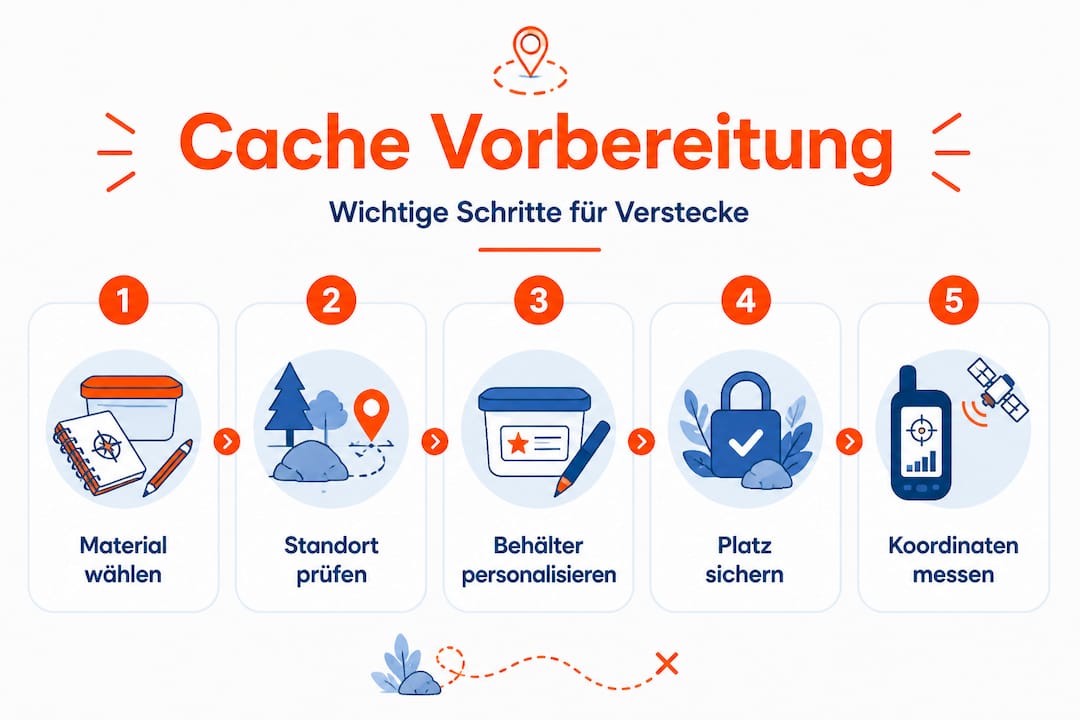
Konzept festlegen: Entscheide dich für einen Cache-Typ (Traditional, Multi, Mystery) und einen groben Standort. Überlege, was das Besondere an diesem Ort ist. Ein Cache an einem historischen Gebäude, neben einem ungewöhnlichen Baum oder mit einem tollen Ausblick bleibt in Erinnerung.
-
Behälter vorbereiten: Reinige den Behälter gründlich. Klebe ein selbst erstelltes Label mit deinem Geocacher-Namen, einem Willkommenstext und einem Hinweis auf geocaching.com innen an den Deckel. Laminierte Labels halten besonders lang.
-
Logbuch einlegen: Falte das Logbuchpapier klein oder rolle es für Nano-Caches. Füge einen kleinen Stift hinzu, wenn Platz ist. Bei größeren Caches kannst du Tauschgegenstände und eine kurze Beschreibung deines Cache-Themas beilegen.
-
Tarnung anbringen: Passe den Behälter optisch an die Umgebung an. Ein PETG-Baumpilz sieht an Baumstümpfen täuschend echt aus. Magnetdosen in Silber oder Schwarz passen an Metallstrukturen. Vermeide grelle Farben, die sofort auffallen.
-
Standort endgültig wählen: Gehe mehrfach zum geplanten Ort, zu verschiedenen Tageszeiten und bei unterschiedlichem Wetter. Prüfe, ob Muggles (Nicht-Geocacher) regelmäßig vorbeikommen. Ein Versteck unter einer beliebten Parkbank wird schnell gestört.
-
GPS-Koordinaten mehrfach messen: Das ist einer der häufigsten Fehler bei Anfängern. Koordinaten mehrfach messen unter verschiedenen Bedingungen ist entscheidend. Miss morgens, mittags und bei bewölktem Himmel. Bilde den Durchschnitt aus mindestens fünf Messungen. GPS-Abweichungen von 3 bis 10 Metern sind normal und können über Erfolg oder Frust entscheiden. Nutze Tipps zu besseren GPS-Messungen für mehr Präzision.
-
Cache platzieren und sichern: Befestige den Behälter so, dass er nicht von selbst herunterfällt oder weggeschwemmt wird. Kabelbinder, Magnete oder Klebeband helfen. Achte darauf, dass kein Werkzeug nötig ist, um den Cache zu öffnen.
-
Listing auf Geocaching-Plattform erstellen: Beschreibe den Cache ansprechend. Ein gutes Listing enthält eine kurze Geschichte zum Ort, die Schwierigkeitsbewertung (D/T-Rating), Hinweise zu Einschränkungen (z. B. kein Zugang im Winter) und ein attraktives Foto des Standorts, nicht des Caches selbst.
-
Cache nach Veröffentlichung testen: Bitte einen Freund oder erfahrenen Geocacher, deinen Cache als “First to Find” zu suchen. Dieses Feedback zeigt dir, ob die Koordinaten stimmen und das Versteck fair ist.
Profi-Tipp: Personalisiere deinen Cache mit einem eigenen Thema. Wer einen Cache zum Thema “Eisenbahn” versteckt, kann das Logbuch als Fahrplan gestalten, Tauschgegenstände mit Zugmotiv einlegen und das Listing mit historischen Fakten zur Strecke füllen. Das macht aus einem gewöhnlichen Versteck ein Erlebnis.

Personalisierter Cache vs. Standard-Cache im Vergleich
| Merkmal | Standard-Cache | Personalisierter Cache |
|---|---|---|
| Behälter | Beliebige Dose ohne Gestaltung | Thematisch gestaltet, individuell beschriftet |
| Tarnung | Oft einfaches Tape oder gar keine Tarnung | Angepasst an Umgebung (Tarnaufsatz, Farbe, Form) |
| Logbuch | Blanko-Papier | Eigenes Design, Willkommenstext, Thema |
| Koordinaten | Einmalig gemessen | Mehrfach geprüft, gemittelt |
| Listing | Grundlegende Beschreibung | Geschichte, Fotos, Hinweise, Besonderheiten |
| Erlebnis für Finder | Neutral | Erinnerungswürdig und motivierend |
Gerade beim GPS beim Outdoor-Abenteuer zeigt sich, wie wichtig zuverlässige Koordinaten sind. Ein tolles Konzept nützt nichts, wenn Suchende zehn Meter danebenstehen.
Häufige Fehler und Wie Du Sie Vermeidest
Nach der erfolgreichen Umsetzung lohnt sich ein Blick auf typische Stolperfallen. Viele Geocaches werden nicht gefunden oder schnell archiviert, weil einfache Fehler passieren.
Die häufigsten Probleme beim Cache-Platzieren
- Ungenaue Koordinaten: Du misst einmal, der GPS zeigt 5 Meter daneben. Finder suchen eine Viertelstunde und geben auf. Misst du mehrfach und bildest den Durchschnitt, verringerst du diesen Fehler erheblich. Lies dazu, wie du Suche und Verstecke meistern kannst.
- Eingraben des Behälters: Viele Cacher denken, ein vergrabener Cache ist besonders gut versteckt. Das Gegenteil ist oft wahr. Das Vergraben von Caches verstößt gegen Regeln in Schutzgebieten und kann den Cache durch Bodenfeuchtigkeit schnell zerstören.
- Zu auffällige Platzierung: Ein leuchtend gelber Behälter an einem grauen Zaun wird von Muggles sofort entdeckt. Farbe und Form müssen zur Umgebung passen.
- Fehlende Beschriftung: Caches ohne den Hinweis “This is a geocache” oder ohne geocaching.com-Aufkleber werden von Findern oft für Müll gehalten und entfernt.
- Unzugängliche Standorte: Ein Cache auf privatem Gelände, in einer Sperrzone oder zu nah an einem Kindergarten wird nicht veröffentlicht und bringt Ärger.
- Schlechtes Logbuch: Logbücher ohne Schutz vor Feuchtigkeit sind nach einem Monat unleserlich. Laminiertes Papier oder wetterfeste Notizbücher sind hier die Lösung.
- Kein regelmäßiger Check: Caches brauchen Pflege. Wer den eigenen Cache monatelang nicht kontrolliert, riskiert schlechte Bewertungen und Archivierung.
Sicherheitshinweis: Platziere keine Caches in der Nähe von Gleisen, Baustellen, Sicherheitsbereichen von Flughäfen oder anderen sensiblen Orten. Die Sicherheit von Suchenden und Muggles hat immer Vorrang. Melde dem Plattformbetreiber sofort, wenn du feststellst, dass dein Standort unsicher geworden ist.
Profi-Tipp: Wenn du spontan eine tolle Stelle entdeckst, fotografiere sie sofort und notiere den Standort in deiner Notiz-App. Prüfe danach in Ruhe: Ist der Ort zugänglich? Liegt er in einem Schutzgebiet? Gibt es bereits einen Cache in der Nähe (Mindestabstand beachten, meist 161 Meter auf geocaching.com)? Erst wenn alle Fragen positiv beantwortet sind, umsetzt du die Idee. So wird aus spontaner Inspiration ein regelkonformes Versteck.
Warum Muggles so oft ein Problem sind
Muggles, also Nicht-Geocacher, sind keine Feinde. Aber sie können einen Cache ungewollt beschädigen oder entfernen. Gute Tarnung löst dieses Problem elegant. Ein PETG-Tarnaufsatz in Form eines Baumpilzes oder eines Steins fällt niemanden auf. Wer beim Geocaching wirklich erfolgreich sein will, denkt beim Verstecken immer auch aus der Perspektive eines ahnungslosen Passanten.
Überprüfung, Wartung und Langfristiger Erfolg deines Personalisierten Caches
Zum Abschluss gilt es noch, den persönlichen Cache für die Community nachhaltig attraktiv und auffindbar zu halten. Viele Caches scheitern nicht beim Erstellen, sondern durch fehlende Pflege.
Warum regelmäßige Wartung so wichtig ist
Ein gepflegter Cache sorgt für konstant gute Bewertungen und motiviert mehr Finder. Koordinaten mehrfach prüfen und den Standort regelmäßig kontrollieren ist kein Aufwand, sondern Teil des Spiels. Cache-Owner, die auf Logs antworten und ihren Cache aktiv betreuen, werden in der Community geschätzt.
Ein gut gepflegter Cache kann viele Jahre aktiv bleiben. Caches ohne Wartung hingegen werden nach einer bestimmten Anzahl negativer DNF-Logs (“Did Not Find”) automatisch archiviert. Das bedeutet: Deine Arbeit verschwindet, und Finder sind frustriert.
Wartungsmaßnahmen im Jahresverlauf
Hier ist eine strukturierte Liste der wichtigsten Wartungsschritte:
-
Frühling (März bis Mai): Kontrolliere den Behälter nach dem Winter. Frost und Nässe können Dichtungen beschädigen. Tausche das Logbuch aus, wenn es voll oder feucht ist. Prüfe die Tarnung, da Moos und natürliche Materialien im Winter verloren gehen können.
-
Sommer (Juni bis August): Überprüfe, ob Vegetation den Cache verdeckt oder schwerer zugänglich macht. Starkes Pflanzenwachstum kann die Koordinaten faktisch unbrauchbar machen, wenn das Versteck plötzlich hinter dichtem Unterholz liegt.
-
Herbst (September bis November): Ersetze Tarnmaterial, das nicht mehr zur Umgebung passt (z. B. frisches Moos durch getrocknete Blätter). Kontrolliere die Befestigung, da Wind und Regen sie lockern können.
-
Winter (Dezember bis Februar): Viele Caches werden im Winter kaum gesucht. Trotzdem lohnt sich ein Besuch, um sicherzustellen, dass der Cache nicht weggeschwemmt oder unter Schnee begraben ist. Notiere saisonale Einschränkungen in deinem Listing.
-
Nach jedem DNF-Log: Wenn jemand deinen Cache nicht findet und einen DNF-Eintrag hinterlässt, reagiere schnell. Prüfe, ob der Cache noch vorhanden ist. Ein freundlicher Log-Reply zeigt, dass du ein aktiver Owner bist.
-
Nach jedem Sturmschaden: Starke Winde oder Überschwemmungen können Caches beschädigen oder verlagern. Kontrolliere nach Extremwetter den Standort so bald wie möglich.
-
Jährliche Koordinatenprüfung: Selbst wenn alles gut läuft, ist eine jährliche GPS-Überprüfung sinnvoll. GPS-Geräte werden präziser, und ältere Koordinaten können durch neue Messungen verfeinert werden. Tipps zum Geocache langfristig pflegen helfen dir dabei.
Statistik: Viele aktive Geocaching-Communitys berichten, dass gut gepflegte Caches mit klaren Listings und regelmäßigen Owner-Logs im Durchschnitt dreimal so viele positive Bewertungen erhalten wie vernachlässigte Verstecke. Das ist keine Überraschung. Ein Cache, der funktioniert, macht Spaß. Und Spaß motiviert Finder, weiterzumachen und ihrerseits eigene Caches zu legen.
Ein weiterer wichtiger Punkt: Antworte auf Logs. Finder freuen sich, wenn der Cache-Owner auf ihre Erlebnisse reagiert. Es sind diese kleinen Interaktionen, die aus einem Spiel eine echte Community machen.
Warum Persönliche Caches Die Geocaching-Erfahrung Wirklich Verändern
Wir sprechen viel über Technik, Material und Koordinaten. Aber hier kommt unsere ehrliche Einschätzung: Der eigentliche Unterschied zwischen einem guten und einem außergewöhnlichen Cache liegt nicht im Material. Er liegt in der Haltung des Owners.
Viele Caches entstehen aus Routine heraus. Jemand hat eine Dose, sucht schnell eine Stelle, drückt auf “publish” und ist fertig. Das Ergebnis ist ein weiterer generischer Behälter ohne Persönlichkeit. Finder loggen, gehen weiter, vergessen den Cache sofort.
Ein durchdachtes, personalisiertes Versteck funktioniert anders. Es erzählt eine Geschichte. Es passt zum Ort, überrascht durch seine Form oder seinen Inhalt und lässt den Finder mit einem Lächeln weitergehen. Solche Caches werden in Logbüchern mit mehr als “TFTC” (Thanks for the Cache) kommentiert. Sie werden weiterempfohlen, auf Social Media geteilt und sind der Grund, warum Menschen weiter suchen.
Was wir in der Geocaching-Community immer wieder beobachten: Cacher, die Zeit in ihre Verstecke investieren, bekommen diese Zeit mehrfach zurück. Durch Kommentare, Dankbarkeit und durch das Wissen, dass Dutzende oder Hunderte Menschen eine schöne Erfahrung durch den eigenen Cache gemacht haben.
Es gibt noch einen anderen Aspekt, den selten jemand ausspricht: Ein gut gestalteter Cache schützt die Umgebung besser. Wer sich Gedanken über Standort, Tarnung und Platzierung macht, wählt automatisch Orte und Methoden, die die Natur nicht belasten. Das ist kein Zufall. Das ist die direkte Folge von Sorgfalt.
Unsere Empfehlung an jeden Cache-Owner, ob Anfänger oder erfahrener Cacher: Stell dir beim nächsten Versteck eine einzige Frage. “Würde ich diesen Cache gerne selbst finden?” Wenn die Antwort ehrlich “Ja” lautet, bist du auf dem richtigen Weg.
Praktische Lösungen und Inspiration für Personalisierte Geocaches
Wenn du jetzt Lust bekommen hast, deinen nächsten Cache wirklich besonders zu machen, haben wir genau die richtigen Produkte und Ideen für dich.
Bei cachewerk.de findest du alles, was du für kreative und naturkonforme Verstecke brauchst. Schau dir zum Beispiel unsere getarnte Geocache-Verstecke an, wie den beliebten Baumpilz aus PETG. Er sieht im Wald täuschend echt aus, ist wetterfest und schützt deinen Behälter zuverlässig. Für weitere Planung findest du bei uns praktische Tipps zum Verstecken und jede Menge weitere Geocaching-Ideen, die Kreativität, Sicherheit und Nachhaltigkeit verbinden. Entdecke, was möglich ist, und mach deinen nächsten Cache zu einem, den die Community nicht so schnell vergisst.
Häufig gestellte Fragen zu Personalisierten Caches
Darf ich meinen Geocache eingraben?
Das Eingraben von Caches ist aus Umwelt- und Sicherheitsgründen in vielen Gebieten verboten. Laut NPS-Richtlinien gilt das insbesondere für Nationalparks und Schutzgebiete, sollte aber überall vermieden werden.
Wie messe ich die Koordinaten meines Verstecks am genauesten?
Miss die Koordinaten mehrmals zu verschiedenen Tageszeiten und unter unterschiedlichen Wetterbedingungen, dann bilde den Durchschnitt aller Messungen. Mehrfachmessungen minimieren GPS-Abweichungen deutlich.
Was macht ein Versteck wirklich “personalisiert”?
Ein personalisiertes Versteck passt sich der Umgebung an, hat ein eigenes Thema, ein gestaltetes Logbuch und hebt sich durch originelle Tarnung oder Inhalte von Standard-Caches ab.
Wie oft sollte ich meinen Cache warten?
Kontrolliere dein Versteck mindestens zweimal im Jahr, am besten nach dem Winter und nach dem Sommer, auf Schäden, Feuchtigkeit und den Zustand des Logbuchs.
Welche Ausrüstung brauche ich für einen eigenen Geocache?
Du benötigst einen wetterfesten Behälter, ein Logbuch aus wetterfestem Papier, passendes Tarnmaterial sowie ein GPS-Gerät oder Smartphone mit einer Geocaching-App.
