What is an Own Cache? Creative Hides and Tips

Many geocachers eventually face the same question: What exactly is an "Own Cache," and how does it differ from regular hunting? The answer is often surprising. An Own Cache is not a specific cache type like a Traditional or Mystery. Instead, it is simply a geocache that you created yourself and for which you, as the owner, bear full responsibility. This might sound like a lot of effort at first. In reality, it is one of the most creative opportunities geocaching has to offer. This article guides you from the definition and key rules to concrete ideas that will make your own cache truly unforgettable.
Table of Contents
- Basics and Definition of an Own Cache
- Guidelines and Responsibility for an Own Cache
- Creative and Sustainable Design of an Own Cache
- From Idea to Practice: Tips for Placing Your Own Cache
- A New Perspective: What Really Counts for Your Own Cache
- Tailored Solutions and Accessories for Your Own Cache
- Frequently Asked Questions About Own Caches
Key Takeaways
| Point | Details |
|---|---|
| Own Cache Term | An Own Cache is an individual geocache container designed by the owner themselves. |
| Follow the Rules | Clear guidelines regarding placement and maintenance apply to every cache you own. |
| Creativity and Sustainability | Customized containers and sustainable materials ensure a unique adventure. |
| Step-by-Step Practice | A clear process—from planning to reviewer check to sustainable maintenance—leads to a successful Own Cache. |
| Community & Accessories | Networking and quality accessories make your geocaching project successful in the long term. |
Basics and Definition of an Own Cache
The term "Own Cache" simply refers to any geocache that you created and registered yourself. You are the owner. This means you choose the location, design the container, write the cache page, and take permanent care of the hide. In this way, an Own Cache differs fundamentally from simply searching, where you are only a finder.
What many beginners don't immediately understand: an Own Cache is not a separate cache type in the technical sense. You can create a Traditional, a Multi-Cache, or even a Mystery Cache as your own. The word "Own" describes ownership, not the difficulty level or the type of hide. This distinction is important so you can correctly categorize the rules.
Distinction of Cache Types
| Cache Type | Number of Stages | Special Feature | Typical Container |
|---|---|---|---|
| Traditional | 1 | Direct coordinates | Canister, nano, magnetic hide |
| Multi-Cache | 2 or more | Stages, waypoints | Varies by stage |
| Mystery / Puzzle | 1 or more | Puzzle solution required | Varies |
| Own Cache | Any | You are the owner | Completely free choice |
The comparison shows that as an owner, you are very free in your design. Nevertheless, the same basic rules apply to every type.
Typical Characteristics of an Own Cache
- The owner sets the coordinates, title, and description
- The container and logbook are provided by the owner
- The owner maintains the hide permanently
- Every Own Cache goes through a reviewer process before publication
- Owners are responsible for any damage to the environment
For DIY hiding tips, it is worth gathering concrete ideas as early as the planning phase, because the more original your hide, the more joy it brings the community.
Crucially: According to official guidelines, certain rules are mandatory for an Own Cache, including no burying of the container, no attaching to trees, no indoor hides without explicit permission, and a clear maintenance obligation for the owner. The reviewer checks every cache against these criteria before publishing it.
Guidelines and Responsibility for an Own Cache
Once you know what an Own Cache is, the topic of responsibility comes into play. Geocaching thrives on trust: trust from finders, property owners, and nature itself. As an owner, you actively contribute to this trust.
Overview of the Most Important Basic Rules
- Location Selection: Choose only locations where you have permission or where no permission is required. Public land is often straightforward, while private property and protected areas require clarification.
- No Digging: The hide must never be buried. The ground should not be damaged, neither for the container nor for clues.
- No Attachment to Trees: Caches must not be attached to living trees. Permanent attachments to branches or trunks are prohibited.
- Indoor Regulation: Placing a cache in buildings or covered areas is only allowed with the explicit permission of the owner.
- Reviewer Process: Before publication, a volunteer reviewer checks your cache for compliance with the rules. You should take the reviewer's feedback seriously.
- Logbook Maintenance: The logbook must be changed regularly as soon as it is full or wet.
- Regular Check-ups: As an owner, you are obligated to personally check your cache at regular intervals.
Maintenance is not an optional extra. A well-maintained cache shows respect for the community and nature. Finders appreciate a fresh logbook and an intact hide. Caches that are neglected for months harm the reputation of geocaching as a whole.
Regarding outdoor locations, there is a lesser-known aspect: especially in forest-rich regions, open fire pits and heavily frequented spots are often unsuitable as they draw too much attention to the hide. Prefer quieter locations for your selection. If, for example, you know of outdoor fire pits and want to place a cache there, make sure to check beforehand if the area is suitable and if there are no safety risks.
Pro-tip: Write the reviewer a short message before submitting your cache. Briefly explain the uniqueness of your hide and show that you know the rules. This speeds up the review process and avoids unnecessary revision rounds. Use every piece of feedback as a learning opportunity.
For creative cache ideas, the rule is: originality is good, compliance is mandatory. Both together make a truly good Own Cache.
Creative and Sustainable Design of an Own Cache
Now it gets really exciting. The design of your Own Cache is the part where you are truly free. You decide what the hide looks like, what material you use, and how much effort you put into it.
Why Material Selection is So Important
A bad container ruins the experience. Paper swells. Thin plastic breaks in cold weather. Moisture destroys the logbook. The hide might remain outdoors for months or years, so the material needs to withstand these conditions.
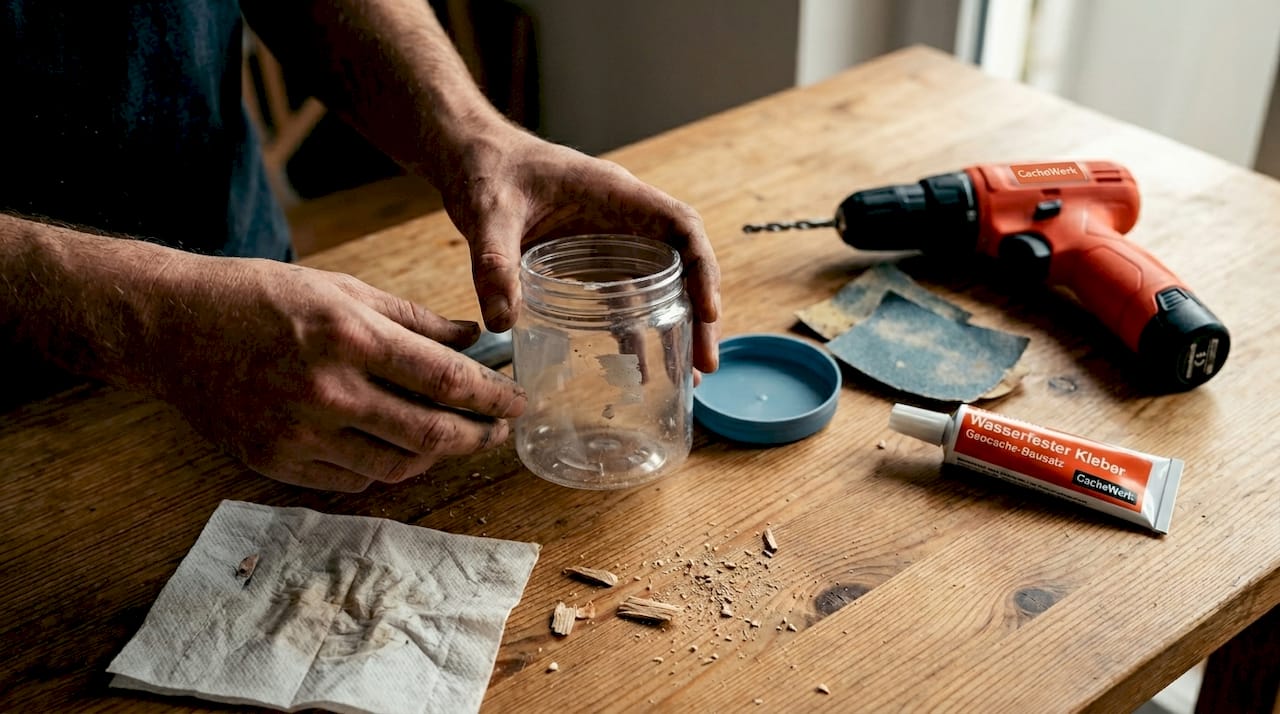
The best DIY inspirations for containers combine creativity with genuine durability. A classic example is the log-tube: a hollowed-out branch is replicated to look deceptively real and contains a waterproof tube for the logbook. At first glance, it looks like regular forest floor. Finders who discover the hide are usually delighted.
Material Comparison: Sustainability and Weather Resistance
| Material | Weather Resistance | Sustainability | Camouflage | Durability |
|---|---|---|---|---|
| PETG Plastic (3D printing) | Very high | Medium | Highly adaptable | Very high |
| Stainless Steel | Very high | High | Limited | Extremely high |
| Wood (treated) | Medium to high | Very high | Very good | Medium |
| Standard plastic container | Medium | Low | Poor | Low |
| Magnetic hide (metal) | High | High | Very good (urban) | High |
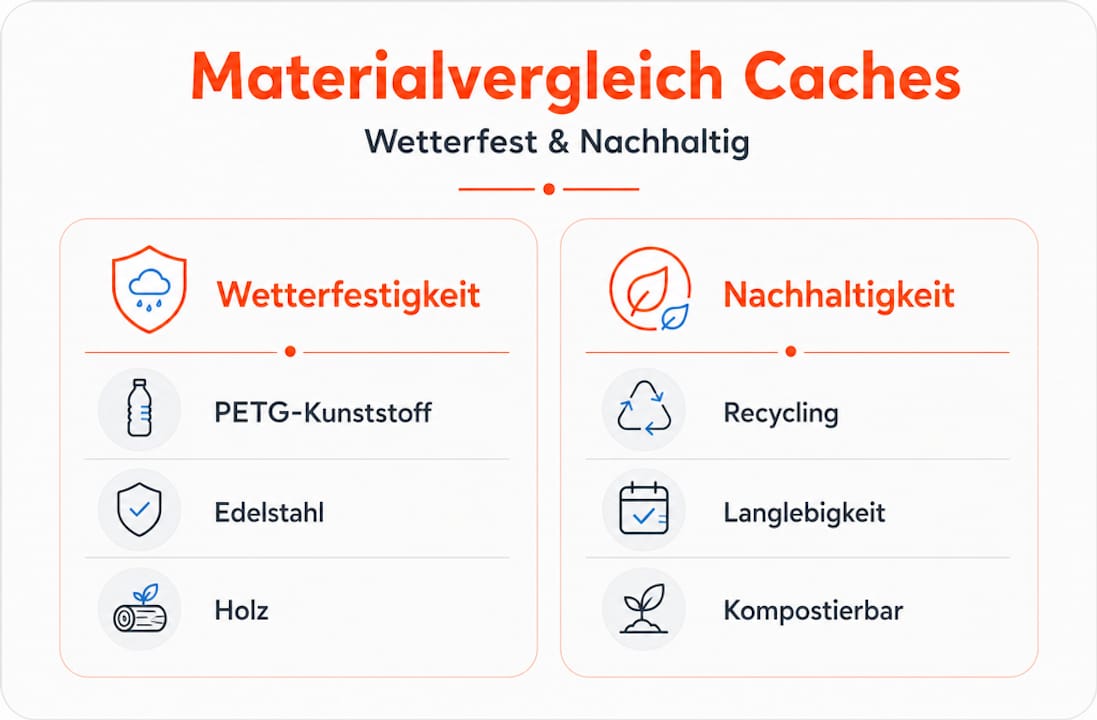
As you can see, 3D-printed PETG plastic beats almost all other materials in terms of adaptability. This is also why 3D-printed hides have become so popular in the community. You can shape them any way you like and camouflage them perfectly. The urban cache guide shows how well this works in city areas.
According to reports from the geocaching community, for self-made containers: tailored containers like log-tubes ensure unique experiences as long as longevity and environmental protection are top priorities.
Creative Cache Types for Inspiration
- Log-tube: Deceptively real branch with a hidden logbook tube
- Fake Sign: Metal sign looking like a real info sign with a magnetic hide behind it
- Tree Stump Imitation: 3D-printed stump with a lid, almost indistinguishable from real wood
- Magnetic container under benches: Small metal capsule with a strong magnet
- Stone shell: Plastic stone with a hollow, realistically painted
- Birdhouse Cache: Miniature birdhouse with a logbook holder inside
- Fake Screws and Bolts: Hollow metal screws on railings or fences
Pro-tip: Always think about the environment when designing. Use no paints or adhesives that could leach into the soil or water. Choose materials that you can completely remove without leaving a trace if necessary. A cache that leaves no trace is a good cache.
From Idea to Practice: Tips for Placing Your Own Cache
A good idea alone is not enough. The implementation determines whether your Own Cache provides joy for months or years. Here is the path from planning to active maintenance.
Step-by-Step to Your Own Cache
- Develop an idea: Consider what kind of experience you want to offer finders. Should it be an easy family walk or a challenging puzzle?
- Check the location: Visit the planned spot multiple times at different times of day and seasons. Check if the location is easily accessible and offers no safety risks.
- Obtain permission: Clarify in advance whether the location is publicly accessible. For private property or protected areas, you need written permission.
- Select and prepare the container: Choose a weather-resistant, durable container concept. Test for waterproofness at home before placing the hide.
- Place the hide: Place the cache so that it cannot be found accidentally or damaged. Avoid places with very high foot traffic by non-geocachers.
- Create the cache page: Write an appealing description. Provide hints regarding difficulty and terrain. Add a suitable photo.
- Wait for the reviewer process: Submit your cache and respond to feedback promptly. Keep all necessary documents ready.
- Create a maintenance plan: From the beginning, plan fixed dates for check-up visits, at least once per quarter.
Common Mistakes to Avoid
- Choosing a location without a prior personal site visit
- Using cheap packaging material that cannot withstand moisture
- Choosing a logbook that is too small (they fill up faster than expected)
- Not testing the cache again immediately after placement
- Not saving backup coordinates or photos of the hiding spot
- Ignoring or leaving reviewer feedback unanswered for too long
- Leaving the cache page incomplete or confusing
- Not being reachable for finders who report problems
That sounds like a lot, but in practice, it is manageable. Many experienced owners use a simple table or app to keep track of their caches.
Community Networking as a Quality Booster
Talk to other geocachers before and after you publish your cache. Ask experienced owners for an informal review of your cache page. Ask finders for their impressions. You will often get valuable tips that you would never have thought of on your own.
Platforms like local geocaching meetups or online forums are ideal for such feedback. Anyone who regularly studies creative tips for cache building and is active in the community develops their own instinct for good hides faster than someone working in isolation.
Exciting urban hides demonstrate especially well how much creativity is possible in a small city area. Let yourself be inspired by them, but don't copy blindly. Your Own Cache should reflect your personality.
Pro-tip: Set up a folder on your smartphone immediately after publishing the cache. Save photos of the hiding spot, coordinates, material numbers, and maintenance dates there. When you come back after a year, you will immediately remember all the details and can act quickly.
Regarding the edge cases of geocaching guidelines, especially in maintenance and location selection, there are many details that surprise beginners. The sooner you know these, the fewer problems you will have with the reviewer.
A New Perspective: What Really Counts for Your Own Cache
After all the rules and steps, we want to be honest with you: most mistakes with an Own Cache do not arise from a lack of rule knowledge. They arise from a lack of courage to be unique.
Many aspiring owners spend weeks reading rules and guidelines and forget what it's actually about. It's about giving other people a moment of joy. Showing a place that no one else notices. Setting a little puzzle that feels right when solved.
The best Own Caches we know have one thing in common: the owner had a clear, personal idea. Not the most sophisticated technology. Not the most expensive container. But a genuine enthusiasm for a specific place or a specific story.
Rules are nonetheless essential. Not because geocaching platforms want it that way, but because by placing your cache, you are taking responsibility for nature and for other geocachers. A buried cache damages the ground. A poorly maintained hide frustrates finders and damages the reputation of the sport. These are not abstract rules, but real consequences.
The difference between a rule-breaker and a good owner lies not in the intent, but in the consistency. Anyone who visits their cache once a year and then wonders why negative logs appear has not yet understood the principle.
Community feedback is not an attack. It is a gift. Finders who take the time to write a detailed log show you what your hide really triggers in people. Take this feedback seriously. It will make your next cache better.
Sustainability is not a trend. It is the foundation of good geocaching. A cache that harms nature or leaves trash behind has no place in the forest. Anyone approaching their hide with a geocaching DIY perspective automatically thinks about materials, locations, and long-term impact.
Our honest advice: Start with a simple but well-maintained cache. Learn from the community's reactions. Then increase the complexity with your next hide. This gradual approach is more fun than trying to create the perfect masterpiece the very first time.
Customized solutions and accessories for your Own Cache
You have now learned everything important about Own Caches. From the definition and rules to creative ideas and practical implementation. Now all that is missing is the right equipment.
At CacheWerk, you will find exactly what your next hide needs. Whether you are looking for a realistic tree fungus cache for a forest location or an urban camouflaged fake sign hide for the city. All products are made of durable PETG and are designed for real outdoor conditions. So you don't have to craft it yourself if you don't have the time. But if you are a DIY enthusiast, you will find everything you need for individual solutions in our Equipment & Accessories collection. Just take a look and get inspired.
Frequently asked questions about the Own Cache
What distinguishes an Own Cache from a traditional cache?
An Own Cache describes any geocache you have created yourself, regardless of the type. A traditional cache follows a simple principle with direct coordinates, while an Own Cache can also be designed as a Multi or Mystery. With an Own Cache, the owner takes full responsibility for design and maintenance.
As a cache owner, do I have to check my own cache regularly?
Yes, the duty of maintenance is mandatory and includes regular check-up visits as well as replacing the logbook when necessary. Anyone who neglects this risks having their cache archived by the reviewer.
Which materials are best suited for a sustainable cache?
Durable materials such as stainless steel, weather-resistant wood, or 3D-printed PETG plastic are particularly suitable. These materials withstand weather conditions and, when used carefully, leave no harmful traces in nature.
Am I allowed to hide my cache anywhere?
No. According to the official guidelines, digging, attaching items to trees, and indoor caches without permission are strictly prohibited. Every location must be carefully checked before submission.
How do I find inspiration for my own cache hide?
Geocaching DIY blogs, community forums, and specialized platforms like CacheWerk offer a wealth of original ideas. Talking directly to experienced cachers at local meetups or geocaching events is also particularly helpful.