Storing card games in weatherproof containers: boxes for outdoor geocachers

For outdoor use, the following applies: all-plastic cards or the box-in-box principle with waterproof log strips are the most reliable combination. Both solutions withstand moisture, friction, and dirt and are easy to clean. Anyone wanting to place cards permanently in a cache should use appropriate containers, seals, and accessories designed specifically for this setup.
In short:
- All-plastic cards are more weather-resistant and easier to clean than paper cards in sleeves, making them more durable for outdoor use.
- For damp locations, the box-in-box principle with weather-resistant containers is recommended to protect the cards from water and dirt.
- Screw-top containers with rubber gaskets or O-rings provide reliable protection against moisture, while screw caps with rubber seals are particularly secure.
- With frequently visited caches, regular replacement of log strips and checks for moisture are essential.
- The right log material in combination with weather-resistant cards and suitable packaging saves costs and maintenance effort in the long run.
Table of contents
- Which boxes and sleeves are suitable for outdoor card games?
- Which types of cards stand up to outdoor use?
- How to pack cards securely in a cache box?
- How to secure the box at the cache location?
- What to do about damp log strips or warped cards?
- Ventilation in the box: How to prevent mold growth
- Controlling humidity in the box: Silica gel and alternatives
- What practice really shows
- Suitable products for your card setup in the cache
- Sources
- FAQ
Which boxes and sleeves are suitable for outdoor card games?
Choosing the right boxes for card games depends on the cache type. A micro-cache requires different containers than a regular-sized cache that you hide permanently at the edge of a forest. Basically, there are several container classes that have become established in geocaching practice.
- PETling: small screw-top container, lightweight, inexpensive, ideal for individual cards or a mini-deck.
- Film canister: classic nano-container, often with an O-ring, for very small card stacks or folded log strips.
- Nano-screw: disguised as a screw with a secret compartment, usually magnetically attached, for urban hides.
- Ammunition box: robust regular size with rubber seal, plenty of space for a complete deck of cards.
- Boat storage container: transparent hard-shell boxes, often with a snap closure, good for transport and home storage.
The type of seal makes all the difference. An O-ring in the lid groove compresses when closed and seals reliably as long as it is not brittle or dirty. Screw caps with rubber gaskets, as used in many cache containers, are considered particularly secure for regular sizes. Snap closures are quick to open but lose tension after many opening cycles.
Standard boxes are usually sufficient for dry, protected locations. As soon as the cache is near the ground, near bodies of water, or in a flood-prone area, the box-in-box principle is worth the effort. A word of caution: dark plastic boxes in direct sunlight can deform, causing the lid to stop closing properly. Light colors and a shady location significantly extend their lifespan.
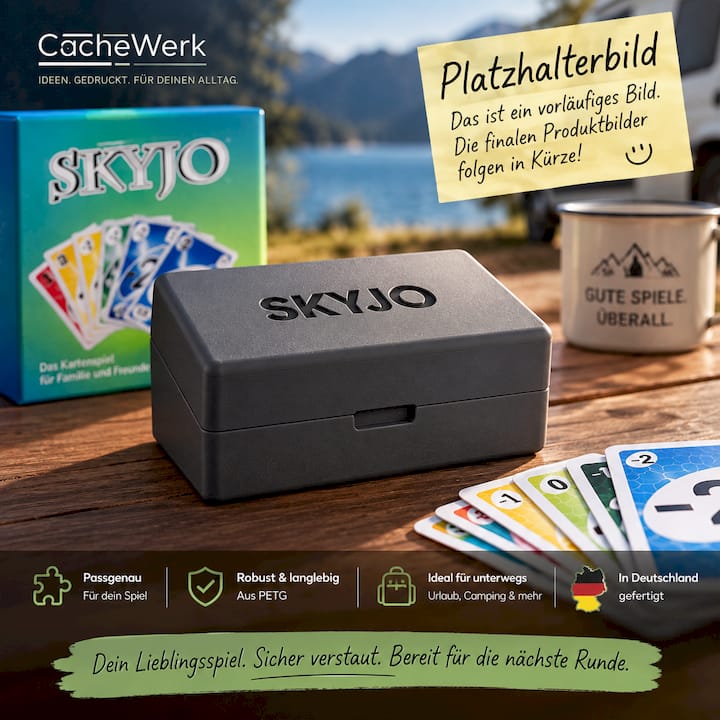
Which types of cards stand up to outdoor use?
All-plastic cards made of PVC or PP are clearly the better choice for outdoors compared to paper cards with sleeves. They do not absorb water, can be wiped clean with a damp cloth, and survive significantly more usage cycles before corners soften or the ink flakes off.
Paper cards in clear sleeves only work to a limited extent. As soon as moisture reaches the cut edges, the cardboard swells and the cards stick together. Even a good sleeve only protects the surface, not the open edges.
Pro Tip: If you already have paper cards, laminate them completely instead of just putting them in a sleeve. This also seals the edges.
All-plastic sets, as offered by specialized manufacturers, cost more than classic paper decks but save on repeated replacement purchases. Commercially available waterproof cards, such as those in the Hoyle category, are also well-suited for the beach, pool, and camping, but should not be exposed to extreme heat or prolonged submersion.
Keep a few points in mind when choosing materials:
- All-plastic cards tolerate temperature fluctuations much better than paper plus a sleeve.
- Cleaning is done with water and mild soapy water, without softening the material.
- In high heat in a car or cache, even plastic cards can warp slightly if left unprotected.
Investing in weather-resistant cards pays off over time because you need to repurchase or replace them less often.
How to pack cards securely in a cache box?
The correct order of packing determines whether your card deck survives the next downpour. Here is the best approach:
- Preparation: Dry the cards and log strips completely before inserting them. Residual moisture is often the actual cause of later mold formation, not the box itself.
- Choose an inner container: Use a small, tight-sealing container with an O-ring or screw cap as the first barrier for the cards.
- Insert and cushion: Place the cards in with some foam or paper padding so they do not slip or rub against each other during transport.
- Secure: A rubber band or a tight inner lid keeps the stack together in case the box is turned upside down.
- Assemble outer shell: Choose an outer shell appropriate to the location—whether screw-hides, chain, or ground sleeve—and camouflage it to match the environment.
Pro Tip: Mark the inner container with the date of the last check. This way, you can immediately see how long the cards have been outside when you next log.
Replace cards or log strips in frequently visited caches more often, as every opening brings in some humidity. For rarely visited hides, a semi-annual check is usually sufficient.
How to secure the box at the cache location?
The attachment method often decides whether a cache survives for weeks or years. Several options have proven effective in practice:
- Bolting: Ground sleeves or screw-hides are suitable for micro-caches on fences, posts, or masonry.
- Chains: A short chain with a carabiner prevents the box from drifting away during strong winds or flooding.
- Magnetic mounting: Practical for urban nano-hides on metal surfaces, such as signs or guardrails.
- Ground sleeves for regular caches: give larger ammo boxes a fixed spot without permanently damaging the ground.