Securely attaching caches to smooth surfaces: What really holds

For smooth surfaces, two basic principles work reliably: magnetic attachment to magnetic substrates like steel, or a removable adhesive base for non-magnetic surfaces such as aluminum, glass, or plastic. Rubberized neodymium magnets, PETG containers, and PowerStrips form the stable material combination for this. However, without the owner's permission and regular maintenance, even the best technology will not last long.
In short:
- Magnetic attachments are only suitable for magnetic surfaces like steel, while metal base plates are necessary for non-magnetic surfaces such as aluminum or glass.
- Rubberized neodymium magnets and PETG containers offer the best practical protection against corrosion and breakage outdoors.
- For permanent mounting, professional cleaning, curing of the silicone, and regular checks are essential to avoid missing caches.
- Obtaining the owner's permission and avoiding property damage are clear ground rules for legal and sustainable hides.
- Alternatives such as PowerStrips, suction cups, or Velcro are effective in the short term but should be maintained regularly and replaced if problems occur.
Table of contents
- Caches on smooth surfaces: These mounting methods work
- Which magnets, containers, and sealants prove successful
- Legal and ethical considerations
- Building and testing your mount step-by-step
- When the mount fails: Quick solutions
- Author's perspective: What really counts in practice
- Suitable hides from CacheWerk for smooth surfaces
- Sources
- FAQ
Caches on smooth surfaces: These mounting methods work
A sheet metal sign, a lamppost, a windowpane: smooth surfaces offer you hardly any hold if you use traditional screws or nails. That is precisely why caches on smooth surfaces revolve around two techniques that have proven themselves in practice.
Direct magnetic attachment works wherever the substrate itself is magnetic, such as steel beams, traffic signs, or metal railings. You build the magnet directly into the cache, usually fixed with hot glue or a sturdy two-component adhesive. The advantage: no tools required; the cache can be placed and removed in seconds. The disadvantage is apparent with thin or coated metal, where holding power is noticeably reduced.
For non-magnetic surfaces, the base plate method has established itself as a practical solution. A thin metal plate is glued on with silicone and sealed all around so that moisture cannot creep underneath. Afterward, you simply place your magnetic cache onto this base. According to practical reports from the Geoclub forum, this technique also works on aluminum, plastic, and even glass.
Where silicone takes too long to cure, many owners resort to removable adhesive solutions:
- PowerStrips for residue-free, temporary fixation
- Double-sided tape for flat, light containers
- Suction cups for very smooth, flat surfaces like windowpanes
- Velcro as an alternative for frequently changed hides
Upside-down mounted caches are the weak point for adhesive solutions: the dead weight is constantly pulling on the adhesive surface, which causes PowerStrips and tape to age faster than with side or bottom mounting.
Pro tip: Fix the metal plate with a PowerStrip first while the silicone cures. This shortens the time you spend visibly working on the surface, and the risk of attracting attention as a "Muggle" drops significantly.
Which magnets, containers, and sealants prove successful
The choice of material determines whether your cache lasts for months or only weeks. Rubberized neodymium magnets protect both the surface from scratches and the magnet itself from corrosion, whereas bare standard magnets usually rust after a short time in outdoor use.
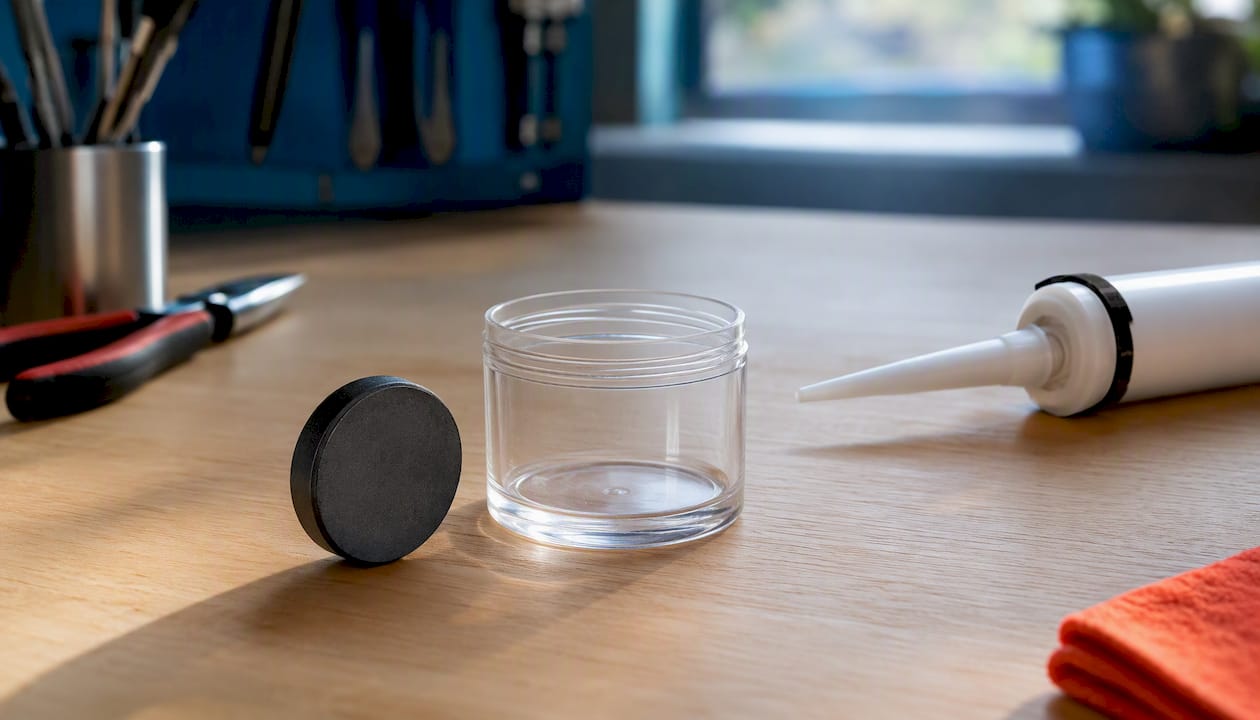
PETG containers last significantly longer in practice than modified film canisters. The material is more UV-resistant, does not break in the cold, and can be precision 3D-printed, allowing for clean inner dimensions for the magnet and logbook.
When choosing silicone, there is a clear rule: neutral-curing silicone is mandatory on metal. Acetoxy-curing silicones release acetic acid during curing, which promotes corrosion on bare steel or aluminum.
The most important materials at a glance:
- Rubberized neodymium magnets for scratch and rust protection
- PETG containers instead of converted film canisters
- Neutral-curing silicone instead of acetoxy-curing
- Heat-resistant mounting without direct contact with a hot glue gun
One technical detail is often overlooked: when heat-shrinking with a heat gun or processing hot glue, magnets should remain below about 80 degrees Celsius; otherwise, they noticeably lose strength. According to manufacturer specifications, neodymium magnets provide holding forces in the range of about 1.7 to 3.4 kilograms depending on size and shape, a value that helps you choose the appropriate magnet size for the weight and wind load of your container.
Legal and ethical considerations
A clever cache is useless if it is attached to someone else's property without permission. Before attaching anything to private property or protected objects, the owner's permission is mandatory, not optional.
Screws or nails in living trees, historical signs, or public infrastructure are taboo. Permanent damage violates the basic rules of the hobby and endangers the trust that owners and municipalities place in geocachers.
The search behavior itself also plays a role: choose the location such that lingering or feeling along a wall does not immediately look suspicious.
- Obtain owner permission before any installation
- No damage to trees, signs, or building structures
- Choose the location so that search behavior remains inconspicuous
- Indicate regular maintenance and the obligation to remove it in the listing
Building and testing your mount step-by-step
Before you even drive to the location, it is worth doing some brief preparation at home. It will save you a second trip.
- Compile a materials list: rubberized magnet, PETG container, neutral-curing silicone or PowerStrips, alcohol wipes for cleaning.
- Check the substrate: Is the surface steel (magnetic) or aluminum/painted metal (often non-magnetic)? A simple on-site magnet test clears this up in seconds.
- Clean the surface: Use alcohol to remove grease and dust, otherwise neither silicone nor tape will hold permanently.
- Attach the metal plate: For non-magnetic substrates, glue the plate on with silicone and seal it all around.
- Observe curing time: Depending on the silicone, wait 24 to 48 hours before the cache is permanently loaded.
- Place the cache: Attach the magnetic container to the base and check the fit.
- Perform a test sequence: Manual wiggle test, followed by a holding test over several hours, ideally in the rain as well.
- Update the listing documentation: Specify maintenance intervals, instructions for removal in an emergency, and contact options for reviewers, as recommended by official guides.
Pro tip: Perform the rain or weather test consciously before the first log, not after. A cache that falls off during the first shower costs you more trust in the community than a one-week delay in listing.
When the mount fails: Quick solutions
If a cache falls off repeatedly, the cause is almost always one of three things: a magnet that is too weak, the wrong substrate, or an aged adhesive surface.
First, check the substrate material again carefully; some painted surfaces look magnetic but are not consistently so. If the magnet is generally too weak for the weight of the container, a second magnet or a stronger neodymium type often helps immediately.
In the short term, additional PowerStrips or a reinforced metal plate can save the situation on-site. In the long term, rust protection on the magnet, logbook replacement in humid conditions, and a visual inspection of the silicone seal are part of the routine. If the base detaches repeatedly despite improvements, repositioning is more honest than having a cache that is constantly reported as "not found."
- Re-check the substrate for magnetism
- Compare magnet size with container weight
- Re-apply PowerStrips or metal plates if necessary
- In case of repeated failure: reposition instead of endlessly repairing
Author's perspective: What really counts in practice
Most guides on caches on smooth surfaces focus on the attachment. What is often missing is an honest assessment of how a combination ages under real weather conditions. In my own setups, the combination of a PETG container, a rubberized magnet, and a PowerStrip base has proven particularly robust, precisely because it addresses three weaknesses simultaneously: material fatigue, corrosion, and the patience required for on-site curing. Those who use bare magnets and acetoxy-curing silicone instead save time at the beginning and pay for it later with rust stains and loose caches. Those who want to dive deeper will find further steps in the CacheWerk guides on magnet construction and weatherproof petling mounting.
— Benedikt
Suitable hides from CacheWerk for smooth surfaces
If you don't want to tinker yourself, you can save yourself a lot of trial and error with ready-made solutions, as CacheWerk develops its hides directly from their own practical experience on city poles and metal signs. For signposts in urban areas, the customizable fake water sign with an integrated pole holder is suitable—unobtrusive in the cityscape and individually customizable.
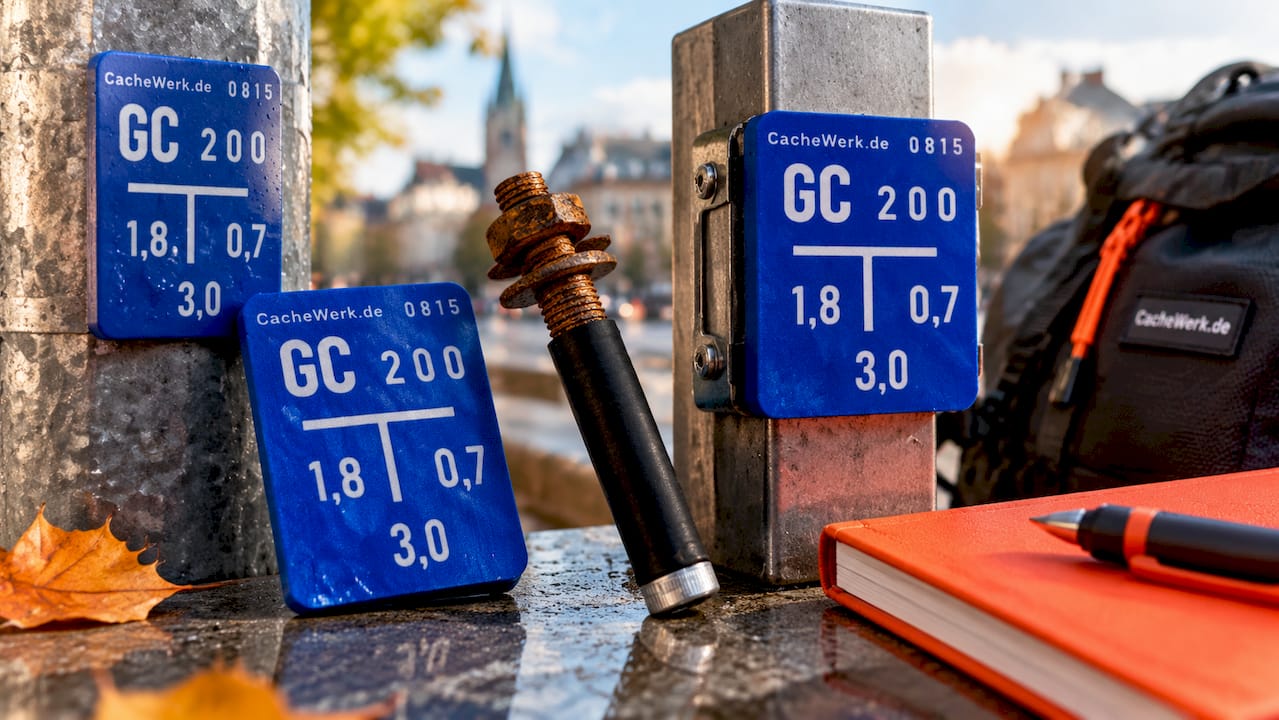
A second variant, the fake water sign as an urban camouflage hide, also fits common posts and bollards and remains completely visually disappeared in the street scene. For metal surfaces like railings, screw connections, or pipelines, the Rusty Bolt Cache offers a creative nano solution with a deceptively real rust look and a compact nano container. All three hides can be mounted using the same principles described here: clean surface, suitable magnet, sufficient curing time. Take a look at the range of geocaching accessories and find the base that suits your next hide.
Sources
Official geocaching guides, manufacturer FAQs about magnets, and forum discussions from the Geoclub provide further practical details on location selection, material selection, and mounting technology.
- How to choose a good location for a geocache – Official Blog
- Geocaching‑Info: Hiding
- Supermagnete
- How can you attach geocaches/stations without damage? | Geoclub - Geocaching Forum
FAQ
Does a magnet cache hold up in rain and frost?
Rubberized neodymium magnets in combination with a sealed PETG container hold up well against moisture and frost in practice, as long as the silicone seal remains intact.
Which adhesive solution is suitable for glass or plastic?
PowerStrips or a glued-on metal plate with neutral-curing silicone work reliably on glass and plastic, as both materials are non-magnetic.
Do I need permission for every mount?
Yes, for private property or protected objects, the owner's permission is generally required before mounting.
How often should I maintain a magnetic cache?
A visual check every few weeks is usually sufficient to detect rust, loose magnets, or leaking seals early before the cache falls off completely.
Are there ready-made solutions for smooth surfaces?
Yes, including a customizable fake water sign with a pole holder and a Rusty Bolt Cache, both developed specifically for urban, smooth substrates.