
Maintaining the Cache Logbook: A Practical Guide for Geocachers
If you want to maintain a cache logbook, check these five points on site and act immediately: visual inspection of the location, watertightness of the container, condition of the logbook, trade items, and rehide. This is your practical quick check before every maintenance. According to the Opencaching Wiki, wet or full logbooks, damaged containers, and shifted hiding spots are the most common reasons for maintenance.
Short checklist for your pocket:
- Approach location inconspicuously, assess muggle risk
- Check outside of container for damage
- Open lid, check for condensation and odor
- Check logbook for free pages, moisture, and readability
- Inspect trade items, remove damaged ones
- Restore camouflage after closing
Pro Tip: Always bring a spare logbook (suitable for Micro and PETling), two zip-lock bags, a waterproof pen, and an emergency-sized spare container. Being prepared saves you a second trip.
Table of Contents
- What do you need for good cache maintenance?
- Who is responsible: Owner's duty, third-party maintenance, and etiquette
- How do you properly replace a logbook?
- How do you permanently protect your cache from water and mold?
- How do you properly document maintenance on the platform?
- Which Cachewerk logbooks are suitable for maintenance?
- Key Takeaways
- Why regular maintenance is more than just fulfilling an obligation
- Your maintenance kit directly from Cachewerk
- Useful sources and further links
What do you need for good cache maintenance?
Being well-equipped for maintenance saves time and prevents you from leaving empty-handed. The four-step routine of the official Geocaching blog sums it up: check, bring spares, fix damage, write maintenance log.
Standard equipment for the maintenance bag:
- Spare logbooks in Micro, PETling, and Small formats
- Waterproof zip-lock bags (various sizes) and freezer bags as an emergency solution
- Waterproof pen (e.g., Staedtler Lumocolor permanent) and regular pencil as backup
- Disposable gloves for hygienic work
- Multi-tool or small pocket knife
- Small camera or smartphone for documentation photos
- Emergency spare container (one size larger than the existing cache)
- Adhesive tape, silicone sealing tape, and desiccant packets
When it comes to materials, it's worth looking at waterproof paper for logbooks and PETG-printed containers. PETG is impact-resistant, UV-stable, and hardly deforms in frost. PE zip-lock bags significantly extend a logbook's lifespan, even if the main container leaks.
| Dimension | Micro/PETling | Small/Regular |
|---|---|---|
| Application Size | Nano up to 1 ml | Micro to Small |
| Water Protection | Zip-lock bag, waterproof paper | Sealing ring, zip-lock bag, desiccant |
| Durability/Material | Waterproof paper, PETG | Laminated paper, plastic |
| Space Required | Log strip, roll format | Mini notebook, spiral bound |
| Replacement Effort | High at short intervals | Medium over longer periods |
A brief note on nature conservation: Stick to existing paths, avoid unnecessary trampling, and leave the site as you found it. As the owner, you are also responsible for ensuring that your cache does not cause any damage to the environment.
Who is responsible: Owner's duty, third-party maintenance, and etiquette
The owner is responsible for their cache. Period. Whoever creates a cache commits to regular maintenance. If maintenance is neglected, the cache can first be deactivated and eventually archived on platforms like geocaching.com or Opencaching.
Third-party maintenance is possible, but tricky. Experienced geocachers in the Geoclub forum agree: Before a logbook exchange by a third party, the owner should be contacted. Exceptions apply in obvious emergencies, very remote caches, or if the owner is demonstrably no longer reachable.
When third-party maintenance is acceptable:
- The container is open and unprotected, logbook is already wet
- Owner has been unreachable for weeks and multiple "Did not find" logs are present
- Agreement with the owner has been made and documented beforehand
- For rare or distant caches with explicit permission
Pro Tip: Before maintenance, send a short message to the owner via the platform. Note the date, time, and what you did. A short maintenance log afterward closes the loop for the community.
Regarding maintenance flags: Set "Needs Maintenance" if there is a problem the owner needs to fix. "Temporarily Unavailable" is used by the owner themselves if the cache is temporarily inaccessible. The Opencaching blog explains in detail how these log types are used correctly.
How do you properly replace a logbook?
The format of the replacement logbook depends on the cache size. A log strip in roll format fits into any PETling and nano-container. A mini notebook is suitable for slightly larger micro containers. For small and regular caches, a spiral-bound notebook or a folded A5 page is the most practical solution. According to CacheWiki, a plastic cover significantly extends the lifespan of any logbook.
Step-by-step for exchanging:
- Photograph the old logbook (all written pages) so that finds are not lost
- Label the new logbook with date, cache name, and "Replacement Logbook from [Date]"
- Seal in a zip-lock bag or laminate before placing it in the container
- Take the old logbook with you and send it to the owner or keep it safe
For templates, there are two great sources: The Opencaching Wiki offers print-ready PDF and ODT files for Micro, Small, and PETling. Even more extensive is gclogbuch.de with hundreds of templates for Nano, Micro, PETling, and Small.
Whoever exchanges a logbook without photographing the old entries deletes the finds of all previous geocachers. This is not a trivial offense, but a real breach of trust with the community.
Pro Tip: Only use waterproof pens in the cache. Normal ballpoint pens will bleed immediately if exposed to moisture. Staedtler Lumocolor permanent or similar permanent markers also hold up on slightly damp paper.
How do you permanently protect your cache from water and mold?
Water ingress is the most common reason for a maintenance visit. The Opencaching Wiki describes zip-lock bags and freezer bags as the simplest and most effective immediate measure. But long-term protection needs more than just a bag.
Immediate measures and long-term protection:
- Always pack the logbook in a zip-lock bag, even if the container seems watertight
- Place desiccant packets (silica gel) in the container, renew regularly
- Maintain the sealing ring with petroleum jelly or a silicone-free lubricant
- Position the container so that no water can run in from above (opening downwards or sideways)
- Choose UV-resistant camouflage materials, as UV radiation makes plastic brittle
- Prefer PETG containers: impact-resistant, frost-resistant, and dimensionally stable
For camouflage, natural materials like moss or bark rot and attract moisture. UV-resistant artificial materials or regularly replaced natural material are better. If you place your cache in a spot where rainwater collects, you will have to maintain it more frequently.
Pro Tip: Never place trade items directly on the logbook. Separate both with a zip-lock bag. Plastic toys and metal can trap moisture and promote mold.
How do you properly document maintenance on the platform?
A good maintenance log informs the community, resolves open maintenance flags, and shows that the owner is keeping an eye on their cache. The most important log types on Opencaching are: Found, Did Not Find, Note, Needs Maintenance, Temporarily Unavailable, and Archived.
A maintenance log doesn't have to be prose. Date, what was checked, what was replaced, and whether the cache is in order again: that's enough. Short and clear is better than long and vague.
Sample text for an owner's maintenance log:
"Maintenance visit on [Date]. Logbook was damp and almost full. New logbook inserted, old logbook archived. Sealing ring checked and treated with petroleum jelly. Camouflage restored. Cache is back in perfect condition. Photo in log."
Do's for maintenance logs:
- State date and specific actions
- Attach a photo, if possible
- Remove Needs Maintenance flag after maintenance
- For third-party maintenance: clearly indicate who performed the maintenance
Don'ts:
- No vague statements like "everything okay" without details
- Don't forget to reactivate the cache after maintenance
- No personal attacks on finders who set the maintenance flag
- No coordinate hints in the public log
Which Cachewerk logbooks are suitable for maintenance?
For maintenance, one thing is paramount: The replacement logbook must fit, stay dry, and last a long time. Cachewerk offers three specialized products for this.
Cachewerk Micro Logbook: Designed for PETling containers and small containers. The logbook is weatherproof and durable, fits into tight containers, and holds up even with occasional moisture. Ideal as a standard replacement for all Micro Caches in the maintenance kit. If you perform maintenance regularly, it's best to stock up on several at once.
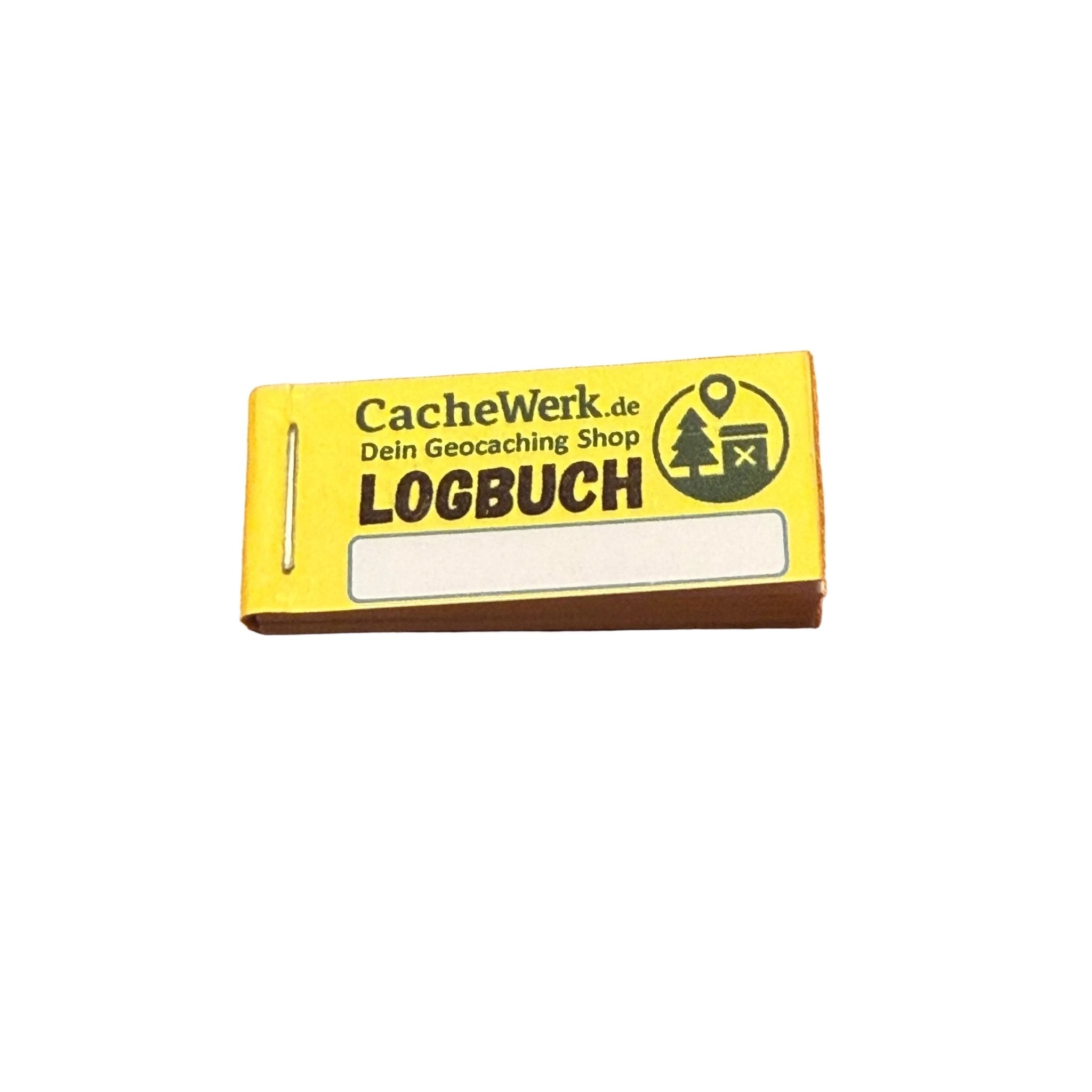
Cachewerk PETling Logbook: Specifically tailored for PETling containers, with precise dimensions. This saves fumbling during insertion and prevents the logbook from creasing or rolling up inside the container. For owners who operate many PETling caches, this is the cleanest solution.
Logwerk Replacement Logbook for PETling Containers: Waterproof and designed for durability. This model is particularly suitable for locations with high moisture exposure, such as near the ground or under foliage. Owners who cannot maintain their cache frequently will benefit most from its extended lifespan.
| Product | Application Size | Water Protection | Material | Space Required | Replacement Effort |
|---|---|---|---|---|---|
| Micro Logbook | Micro/PETling | Weatherproof | Waterproof Paper | Very low | Low |
| PETling Logbook | PETling | Weatherproof | Waterproof Paper | Perfect fit | Low |
| Logwerk Replacement Logbook | PETling | Waterproof | Durable Material | Compact | Very low |
Pro Tip: The combination of a PETG PETling container and the Logwerk Replacement Logbook is particularly durable. PETG does not deform in frost, and the waterproof logbook can even withstand short floods. For locations with a high risk of moisture, this is the most reliable combination.
Key Takeaways
A well-maintained cache logbook and a sealed container are the foundation for long-lasting geocaching fun: Regular checking, replacement, and documentation protect finds, strengthen the community, and prevent forced archiving.
| Topic | Details |
|---|---|
| On-site Checklist | Check five points: location, container, watertightness, logbook, camouflage. |
| Choose Logbook Format | Log strip for Micro/PETling, mini notebook for Small, spiral-bound for Regular. |
| Secure Old Entries | Photograph all pages before replacement to avoid losing finds. |
| Platform Documentation | Maintenance log with date, actions, and photo; clear maintenance flag afterward. |
| Cachewerk Products | Micro Logbook, PETling Logbook, and Logwerk Replacement Logbook fit perfectly and last long. |
Why regular maintenance is more than just fulfilling an obligation
When you create a cache, you make a promise to the community. Not explicitly, but truly. Every finder who sets out trusts that the cache is there, the logbook is dry, and the container is sealed. If that's not the case, it's not a minor annoyance, but a real motivation killer.
What sometimes bothers me about the maintenance discussion in the community is that many owners treat it as a tedious duty they want to perform as rarely as possible. Yet, a well-maintained cache is a sign of respect for everyone who seeks it. A fresh logbook, a sealed lid, stable camouflage: That costs an hour a year and makes the difference between a cache that lasts ten years and one that gets archived after two seasons.
My advice: Plan maintenance visits actively, not reactively. If you wait until three DNF logs and a maintenance flag appear, you've already waited too long. Two visits per year, combined with a good replacement kit, are perfectly sufficient for most caches.
Your maintenance kit directly from Cachewerk
Cachewerk offers suitable replacement logbooks for every cache size: weatherproof, durable, and specially developed for PETling containers. Instead of stuffing generic notebooks into damp containers, you'll use products specifically designed for this purpose.
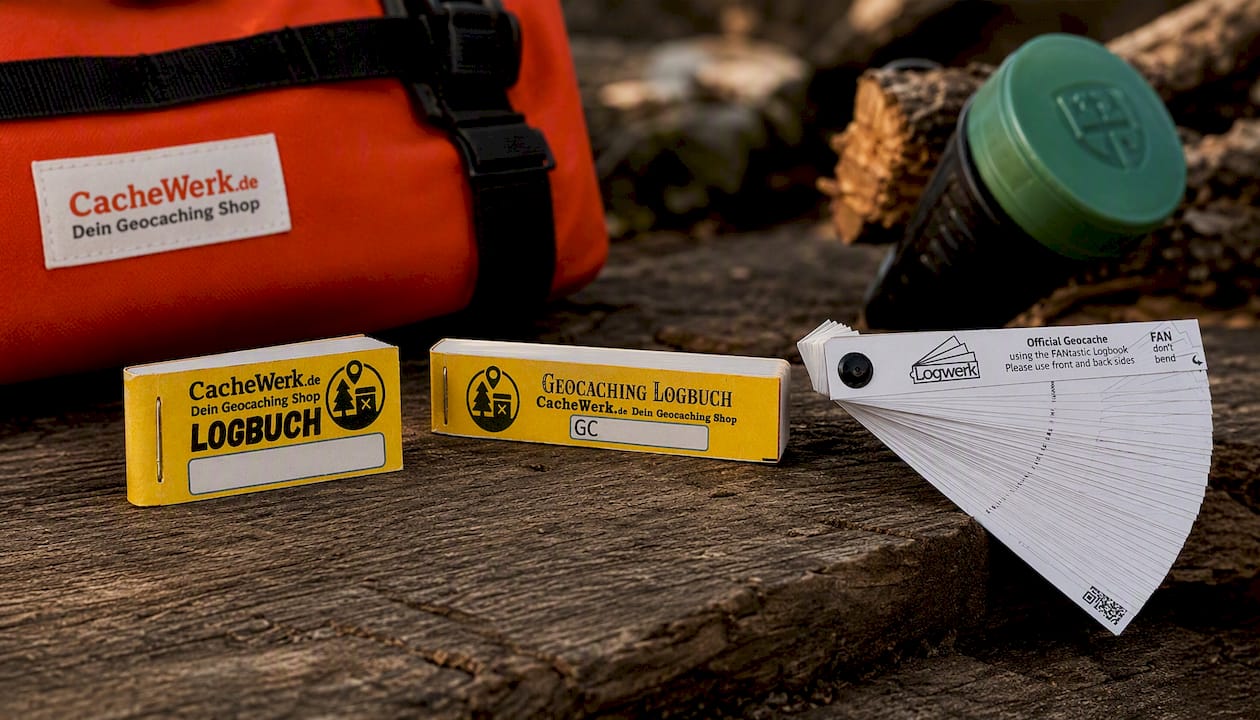
The Cachewerk micro logbook fits into any standard PETling and withstands adverse conditions. The PETling logbook fits perfectly without creasing or rolling up. And the Logwerk replacement logbook is the first choice for locations with high humidity. You can find all three products directly in the Cachewerk shop, along with other accessories for cache owners. Put together a small maintenance kit and you'll be ready for the next visit immediately.
Useful Sources and Further Links
The following resources will help you look up, print, and delve deeper:
- Cache Maintenance – Opencaching-Wiki: Official community documentation on reasons for maintenance and immediate measures. Serves as a reference for Opencaching platform conventions.
- Logbook – CacheWiki: Explains formats, protective measures, and logging requirements. Useful for beginners and as a reference.
- Printable Templates – Opencaching-Wiki: Print-ready PDF and ODT templates for Micro, Small, and PETling. Community-driven and regularly updated.
- gclogbuch.de: Largest German-language collection of logbook templates for Nano, Micro, PETling, and Small. Practical for quick replacements.
- Simple Steps for Cache Maintenance – Geocaching Blog: Official four-step routine from geocaching.com. Serves as the platform standard for owners.
- Tips and Tricks: How do I log what? – Opencaching Blog: Explains all log types and maintenance flags on Opencaching. Essential reading for owners who want to maintain their listings correctly.
- Cache Maintenance/Logbook Exchange – Geoclub Forum: Community discussion on third-party maintenance. Shows how experienced geocachers handle tricky situations.
| Resource | Type | Particularly useful for |
|---|---|---|
| Opencaching-Wiki Cache Maintenance | Official Platform Info | Maintenance reasons, immediate measures |
| CacheWiki Logbook | Community Wiki | Formats, protection, logging requirements |
| Opencaching-Wiki Templates | Template Collection | Print-ready replacement logbooks |
| gclogbuch.de | Template Collection | Large selection, all sizes |
| Geocaching Blog Maintenance | Official Platform Info | Step-by-step routine |
| Opencaching Blog Log Types | Official Platform Info | Correct use of maintenance flags |
| Geoclub Forum | Community Discussion | Third-party maintenance, etiquette |