
Function of Secret Hiding Places: Camouflage and Protection
The function of hidden compartments is to integrate objects into their surroundings in such a way that they remain invisible and inaccessible to third parties. This principle applies both to classic burglary protection and to geocaching, where a well-camouflaged cache makes the difference between an exciting treasure hunt and a quickly revealed secret. Those who understand the mechanisms behind effective hiding places build better caches, choose smarter locations, and create experiences that keep finders engaged for a long time. This article explains the core principles of camouflage, highlights typical mistakes, and provides concrete building instructions for geocachers.
How does a hidden compartment extend search time and increase protection?
The primary function of hidden compartments is to extend search time. The longer someone has to search, the more likely they are to give up. Standard hiding places are often discovered in less than 15 seconds, while the average search time for a burglar is less than 10 minutes. This means that designing your hiding place so that the search takes even a few minutes longer significantly increases protection.
The same principle applies to geocachers in reverse. A cache that keeps finders busy for several minutes or even hours is a good hiding place. The search time depends on three factors: the camouflage of the container, its placement in the terrain, and psychological distraction by the surroundings.
Hiding places that require heavy furniture or structural alterations significantly increase search time. Professional burglars usually give up if quick access is not possible. This knowledge can be directly applied to geocaching: a cache that is not immediately recognizable as such protects itself.
The following factors demonstrably extend search time:
- Unexpected placement: A cache at eye level is found faster than one on the ground or two meters high.
- Camouflage color and texture: Containers that visually blend with the background are less often perceived as foreign objects.
- Lack of visual cues: No tape, no visible magnets, no fresh scratches on the surface.
- Psychological distraction: Several possible hiding spots nearby distribute the seeker's attention.
Pro Tip: Never place your cache directly at the most obvious point of a coordinate range. A tree with a branch fork at eye level is the first place everyone checks. Go three steps further.
Which classic mistakes in hidden compartments should be avoided?
Classic hiding places like mattresses, sock drawers, or food containers are among the most insecure options because they are instinctively searched first. Police experience confirms: those who use known hiding places lose their protection immediately. For geocachers, this means: a nano magnet under the nearest lamppost is no longer a challenge.
The most common mistakes can be divided into two categories. First, there are mistakes in choosing the location, and second, mistakes in designing the container.
| Common Mistake | Why it's problematic | Better Alternative |
|---|---|---|
| Lamppost nano | Too well known, checked first | Unusual surfaces, e.g., bark texture |
| Magnetic hide on metal fence | Visible magnet traces reveal the location | Integrated container without metal contact |
| Film canister under stone | Stones are systematically turned over | Container that looks like a stone |
| Plastic box in bushes | White or light colors stand out | Brown or green camouflage coating |
| Obvious coordinates | Leads directly to the hide without detours | Multi-stage cache with intermediate stops |
In addition to site selection, the visibility of incentives plays a crucial role. Conspicuous cache spots massively increase the probability of discovery by random passersby, so-called muggles. A hiding place that arouses curiosity is not a good hiding place.
Experienced geocachers and security experts agree: the best hiding places are those where no one would even think to look. This requires creativity and knowledge of other people's search habits.
What principles make hidden compartments particularly effective?
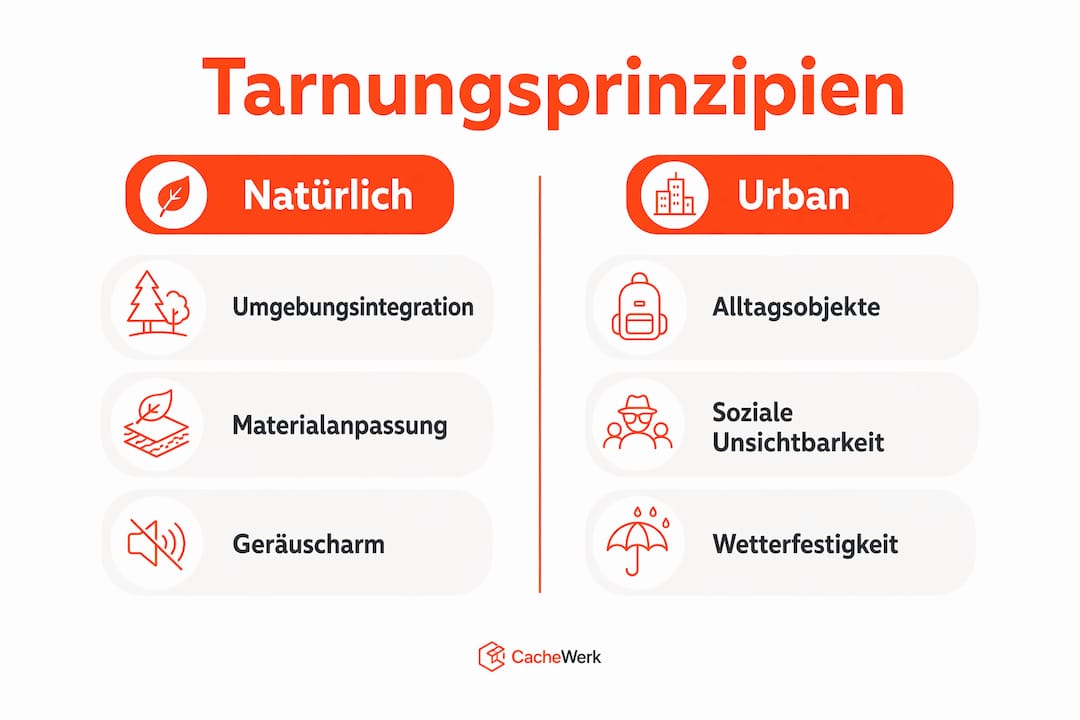
The most effective camouflage is achieved by integrating the hiding place into the surroundings so that it does not stand out as a foreign object. Custom-made solutions that are built into structural elements or urban infrastructure significantly improve the camouflage effect. This principle applies to safes behind picture frames as well as to geocaches designed as tree bark, stones, or street signs.
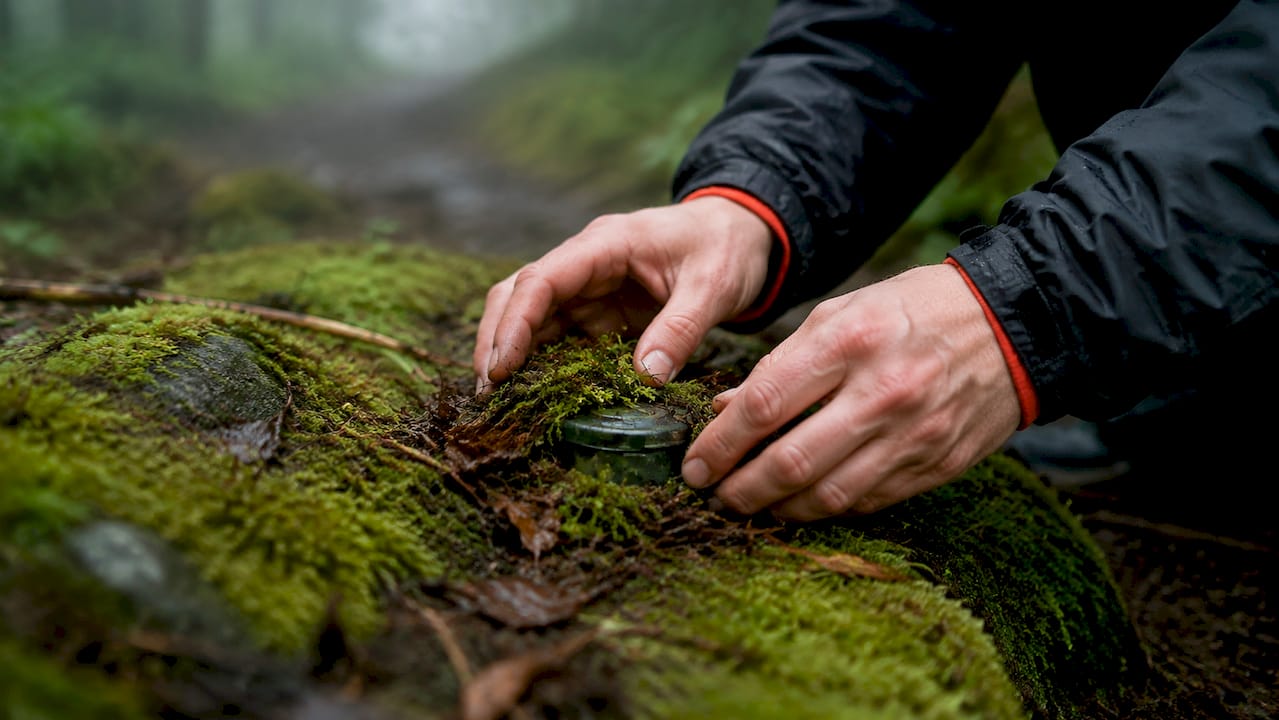
The psychology of camouflage is based on a simple mechanism: the human brain filters out objects it already knows and has classified as harmless. A dummy electrical outlet on the wall does not trigger a reaction because electrical outlets are part of everyday life. Dummy electrical outlets, ventilation grilles, or inconspicuous everyday objects are therefore particularly effective camouflage options.
For geocachers, concrete design principles can be derived from this:
- Environmental analysis first: Observe the planned hiding place closely. What objects naturally belong there? A branch, a stone, a manhole cover?
- Adapt material: Choose color, texture, and shape so that the container blends with the background. PETG printing allows very precise adjustments.
- Minimize size: Smaller objects are less noticeable. A nano cache in a tree bark texture is harder to find than a large box.
- Leave no trace: Fresh scratches, broken branches, or shifted stones reveal the hiding place. Place the cache so that the surroundings remain unchanged.
- Use double camouflage: A container that looks like a stone and is additionally placed under real stones combines two levels of camouflage.
Pro Tip: Urban camouflage works best when you use objects that are so common in the city that no one looks twice. Screws, bolts, cable ducts, and signs are classic examples.
The visibility of an object strongly influences the risk of discovery. Good hidden compartments are characterized by the fact that they are not recognizable to outsiders or are simply not perceived as a hiding place. This is the difference between a hidden object and a camouflaged object.
How do geocachers design creative and secure hiding places?
Geocaching hiding places particularly benefit from a combination of psychological camouflage and robust, weatherproof construction. Material selection and construction determine whether a cache lasts one year or ten years. Those who cut corners here risk waterlogged logbooks, damaged containers, and frustrated finders.
Outdoor Hiding Places: Materials and Construction
Clear requirements apply to outdoor use. The container must be waterproof, UV-resistant, and mechanically stable. PETG as a 3D printing material meets all three criteria and also allows for individual shapes that perfectly match the environment. Alternatively, metal ammo boxes are suitable for robust forest hiding places, or special geocaching containers with screw caps.
- Weather resistance: Sealing rings on closures prevent moisture from entering. Silicone sealant as a supplement extends the lifespan.
- Camouflage in the forest: Brown and green hues, bark textures from the 3D printer, or real moss as cladding.
- Attachment: Magnets for metal surfaces, cable ties for branches, ground sleeves for stable ground anchoring.
- Logbook protection: Waterproof foil bags or special logbook tubes protect the contents even with condensation.
Urban Hiding Places: Integration into the City Structure
Different rules apply in urban areas. Here, it's less about weather resistance and more about social camouflage. A cache in the city must look like it belongs there. Dummy screws, cable duct pieces, magnetic nanos behind street signs, or containers disguised as rivets are proven solutions.
| Hiding Place Type | Suitable Environment | Material | Difficulty Level |
|---|---|---|---|
| Tree Bark Cache | Forest, Park | PETG print, acrylic paint | Medium |
| Magnetic Nano | Street furniture, railings | Aluminum, neodymium magnet | Easy |
| Survey Mark | Paths, squares | PETG with ground sleeve | Medium |
| Ammo Box | Forest, terrain | Metal, rubber seal | Easy |
| Tree Fungus Cache | Forest, tree stumps | PETG, natural colors | Hard |
Historical hiding places like priest holes were successful due to permanent structural integration. This principle can also be applied to geocaching: a cache that appears firmly built into a structure not only withstands the weather but also curious glances much better.
The combination of security and accessibility for the cache owner is crucial. A hiding place that is so well camouflaged that you can't even find it yourself has failed its purpose. Mark the exact position internally and test access several times before publishing.
Key Takeaways
The function of hidden compartments is to make access difficult for unauthorized persons through camouflage, integration, and extended search time, while remaining accessible to the authorized person.
| Point | Details |
|---|---|
| Extend search time | Every additional minute of search time increases the chance that seekers will give up. |
| Avoid known locations | Mattresses, sock drawers, and lampposts are searched first. |
| Integrate into surroundings | Containers that look like natural objects remain undiscovered the longest. |
| Choose weatherproof materials | PETG, metal, and rubber seals ensure durability in outdoor use. |
| Use double camouflage | Combining two levels of camouflage significantly increases protection compared to simple solutions. |
Why good hiding places are more than just containers
I've hidden many caches and found even more over the years. And I'll tell you honestly: most bad hiding places don't fail due to technology, but due to a lack of perspective. The cache owner thinks from their own perspective, not from the seeker's perspective.
The interesting thing is that the principles from burglary research are directly applicable here. A burglar and a geocacher think similarly: both search systematically, both have limited time, and both give up if the hiding place requires too much effort. The only difference is the motivation.
What truly surprised me: the best caches I've ever found weren't technical masterpieces. They were simply perfectly integrated into their surroundings. A tree fungus that looked like all the other tree fungi. A screw that wasn't a screw. A stone that turned out to be hollow when touched. These moments are not created by expensive materials, but by careful observation of the surroundings.
My advice: spend ten minutes at the planned hiding place before you place the cache. See what naturally occurs there. Then recreate exactly that. The DIY instructions for geocachers help with this, but the decisive step is always on-site observation.
— Benedikt
Creative Geocaching Hiding Places from Cachewerk
Cachewerk offers a selection of professionally designed hiding places that implement exactly these principles.
The Mini Birdhouse Cache is weatherproof, inconspicuous, and fits perfectly in gardens and parks. The Ammo Box Trick Edition offers robust protection with integrated camouflage for forest use. Those looking for stable ground anchoring will find a 3D-printed PETG solution with a ground sleeve in the Survey Point Cache. All products are designed for long-lasting outdoor use and are ready for immediate deployment. No tinkering, no guesswork, just place and activate.
FAQ
What is the main function of a hidden compartment?
The main function of a hidden compartment is to conceal an object through camouflage and integration into the environment so that unauthorized persons cannot find it. This extends the search time, which increases the protection of the hidden item.
Which hiding places should be avoided in geocaching?
Lampposts, obvious piles of stones, and magnetic hiding places on fences are among the most frequently searched locations. They are checked first by experienced geocachers and seekers and offer little challenge.
What material is best for outdoor geocaches?
PETG as a 3D printing material is UV-resistant, waterproof, and mechanically stable, making it the best choice for durable outdoor hiding places. Metal ammo boxes with rubber seals are a robust alternative for difficult terrain.
How does urban camouflage differ from forest camouflage?
Urban camouflage uses everyday objects like screws, cable ducts, or street signs to make caches socially invisible. Forest camouflage relies on natural textures like bark, moss, and stones to visually integrate the container into the environment.
How long should a well-camouflaged cache remain undiscovered?
A well-designed cache should keep even experienced geocachers occupied for at least several minutes. Hides that are found in less than 30 seconds are considered too easy by the community and quickly lose their appeal.