
Geocaching Step-by-Step: Guide & DIY Tips
Are you excited about geocaching but don't know where to start? Many people feel that way. The first cache remains undiscovered, the app is confusing, and your own hide might run into legal pitfalls. This guide will walk you through everything, from registration to creating a DIY hide. We'll explain the most important platforms, show you step-by-step how to find your first cache, and give you concrete tips for hiding caches in Germany. It's all practical, straightforward, and specifically for beginners and DIY enthusiasts in the German community.
Table of Contents
- What You Need for Geocaching
- Step-by-Step: Finding Your First Cache
- Hiding Safely: Rules and Tips for Germany
- Creative DIY Hides and Cache Types
- Our Experience: What Really Matters for DIY Hides
- High-Quality Hides and Accessories: Discover Them Now at CacheWerk
- Frequently Asked Questions
Key Takeaways
| Point | Details |
|---|---|
| Starter Kits and Platforms | You only need a free registration and a smartphone to get started. |
| Legality and Environment | Stay on legal ground, avoid nature reserves, and obtain permits. |
| Practical DIY Tips | Creative containers and fair puzzles increase the fun and maintainability of your caches. |
| Community Advantages | With opencaching.de, you as a German geocacher are particularly flexible and without premium hurdles. |
| Recommended Apps | The official app and c:geo significantly facilitate searching and navigation. |
What You Need for Geocaching
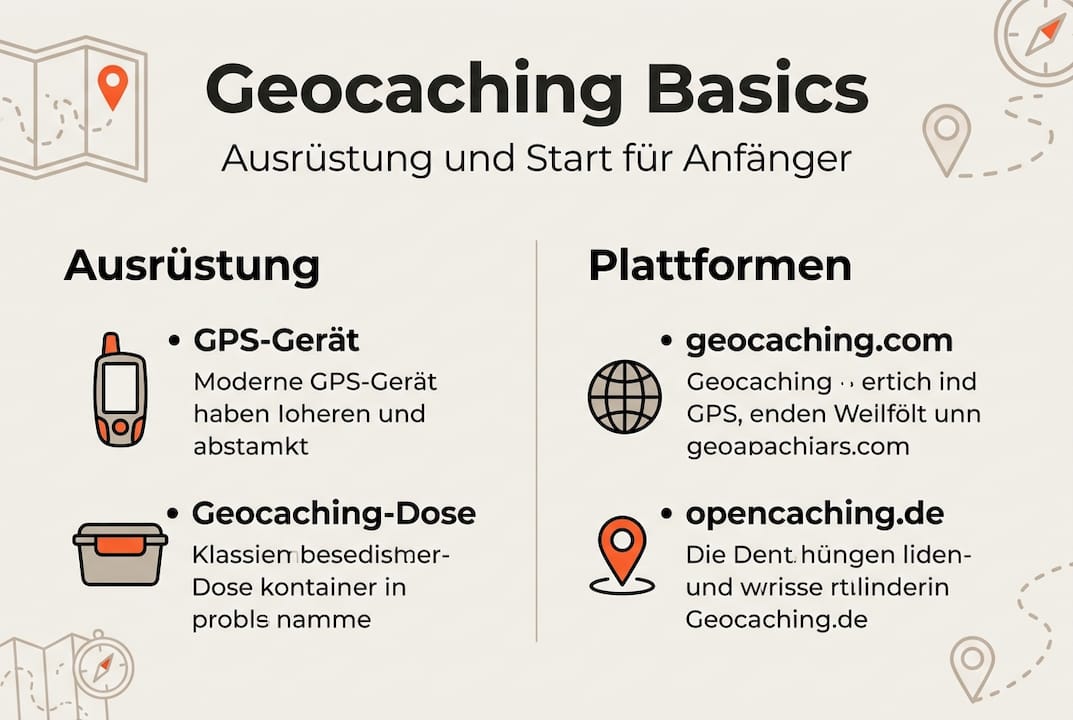
Before you start, you need the right tools. The good news: getting started costs almost nothing. The most important things are a smartphone or a GPS device, as well as an account on one of the major platforms.
The two best-known platforms in Germany are geocaching.com and opencaching.de. Both offer free registration and access to thousands of caches. The difference: geocaching.com has the largest worldwide network, but locks many caches behind a paid premium account. opencaching.de is completely free and without premium hurdles, making it the ideal starting point for beginners in Germany.
For navigation on a smartphone, the community recommends the official Geocaching app and c:geo (Android), which is free and works offline. Those who prefer a dedicated GPS device opt for Garmin models, which function reliably even without a mobile network.
Popular containers for getting started:
- Lunchbox (robust, weatherproof, easy to camouflage)
- PETling (small plastic tube, ideal for urban hides)
- Film canister (classic, fits anywhere)
- Nano-Cache (tiny, for experienced geocachers)
| Platform | Cost | Special Feature |
|---|---|---|
| geocaching.com | Basic free | Largest network worldwide |
| opencaching.de | Completely free | Ideal for DE beginners |
| c:geo App | Free | Offline-capable, Android |
The basics of geocaching are quickly learned: create an account, install the app, call up the first coordinates. You really don't need more than that to start.
Pro Tip: Start with opencaching.de if you don't want to pay premium fees. You'll find enough caches there for the first few weeks and learn all the basic principles without restrictions.
Step-by-Step: Finding Your First Cache
After the basics and materials are sorted, it's time for the actual search. Here's the complete sequence for your first successful find.
- Create an account on geocaching.com or opencaching.de
- Download the app (c:geo or official app)
- Select a cache: Filter for D1/T1 (lowest difficulty)
- Start navigation: Enter GPS coordinates into the app
- Search: Look for the container within 10 meters of the coordinates
- Sign the logbook: Always with date and nickname
- Log online: Record the find on the platform
- Trade (optional): Take an item, leave an item of equal value
The D/T scale is your best friend here. D stands for Difficulty (of the puzzle), T for Terrain (of the location). Both values range from 1 to 5. For beginner caches with D1 to D2, you don't need special knowledge or climbing equipment.
| D/T Value | Meaning | Recommendation |
|---|---|---|
| 1 | Very easy / flat terrain | Perfect for beginners |
| 2 | Easy / light terrain | Good second step |
| 3 | Medium / challenging | After 10 finds |
| 4 to 5 | Difficult / special equipment | Experienced geocachers |
Important: When trading, the golden rule applies: take something out, put something of equal value in. No trash, no food, nothing dangerous.
A complete geocaching guide can also be found online if you want to dive deeper. For creative ideas when searching, it's also worth looking at creative hides that other geocachers have already implemented.
Pro Tip: For your first caches, choose locations that are publicly and easily accessible. Parks, pedestrian zones, and well-known landmarks are ideal. This way, you avoid uncertainty during the search.
Hiding Safely: Rules and Tips for Germany
After finding a cache, it's time to hide your own, but strict rules apply here. Germany has clear guidelines that you absolutely must know.
The most important basic rule: Caches must not be hidden in nature reserves or breeding grounds, and trees must not be damaged in the process. If you want to hide on private land or in a forest, you need written permission from the owner. Illegal hides can lead to fines and harm the reputation of the entire community.
Germany is one of the most active geocaching countries worldwide. With over 432,000 active caches in Germany, the network is dense, which means good spots are sought after but also well monitored.
DOs and DON'Ts when hiding:
- DO: Obtain permission from forestry and private landowners
- DO: Use weatherproof containers
- DO: Regularly maintain the cache and check for damage
- DO: Include a clear logbook and pen
- DON'T: Attach nails or ropes to trees
- DON'T: Hide in nature reserves or water protection areas
- DON'T: Place hides in locations that could alarm muggles (non-geocachers)
- DON'T: Create a cache without a maintenance plan
Note: The path obligation also applies to geocaching. You must stay on marked paths when hiding or searching for a cache.
For more inspiration on legal and creative solutions, we recommend taking a look at ideas for safe hiding that have proven successful in the German community.
Creative DIY Hides and Cache Types
Once you've mastered the basics, you can get creative and design your own innovative hides. The variety of cache types makes this possible.
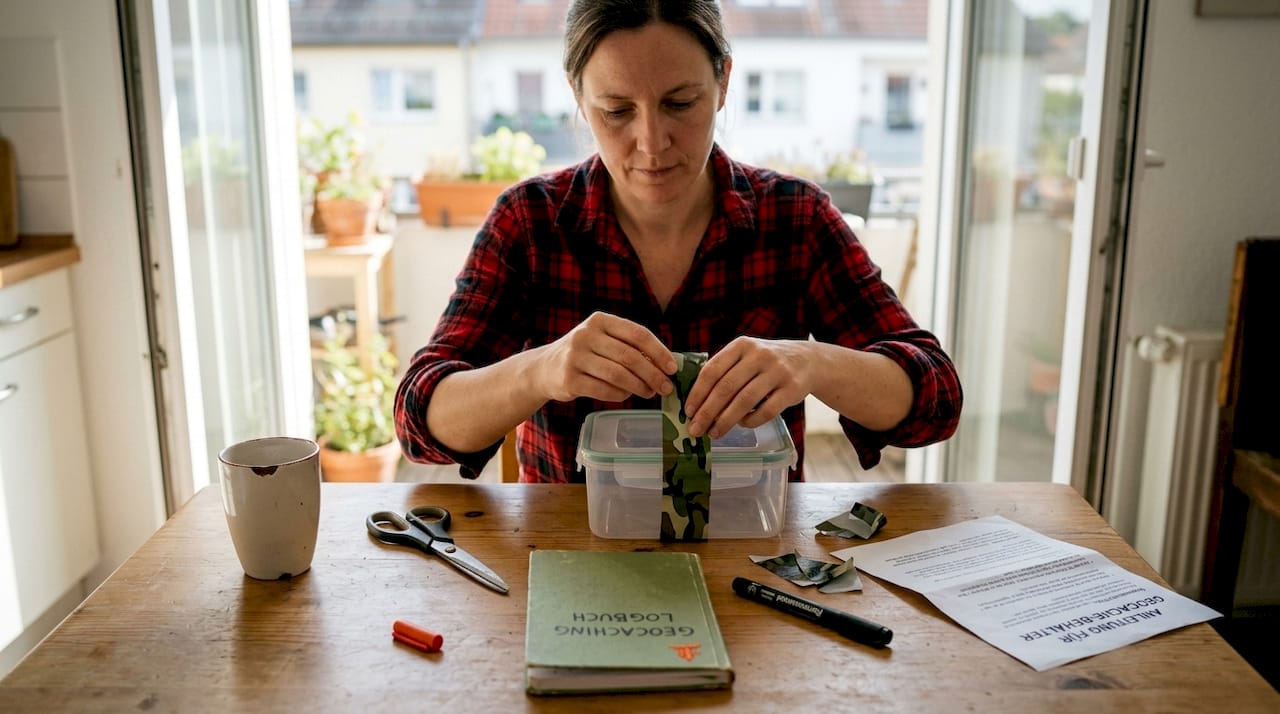
The three most common types are Traditional, Multi, and Mystery. A Traditional Cache has a single coordinate where the container is located. A Multi-Cache with 3 to 5 stages leads step-by-step to the goal, with each stage providing a clue for the next. Mystery Caches require solving a puzzle before receiving the actual coordinates.
Creative camouflage ideas for DIY enthusiasts:
- Magnetic PETling: Small tube with a magnet, adheres invisibly to metal posts or signs
- Fake information sign: Deceptively real sign with a hidden compartment behind it
- Root camouflage: Container in tree bark optics, hardly distinguishable from a real root
- Screw Nano: Looks like a normal screw, contains a tiny logbook
- Stone Cache: Hollow artificial stone, perfect for natural environments
A practical example: a film canister under a street sign, secured with a small magnet, is easy for beginners to implement and difficult to discover. For containers and DIY ideas, there are many proven templates in the community.
For Mystery Caches, the puzzle must be fair and solvable without specialized knowledge. Fair puzzles with beta testing and a story connection are much better received in the community than frustrating brain teasers. Have your puzzle tested by someone who doesn't already know it.
Pro Tip: Always plan a checksum verification for Multi-Caches. This way, you can detect calculation errors before other geocachers are frustrated by empty coordinates. Fewer stages, but well-executed, is almost always better.
Our Experience: What Really Matters for DIY Hides
After many conversations with the German geocaching community, one thing is clear: the most elaborate hides are rarely the most popular. What really counts is ease of maintenance. A cache that you can maintain twice a year without much effort will be rated better in the long run than a technical masterpiece that breaks down after three months.
The community prefers easy-to-maintain puzzles over frustrating, unfair variations. This specifically means: simple mechanisms, clear clues, and a logbook that can be written in even in the rain.
Many DIY ideas fail because they are too complex or too difficult to control. A hide with moving parts sounds great, but rain, frost, and curious hands quickly take their toll. For practical DIY hides: Test your concept in bad weather before you publish it.
Our advice for starters: Begin with a simple Traditional Cache in a good location. Learn how the community reacts, and only increase complexity when you know what works.
High-Quality Hides and Accessories: Discover Them Now at CacheWerk
For those who want to professionalize their DIY ideas, CacheWerk offers suitable solutions. From clever camouflages to robust accessories, everything is specially developed for geocachers.
A highlight is the fake road sign hide, which looks deceptively real and is perfect for urban locations. If you want to upgrade your entire setup, you'll find everything at a glance in the Equipment & Accessories collection. All products at CacheWerk are designed for durability and easy maintenance, exactly what the community really needs. Stop by and get inspired!
Frequently Asked Questions
Do I need a premium account for geocaching?
No, you can use all basic functions with free basic accounts at geocaching.com and opencaching.de without paying anything.
How do I find legally suitable cache hides in Germany?
Caches must not be hidden in nature reserves, on private property without permission, or by damaging trees. DE-specific rules also include the path obligation and the protection of natural areas.
Which apps are particularly suitable for geocaching?
The official Geocaching app and c:geo for Android are recommended by the community, as c:geo is free and works offline.
What is the D/T scale in geocaching?
D/T stands for Difficulty and Terrain and rates the difficulty and terrain of a cache on a scale of 1 to 5, where 1 means very easy and 5 means very challenging.
Which DIY containers are suitable for beginners?
Lunchboxes, PETlings, and film canisters are ideal as starter caches because they are easy to camouflage, inexpensive, and simple to maintain.