Geocaching Magnet Containers Explained: Types, Magnets, and DIY

Geocaching magnetic containers are waterproof, magnetically adhesive cache containers that can be attached to metal surfaces and are particularly suitable for hidden, hard-to-reach places. In geocaching, they are also known as magnetic micros or nano-caches. Typical examples include the PETling with a magnetic holder, the classic nano-cache, and the screw hide with a built-in magnet. They work using neodymium magnets, which are directly attached to the container and adhere to metal supports such as signs, railings, or lampposts. If you want to know what geocaching magnetic containers are and how to build them, you'll find all the important information here.
What types of geocaching magnetic containers are there?
Magnetic cache containers come in many different sizes and designs. The choice of the right type depends on the planned hide and the desired maintenance frequency.
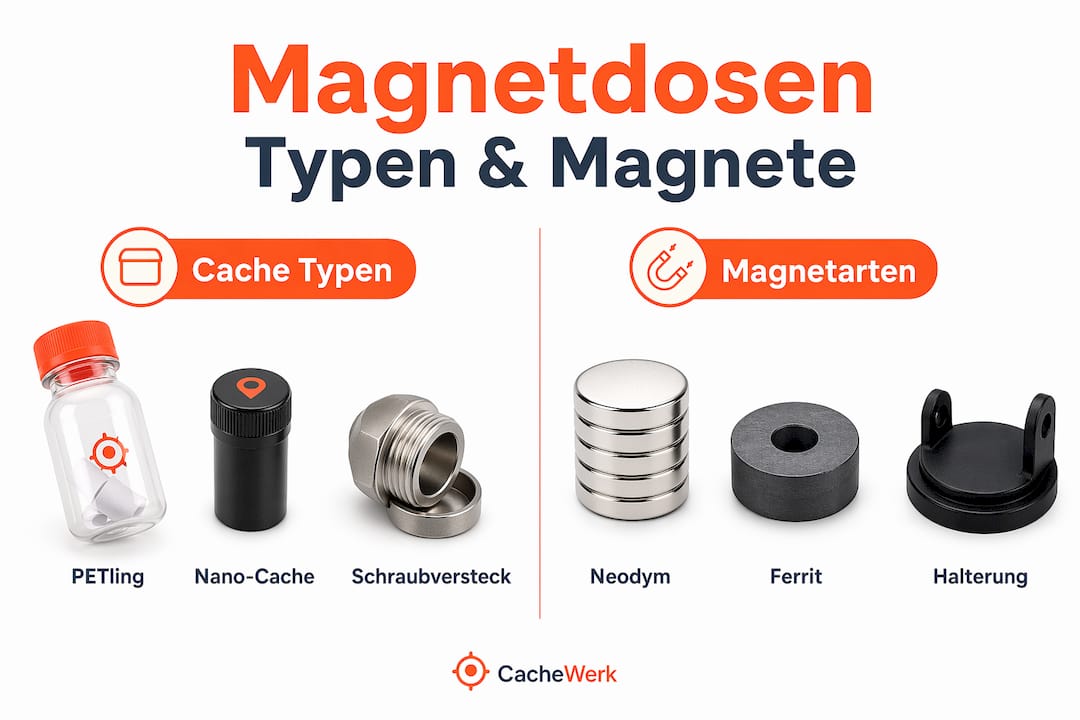
The PETling is a cylindrical plastic container with a screw cap. It holds a complete logbook and can be easily camouflaged. With a glued or screwed-on magnetic holder, it becomes a fully-fledged magnetic container. Cachewerk's magnetic holder for PETlings is a ready-made example, available in camouflage and signal colors.
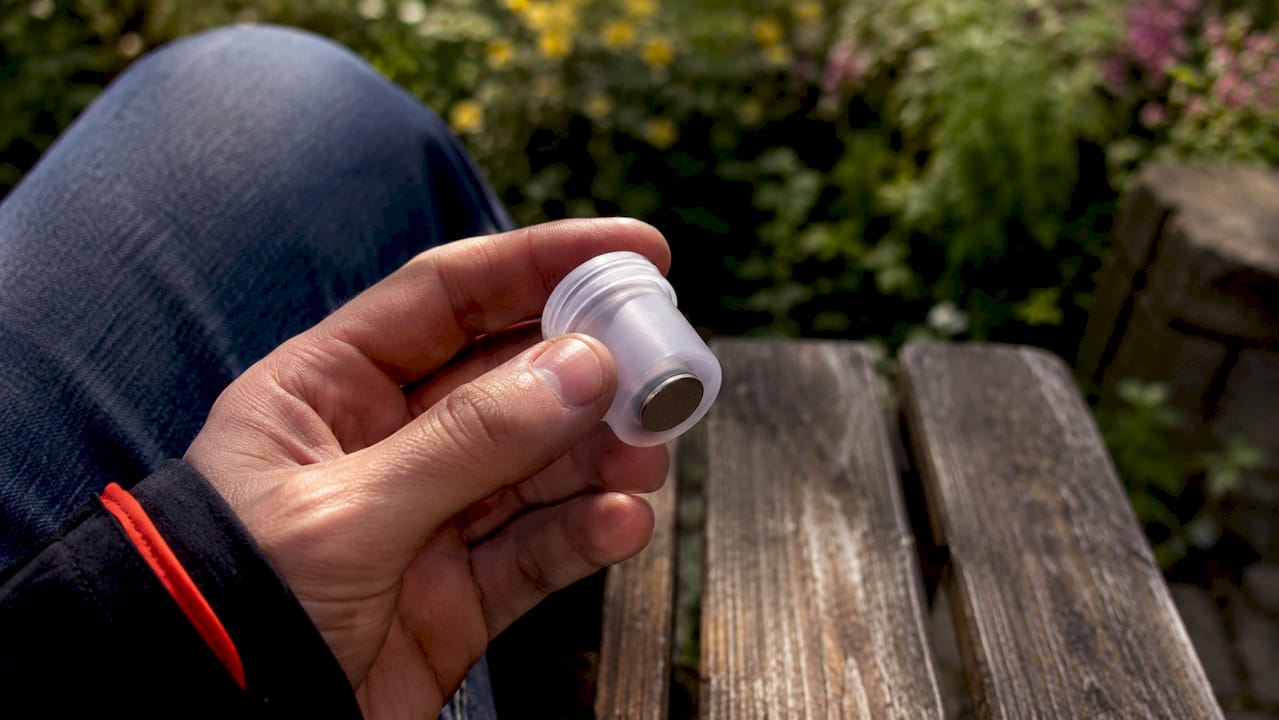
The nano-cache is significantly smaller, often only a few centimeters long. It fits in places where a PETling simply wouldn't: under benches, behind signs, or on railings. The price is around 4.50 Euros, including logbooks. However, the logbook is very small and needs to be changed frequently.
The screw hide combines a screw as a camouflage object with a built-in secret compartment and magnet. It looks like an ordinary screw and is barely noticeable even to attentive passers-by. Cachewerk offers the screw hide with magnet as a two-pack.
The cap nut as a cache container follows the same principle. It is made of stainless steel, waterproof, and looks like a normal fastener. Cachewerk's cap nut cache is specifically designed for urban use.
| Type | Size | Logbook capacity | Typical hide |
|---|---|---|---|
| PETling with magnet | medium (approx. 10–15 cm) | complete logbook | Lampposts, railings |
| Nano-cache | very small (approx. 2–3 cm) | approx. 39 entries | Signs, benches, fences |
| Screw hide | small (screw size) | mini log strip | Metal structures |
| Cap nut cache | small (nut size) | mini log strip | Railings, bridges |
Each type has its place. For high-traffic locations, a larger container is worthwhile because the logbook lasts longer and requires less frequent maintenance.
Which magnets are used for geocaching magnetic containers?
Neodymium magnets are the standard for magnetic geocaches. They offer high holding power in a small size and hold reliably even in damp conditions. Neodymium magnets with approx. 10 mm diameter and 5 mm thickness achieve a holding force of 1.6–2.4 kg. This is sufficient for most cache containers on vertical metal surfaces.
The price per magnet is about 0.35–0.50 Euros. This makes DIY affordable. For a PETling, two magnets are usually sufficient to ensure a secure hold even in damp conditions.
Pro Tip: Never use a single, very strong magnet if two medium-strength ones are sufficient. Too strong a magnetic force can make it difficult to remove the container and damage metal hides.
Important points for magnet selection:
- Size: 10 mm diameter and 5 mm thickness are proven for micros and PETlings.
- Quantity: Two magnets per container are common for stable hold.
- Holding force: 1.6–2.4 kg is sufficient for vertical metal surfaces.
- Weather resistance: Neodymium magnets tolerate rain and temperature fluctuations well, but should not be permanently submerged in water.
Ferrite magnets are cheaper, but significantly weaker. They are not a good choice for outdoor geocaches. Neodymium is clearly the better option here.
How to build a geocaching magnetic container yourself?
Building a magnetic container yourself is easier than many think. You don't need a workshop or expensive tools.
Materials:
- PETling or other container of your choice
- 2 neodymium magnets (approx. 10 mm diameter, 5 mm thickness)
- Patex Repair Extreme or comparable industrial adhesive
- Fabric tape as additional security
- Logbook strip and pencil
Step-by-step instructions:
- Prepare the surface: Thoroughly clean the adhesive area on the container with isopropanol. Grease and dirt will cause the adhesive to fail.
- Align the magnets: Hold the magnets in the desired position and check the alignment. Both magnets should face outwards with the same side so that they adhere to the metal surface.
- Apply adhesive: Apply Patex Repair Extreme to the adhesive area. Industrial adhesives like Patex Repair Extreme are significantly more durable for outdoor mounting than hot glue or household adhesives.
- Press on the magnets: Press the magnets firmly and hold them for at least 60 seconds. Allow the adhesive to fully cure before proceeding.
- Secure with tape: Wrap fabric tape over the magnets. Tape as additional security significantly improves durability in case the adhesive weakens over time.
- Insert logbook: Loosely roll up the log strip and place it in the container with a pencil. No ballpoint pen, as it won't write in damp conditions.
- Test run: Attach the container to a metal surface and check its hold. Shake it. If it holds, it's ready for use.
Pro Tip: A small screw on the lid of the PETling helps to pull the container out of tight hiding places more easily. A screw on the lid is particularly useful if the cache is deep inside a cavity.
If you want to camouflage the container additionally, you can paint it or cover it with moss or tape in the color of the background. Creative camouflages increase inconspicuousness and protect the cache from accidental finds by Muggles. More ideas can be found in the Cachewerk blog on creative hiding tips.
Where can geocaching magnetic containers be hidden?
Magnetic cache containers adhere to any metal surface. This opens up hiding possibilities that simply wouldn't work with a normal container.
Typical hiding spots in urban environments:
- Lampposts: The classic. The container sticks to the base of the post, often behind a sign or cover.
- Railings and bridges: Metal railings offer many surfaces. The container sticks to the underside and is not visible from above.
- Signs and traffic signs: A magnetic container adheres reliably to the back of metal signs.
- Benches with metal frames: Under the seat or at the foot of a metal bench.
- Electrical boxes and distribution boxes: Frequently used, but check beforehand if the hide is permitted.
Nano-caches are particularly popular in urban environments because they are very small and inconspicuous. However, they are less suitable for natural areas without metal surfaces. There, you either need a larger container or a different hiding concept.
If you are interested in special attachment ideas, you will find a dedicated DIY guide to cache attachments in the Cachewerk blog. And for all those who want to be well organized even during outdoor adventures, Sitpack offers useful camping organization tips for stress-free trips.
Nano-cache or larger magnetic container: Which is better?
Nano-caches are temptingly small and fit everywhere. But they have a real weakness: the logbook. Nano-caches have logbooks with only 39 fields. In a high-traffic location, the logbook will be full after a few weeks.
Then there's the handling. Rolling up the tiny log strip, putting it back in, and closing the lid is fiddly. Especially in the cold or with gloves, it becomes a real test of patience.
Advantages of nano-caches:
- Very small and inconspicuous
- Inexpensive to purchase
- Fit in places where nothing else fits
Disadvantages of nano-caches:
- Logbook holds little and needs to be changed frequently
- Logging is cumbersome
- Not suitable for locations without camouflage
Larger magnetic caches are easier to maintain and keep the logbook dry longer. Experts therefore recommend: If space allows, choose a PETling or a larger magnetic container. Proven standard containers like PETlings and screw-top containers require less work and last longer. The principle "bigger is better" almost always applies in geocaching when it comes to maintenance effort. Cachewerk explains more about how to improve the durability of your geocache in a dedicated practical guide.
Key Takeaways
Magnetic geocaching containers are versatile, but their longevity directly depends on the right magnet choice, suitable adhesive, and container size.
| Topic | Details |
|---|---|
| Magnet type | Neodymium magnets (10 mm, 5 mm thickness) offer 1.6–2.4 kg holding force and are the standard. |
| Adhesive | Patex Repair Extreme is significantly more durable for outdoor mounting than hot glue. |
| Container size | Larger containers like PETlings require less maintenance than nano-caches. |
| Hiding spots | Lampposts, railings, and metal signs are classic magnetic container hiding spots. |
| Security | Fabric tape over the magnets additionally extends durability. |
My experience with magnetic geocaching containers
Over the years, I've built many magnetic caches and found even more. And I'll tell you honestly: most problems arise not from bad ideas, but from bad glue.
Hot glue sounds practical. It's fast, cheap, and everyone has it at home. But outdoors, after a hot summer or a wet winter, it comes undone. The magnet falls off, the container ends up on the ground somewhere, and the cache is as good as lost. Patex Repair Extreme costs a little more, but it holds. There's no comparison.
What really surprised me: how much difference the number of magnets makes. Two magnets don't just hold twice as well as one. They distribute the load more evenly and reduce the leverage when someone pulls the container off. That's a small detail with a big effect.
As a seeker, I find nano-caches exciting. As a cache owner, they're a lot of work. The logbook is full after a few weeks, changing it is fiddly, and if moisture gets in, the paper quickly becomes illegible. I prefer to build a slightly larger container and save myself the frequent maintenance trips. If you really want to maintain your cache, you should check out the Cachewerk article on cache care and longevity. There's a lot of practical knowledge in there.
Being creative is fun. But a cache that breaks after three months brings no one joy. Good materials and a little planning are the difference between a cache that lasts for years and one that is abandoned after the first rainy season.
— Benedikt
Magnetic Caches from Cachewerk
If you don't feel like building your own or simply want a finished, reliable product, Cachewerk is the right place for you. The range includes ready-made magnetic hides for every application.
The magnetic PETling comes with a magnetic holder and is available in various colors. The screw hide with a magnet looks like a real screw and deceives even experienced geocachers. And the stainless steel cap nut cache is waterproof and built for permanent urban use. All products can be ordered directly from the Cachewerk shop and come with everything you need for immediate use.
FAQ
What exactly are geocaching magnetic containers?
Geocaching magnetic containers are waterproof cache containers with built-in or glued-on neodymium magnets. They adhere to metal surfaces and are used in geocaching as micro or nano-caches.
Which adhesive is suitable for magnet mounting?
Patex Repair Extreme is the recommended choice for outdoor mounting. Hot glue and household adhesives fail under weather conditions and are unsuitable for outdoor geocaches.
How many magnets do I need per cache container?
Two neodymium magnets per container are common. They distribute the load more evenly and ensure a stable hold even in damp conditions.
Where can I hide a geocaching magnetic container?
Lampposts, metal railings, benches with metal frames, and the back of traffic signs are classic hiding spots. The container must be able to adhere to a metal surface.
Are nano-caches recommended as magnetic containers?
Nano-caches are inconspicuous and inexpensive, but their logbook only holds about 39 entries. For highly visited locations, larger magnetic containers like PETlings are more low-maintenance and durable.