
Optimal role distribution in geocaching teams for 2026
Many geocaching teams underestimate the power of a well-thought-out role distribution. Studies show that clearly defined roles increase the success rate by up to 25% and significantly reduce search time. While many groups go geocaching spontaneously and without a fixed task assignment, they miss out on enormous potential. This article shows you how to optimally distribute roles within your team, adapt them to different terrains and difficulty levels, and maximize your efficiency through targeted training and clear communication. You'll learn which roles exist, when each combination makes sense, and how you as a team can take your collaboration to the next level.
Table of contents
- Basics of role distribution in geocaching
- Adjust role distribution to the terrain and difficulty types.
- Influence of team size and training on role distribution
- Communication and preparation for effective collaboration
- Geocaching equipment for teams at Cachewerk
- Frequently Asked Questions
Key findings
| Point | Details |
|---|---|
| Defined roles increase success | A clear division of tasks significantly reduces search time and increases the success rate. |
| Terrain influences role distribution | Mountainous terrain requires different roles than urban environments. |
| Team size determines structure | Teams of four have a 27% higher success rate than teams of two. |
| Training improves coordination | Regular joint training increases synchronized actions by 43%. |
| Communication prevents conflicts | Preliminary discussions and clear protocols lead to fewer misunderstandings. |
Fundamentals of role distribution in geocaching
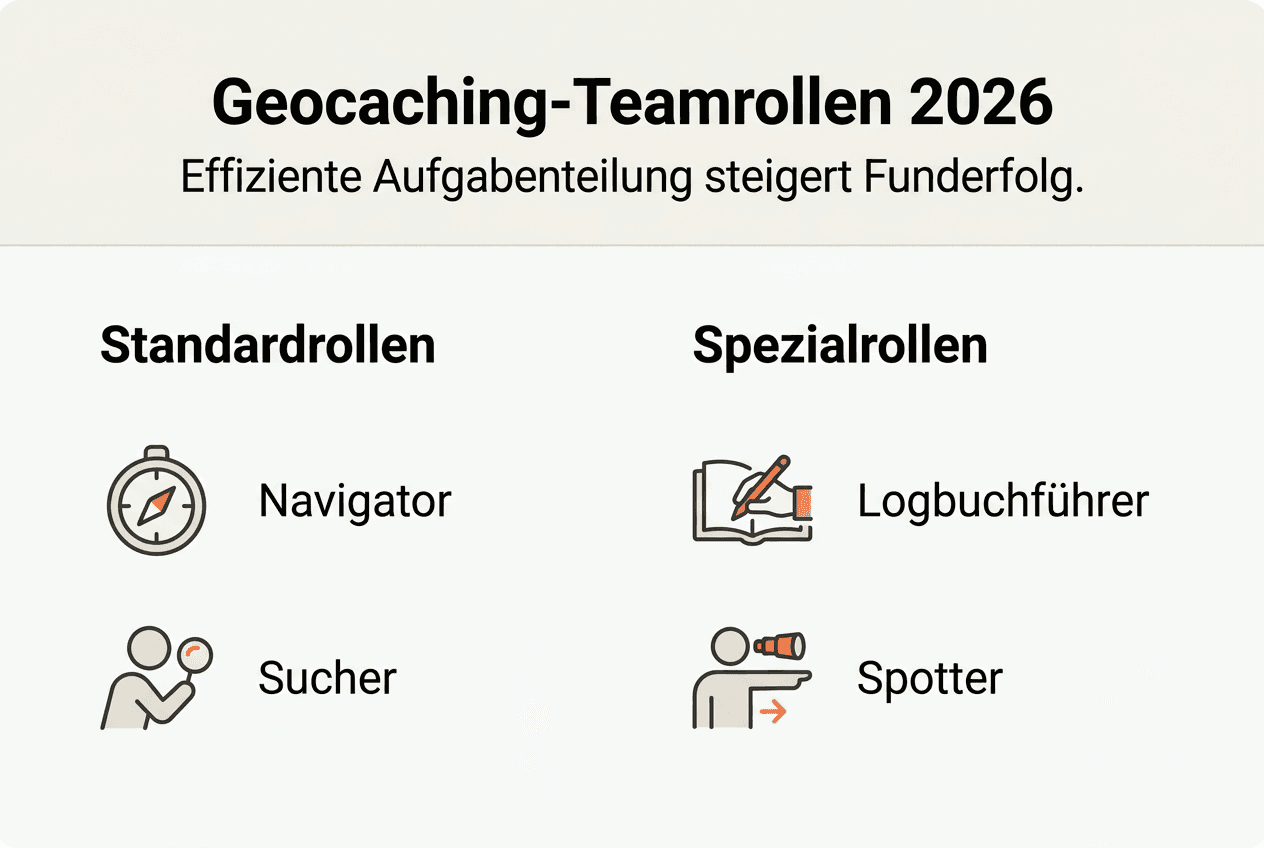
Effective role distribution in geocaching teams significantly improves cache discovery rates and reduces search times. But what exactly does role distribution mean? Essentially, it's about assigning each team member specific tasks that optimally utilize their strengths. A navigator takes care of GPS data and route finding, while a seeker actively searches for the cache. The log keeper documents finds and manages the logbook.
This division of labor creates structure and prevents chaos. Instead of everyone searching for the cache at the same time and getting in each other's way, everyone works on their own task with focus. This not only saves time but also increases motivation. Everyone knows what they are responsible for and can concentrate on it.
Typical roles include:
- Navigator: Guides the team to the destination, interprets GPS coordinates
- Seeker: Actively searches for the hiding place, investigates suspicious areas
- Log Keeper: Documents finds, maintains logbooks and trackables
- Spotter: Observes the surroundings, warns of Muggles (non-geocachers)
- Equipment Manager: Manages tools, flashlights, and spare parts
The impact on success is measurable. Teams with clearly defined roles find caches an average of 30% faster than unorganized groups. Furthermore, frustration decreases because everyone contributes and successes are celebrated together.
Pro tip: Rotate roles regularly so that each team member experiences different perspectives and develops their skills. This keeps the hunt exciting and prevents anyone from getting bored in their position.
Experts from the Geocaching Research Institute emphasize: “A collaborative environment where each member understands and respects their role creates the foundation for long-term geocaching success.” This statement underscores that it's not just about efficiency, but also about team dynamics and shared growth. If you'd like to learn more about difficulty ratings, our guide to geocaching difficulty and terrain rating will help.
Adapt role distribution to the terrain and difficulty types
The optimal distribution of roles varies depending on the terrain and the difficulty level of the geocache. An urban micro-cache requires different skills than an alpine multi-cache. In the city, discretion and quick orientation are crucial, while in the mountains, endurance and navigational skills are essential.
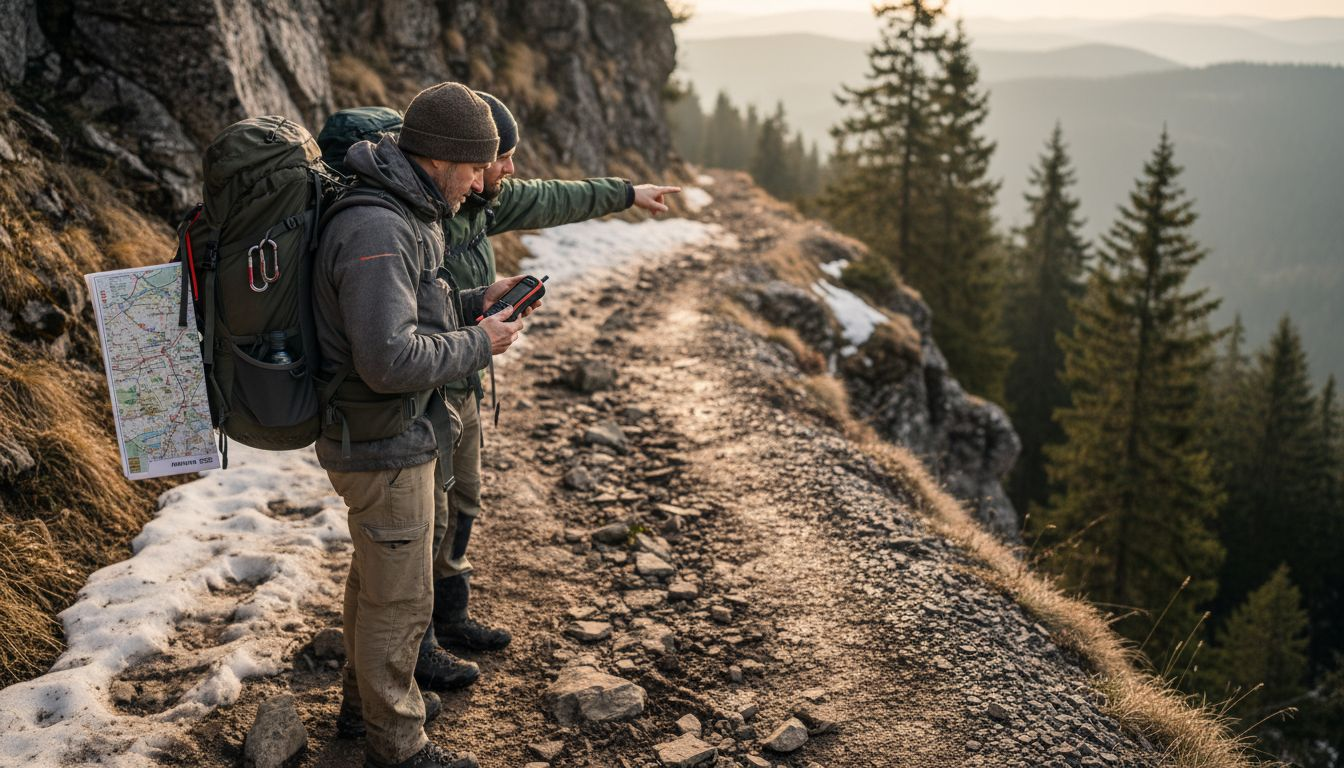
For mountainous terrain, an experienced navigator who can assess altitude and trail conditions is recommended. A spotter with binoculars helps identify potential hiding places from a distance. The equipment manager carries climbing gear or first-aid supplies. In flat, urban terrain, however, you need an inconspicuous seeker who can find hiding places without attracting attention. A spotter observes passersby and gives warning signals.
Difficulty levels also influence the distribution of roles. For a Difficulty 1 cache, basic roles are sufficient. From Difficulty 3 and above, you should introduce specialized roles, such as a puzzle solver for puzzle caches or a tech expert for electronic caches. The following table shows recommended role combinations:
| Terrain/Difficulty | Recommended roles | Special features |
|---|---|---|
| Urban/Low | Navigator, Seeker, Spotter | Focus on discretion and speed |
| Forest/Medium | Navigator, Seeker, Equipment Manager | Tools needed for dense undergrowth |
| Mountains/Highlands | Navigator, Spotter, Equipment Manager, Seeker | Safety equipment and experience required |
| Water/Medium | Navigator, Seeker, Equipment Manager | Waterproof equipment and buoyancy |
Pro tip: Before your geocaching adventure, study the difficulty and terrain rating of the target cache. This will allow you to assign roles precisely and leave unnecessary equipment at home.
Adapt your strategy dynamically. If you realize the terrain is more challenging than expected, switch roles spontaneously. Flexibility within the structure is key. A good navigator can become a seeker when needed, once the coordinates are reached. This adaptability makes the difference between success and frustration.
Also consider seasonal factors. In winter, you might need someone who can assess snow and ice conditions. In summer, an expert on insects and heat protection is invaluable. Terrain and difficulty are not static but change with the conditions.
Influence of team size and training on role distribution
The size of your team directly impacts role distribution and success. Teams of four achieve 27% higher success rates than teams of two. More members mean more specialized roles, but also greater coordination effort. A two-person team can only cover basic roles, such as navigator and seeker. With three or more people, a dedicated spotter or log keeper becomes worthwhile.
With five or more members, more complex structures emerge. You can form sub-teams that work in parallel. One team focuses on the search, the other on documentation and logistics. This division speeds up the process but requires excellent communication. Teams that are too large (over six people) often become inefficient because coordination takes too long.
Regular training is the second crucial factor. Teams with over three hours of weekly training show 43% higher accuracy in synchronized actions. Training doesn't just mean joint geocaching trips, but also exercises for specific scenarios. Simulate difficult situations, such as night searches or hiding caches at high altitudes.
Steps to improve role coordination:
- Define clear responsibilities for each role before the first joint hunt.
- Conduct monthly training sessions where you rotate roles.
- Analyzes after each hunt what went well and where there is room for improvement.
- Use simulations for extreme scenarios such as bad weather or technical failures
- Document your strategies and best practices in a shared team handbook.
Training dramatically reduces errors. Untrained teams make an average of three avoidable mistakes per hunt, such as incorrect coordinate input or overlooked clues. Trained teams halve this rate. Furthermore, reaction time in unexpected situations improves.
Pro tip: Conduct debriefings after every hunt. Discuss which roles worked well and where adjustments are needed. This reflection greatly accelerates team growth.
The combination of an optimal team size and regular training creates a highly efficient geocaching team. You'll not only find more caches, but also have more fun because everyone can contribute their strengths. Invest time in training, and success will follow.
Communication and preparation for effective collaboration
Clear communication is the foundation of successful teamwork in geocaching. Teams with established communication channels experience higher success rates and fewer conflicts. Without coordination, misunderstandings, duplicated work, and frustration arise. A pre-hunt briefing is therefore essential.
In this preliminary meeting, you will clarify the following points:
- Target cache and its difficulty level
- Role assignment based on terrain and team strengths
- Communication devices (radios, hand signals, messenger apps)
- Emergency plans for unforeseen situations
- Schedule and meeting points
A clear communication protocol prevents chaos. It defines who speaks when and how information is passed on. The navigator gives directions, the spotter reports hazards, and the seeker communicates suspected finds. Avoid having everyone speak at once, as this leads to confusion.
Real-time reporting during the hunt is crucial. If the seeker spots something suspicious, they immediately inform the team. The spotter promptly warns of approaching muggles. Quick, precise updates enable coordinated responses. Use short, clear instructions instead of lengthy explanations.
Conflict prevention begins with mutual respect. Every role is valuable, none more important than another. If someone makes a mistake, remain constructive. Criticism should be objective and solution-oriented, never personal. Discuss problems after the hunt, not during the hectic search.
Experts emphasize: “Teams that value and actively involve the input of every member develop stronger bonds and better strategies.” This culture of appreciation motivates everyone to give their best. No one feels overlooked or unimportant.
Pro tip: Use technology wisely. Apps like WhatsApp or dedicated geocaching tools make coordination easier. But don't rely solely on them; batteries can run out. Always have a plan B, such as hand signals or agreed-upon meeting points. For more advanced team communication strategies, we recommend Communication Strategies for Teams .
Regular feedback sessions strengthen communication in the long run. After each hunt, ask if everyone felt heard and if the information flow was effective. Adjust your protocol based on this feedback. Communication isn't a static system; it evolves with the team.
Through thoughtful preparation and open communication, you create an environment where everyone can reach their full potential. Conflicts become rare, successes frequent. Your team will not only be more efficient, but also more harmonious.
Geocaching equipment for teams at cachewerk
Now that you understand the principles of effective role distribution, you need the right equipment to put these strategies into practice. At CacheWerk, you'll find specialized geocaching equipment and accessories that optimally support every role in your team. From innovative hiding places to well-designed camouflage, we offer solutions for urban and alpine environments.
Our specialized geocaching hides allow you to create imaginative caches that will challenge and inspire your team. From 3D-printed PETG items to personalized trackables, CacheWerk equips your team with high-quality, durable gear. Every product is designed to make your geocaching adventures safer and more successful. Invest in quality that will take your role distribution and team dynamics to the next level.
Frequently Asked Questions
How many roles should a geocaching team ideally have?
The ideal number of roles depends on team size and cache complexity. A three-person team should at least cover a navigator, seeker, and spotter. Four- or five-person teams can also include a log keeper and equipment manager. For simple caches, two to three roles are sufficient, while four to five are advisable for difficult terrain or puzzle caches. It's crucial that each role is clearly defined and that multiple people don't perform the same task, as this leads to inefficiency.
How can you improve communication within a team during a geocaching hunt?
Establish a short pre-hunt briefing to define roles, objectives, and communication methods. Use clear, simple instructions instead of lengthy explanations. A communications leader can help consolidate information and avoid chaos. Two-way radios or messaging apps are suitable for longer distances. Practice communication protocols regularly in training so they become automatic in real-world situations.
Which role is most important in difficult terrain types?
In complex terrain, the navigator and spotter are indispensable. The navigator interprets GPS data and guides the team safely to the objective, especially in rugged terrain. The spotter identifies hazards and potential hiding places from a distance. In urban environments, the spotter's role becomes even more crucial, as they observe muggles and warn the team. No role is universally more important, but these two are critical in challenging conditions. You can find more information in our article on terrain-specific roles.
Should roles within the team be rotated regularly?
Yes, regular rotation fosters understanding and flexibility. When each member is familiar with different roles, the team can react spontaneously to unexpected situations. Rotation also prevents boredom and keeps motivation high. Plan a role swap every two to three hunts. For highly specialized roles like puzzle solvers, longer periods of consistency can be beneficial, but basic roles should rotate.
How do you prepare a new team member for their role?
Start with a detailed role description and explain why this task is important. Have the new member accompany an experienced person in the same role on their first few hunts. Give them specific tasks, but be patient with mistakes. After each hunt, discuss what went well and where there is room for improvement. Actively integrate the new member into training sessions so they quickly gain confidence. A mentoring system will significantly accelerate the onboarding process.