Create Outdoor Puzzles: Step-by-Step Guide
You can set up a secure, weatherproof outdoor puzzle with 5–8 stations in just a few hours. Typical playing time is 60–90 minutes, and preparation usually takes 1–3 hours. The result: an experience that excites groups of all ages.
Immediate Checklist for your Outdoor Puzzle:
- Determine theme and story (pirates, detective, nature detectives)
- Determine the number of stations (sweet spot: 5–8)
- Plan route and distances (approx. 10–100 m depending on terrain)
- Gather materials and pack them to be weatherproof
- Laminate clues or place them in waterproof containers
- Conduct a test run with a trusted person
- Allow a buffer of 20–30 minutes for setup and teardown
Key Takeaways
A successful outdoor puzzle results from clear planning, a strong theme, and weatherproof materials that are still legible even after the third rain shower.
| Topic | Details |
|---|---|
| Optimal number of stations | 5–8 stations are the sweet spot for a playing time of 60–90 minutes. |
| Story first | A clear motto (e.g., pirates, detective) simplifies puzzle choice and finale. |
| Weather resistance is a must | Laminated cards, PETling containers, or waterproof boxes reliably protect clues. |
| Don't skip the test run | A trial run reveals illegible clues, GPS errors, and time issues. |
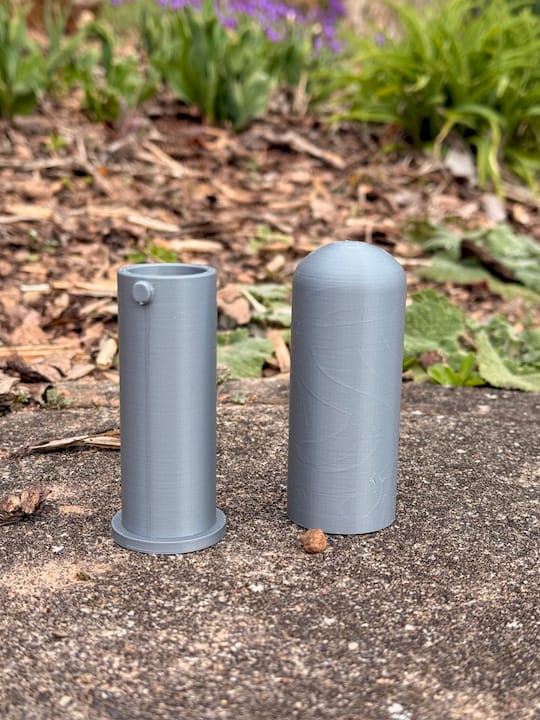
| Cachewerk for professional hiding spots | Blind Maze Tube and Fake Water Shield offer weatherproof, durable solutions for challenging stations. |
Useful Links and Tools
Here you will find all the tools and resources mentioned in the article at a glance:
- Actionbound – App and editor for digital outdoor games with level structure and time limits; free basic version available.
- QR-Code Rally Creator (Medien Durchblick) – Creates stations with QR codes, exports PDFs, and allows offline operation after pre-download.
- Puzzel – Online editor for interactive scavenger hunts with unlock codes, quiz questions, and timed control.
- Klickkiste DIY Scavenger Hunt – Practical time estimates and station recommendations for self-created outdoor puzzles.
- QR Codes in Caches: Practical Guide – Cachewerk guide on the use, printing, and offline use of QR codes in outdoor puzzles.
- Blind Maze Tube – Weatherproof labyrinth hideout from Cachewerk, ideal as a final station.
- Fake Water Shield – Urban camouflage hideout with post holder for city rallies and park operations.
Table of Contents
- Which format suits you and your group?
- How do you plan your route, stations, and schedule?
- How do you give your puzzle a common thread?
- Which types of puzzles work best outdoors?
- Which materials truly last outdoors?
- How do you use digital elements effectively?
- What do you check during the test run and on game day?
- What legal and safety aspects do you need to consider?
- Templates to copy and get started immediately
- Ready-made hiding spots from Cachewerk for your outdoor puzzle
- Sources
Which format suits you and your group?
Not every outdoor puzzle is the same. The format depends on who participates and where it is played.
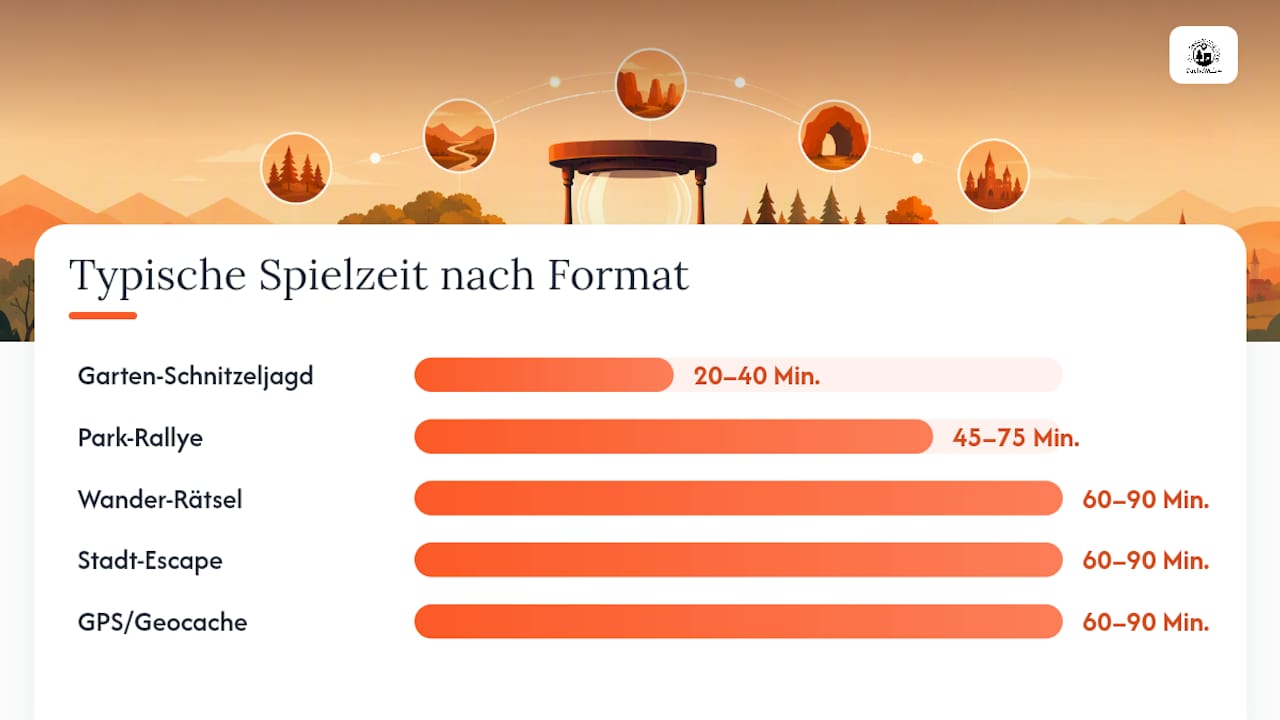
Garden scavenger hunt is suitable for children aged 4 and up. Short distances, simple picture clues, a small treasure at the end. Preparation: less than an hour. Playing time: 20–40 minutes.
Park rally works well for families and school classes. Stations at benches, trees, or information boards, combined with observation tasks. Ideal for 6- to 12-year-olds, playing time 45–75 minutes.
Hiking puzzle combines movement with puzzles along a hiking trail. Suitable for teenagers and adults who also want to be physically challenged. Stations can be further apart.
City Escape uses urban elements such as street signs, house numbers, or monuments as clue carriers. Particularly exciting for adult groups and team-building events.
GPS/Geocache variant relies on coordinates instead of visible markings. Here, digital components come into play: QR codes, app puzzles, or audio clues. Useful for larger areas, multiple teams, or if the group is tech-savvy.
| Format | Target Group | Playing Time | Digital Components |
|---|---|---|---|
| Garden scavenger hunt | Children 4–8 years | 20–40 Min. | Not necessary |
| Park rally | Families and school classes | medium duration | Optional |
| Hiking puzzle | Teenagers, adults | 60–90 minutes | Optional |
| City Escape | Adults, teams | 60–90 Min. | Recommended |
| GPS/Geocache | Tech-savvy, groups | 60–90 minutes | Yes |
How do you plan your route, stations, and schedule?
Good planning is the difference between a smooth game day and a chaotic afternoon. Here's the specific process.
Location selection and route length
Walk the route in advance. Check: Are there tripping hazards, unsecured embankments, or busy roads? Stations should be at least 5 m away from roads and bodies of water. Distances between stations of 10–100 m are sensible depending on the terrain and age group.
Stations and order
The sweet spot is 5–8 stations. Fewer feels too thin, more can overwhelm younger groups in particular. Arrange the stations in ascending order of difficulty: Station 1 should be easy to solve, Station 7 or 8 should be the challenging finale.
| Planning Step | Time Required | Note |
|---|---|---|
| Walk the route and mark stations | 30–60 Min. | Take photos of the hiding places |
| Create and print puzzles | 60–90 Min. | Don't forget to laminate |
| Conduct test run | about thirty to forty-five minutes | Alone or with one person |
| Setup on game day | about twenty to thirty minutes | Arrive early enough |
| Playing time | 60–90 Min. | Plan for buffer time |
| Teardown and cleanup | about fifteen to twenty minutes | Do not leave any materials behind |
Material list and weather resistance
Print all clues twice. Laminate everything that will be left outdoors. Pack spare material in a separate bag. Clips, magnets, or small weights prevent clues from blowing away.
Pro Tip: Mark materials for different teams with colors: Team Red gets red cards, Team Blue gets blue ones. This prevents mix-ups and allows multiple groups to play simultaneously.
How do you give your puzzle a common thread?
A clear theme makes planning much easier. Once the motto is established, tasks and the finale almost create themselves.
Popular themes: Pirates (treasure map, sailor's knots, coordinates), Detective (fingerprints, witness statements, suspect profile), Nature Detectives (animal tracks, identifying leaves, weather phenomena), Time Travel (historical facts from the area), Space (planet puzzles, Morse code as a radio signal).
The theme dictates which puzzle types are suitable. For pirates, a Caesar cipher for coordinates feels authentic. For nature detectives, collection tasks with real materials from the forest fit well.
Story Framework in Three Steps
- Initial Situation: Who needs help, what happened? (Example: "Pirate Captain Bluebeard has hidden his treasure, and only you can find it.")
- Tasks: Each station solves a part of the puzzle or provides a clue to the next station.
- Finale: The solution word, a combination from all stations, or a real small treasure.
Small theatrical elements greatly increase motivation. A costumed game master, a read-aloud message, or an envelope with a "secret mission" create genuine immersion. A clear common thread makes puzzles coherent and simplifies the creation of all tasks up to the finale.
Which types of puzzles work best outdoors?
Outdoor puzzles actively use the environment. Specific mechanics like Caesar ciphers for coordinates, audio clues via QR code, or collection tasks with natural materials are particularly effective outdoors.
Puzzle Categories at a Glance
- Observation/Location Questions: "How many steps does the staircase have?" or "What number is on the sign to the left of the entrance?"
- Codes and Ciphers: Caesar cipher, Morse code, number-letter substitution (A=1, B=2...)
- Puzzle/Part Assembly: Clue is cut into pieces hidden at different stations
- Movement Tasks: 10 steps north, then 5 east
- Nature Tasks: Find a leaf of a specific tree species, identify animal tracks
- QR/Audio Clues: QR code leads to a short video or voice message
Examples by Age Group
| Age Group | Puzzle Type | Specific Example |
|---|---|---|
| 3–5 years | Picture clues, colors | "Find the red thing next to the big tree" |
| 6–10 years | Observation, simple codes | "Count the windows and write down the number" |
| from 6 years | Caesar cipher, coordinates | Shift letters by 3 positions to get the solution word |
| Adults | Logic puzzles, QR audio | QR code plays a clue solvable only with environmental knowledge |
Progressive difficulty increases gameplay fun and reduces frustration. Station 1 should be immediately solvable by everyone. The finale can certainly be tricky.
Copy-ready Short Puzzles:
- "I have branches but no leaves in winter. I stand alone in the meadow. What am I?" (Answer: Tree)
- "Add the house numbers of the three red houses on this street. The result is your code."
- "Find the stone with the X. Your next clue is underneath."
Which materials truly last outdoors?
Unprotected paper becomes unreadable after the first drizzle. Weatherproof packaging is not a nice-to-have, but a must.
- Laminated cards: Simplest solution for clue sheets. Protects against rain, dew, and dirt. Laminators are available from approx. €20.
- PETling containers: Small, waterproof tubes ideal for rolled-up clues. Robust and reusable.
- Waterproof boxes: For larger clues or treasures. Click-lock prevents moisture from entering.
- Magnetic containers: Practical for urban environments, can be discreetly attached to metal posts or railings.
For camouflaging hiding spots, there are creative solutions: bark-look, stone imitations, or inconspicuous everyday objects that no one looks at twice.
Protection against wind and theft:
- Secure clues with clips or small weights
- Choose subtle camouflage: avoid flashy colors
- Do not place hiding spots directly on paths where passers-by might accidentally take them
Pro Tip: Place a note in each container with the inscription "Please do not remove - part of a game." This significantly reduces losses due to curious passers-by.
Working sustainably means: reusable containers instead of disposable plastic bags, no markings on trees or stones, and collecting all materials completely after the game.
How do you use digital elements effectively?
QR codes, GPS coordinates, and app puzzles can significantly enhance an outdoor game. But: technology always needs a fallback.
Actionbound recommends structuring games into sections and levels, starting with a short intro, and optionally using a timer in the finale to add pressure. This works well for team-building events and larger groups.
QR rally editors like the QR-Code Rally Creator allow you to create stations with QR codes, export them as PDFs, and operate them offline after pre-download. Puzzel also offers quiz questions, solution codes, custom styling, and timed task unlocking.
Tech Checklist for Game Day:
- Test the app or page in offline mode beforehand
- Ensure all devices are fully charged (bring a power bank)
- Check signal coverage at all stations
- Print QR codes in a sufficient size (at least 4 × 4 cm)
- Observe data protection: do not store personal data in QR codes
- Always have an analog backup version of the clues ready
Important when using GPS: Smartphone GPS is typically accurate only to about 3–10 meters. Hiding spots must account for this tolerance, otherwise frustration will increase. Plan a generous search area and always supplement GPS coordinates with a descriptive clue.
What do you check during the test run and on game day?
A test run before the actual event is indispensable. It reveals problems that are invisible during planning.
- Walk the entire route: Visit all stations in the planned order and note down times.
- Check hiding spots: Are all containers still in place? Are clues legible and dry?
- Test GPS tolerances: For GPS stations, check if the coordinates match the actual position.
- Solve puzzles: Work through each puzzle yourself. Is the solution unambiguous? Are there any ambiguities?
- Adjust time estimate: Multiply your own running time by a factor of 1.5 for groups with children.
- Provide backup material: Pack spare clues for each station.
Setup timeline on game day:
- 45 minutes before start: Arrival, set up and secure all stations
- 20 minutes before start: Own control round through all stations
- 10 minutes before start: Player briefing (rules, safety instructions, introduce theme)
- Start time: Send off teams, staggered starts if necessary
- During the game: Game master remains reachable, observes without interfering
- After the finale: Teardown, material check, leave nothing behind
Common problems and quick solutions: Wet clues? Replacement copies from the backup bag. Wrong answer at a station? A clear hint on the solution sheet helps. Team lost? Communicate meeting point and emergency number in advance.
Recommended roles: Game Master (knows all solutions, intervenes only in emergencies), First Aid (first aid kit on hand, knows nearest aid station), Logistics (backup material, time control).
What legal and safety aspects do you need to consider?
Germany has clear rules for events in public spaces. In short and concretely:
- Safety first: No hiding places in dangerous locations (embankments, tracks, construction sites). Maintain minimum distance from roads and bodies of water.
- Permits: No permit required for private gardens and own property. For public parks, squares, or forests, inquire with the responsible municipality, park department, or forestry office. Commercial events are subject to additional requirements.
- Nature conservation: No permanent installations (nails in trees, buried containers). No materials in protected areas or sensitive habitats. Collect all waste completely.
- Groups with children: Observe duty of supervision. Adjust ratio of supervisors to children depending on age and terrain.
- Marking: For larger groups in public spaces, visible marking (vest, sign) is recommended so that passers-by recognize the group as an organized event.
- Station No.: ___
- Location (Description): ___
- Riddle/Task: ___
- Solution/Code: ___
- Material in container: ___
- Container weatherproof: Yes / No
- All clues laminated or packed in containers
- Spare copies of all clues on hand
- Clamps/magnets/weights for wind protection
- First aid kit and emergency numbers
- Backup devices charged (for digital elements)
- Solution sheet for game master
- Briefly introduce theme and story (2–3 sentences)
- Explain rules: What can be touched, what cannot?
- Safety instructions: Meeting point, emergency number
- Give start signal
- Puzzle tour on your phone with My Outdoor Escape through Falkensee & Nauen
- DIY Scavenger Hunt Outdoor – Klickkiste
- Actionbound – How to create your own Escape Game!
- Puzzel
- Mapping the Earth with Radar Interferometry – Spektrum
Note: This information is for general guidance and does not replace legal advice. For specific permit questions, contact the competent local authority.
Templates to copy and get started immediately
Here are the most important templates that you can print and customize directly.
Station List (Template):
Material check before game day:
Player Briefing (Template):
Three example puzzle sets
Children (6–8 years): "Go to the largest tree in the park. Count its branches up to the first fork. The number is your code."
Family (9–12 years): "Find the information board at the entrance. The founding year of the park, if you calculate its digit sum, gives you your next station."
Adults: "The GPS coordinates of the next station can be obtained by solving the following Caesar cipher (shift: 3): NRRUGLQDWHQ."
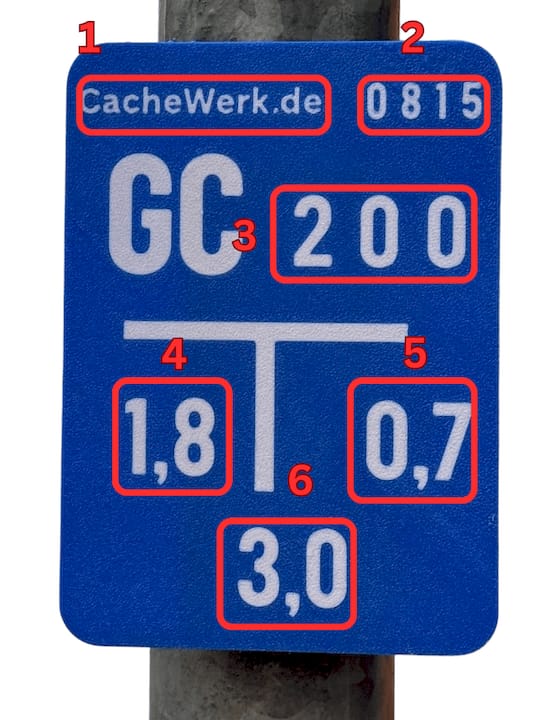
For weatherproof, professional hiding spots for the finale or individual stations, Cachewerk offers specialized solutions. The Blind Maze Tube is an ingenious labyrinth hiding spot that keeps contents secure and invisible. For urban scenarios, the Fake Water Shield is an deceptively real camouflage hiding spot that completely blends into the cityscape. Both products are made from robust PETG plastic and can withstand continuous outdoor use. More ideas for creative geocaching products can be found in the Cachewerk blog.
What I learned after the first test game
The first outdoor puzzle you create is almost always too long. Seven stations may sound like a small number, but with a group of eight people, a child tying their shoelaces, and an adult who insists on taking the wrong turn, 60 minutes quickly turns into an hour and a half.
The most important advice: Plan less than you think. Five really good puzzles beat eight mediocre ones every time. And the test run is not an optional step. It's the step that saves everything else. If you skip it, you'll find out on game day that Station 4 is in the shade and the QR code there doesn't scan, or that the solution to Puzzle 3 also applies to Puzzle 6.
Also, always plan for a buffer of at least 20 minutes. Not for problems, but for the moments that make the game truly great: when someone suddenly finds a creative solution you hadn't anticipated, or when the group spontaneously starts exploring the surroundings.
After the first round, you'll know exactly what you'll do differently next time. That's not a mistake; that's the process.
Ready-made hiding spots from Cachewerk for your outdoor puzzle
Building it yourself is fun, but sometimes you need a hiding spot that looks professional, is truly waterproof, and still works after 50 rounds of play.
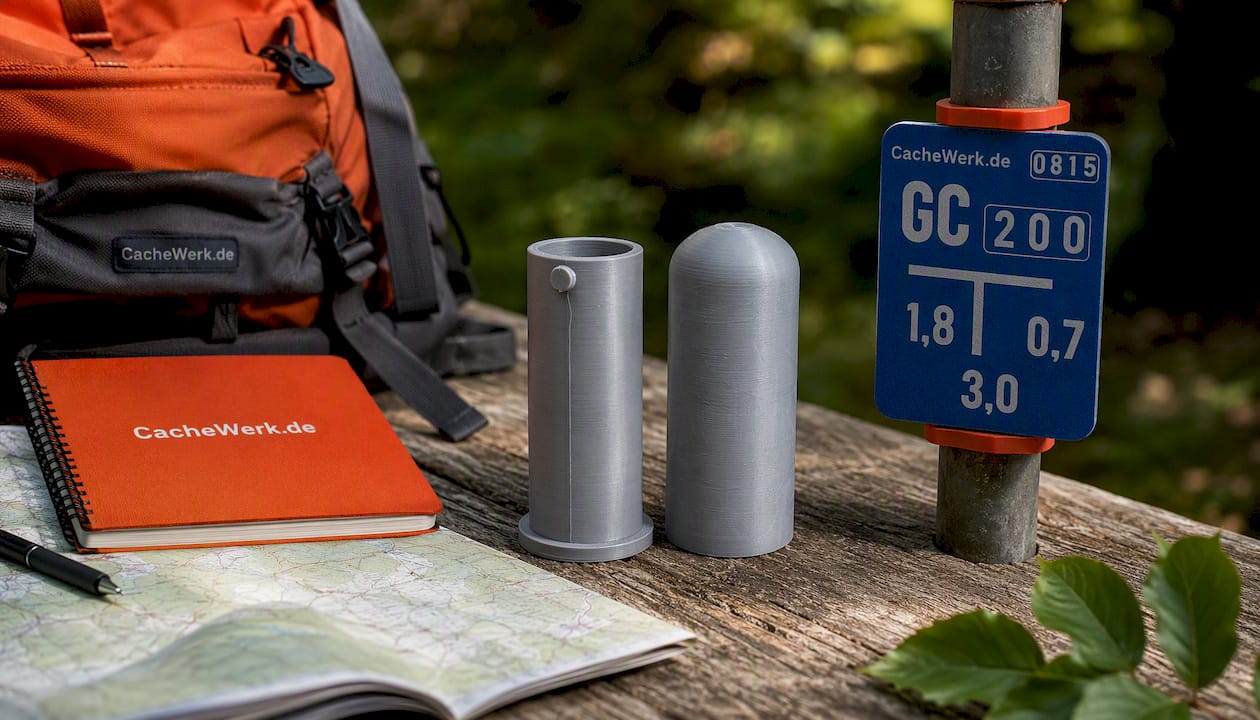
That's exactly what Cachewerk is for. The Blind Maze Tube is a specially developed labyrinth hiding spot made of PETG plastic: robust, weatherproof, and designed so that contents are only accessible through targeted navigation. Perfect as a final hiding spot or for stations that should be particularly tricky. The customizable Fake Water Shield with post holder disappears into the cityscape and is ideal for urban rallies or park stations where a conspicuous container would be immediately found.
Both products can be ordered directly from the Cachewerk shop. Take a look at the shop now and find the right hiding spot for your next outdoor puzzle.