
Schwierige Cache-Locations finden: der Praxis-Guide
Eine schwierige Cache-Location zu finden ist kein Glücksspiel. Es ist das Ergebnis gezielter Vorbereitung, des richtigen Werkzeugs und einer systematischen Suchstrategie. Wer eine schwierige cache location finden will, braucht vor allem drei Dinge: ein Verständnis der Geocaching-Attribute, passende Kartenwerkzeuge und eine klare Methode für die Suche vor Ort. Dieser Guide zeigt dir Schritt für Schritt, wie du auch D4- und D5-Caches zuverlässig aufspürst, typische Probleme löst und dabei den Spaß am Hobby behältst.
Welche Rolle spielen Geocaching-Attribute bei der Vorbereitung?
Geocaching-Attribute sind die wichtigste Informationsquelle vor jeder Suche. Owner können bis zu 15 Attribute pro Cache-Listing auswählen, um Erwartungen zu steuern und Cacher auf die nötige Ausrüstung hinzuweisen. Das bedeutet: Wer die Attribute liest, weiß schon vor dem Aufbruch, ob er Kletterausrüstung, Taschenlampe oder Wasserfestigkeit braucht.
Gezielte Filterung nach Attributen spart Zeit, reduziert Frust und erhöht den Spaßfaktor. Premium-Mitglieder auf geocaching.com können Caches nach diesen Parametern filtern und so gezielt Touren planen, die zum eigenen Können passen. Wer zum Beispiel Caches mit dem Attribut „schöne Aussicht" oder „nicht mit Kinderwagen" sucht, bekommt sofort eine passende Auswahl.
Praktisch sieht das so aus:
- Schwierigkeitsgrad D1/D2: Für Einsteiger geeignet, wenig Ausrüstung nötig
- Schwierigkeitsgrad D4/D5: Erfordert Kletterausrüstung, Tauchen oder besondere Werkzeuge
- Attribut „nur tagsüber": Schließt Nachtsuchen aus
- Attribut „Rätsel lösen": Weist auf Mystery-Caches hin, die Vorbereitung zu Hause erfordern
- Attribut „Teamarbeit nötig": Ideal für Schatzsuche im Team
Profi-Tipp: Lies vor jeder Suche alle Attribute und die letzten fünf Logs. Oft stecken dort Hinweise, die der Owner nicht explizit in die Beschreibung geschrieben hat, zum Beispiel Hinweise auf saisonale Zugangsprobleme oder veränderte Tarnungen.
Die Schwierigkeits- und Terrainbewertung ist dabei eng mit den Attributen verknüpft. Wer beide zusammen liest, bekommt ein vollständiges Bild der Herausforderung.
Welche Werkzeuge helfen beim Orten schwieriger Cache-Standorte?
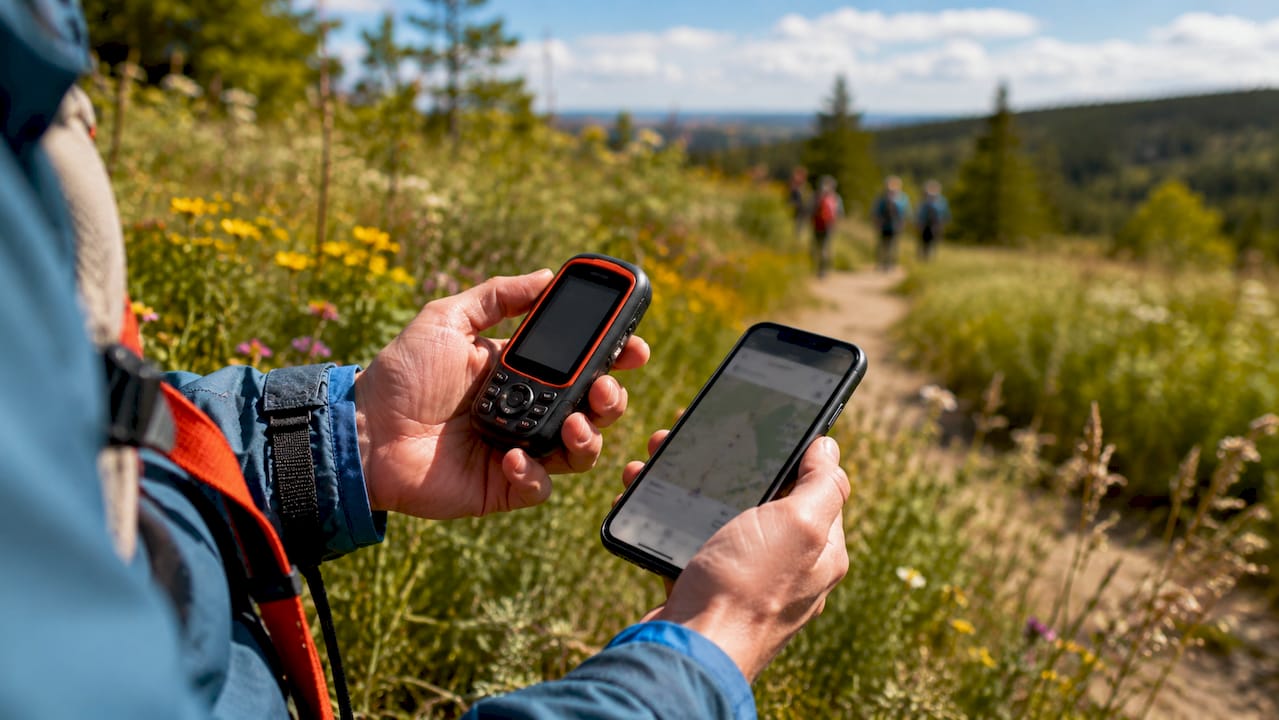
Technische Hilfsmittel machen den Unterschied zwischen einer langen Suche und einem gezielten Fund. Google Maps mit Hybridansicht und Geländeoption hilft, Standort und Terrain vor der Suche realistisch einzuschätzen. Satellitenbild und Geländeansicht zusammen zeigen, ob ein Waldweg wirklich begehbar ist oder ob ein Felsvorsprung den Zugang blockiert.
Spezialisierte Webseiten wie nachtcache.de ergänzen die Planung für besondere Cache-Typen. Nachtcaches lassen sich per Karte und Google Maps lokalisieren und vorab auf Zugänglichkeit prüfen. Das spart vor Ort wertvolle Zeit.
| Werkzeug | Stärke | Einsatz |
|---|---|---|
| Google Maps Hybridansicht | Gelände und Wege sichtbar | Vorab-Planung, Zugangsprüfung |
| GPS-Gerät (dediziert) | Hohe Genauigkeit, offline nutzbar | Suche vor Ort, kein Akkuproblem |
| Geocaching-App (Smartphone) | Logs, Hinweise, Karte kombiniert | Schneller Zugriff auf alle Infos |
| nachtcache.de | Spezialkarten für Nachtcaches | Planung von Nacht- und Thementouren |
| Satellitenbilder (offline) | Kein Netz nötig | Gebiete ohne Mobilfunk |
GPS-Geräte und Smartphone-Apps haben unterschiedliche Stärken. Ein dediziertes GPS-Gerät arbeitet auch ohne Mobilfunknetz und hat einen langen Akku. Die Smartphone-App dagegen zeigt Logs, Hinweise und Karte auf einen Blick. Viele erfahrene Cacher nutzen beides gleichzeitig.
Profi-Tipp: Lade Karten und Cache-Daten immer vor dem Aufbruch herunter. Gerade in Waldgebieten oder bei Nachtcaches ist das Mobilfunknetz oft schwach oder gar nicht vorhanden.
Wie setzt man systematische Suchstrategien effektiv ein?
Die häufigste Fehlerquelle bei schwierigen Caches ist der Fokus auf die Koordinaten statt auf die Umgebung. Bei D5-Caches erkennt man, dass Tarnungen oft natürliche Geländeabweichungen sind. Man sucht Anomalien statt nur nach dem Cache-Behälter. Ein loser Stein, eine ungewöhnlich glatte Baumrinde oder ein Ast, der nicht ganz natürlich liegt, sind typische Hinweise.
Für Mystery-Caches gilt eine andere Logik. Erfahrene Geocacher nutzen Mustererkennung in Koordinaten, um Lösungswege effizienter zu erschließen. Das Wissen um den Zielort hilft dabei, Rätsel zielorientiert zu lösen statt planlos zu probieren.
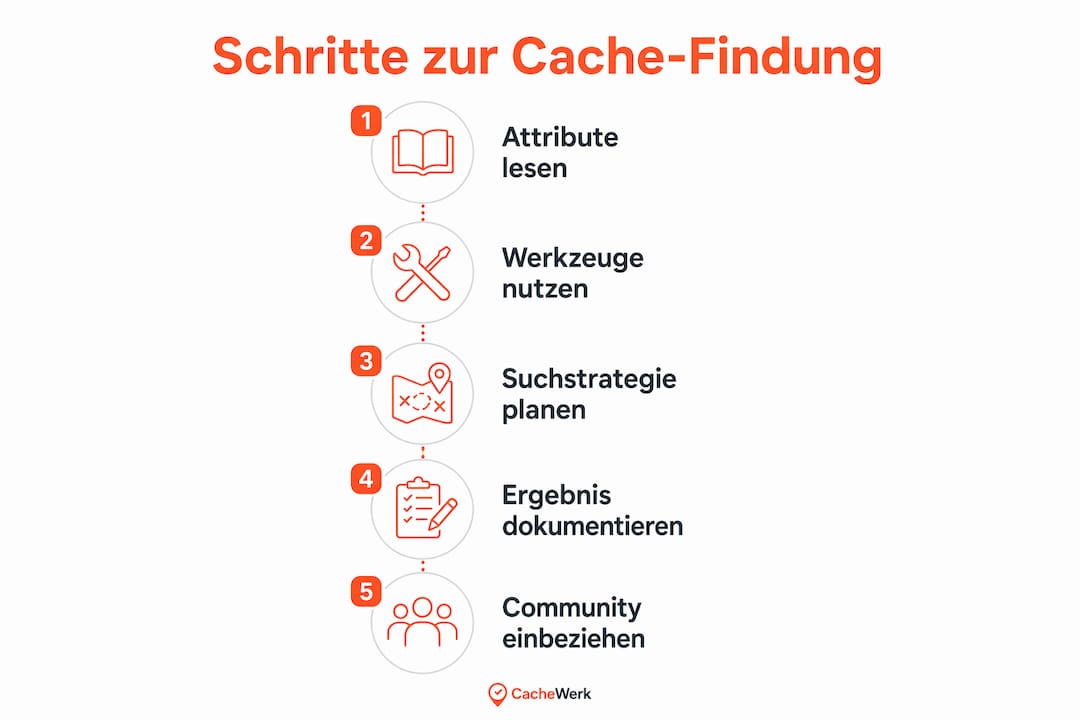
Eine bewährte Schritt-für-Schritt-Methode für schwierige Standorte:
- Koordinaten prüfen: Stimmen die Koordinaten mit dem Gelände überein? Gibt es Abweichungen durch Baumbestand oder Gebäude?
- Umgebung scannen: Welche Elemente wirken unnatürlich? Wo gibt es Anomalien im Gelände?
- Logs lesen: Was haben andere Cacher geschrieben? Gibt es versteckte Hinweise in den Formulierungen?
- Radius einengen: Suche systematisch in konzentrischen Kreisen um die Koordinaten, nicht zufällig.
- Perspektive wechseln: Knie dich hin, schau von unten, wechsle den Blickwinkel. Viele Tarnungen sind nur aus einer Richtung sichtbar.
- Pause einlegen: Nach 20 Minuten erfolgloser Suche kurz weggehen. Frische Augen finden oft sofort, was müde Augen übersehen haben.
„Mehrere Anläufe bei schwierigsten Caches sind normal. Tagesform und Umgebungsfaktoren beeinflussen die Wahrnehmung am Suchort stark. Wer heute nichts findet, findet morgen vielleicht sofort."
Erfahrung aus der Geocaching-Community
Das Loggen von „DNF" (Did Not Find) ist kein Scheitern. Es ist eine anerkannte Methode, um die Community zu informieren und Teil des normalen Lernprozesses. Erfahrene Cacher nutzen DNF-Logs als wertvolle Information für den Owner und für andere Suchende. Wer ein DNF loggt, hilft dem Owner zu erkennen, ob der Cache vielleicht verschwunden ist oder ob die Koordinaten korrigiert werden müssen.
Anfänger sollten mit D1- oder D2-Caches starten, bevor sie sich an D4 oder D5 wagen. D4- und D5-Caches können schnell Frustration erzeugen, wenn die Grundtechniken noch nicht sitzen. Das ist keine Schwäche, sondern kluge Progression.
Welche typischen Probleme treten bei schwierigen Cache-Locations auf?
Schwierige Caches bringen vorhersehbare Probleme mit sich. Wer sie kennt, löst sie schneller.
- Ungenaue Koordinaten: GPS-Geräte haben eine natürliche Ungenauigkeit von wenigen Metern. In dichten Wäldern oder zwischen Gebäuden kann die Abweichung größer sein. Lösung: Immer einen Suchradius von mindestens 10 Metern um die angegebenen Koordinaten einplanen.
- Missverständliche Hinweise: Manchmal sind Hinweise absichtlich vage formuliert. Lösung: Hinweise wörtlich nehmen und nicht überinterpretieren. Was steht da wirklich?
- Tarnung nicht erkannt: Viele Caches imitieren natürliche Objekte perfekt. Lösung: Alles anfassen, was sich leicht anfühlt oder ungewöhnlich glatt ist.
- Motivation verloren: Nach mehreren erfolglosen Versuchen sinkt die Energie. Lösung: Gezielt einen leichteren Cache zwischendurch suchen, um das Erfolgsgefühl zurückzuholen.
- Community nicht genutzt: Viele Cacher scheuen die Frage nach Hilfe. Lösung: Foren, lokale Geocaching-Gruppen und die Kommentarfunktion im Listing nutzen.
Gründliche Vorbereitung durch Studium von Attributen und Logs erhöht die Wahrscheinlichkeit einer erfolgreichen Suche und sorgt für die richtige Ausrüstung. Das ist kein Geheimnis, aber viele Cacher überspringen diesen Schritt.
Spaßfaktor beim Cachen ist entscheidend. Es ist legitim, bei extremer Frustration die Suche abzubrechen und gezielt leichtere Caches zu wählen. Das Hobby soll Freude machen, kein Pflichtprogramm sein. Wer das verinnerlicht, bleibt langfristig dabei.
Die Community ist dabei ein unterschätztes Werkzeug. Lokale Geocaching-Gruppen auf Plattformen wie Facebook oder in regionalen Foren tauschen regelmäßig Tipps aus. Oft kennt jemand den Cache persönlich und gibt einen entscheidenden Hinweis ohne die Lösung zu verraten.
Wichtige Erkenntnisse
Schwierige Cache-Locations finden gelingt zuverlässig durch die Kombination aus Attribut-Analyse, Kartenwerkzeugen und systematischer Suche vor Ort.
| Thema | Details |
|---|---|
| Attribute lesen | Bis zu 15 Attribute pro Cache geben Auskunft über Ausrüstung, Zugang und Schwierigkeitsgrad. |
| Kartenwerkzeuge nutzen | Google Maps Hybridansicht und GPS-Gerät zusammen liefern die beste Vorbereitung für schwieriges Terrain. |
| Anomalien suchen | Bei D5-Caches nach unnatürlichen Details im Gelände suchen, nicht nur nach dem Behälter. |
| DNF loggen | Ein DNF-Log ist kein Versagen, sondern wertvolle Information für Owner und Community. |
| Progression beachten | Mit D1/D2 starten und schrittweise zu D4/D5 aufsteigen, um Frustration zu vermeiden. |
Was ich nach Jahren mit D5-Caches gelernt habe
Ich erinnere mich noch gut an meinen ersten D5-Cache. Ich habe zwei Stunden gesucht, bin dreimal um denselben Baum gelaufen und habe am Ende ein DNF geloggt. Frustriert, aber auch neugierig. Beim zweiten Versuch, drei Wochen später, habe ich den Cache in vier Minuten gefunden. Derselbe Ort, aber ein anderer Blickwinkel.
Was mich das gelehrt hat: Schwierige Caches verlangen keine Superkräfte. Sie verlangen Geduld und die Bereitschaft, die eigene Wahrnehmung zu hinterfragen. Die meisten erfahrenen Cacher, die ich kenne, haben ihre besten Funde nicht beim ersten Versuch gemacht.
Mein ehrlicher Rat: Überspring die Vorbereitung nicht. Wer die Logs liest und die Attribute versteht, hat einen echten Vorteil. Und wer trotzdem nichts findet, loggt ein DNF und kommt wieder. Das ist kein Scheitern. Das ist Geocaching.
Ich finde es außerdem wichtig, den Spaß nicht aus den Augen zu verlieren. Wenn ein Cache nur noch Stress bedeutet, ist es völlig in Ordnung, ihn auf die Merkliste zu setzen und erstmal was Leichteres zu suchen. Das Hobby soll Freude machen. Punkt.
— Benedikt
Ausrüstung für schwierige Cache-Suchen bei Cachewerk
Gute Vorbereitung beginnt mit der richtigen Ausrüstung. Cachewerk hat genau das im Sortiment, was du für anspruchsvolle Touren brauchst.
Das Geocaching-Starter-Bundle 1 enthält PETling, Logbuch und Halterung und ist der ideale Einstieg für alle, die ihre ersten schwierigen Caches angehen wollen. Wer etwas mehr Flexibilität beim Verstecken sucht, findet im Geocaching-Starter-Bundle 2 eine Alternative mit Aufhängung statt Halterung. Für urbane Touren lohnt sich ein Blick auf den Rusty Bolt Cache, eine täuschend echte Tarnung als rostiger Schraubbolzen mit Nano-Behälter. Das gesamte Sortiment an Geocaching-Ausrüstung und Zubehör findest du direkt im Cachewerk-Shop.
FAQ
Was bedeutet Schwierigkeitsgrad D5 beim Geocaching?
D5 ist der höchste Schwierigkeitsgrad auf der Geocaching-Skala. Er bedeutet, dass der Cache sehr schwer zu finden ist und oft besondere Ausrüstung oder Fähigkeiten erfordert.
Wie finde ich den Cache-Standort bei ungenauen Koordinaten?
Plane immer einen Suchradius von mindestens 10 Metern um die angegebenen Koordinaten ein. Dichte Vegetation und Gebäude können die GPS-Genauigkeit deutlich verringern.
Was ist ein DNF-Log und warum sollte ich ihn nutzen?
DNF steht für „Did Not Find" und bedeutet, dass du den Cache nicht gefunden hast. Das Loggen eines DNF informiert den Owner und andere Cacher und ist ein normaler Teil des Geocachings.
Wie löse ich einen Mystery-Cache systematisch?
Lies die Beschreibung genau und suche nach Mustern in Zahlen oder Buchstaben. Erfahrene Cacher empfehlen, den Zielort im Kopf zu behalten und Rätsel zielorientiert statt planlos zu lösen.
Welche Attribute sollte ich bei schwierigen Caches besonders beachten?
Achte auf Attribute wie „Kletterausrüstung nötig", „nur tagsüber" oder „Teamarbeit erforderlich". Diese geben direkte Hinweise auf die nötige Vorbereitung und Ausrüstung.