
Examples of Special Cache Mounts: DIY Guide
Special cache attachments are specially developed methods to keep geocaches secure, discreet, and weatherproof at their hiding place. In geocaching, a distinction is made between standard attachments, such as simple adhesive tape, and genuine special solutions that combine camouflage, durability, and maintainability. Those planning creative cache locations need methods that suit the container size, environment, and maintenance effort. This guide shows you the best examples of special cache attachments, from neodymium magnets to plant stake constructions and hanging tree attachments, with specific material information and construction instructions.
1. Examples of Special Cache Attachments with Magnets
Magnetic attachments are among the most popular methods for micro and PETling caches. The reason is simple: they are quick to install, invisible from the outside, and reliably hold onto metal surfaces.
The best-known solution is neodymium magnets with 2.4 kg holding force in D10x5 mm format. It is recommended to use two magnets per container, resulting in material costs of around 0.70 euros. This is hardly worth mentioning, but the effect is impressive.
Materials for a magnetic PETling attachment:
- 2 neodymium magnets (D10x5 mm, approx. 0.35 Euro each)
- 2-component epoxy resin adhesive or Pattex Repair Extrem
- Fabric adhesive tape for additional security
- Sandpaper for roughening the adhesive surface
The right adhesive determines the lifespan. 2-component epoxy resin or Pattex Repair Extrem can withstand temperature changes and remain firm even after years. Normal household glue or hot glue regularly fails outdoors after a few months.
Pro Tip: Roughen the adhesive surface on the container with 80-grit sandpaper before gluing. This doubles the adhesion surface and the magnet sits significantly firmer, especially on smooth PETling surfaces.
Disadvantages of magnetic attachments: They only work on metal surfaces. And with very strong magnets, removal can be difficult for finders without tools. If you want to implement creative geocaching ideas with magnets, you should consciously choose the holding force.
2. Plant Stake Method for Nano Caches
The plant stake method is one of the clever solutions for small nano containers. It camouflages the cache as a normal garden stake and at the same time protects it from rain, frost, and curious glances.
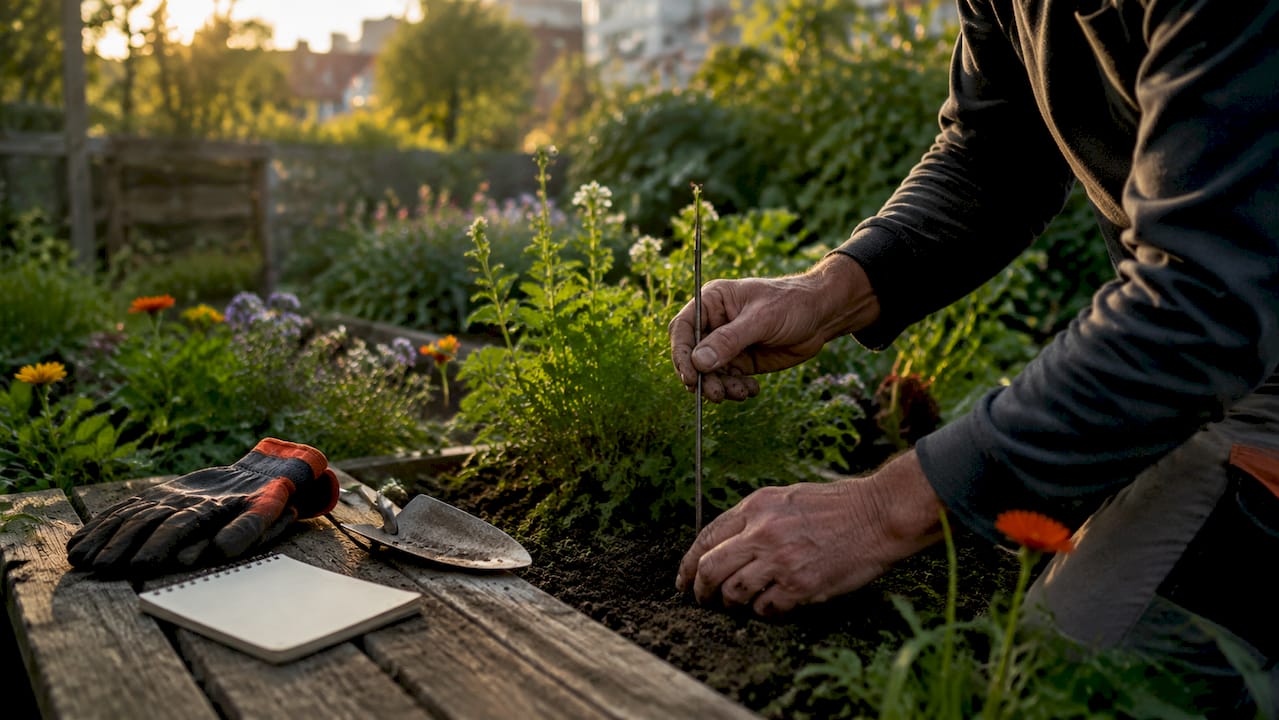
Construction time is around 1–2 hours, including drying time. The material can be obtained cheaply from a hardware store.
Step-by-step instructions:
- Cut a solid iron rod (10 mm diameter) to the desired length, a hacksaw is sufficient.
- Shorten a hollow plant stake (16 mm outer diameter) so that the nano container fits inside.
- Insert the nano cache into the hollow plant stake and secure it with a drop of glue.
- Drive the solid iron rod into the ground as an earth anchor.
- Place the hollow plant stake with the cache over the iron rod.
| Feature | Plant Stake Cache |
|---|---|
| Container Size | Nano |
| Weather Protection | Very good |
| Camouflage | Very high (looks like a normal garden stake) |
| Construction Effort | Low to medium |
| Maintenance Effort | Medium (logbook fills up quickly) |
The biggest disadvantage: Nano caches require regular maintenance because the logbook is difficult to change through the small opening and fills up quickly. However, if you plan for this, you will have a very durable and discreet hiding place.
3. Hanging Attachments for Tree Mounting
Tree hiding places have a clear advantage over ground hiding places: they are harder to find accidentally and offer more design freedom. However, if you want to attach a cache to a branch or trunk, you need the right material.
A basic laying set for hanging caches contains exactly what is needed:
- Screw hooks (various sizes)
- Key rings as connecting elements
- Garden wire for flexible attachment
- Garden bast for natural camouflage
- Fabric adhesive tape for stable connections
The entire set fits into a small 0.3-liter Clip’n’Lock container. This is practical because you take everything with you to the cache location at once and don't forget anything during maintenance visits.
Tree hiding places last longer than ground hiding places because they are exposed to less moisture. Moreover, they are significantly less interesting for muggles (non-geocachers) than something lying on the ground.
Pro Tip: Use garden bast instead of plastic rope when attaching the cache to a branch. Bast slowly rots, looks natural, and is not noticeable to muggles. Change it once a year.
For team building events or outdoor group activities, hanging caches can also be used as part of internal company treasure hunts. This shows how versatile this type of attachment is.
4. Innovative Craft Hiding Places with Magnetic Closure
More complex craft hiding places go a step further than simple magnetic attachments. The best-known example is the so-called "Vollpfosten" (idiot) cache: a wooden post that looks like a normal fence post from the outside but has a hidden hollow space with a magnetic closure.
Neodymium magnets with 1.6 kg pulling force in combination with wooden dowels ensure that the lid closes perfectly and no visible gap appears. This is the crucial difference to simple plug connections, which often leave a gap and ruin the camouflage.
Materials for a magnetic closure cache:
- Neodymium magnets (matching the lid surface)
- Wooden dowels or aluminum pins as guides
- Wooden post or similar carrier material
- Screw as a handle for easier removal
The combination of magnet and guide pins prevents the lid from sitting crookedly or jamming. This may sound like a detail, but it makes the difference between a cache that finders can easily open and one that gets stuck after three months.
| Attachment Type | Camouflage | Construction Effort | Durability |
|---|---|---|---|
| Simple Magnet Adhesive | Medium | Low | Good |
| Magnetic Closure with Guide | Very High | High | Very Good |
| Plant Stake Method | High | Medium | Very Good |
| Hanging Attachment | Medium to High | Low | Good |
Creative crafting methods with wooden posts increase longevity but also bring structural challenges. Fit accuracy and maintainability are the most common problems. If these are considered during construction, the result will be a hiding place that lasts for years.
Pro Tip: Always incorporate a screw or small pin as a handle into the lid. Finders can then open the cache even with cold fingers or gloves, without cursing.
You can find more ideas for self-made hiding places in the Craft Caches Guide from Cachewerk.
5. Creative Special Solutions: Guardrails and Aluminum Foil
Not every attachment requires expensive material. One practical example: Caches on guardrails can be attached with reinforced aluminum foil as a thin pocket. The foil conforms to the guardrail and is barely visible from the outside.
This method is weather-dependent and only works in safe, traffic-free locations. Tear-resistant, reinforced aluminum foil is mandatory here. Normal household foil does not last two weeks outdoors.
The advantage of this solution is its extreme flatness. The cache literally lies against the metal surface and is barely noticeable even on close inspection. This makes it a good choice for experienced cache owners who want to place special cache hiding places with a high degree of difficulty.
6. Installation and Maintenance: Which Method Fits When?
The choice of attachment method directly influences the search time and experience of the finders. A cache that comes loose after three months or whose logbook is soaked leaves a bad impression. Therefore, it is worthwhile to consciously choose the method.
Decision aid based on location:
- Metallic surfaces (bridges, railings, signs): Magnetic attachment with neodymium magnets, secured with epoxy resin.
- Trees and branches: Hanging attachment with screw hooks, garden wire, and bast.
- Ground and beds: Plant stake method with iron rod and hollow plant stake.
- Wooden structures and fences: Magnetic closure cache with guide pins.
- Guardrails and flat metal surfaces: Aluminum foil pocket for experienced owners.
Maintenance intervals depend heavily on the container size. Nano caches require a logbook change every 4–8 weeks. Larger PETlings often last a whole year without intervention.
Pro Tip: When placing the cache, note the exact date and the materials used. This way, during the next maintenance, you will immediately know what needs to be checked and which parts may need to be replaced.
For a comprehensive overview of secure attachment techniques, we recommend the article on safe caching tips on the Cachewerk blog.
Key Takeaways
The most durable cache attachments combine the right adhesive, a suitable support structure, and regular maintenance, adapted to container size and location.
| Topic | Details |
|---|---|
| Magnetic Attachment | Glue neodymium magnets D10x5 mm with epoxy resin, use two magnets per container. |
| Plant Stake Method | Iron rod as earth anchor, hollow plant stake as cover, ideal for nano caches. |
| Hanging Attachment | Transport screw hooks, garden wire, and bast in a 0.3-liter container. |
| Magnetic Closure with Guide | Wooden dowels or aluminum guide pins prevent visible gaps and improve camouflage. |
| Maintenance Planning | Check nano caches every 4–8 weeks, note date and materials when placed. |
What I Really Recommend After Years of Crafting
by Benedikt
I've tried many attachments. Some held, some didn't. And honestly, my biggest mistakes were always the same: too little glue, the wrong material, no plan for maintenance.
What surprised me most: The glue is more important than the magnet. I've placed caches with cheap neodymium magnets that were still perfectly in place after two years because the epoxy resin adhesive held. And I've attached expensive magnets with hot glue that were gone after the first winter.
My personal favorite is the plant stake method. It looks unspectacular, but that's exactly the point. No muggle looks twice. And the weather protection is not as good with any other method for so little effort.
What I recommend to everyone: Start with a simple magnetic attachment. Learn how the material behaves. Then progress to more complex constructions like the magnetic closure cache. If you start right away with the "Vollpfosten" cache, you'll spend more time troubleshooting than caching.
And one more thing: Plan for maintenance from the beginning. A cache that no one finds after a year because the logbook is full is not a good cache. It's just work for the next owner.
— Benedikt
Matching Products at Cachewerk
If you want to get started right away, Cachewerk offers ready-made starter kits specifically designed for these attachment methods.
The Geocaching Starter Bundle 1 contains a PETling, a logbook, and a suitable holder. Everything you need for your first magnetic or hanging attachment is included. For tree hiding places, there is the Geocaching Starter Bundle 2 with PETling and suspension. Both sets are made from durable materials and designed for outdoor use. If you prefer to choose individual parts, you can find the entire range in the Geocaching Equipment section at Cachewerk.
FAQ
What are the best magnets for cache attachments?
Neodymium magnets in D10x5 mm format with approximately 2.4 kg holding force are the most proven choice. Two magnets per container are sufficient for most micro and PETling caches.
Which adhesive permanently holds neodymium magnets outdoors?
2-component epoxy resin adhesive or Pattex Repair Extrem are the most reliable options. Hot glue and normal household adhesives fail outdoors with temperature changes.
How often do I need to maintain a nano cache?
Nano caches require a logbook change every 4–8 weeks because the logbook is difficult to change through the small opening and fills up quickly.
Which attachment is suitable for tree hiding places?
Screw hooks with key rings, garden wire, and garden bast are the most proven combination. The material fits completely into a 0.3-liter Clip’n’Lock container.
How do I prevent visible gaps in craft hiding places?
The combination of neodymium magnets and wooden dowels or aluminum guide pins ensures a precise closure without a visible gap.
