
Geocache Magnetbau Workflow: Schritt für Schritt zum Ziel
So läuft der Bau magnetischer Geocaches ab
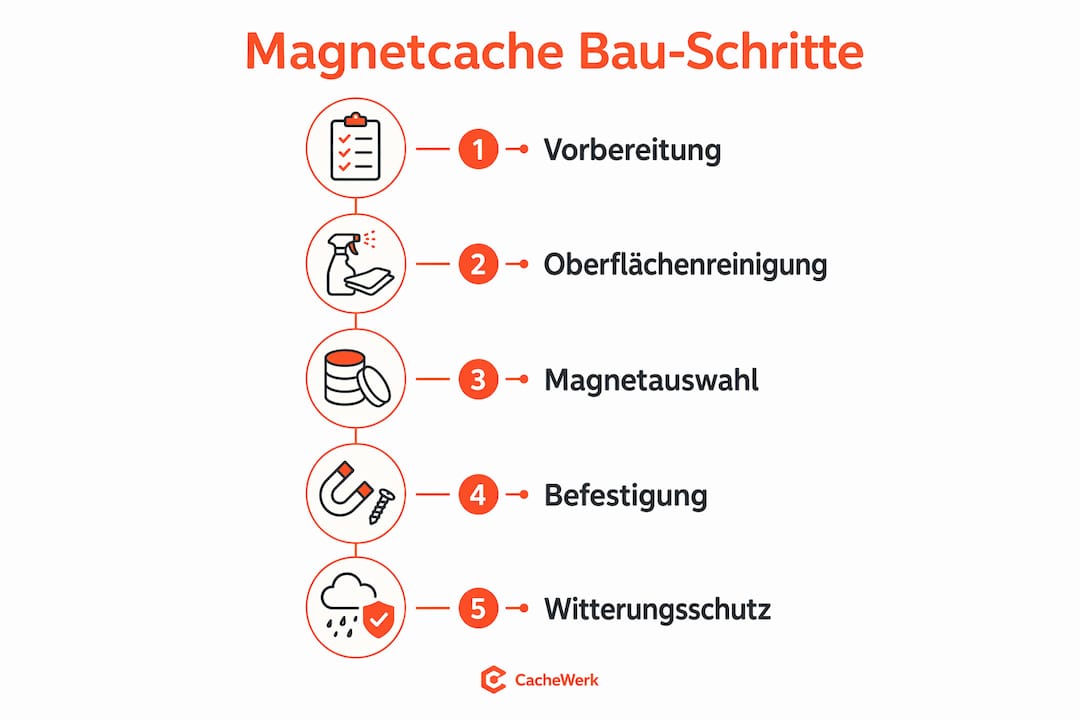
Der effektivste Geocache Magnetbau Workflow folgt fünf klaren Schritten: Oberfläche reinigen, passende Neodym-Magnete wählen, mit Industriekleber oder Schrumpfschlauch befestigen, Haltbarkeit testen und den Cache kreativ tarnen. Wer diesen Ablauf kennt und die richtigen Materialien einsetzt, baut Verstecke, die jahrelang halten.
Hier die wesentlichen Schritte auf einen Blick:
- Vorbereitung: Klebeflächen mit Isopropanol entfetten, Cachegröße und Versteckort festlegen
- Magnetauswahl: Neodym-Scheibenmagnete (z. B. 10 x 5 mm) für Mikrocaches, gummierte Varianten für Außeneinsatz
- Befestigung: Industriekleber wie Pattex Repair Extrem oder Epoxidharz, zusätzlich Gewebeklebeband oder Schrumpfschlauch als mechanische Sicherung
- Haltbarkeitstest: Haftkraft prüfen, Cache mehrfach ab- und anbringen, auf Wackelfreiheit achten
- Tarnung: Cache farblich anpassen, als Alltagsgegenstand gestalten oder mit Gewebeklebeband ummanteln
Als Behälter bewähren sich der CacheWerk PETling mit Magnethalter sowie die Cachewerk Hutmutter und das Cachewerk Schraubversteck. Für das Logbuch eignen sich Micro Log Strips, die auch in kleinen PETlingen Platz finden. Wer auf 3D-gedruckte Teile setzt, findet bei ABC Creative passgenaue Halter und Gehäuse aus PETG.
Sicherheit und Wetterfestigkeit sind keine Extras. Neodym-Magnete korrodieren ohne Schutz, und ungeeignete Kleber versagen bei Temperaturschwankungen zwischen Sommer und Winter.
Wie du deinen Magnetcache richtig vorbereitest
Gute Vorbereitung entscheidet darüber, ob ein Cache zwei Monate oder zwei Jahre hält. Der häufigste Fehler: Magnete auf ungereinigten Oberflächen kleben. Fett, Staub oder Kunststoffreste verhindern, dass der Kleber richtig greift.

Reinige die Klebefläche am PETling oder an der Dose gründlich mit Isopropanol. Lass die Fläche vollständig trocknen, bevor du Kleber aufträgst. Dieser Schritt dauert keine zwei Minuten und verhindert die häufigste Ursache für Haftungsversagen im Außeneinsatz.
Plane außerdem die Cachegröße vor dem Kauf der Magnete. Ein Standard-PETling mit etwa 15 cm Länge braucht andere Magnete als eine kleine Filmdose. Überlege auch, wo der Cache hängen soll: Leitplanke, Metallbrücke oder Schild. Je nach Untergrund variiert die nötige Haftkraft.
Profi-Tipp: Klebe die Magnete nie innen in den PETling. Der Platz für das Logbuch wird knapp, und die Befestigung ist von innen deutlich fummelig. Außen angebrachte Magnete lassen sich sauberer verkleben und zusätzlich mit Gewebeklebeband sichern.
Denk auch an den Schutz vor Witterung. Wähle Untergründe, die nicht dauerhaft im Wasser stehen. Metall rostet, Kunststoff verformt sich bei starker Hitze. Ein schattiger Platz verlängert die Lebensdauer des Caches spürbar.
Welche Magnete und Befestigungstechniken wirklich halten
Neodym-Magnete sind die einzig sinnvolle Wahl für magnetische Geocaches. Gewöhnliche Haushaltsmagnete aus dem Baumarkt sind, gemessen an ihrer Größe, zu schwach für den Außeneinsatz. Neodym-Scheibenmagnete mit 10 mm Durchmesser und 5 mm Höhe liefern pro Stück eine gute Haftkraft, die für Mikrocaches ausreichend ist. Für einen Mikrocache reichen zwei davon völlig aus.

Aber Vorsicht: Standard-Neodym-Magnete sind nicht für den Außeneinsatz konzipiert. Sie rosten bei direktem Kontakt mit Feuchtigkeit. Gummierte Varianten oder eine Versiegelung mit Epoxidharz schützen zuverlässig. Alternativ hält Schrumpfschlauch den Magneten trocken und an Ort und Stelle.
Beim Kleber gilt: Heißkleber und handelsüblicher UHU-Kleber versagen im Outdoor-Einsatz. Epoxidharzkleber oder hochfeste Reparaturkleber halten Temperaturschwankungen zwischen Sommer und Winter aus. Pattex Repair Extrem hat sich in der Praxis bewährt: Er wird nicht spröde und haftet auf Kunststoff wie auf Metall.
-
Epoxidharz: Sehr hohe Endfestigkeit, zweikomponentig, etwas aufwendiger in der Verarbeitung
-
Pattex Repair Extrem: Einfach aufzutragen, temperaturwechselfest, im Baumarkt erhältlich
-
Schrumpfschlauch: Mechanische Fixierung ohne Kleber, ideal als zusätzliche Sicherung
Beim Einsatz von Schrumpfschlauch gilt ein wichtiger Hinweis: Neodym-Magnete verlieren ab 80 Grad Celsius dauerhaft an Magnetkraft. Beim Schrumpfen also immer auf die Temperatur achten und den Magneten mit einer Zange oder Schere fixieren, nie mit den Fingern halten.
Nach dem Verkleben kommt ein Streifen Gewebeklebeband als Sicherung. Der Streifen muss lang genug sein, um den PETling komplett zu umschließen. So hält der Magnet auch dann noch, wenn der Kleber nach Jahren nachlässt.
Zu starke Magnete können übrigens zum Problem werden. Wer Magnete mit sehr hoher Haftkraft an Leitplanken befestigt, riskiert, dass sich der Cache kaum noch lösen lässt oder die Metallstruktur beschädigt wird. Für Mikrocaches sind zwei Scheibenmagnete mit 10 x 5 mm die richtige Wahl.
Wie du kreative Verstecke baust, die Muggel nicht finden
Ein gut getarnter Cache überlebt deutlich länger als ein offensichtlicher Behälter. Die Integration in natürliche oder funktionale Objekte erhöht die Tarnqualität und erschwert zufällige Funde erheblich. Ein Holzkeil an der Unterseite eines Spielturms, der von außen wie ein normales Brett aussieht und per Scheibenmagnet gehalten wird, ist ein klassisches Beispiel dafür.
Bewährte Tarnstrategien für magnetische Caches:
- Farblich anpassen: Gewebeklebeband in Schwarz, Grün oder Grau ummantelt den PETling und lässt ihn mit dem Untergrund verschmelzen
- Als Alltagsgegenstand tarnen: Das Cachewerk Schraubversteck sieht aus wie eine gewöhnliche Schraube, enthält aber ein Geheimfach mit Magnet
- Funktionale Objekte nutzen: Schilder, Bolzen oder Holzleisten als Träger für den Cache, der Magnet sitzt versenkt im Material
- „Kein Müll“-Hinweis: Immer ein kleines Schild oder einen Aufkleber anbringen, damit der Cache nicht als Abfall entsorgt wird
Für die Platzierung gilt: Wähle Orte, an denen Muggel keinen Grund haben, genauer hinzuschauen. Eine Leitplanke an einer belebten Straße ist riskanter als eine ruhige Brücke abseits des Hauptwegs. Achte darauf, dass der Cache nicht direkt auf Augenhöhe hängt und von der Seite nicht als Fremdkörper auffällt.
3D-gedruckte Teile von ABC Creative eröffnen hier besondere Möglichkeiten. Gehäuse aus PETG lassen sich in beliebigen Formen drucken, lackieren und in die Umgebung einpassen. Wer einen Schild-Cache oder einen Magnetschutz für den Angelcache bauen möchte, findet bei ABC Creative passende Druckdateien.
Profi-Tipp: Platziere den Cache so, dass du ihn selbst beim ersten Blick nicht sofort siehst. Wenn du nach dem Anbringen einen Schritt zurücktrittst und kurz suchst, bevor du ihn findest, ist die Tarnung gut gelungen.
Expertenwissen von Benedikt und Cachewerk für deinen Magnetcache
Benedikt betreibt den Cachewerk Blog und hat sich auf praktische Anleitungen für Geocaching-Bastler spezialisiert. Seine Empfehlungen basieren auf echten Bauerfahrungen mit magnetischen Verstecken in Deutschland, von einfachen PETlingen bis zu aufwendigen Konstruktionen mit Magnetscharnier.
Bewährte Produktempfehlungen
Für den Einstieg in den magnetischen Cachebau empfiehlt Cachewerk drei Produkte, die sich in der Praxis bewährt haben:
- PETling mit Magnethalter: Fertig vorbereiteter Behälter mit integriertem Magnethalter, erhältlich in Tarn- und Signalfarben. Kein Kleben nötig, sofort einsatzbereit.
- Hutmutter Cache: Nano-Cache aus Edelstahl mit Magnet, wasserdicht und für urbane Verstecke konzipiert. Sieht aus wie eine gewöhnliche Hutmutter.
- Schraubversteck: Nano-Cache mit Geheimfach und Magnet, im Doppelpack erhältlich. Ideal für Metalluntergründe in der Stadt.
Für das Logbuch passen Geocaching Micro Log Strips in alle drei Behälter. Sie sind schmal genug für Nano-Caches und trotzdem gut beschreibbar.
Sicherheit beim Umgang mit Magneten
Neodym-Magnete sind keine Spielzeuge. Starke Magnete können sich unkontrolliert anziehen und Finger einklemmen. Beim Arbeiten mit mehreren Magneten immer einzeln handhaben und nie zwei gleichzeitig in der Hand halten. Wer Schrumpfschlauch verwendet, braucht eine Zange oder Schere als Halterung, da die Hitze der Heißluftpistole den Magneten sonst verrutscht oder beschädigt.
Kinder sollten beim Basteln nicht unbeaufsichtigt mit starken Neodym-Magneten hantieren. Verschluckte Magnete können im Körper gefährliche Verletzungen verursachen.
Rechtliche Rahmenbedingungen in Deutschland
Bevor du einen Cache platzierst, kläre die Genehmigungslage. In Deutschland gilt: Caches auf privatem Grund brauchen die Zustimmung des Eigentümers. In Naturschutzgebieten und Nationalparks ist das Platzieren von Caches oft verboten oder genehmigungspflichtig. Für Caches an öffentlichen Straßen und Leitplanken solltest du beim zuständigen Straßenbauamt nachfragen. Die Geocaching-Plattform, auf der du den Cache veröffentlichst, hat außerdem eigene Richtlinien, die du einhalten musst.
Wartung nach der Platzierung
Ein magnetischer Cache braucht regelmäßige Kontrolle. Prüfe alle drei bis sechs Monate:
- Sitzt der Magnet noch fest?
- Hat der Kleber oder das Gewebeklebeband nachgegeben?
- Ist das Logbuch noch trocken und beschreibbar?
- Zeigt der Behälter Rostspuren oder Risse?
Wer seinen Cache pflegt, spart sich aufwendige Reparaturen und schützt die Sucherfahrung für andere Cacher. Ein gepflegter Cache mit frischem Logbuch bekommt bessere Bewertungen und bleibt länger aktiv.
Profi-Tipp: Lege beim ersten Platzieren gleich ein Ersatz-Logbuch in den Cache. So können Finder das Logbuch selbst tauschen, wenn es voll ist, und du musst nicht sofort vor Ort.
Wer tiefer in die Materie einsteigen möchte, findet im Cachewerk DIY-Guide für Fortgeschrittene weitere Praxistipps zu besonderen Befestigungen und Tarnmethoden.
Cachewerk macht den Einstieg leicht
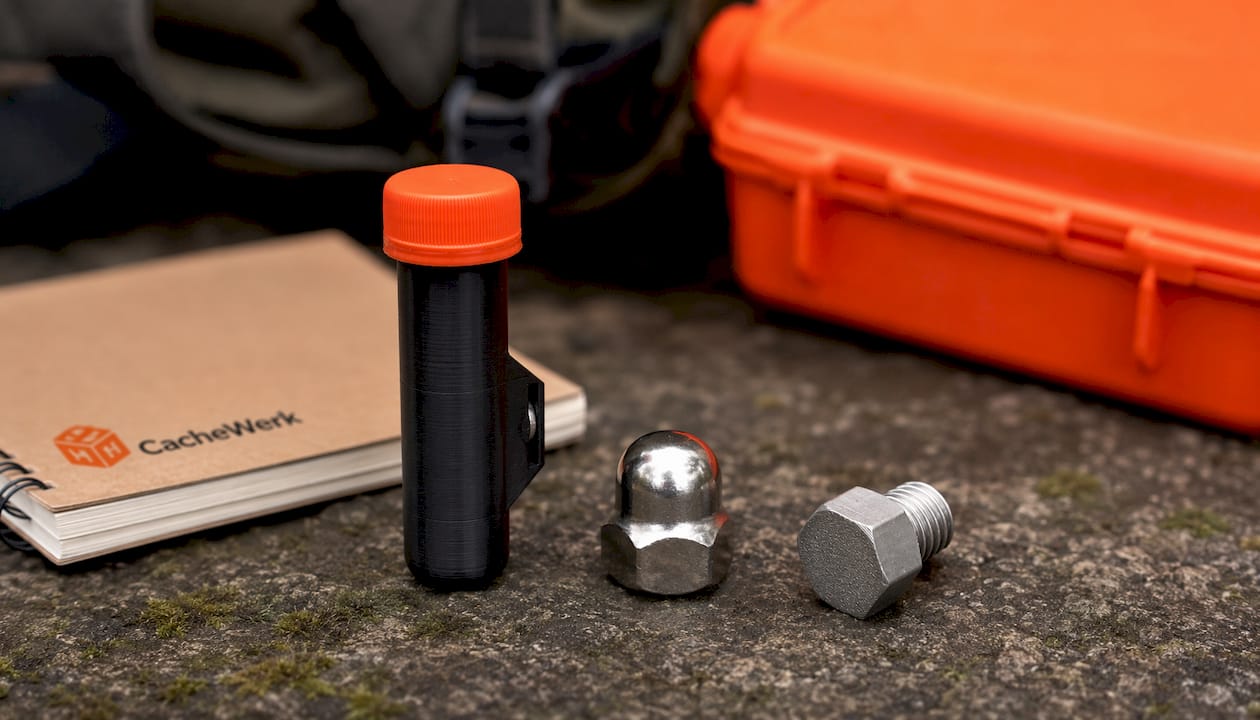
Du willst direkt loslegen? Cachewerk hat alles, was du für deinen ersten magnetischen Geocache brauchst. Vom fertigen PETling mit Magnethalter über die Hutmutter bis zum Schraubversteck findest du bei Cachewerk geprüfte Produkte, die sofort einsatzbereit sind. Dazu passende Micro Log Strips und 3D-gedruckte Teile von ABC Creative aus PETG.
Schau dir die Magnetdosen und Zubehör direkt bei Cachewerk an und leg los.
Wichtige Erkenntnisse
Der effektivste Workflow für magnetische Geocaches verbindet sorgfältige Oberflächenvorbereitung, temperaturwechselfeste Kleber und kreative Tarnung zu einem dauerhaften, muggelresistenten Versteck.
| Thema | Details |
|---|---|
| Magnetauswahl | Neodym-Scheibenmagnete (10 x 5 mm) für Mikrocaches |
| Kleber und Befestigung | Pattex Repair Extrem oder Epoxidharz halten Temperaturschwankungen aus; Gewebeklebeband sichert zusätzlich. |
| Temperaturgrenze beachten | Neodym-Magnete verlieren ab 80 Grad Celsius dauerhaft an Kraft, besonders beim Schrumpfen relevant. |
| Tarnung entscheidet | Farblich angepasste Behälter oder Alltagsgegenstände wie das Schraubversteck schützen den Cache vor Muggel-Funden. |
| Regelmäßige Wartung | Alle drei bis sechs Monate Magnet, Kleber und Logbuch prüfen, um die Sucherfahrung zu erhalten. |