Geocaching with Kids: Ideas and Templates for Parents

Start with a simple traditional cache with difficulty and terrain ratings of 1 to 2, choose a container size Small or larger, and turn the search into a game with a bingo card or a small puzzle. This is the shortest formula for a successful first outing: children want to see success quickly, not a half-hour climb through bushes.
This mini-checklist is sufficient to get started:
- Smartphone with charged battery or power bank
- Pen for the logbook
- A few small trading items
- Cache saved offline in advance
Pro-tip: Start from about five years old, avoid lost places, and consistently stay on marked paths. This eliminates any risk from the outing while still allowing a real sense of adventure.
Key Takeaways
Geocaching with children is most reliably successful with D/T 1 to 2, containers from Small size, and a clear game mechanic like bingo or a puzzle rally.
| Topic | Details |
|---|---|
| Cache Selection | Choose D/T 1 to 2, containers at least child-friendly size for visible trading items. |
| Hide Height | Plan stations for children at a child-friendly height, suitable for a child's perspective. |
| Age Limit | Start from school age, younger children need short distances and continuous supervision. |
| Equipment | Power bank, pen, and three trading items are the basis for every outing. |
| Durable Hides | Cachewerk offers robust, 3D-printed PETG hides for family-friendly caches with low maintenance. |
Table of Contents
- Geocaching with Children: Ideas for the First Joint Cache
- Which Caches Are Really Suitable for Child-Friendly Searches?
- 20 Creative Ideas and Game Variations for Children
- Packing List and Equipment: What Really Helps
- At What Age Is Geocaching with Children Useful?
- Geocaching for Children's Birthdays: Three Sample Agendas
- Practical DIY Tips from Cachewerk: Robust Hides for Families
- Why the Usual Geocaching Tips for Children Often Fall Short
- Cachewerk as a Starting Point for Your Next Family Adventure
- Frequently Asked Questions About Geocaching with Children
- Sources
Geocaching with Children: Ideas for the First Joint Cache
You don't need special equipment. A smartphone with the official Geocaching app or the open-source app C:Geo is perfectly sufficient, the latter even with a solid offline function for dead zones in the forest. A free account is enough to get started; you really don't need anything more.
Here's how to prepare:
- Filter by Traditional Cache, D/T 1 to 2, high favorite points, and container size Small or larger.
- Read the entire listing, especially the hint and terrain description.
- Save the cache offline before you leave.
- Only start the GPS display directly at the destination to conserve battery.
- Aim for the point, look carefully together on site, and sign the logbook.
Pro-tip: Let the children search the last meter alone. The moment they discover the container themselves is the real reason they'll want to join again next time.
If you want to combine the tour with a proper hike, our practical guide to combining geocaching and hiking offers suitable route ideas for various fitness levels.
Which Caches Are Really Suitable for Child-Friendly Searches?
The difficulty and terrain ratings, or D and T, determine the success of an outing more than any other information in the listing. For families with children, Traditional Caches with a low difficulty and terrain rating of 1 to 2 are particularly suitable. They are usually located in parks or normal forests and lead directly to the destination, without detours over rock faces or deep water. A D/T of 4 or 5, on the other hand, often means climbing equipment or hours of searching, which frustrates children within minutes.
Regarding container size, it's worth looking at the details: larger caches like Regular or Large more frequently contain trading items, while micro-containers usually only hold a logbook. So for children, at least Small or Regular is worthwhile so that there is actually something to trade (SWAG) at the end.
One detail almost no one considers: stations and hide heights should be geared towards children's eyes, i.e., about 60 to 100 centimeters above the ground. Children see the world from a different perspective; a hide at adult height often remains invisible to them. Plan short routes, especially for children under eight, or take a bike or wagon for medium distances.
20 Creative Ideas and Game Variations for Children
Not every cache has to remain the classic search for the container. These variations can be implemented with little effort:
- Geocaching Bingo – Check off symbols (tree, bridge, animal) on a card during the tour, for ages 6+, 30 to 45 minutes.
- Themed Rally – Link several caches around a theme like knights or dinosaurs, for ages 6+.
- Night Cache with Reflectors – Reflectors or UV light mark stations and create a spooky atmosphere at dusk, for ages 8+, with supervision only.
- Multi-Stations with Mini-Tasks – A small math problem or collecting a symbol at each station.
- Photo Puzzle – Show a detailed photo of the surroundings before the outing that the children have to find at the destination.
- Draw Your Own Treasure Map – For very young children, a drawn map instead of a GPS point.
- Point System – Each find earns points, with a small reward at the end.
- Team Cache – Two groups of children start from different points and meet at the destination.
- Magnifying Glass Search – Let children discover small details at the cache with a magnifying glass.
- Trading among Friends – Bring small personal items to trade in advance.
For birthdays, three fixed schedules are worthwhile:
- Short (30 to 45 minutes): a single cache, bingo card, small prizes at the destination.
- Medium (1 to 2 hours): three to four caches as a rally, a stop with a picnic.
- Long (2 to 3 hours): multi-cache with five stations, team division, closing celebration with homemade cake.
If you're torn between a classic container and a more elaborate hide, the article Traditional vs. Creative Caches provides a good classification of which format suits which age.
Packing List and Equipment: What Really Helps
The basic equipment remains minimal. Smartphone or GPS device, pen for the logbook, weather-resistant container if you're placing a cache yourself, gloves for thorny bushes, and a small first-aid kit belong in every backpack.
These extras make the difference between an okay and a really good outing:
- Magnifying glass for detail searching at small hides
- Small trading items that belong to the children, not you
- Seat pad for breaks in the grass
- Wagon or carrier for toddlers on longer routes
The battery is the hidden bottleneck of every tour. GPS and apps drain a smartphone surprisingly quickly, so a power bank is almost always worthwhile. Download caches offline in advance, close unnecessary background apps, and the battery will easily last until the last find.
Pro-tip: Pack the trading items in a small transparent box so children can see what's left on the go and don't have to constantly ask.
At What Age Is Geocaching with Children Useful?
From about five to six years old, geocaching becomes truly fun; before that, children usually lack the stamina for longer distances or the understanding for the search itself. For younger children, short distances and continuous supervision help, not the full hiking route for adults.
A few rules apply without exception:
- No lost places, no abandoned buildings, no collapsing sites
- No risky climbing passages, especially not near water or busy roads
- Do not leave marked paths, even if the point on the map is closer to the bushes
- Do not remove anything from nature, put trackables back after finding them instead of keeping them
- Always return the container exactly to its original spot, just as you found it
This last rule is not a formality. The next finder relies on an intact hide, and a carelessly left cache often disappears within weeks.
Geocaching for Children's Birthdays: Three Sample Agendas
A birthday with geocaching doesn't need an elaborate script, just a clear structure. Three formats have proven effective in practice:
- Mini-Event (30 to 45 minutes): one cache, clear start and finish markings, each child gets a role like map reader or finder.
- Standard (1 to 2 hours): three stations with small tasks, a material kit with prepared logbooks and trading items.
- Grand Rally (2 to 3 hours): five to six stations, fixed teams, reflectors or flashlights for the last section at dusk.
For all three, the same material kit applies: prepared logbooks, small prizes, reflectors for later start times, and safe flooring for birthday setups as well as sufficient water. If you want to create and publish a birthday cache yourself, you should first check whether the planned location meets the guidelines for new listings, which will save you trouble with activation later.
Practical DIY Tips from Cachewerk: Robust Hides for Families
Material choice determines how long a self-built cache will last. Robust materials and 3D-printed hides made of PETG are particularly recommended for family caches because they withstand moisture and temperature fluctuations much better than improvised plastic containers from the household. Weatherproof screw boxes and the use of a PETling save time in the long run because you have to make fewer repairs.
A simple family project for a weekend: build a birdhouse hide with a camouflaged opening mechanism, paint it together with the children, and then register it as your own cache. A survey marker hide with a ground sleeve works just as well for urban environments.
Robust, durable hides significantly reduce maintenance intervals and are economically sensible, especially for family-friendly caches, because they need to be replaced or repaired less frequently.
If you are looking for specific building instructions, the article Cleverly Hiding Miniature Objects provides practical approaches for small trading items and their placement.
Why the Usual Geocaching Tips for Children Often Fall Short
Most guides on this topic repeat the same basic rule: choose easy caches, done. That's true, but it falls short. The real hurdle for children is not the difficulty level, but the lack of reward during the search. A child who hikes for twenty minutes and only finds a logbook at the end loses interest faster than one who solves small tasks at three stations.
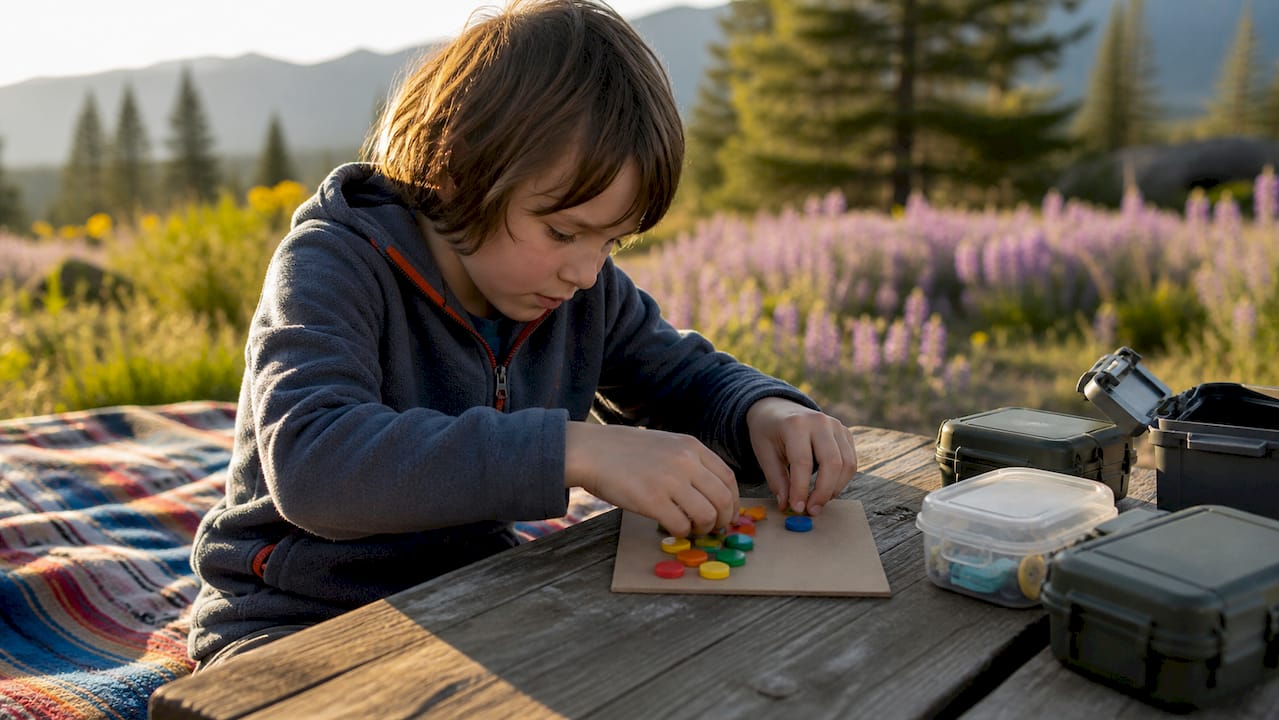
That's why I consider game mechanics like bingo or a point system to be underrated. They require little preparation, but they change how children experience the time between start and find. This is precisely where it is decided whether the next outing will even take place.
What I would recommend to parents first: don't invest in equipment, but in the selection of the first cache. A well-maintained, robust hide with a high favorite point rating beats any expensive equipment. If you later build caches yourself, you should rely on materials from the beginning that can withstand rain and frost, because a decaying hide quickly turns a good experience into a frustrating one.
Cachewerk as a Starting Point for Your Next Family Adventure
If you want to build your own first cache instead of just searching, Cachewerk offers ready-made solutions that would otherwise save hours of crafting and material sourcing. The range extends from weatherproof hides to 3D-printed special parts, all designed for durability in outdoor use.
For an urban cache that doesn't attract attention from curious passers-by, the Geocaching Rusty Bolt Cache with a rusty bolt and nano container is suitable. If you're planning a family outing in the forest or on the edge of a field, it's better to use the Ammo Box in a trick design, which remains watertight even in continuous rain. For a joint crafting project on the weekend, the Survey Marker Hide with PETling is ideal for showing children how to build their own cache.
If a child's birthday is to be celebrated with geocaching, an activatable Geocaching Travel Bug makes an impression as a souvenir that the children can track online later. Browse the shop and choose the hide that suits your next tour.
Frequently Asked Questions About Geocaching with Children
At what age can children start geocaching? From about five to six years old, it works well, provided the route remains short and an adult accompanies them continuously.
Which app is best for families? The official Geocaching app is perfectly sufficient for getting started, while C:Geo also offers a solid offline function for areas without reception.
How do I find child-friendly caches near me? Filter by Traditional Cache, D/T rating of 1 to 2, high favorite points, and container size Small or larger; then the route length and environment are usually right.
What absolutely belongs in the backpack? Smartphone with power bank, pen for the logbook, a pair of gloves, and small trading items cover most outings.
Are children allowed to take items from a cache? Yes, as long as they put an item of equal value in return. Trackables, on the other hand, do not belong on their own shelf, but back in circulation.