At ten doses a day: The geocaching bag that saves time

For short urban trips, a crossbody bag or a sling with quick access is perfectly sufficient. For day trips off-road, you need more volume and weather protection, so a roll-top backpack or daypack. Three axes are crucial: speed of access, capacity, and rain protection. You can find suitable models for both scenarios directly in the Cachewerk shop.
In short:
- For short urban tours, a crossbody bag with quick access and low volume is sufficient, while for longer tours, a roll-top backpack with more storage space is suitable.
- The choice depends on tour duration, terrain, and frequency of access; a combination of a body bag and a backpack is most efficient in practice.
- When buying, compartment layout, water protection, and carrying system are crucial criteria, with 3 to 8 liters volume recommended for short trips and 15 to 25 liters for day trips.
- For different cache types, special items such as UV lamps, reflectors, or spare batteries are necessary and should be well-organized in labeled pouches.
- Organization, material quality, and weather protection are more important than large volume to reach the geocaching destination quickly and dry.
Table of Contents
- Shortlist: Which format suits which situation?
- How to make the right decision?
- What features do you need to check when comparing?
- What belongs in the bag, depending on the cache type?
- Why does Cachewerk recommend exactly these solutions?
- What many misjudge when buying a bag
- Your next bag directly from the Cachewerk shop
- Sources
Shortlist: Which format suits which situation?
Before you click through endless product pages, it's worth taking a look at the three common categories. Each has a clear area of application, and the choice almost always depends on how long you're on the go and how often you need to access the bag.
- Short trips and urban caches: A crossbody bag or a sling offers quick access with low volume. Ideal if you want to log two or three caches between your lunch break and closing time.
- Day trips and trail caching: A roll-top backpack or daypack provides space for provisions, changes of clothes, and equipment. Backpacks are particularly suitable for longer tours with more luggage, while smaller bags remain more practical for short, spontaneous excursions.
- Climbing caches and expeditions: This requires a special backpack with attachment points for rope, carabiners, or additional tools.
For the first two categories, Cachewerk offers suitable models directly, which were co-developed by active geocachers, not just relabeled everyday backpacks.
How to make the right decision?
Three questions almost always decide which bag suits you. First: How long are you on the go, hours or a whole day? Second: What does the terrain look like, city park or forest path with inclines? Third: How often do you need to access your equipment during the tour, every few minutes or only at the find site?
These three answers result in a simple priority matrix:
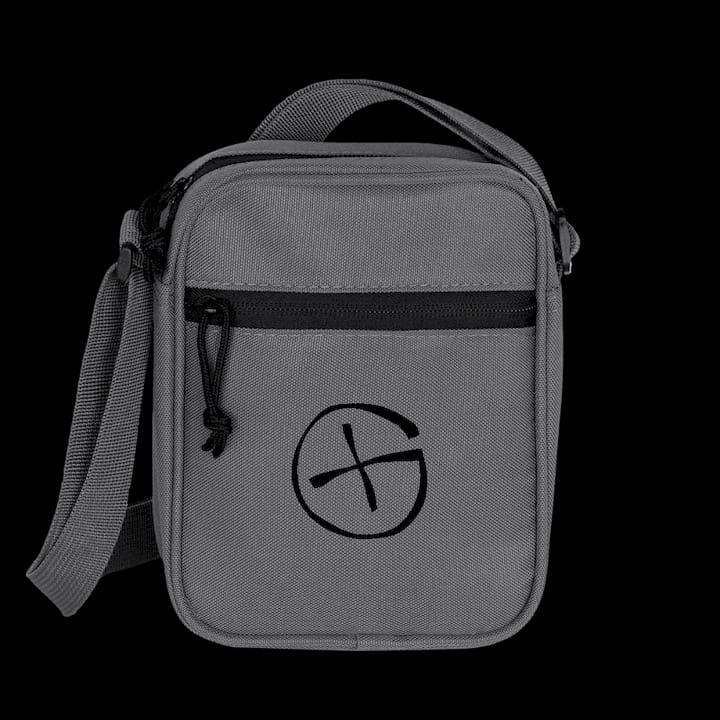
- High access requirement, little volume needed: Sling or crossbody worn on the front of the body.
- Low access requirement, much volume needed: classic backpack with main compartment.
- Both simultaneously required: Combination of a small body-worn bag and a reserve backpack.
Precisely this combination has proven itself in the practice of many geocachers. A body-worn container for a pen, phone, and trade items plus a backpack in the car or on your back for additional equipment prevents you from having to take off your entire backpack at every cache. This saves time and nerves, especially if you visit ten or more caches in one day.
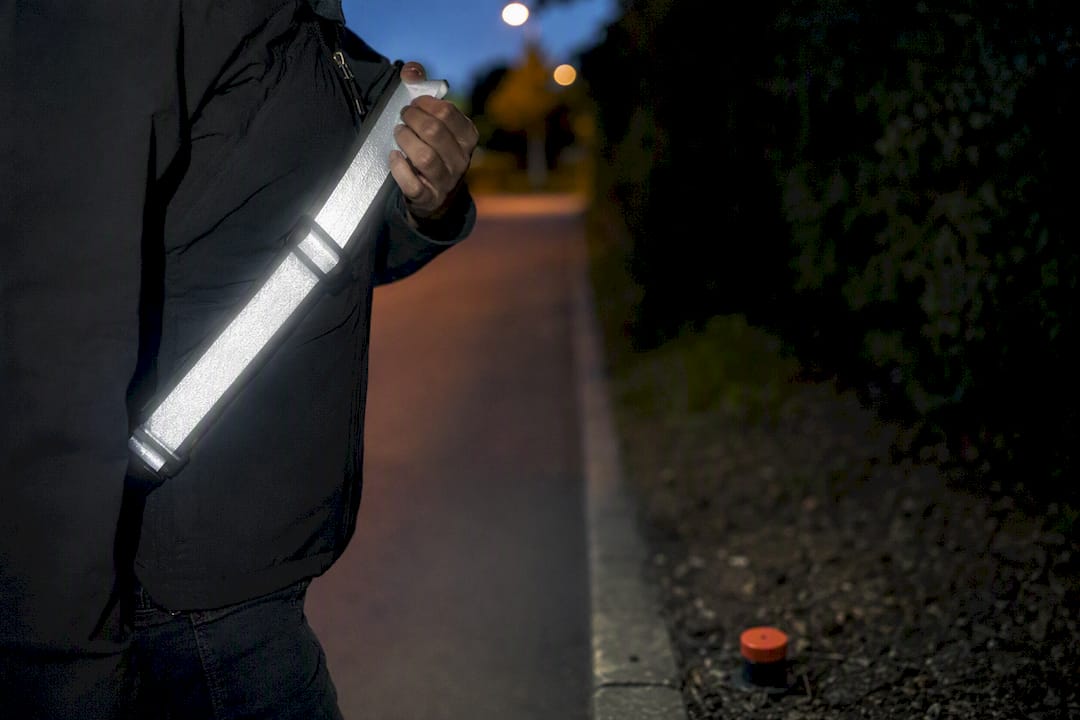
Safety also plays a role. Visibility through reflectors is recommended by the community as a sensible measure, especially for dusk tours or night caches near roads.
Pro Tip: Pack your body-worn bag so you can blindly grab your pen and trade item without looking. This saves valuable seconds at the find spot.
What features do you need to check when comparing?
A cache log is usually significantly smaller than the space a standard bag provides for it. This is precisely why many outdoor bags fail in practice; they offer volume but no well-thought-out small-item organization.
You should check these points for every model directly:
- Compartment layout: A dedicated pen compartment, a small zippered pocket for batteries, and a separate compartment for trade items are a must, not a nice-to-have.
- Material: Abrasion-resistant, synthetically coated fabrics withstand thorny bushes and rock crevices without being worn through after three tours.
- Water protection: A rain cover provides temporary protection, a roll-top closure provides permanent protection and also adapts to the packing volume.
- Carrying system: A sling sits on the front and allows immediate access, a two-point strap distributes weight better over longer distances, a hip belt stabilizes on uneven terrain.
For short trips, a volume of 3 to 8 liters is usually sufficient. For day trips with provisions and changes of clothes, you should plan for 15 to 25 liters. Roll-top models offer a practical advantage here because the volume flexibly adapts depending on the roll length, without you having to buy a larger backpack right away.
What belongs in the bag, depending on the cache type?
The packing list depends directly on the length of the tour, and this is where some preparation the evening before is worthwhile, instead of a frantic scramble at the front door.
- Short trip, urban: Pen, smartphone with GPS app, a small trade item, flashlight. Nothing more is needed for a 30-minute round through the city park.
- Day tour: Additionally, change of clothes, provisions, a small first-aid kit, and a power bank, because nothing is more annoying than a dead battery at the last cache of the day.
- Night caches and special hides: UV lamp, spare batteries, and reflectors belong additionally in the bag. For these cache types, the accessibility of certain tools counts more than the weight; a small body-worn compartment for the UV lamp saves search time here.
For organization, labeled zipper bags and fixed places for each small item help. Experienced geocachers swear by these fixed places because they can grab things blindly even in the dark, without completely emptying the bag. A more detailed overview can be found in our Geocaching Packing List.
Why does Cachewerk recommend exactly these solutions?
Cachewerk is not an all-round outdoor shop that just happens to carry backpacks. The range is designed from the outset for geocaching, with compartments and details that respond to real cache situations, not generic hiking needs.
- Material quality: Durable fabrics and modularly designed interior compartments, developed for small items such as pens, tweezers, and trackables.
- Practical combinations: Geocacher forums repeatedly confirm that a body-worn bag plus a reserve backpack is the most efficient solution for mixed tours.
- Direct product proof: Each product page transparently displays material, volume, and compartment layout, without marketing jargon.
A practical example: If you're planning a day trip with a roll-top backpack, you pack the main compartment with a change of clothes and provisions, while the small outer compartment is reserved for a pen and GPS device. This way, access remains quick, even though the backpack is designed for the whole day.
The combination of quick access and sufficient reserve ultimately determines whether a tour remains relaxed or ends in constant backpack opening and closing.
What many misjudge when buying a bag
Most guides present bag selection as purely a matter of volume: the larger, the better equipped. That's too short-sighted. In practice, I more often see the opposite fail: geocachers with huge hiking backpacks who have to take off and rummage through their entire backpack at every find because the pen has disappeared somewhere between a rain jacket and a water bottle.
The real key is organization, not size. A small crossbody bag with three neatly separated compartments almost always beats an unorganized 30-liter backpack in everyday practice. Weather protection is also underestimated; roll-top closures are often considered a niche item, but in sudden rain, they are the difference between a dry logbook and soaked equipment.
My recommendation: First buy the small, body-worn solution for daily access. You can get the backpack for long tours later, when you realize that you really lack volume, not the other way around.
— Benedikt
Your next bag directly from the Cachewerk shop
Unlike generic outdoor brands, Cachewerk offers bags that are designed for geocaching from the ground up, complete with the Opencaching logo as a recognition symbol for the community.
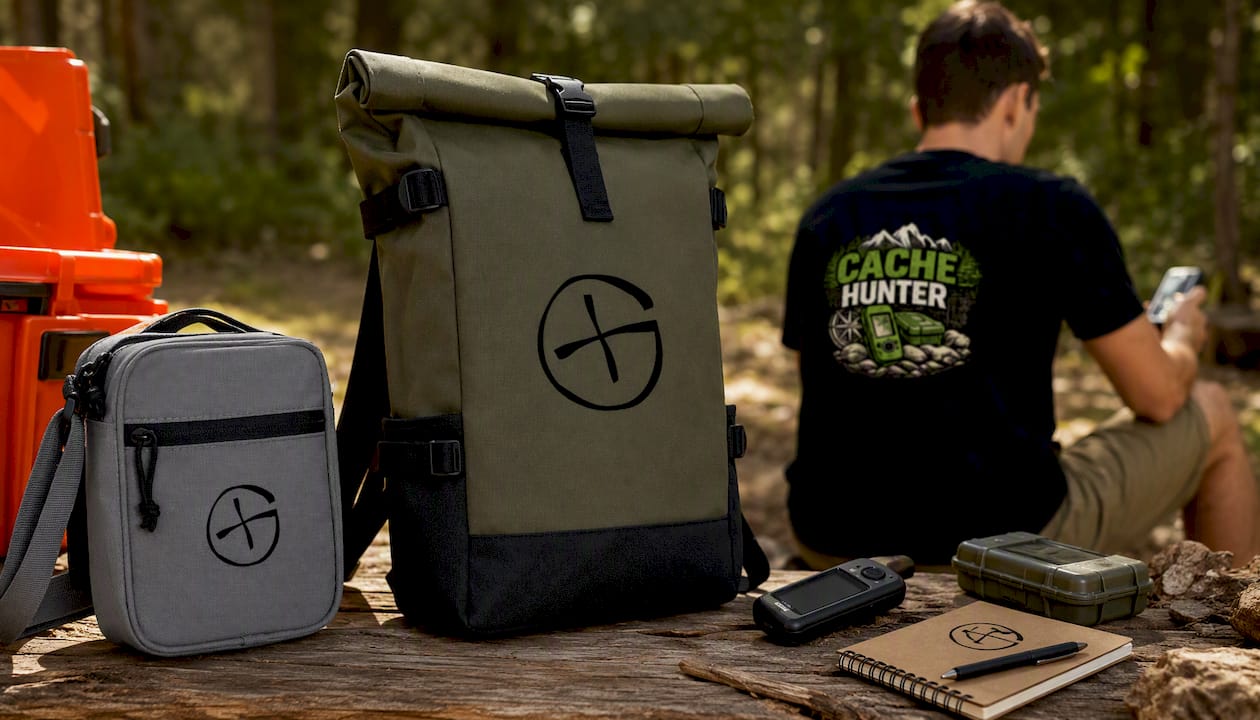
The Crossbody Bag for Geocachers is the right choice for short urban tours: compact, body-hugging, with quick access to pens and trade items. For day tours with changeable weather, the Roll Top Backpack for Geocachers is recommended, whose roll-top closure keeps out rain and flexibly adapts its volume. As a small extra for the next geocaching round with friends, the Geocaching T-Shirt "Cache Hunter" is suitable, a simple community signal without much purchase effort.
Check out the product pages, compare materials and compartment layouts at your leisure, and order the bag that suits your next outing.
Sources
- Equipment – CacheWiki
- Geocaching Backpacks – Geocaching Magazine (X‑Over Test)
- Extended Geocaching Equipment – Abenteuer‑Geocaching
- Geocaching