
Geocaching und Lasercutter erklärt: Dein DIY-Guide 2026
Geocaching ist eine GPS-gestützte Schatzsuche, bei der du versteckte Behälter mit Logbuch suchst, dich einträgst und den Cache wieder versteckst. Seit dem Jahr 2000 hat sich das Hobby weltweit verbreitet. Und genau hier kommt der Lasercutter ins Spiel: Mit ihm lassen sich Verstecke bauen, die so gut getarnt sind, dass selbst erfahrene Geocacher zweimal hinschauen müssen. Die Kombination aus GPS-Abenteuer und präziser Holz- oder Acrylbearbeitung macht Geocaching zu einem echten DIY-Projekt.
Was du für den Einstieg brauchst:
- GPS-Gerät oder Smartphone mit einer Geocaching-App
- Stift zum Eintragen ins Logbuch
- Wetterfeste Kleidung und festes Schuhwerk
- Lasercutter für eigene Cachekonstruktionen (optional, aber lohnenswert)
- Vektorgrafik-Software wie Inkscape für CAD-Entwürfe
Was ist Geocaching, und welche Ausrüstung brauchst du wirklich?
Geocaching funktioniert denkbar einfach: Du rufst die Koordinaten eines Caches ab, navigierst mit GPS dorthin und suchst den versteckten Behälter. Gefunden, eingetragen, wieder versteckt. Fertig.
Die Cachearten unterscheiden sich dabei deutlich:
- Traditional Cache: Ein Behälter, eine Koordinate. Ideal für Einsteiger.
- Multi-Cache: Mehrere Stationen führen zur Enddose. Gut für Geocaching mit Kindern, weil die Route Schritt für Schritt aufgebaut ist.
- Rätselcache (Mystery Cache): Erst ein Rätsel lösen, dann suchen. Die veröffentlichten Koordinaten führen nur zu einem Startpunkt.
Für die Ausrüstung gilt: Ein Smartphone reicht für den Anfang völlig aus. Wer öfter in abgelegenen Gebieten sucht, greift besser zu einem dedizierten GPS-Empfänger mit längerer Akkulaufzeit. Ein Multitool und ein wasserfester Stift gehören in jeden Rucksack, denn nasse Logbücher sind ein häufiges Ärgernis.
Profi-Tipp: Wähle deinen ersten Cache nach dem Schwierigkeitsgrad 1/1 oder 2/2. Die Bewertung zeigt dir auf einer Skala von 1 bis 5 sowohl den Geländeanspruch als auch die Rätselkomplexität. So vermeidest du frustrierende Fehlstarts.
Wer Geocaching und Wandern verbinden möchte, findet bei Cachewerk einen Praxisguide für Touren, der Routen planen und Caches suchen miteinander verknüpft.
Wie funktioniert ein Lasercutter, und was bringt er beim Versteckbau?
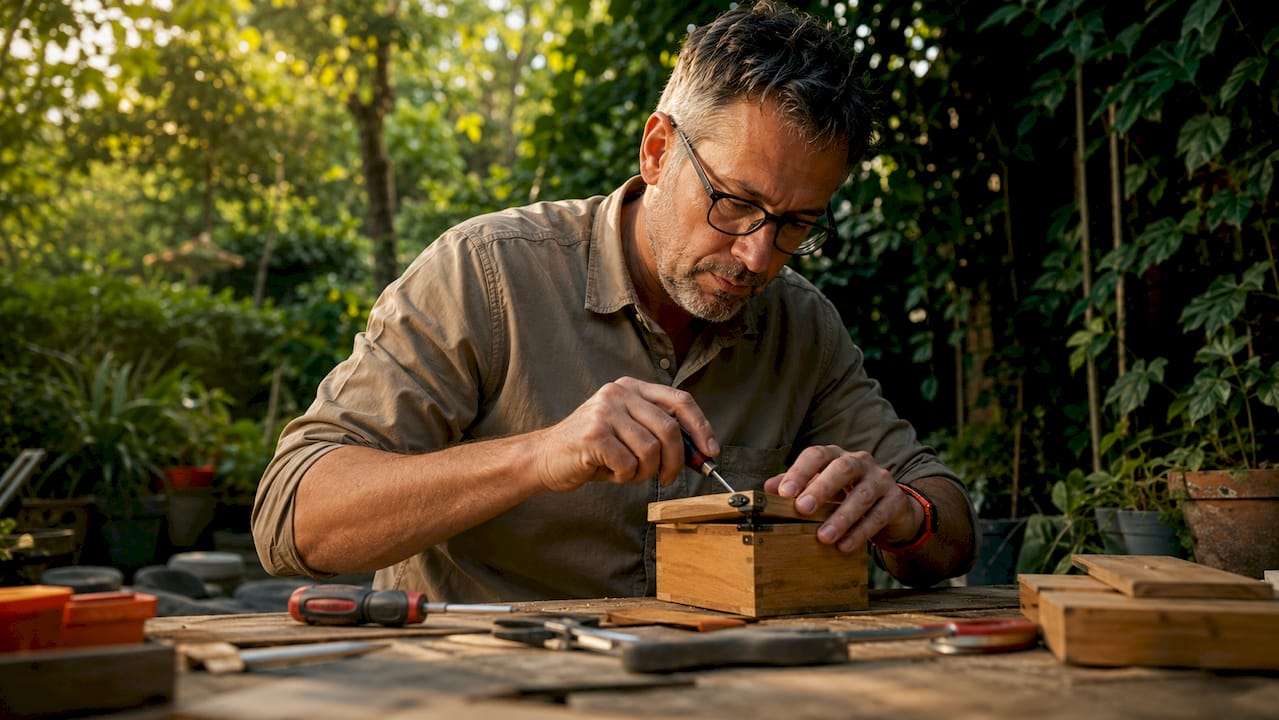
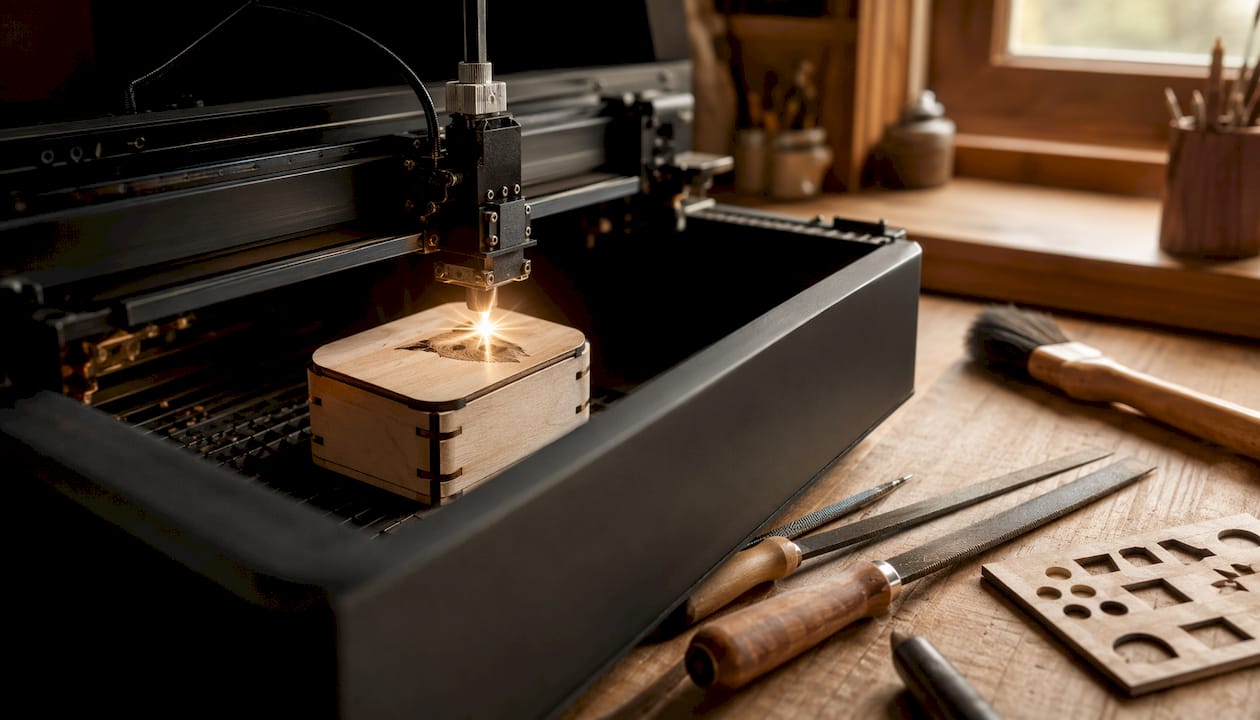
Ein Lasercutter bündelt einen Lichtstrahl auf einen winzigen Punkt und brennt oder schneidet Material mit hoher Genauigkeit. Für Geocaching-Verstecke sind zwei Lasertypen relevant: CO2-Laser eignen sich besonders für organische Materialien wie Holz, Sperrholz und Acryl. Diodenlaser sind günstiger, aber in ihrer Materialvielfalt eingeschränkter.
Was lässt sich damit für Geocaches bauen?
- Schrauben-Dummies: Täuschend echte Schrauben aus Holz oder Acryl, die einen Nano-Cache verbergen.
- Hohlraumsteine: Aus Sperrholz gelaserte Steinimitationen, die sich nahtlos in die Umgebung einfügen.
- Koordinatentafeln: Gravierte Holzplatten mit verschlüsselten Hinweisen für Multi-Caches.
- UV-aktivierte Stationen: Materialien mit Lasergravur, die unter UV-Licht Koordinaten oder Rätsel sichtbar machen.
Erfahrene Geocacher betonen, dass die Qualität der Tarnung über Erfolg oder Misserfolg eines Caches entscheidet. Ein Lasercutter liefert hier eine Präzision, die von Hand kaum erreichbar ist. Wichtig beim Entwurf: Der Laserstrahl hat eine messbare Schnittbreite, die per CAD exakt kompensiert werden muss, damit Steckverbindungen und Gehäuseteile passgenau sitzen.
Sicher lasern: Was du vor dem ersten Schnitt wissen musst
Lasercutter sind kein Spielzeug. Absaugung und Fachschulung sind keine optionalen Extras, sondern Grundvoraussetzungen für den sicheren Betrieb.
Konkrete Sicherheitsregeln für Hobbyanwender:
- Niemals unbeaufsichtigt lasern. Brandgefahr besteht auch bei kurzen Schnitten.
- Absauganlage immer einschalten vor dem ersten Laserpuls. Holzrauch und Acrylgase sind gesundheitsschädlich.
- Kein PVC lasern. Es entstehen Chlorgase, die Lunge und Maschine schädigen.
- Schutzbrille tragen, die zur Wellenlänge deines Lasers passt.
- Materialien kennen: Behandeltes Holz kann Lacke oder Leime enthalten, die beim Lasern giftige Dämpfe erzeugen.
Die Materialwahl beeinflusst nicht nur die Sicherheit, sondern auch die Schnittqualität direkt. Rohes Sperrholz lässt sich sauber schneiden; beschichtete Platten hingegen neigen zu Rückständen auf der Linse.
Profi-Tipp: Reinige die Fokuslinse deines Lasercutters nach jeweils 8–10 Betriebsstunden mit einem Linsenreinigungstuch. Verschmutzte Optik reduziert die Schnittleistung spürbar und erhöht das Brandrisiko.
Vom Entwurf zum fertigen Cache: DIY-Anleitungen und Ideen von Cachewerk
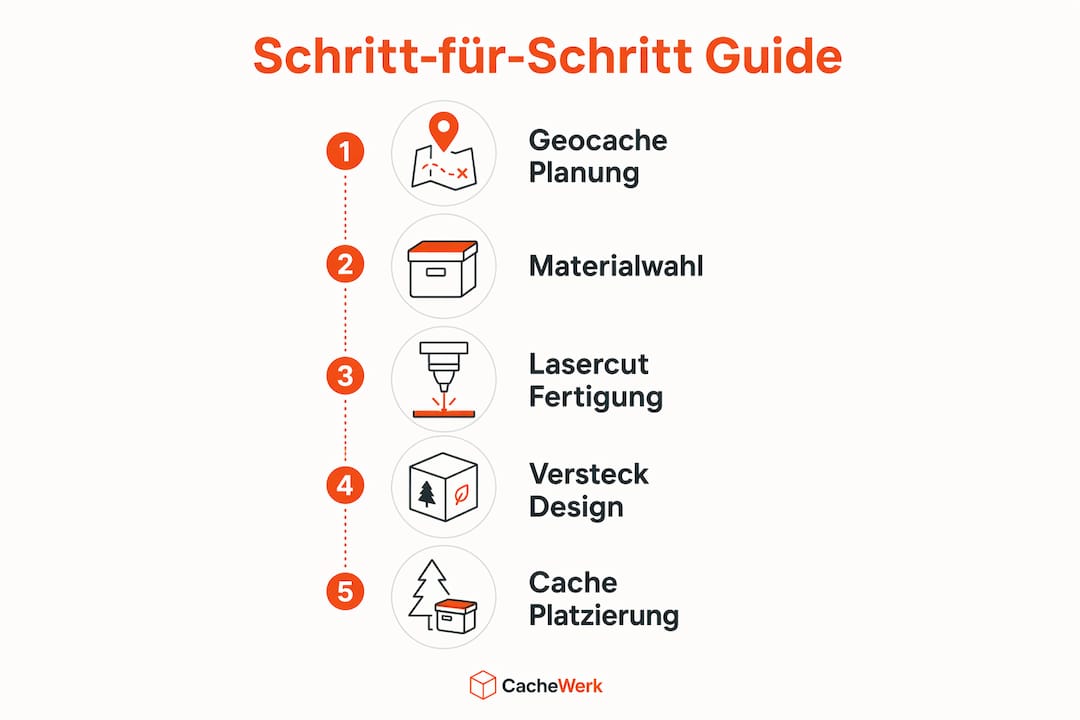
Der Weg vom Entwurf zum fertigen Geocache-Versteck folgt einem klaren Ablauf:
- Idee skizzieren: Was soll der Cache darstellen? Ein Stein, eine Schraube, ein Schild?
- Vektorgrafik erstellen: Programme wie Inkscape oder LightBurn erlauben verlustfreie Skalierungen, die für passgenaue Steckverbindungen unverzichtbar sind.
- Material wählen: Für Outdoor-Caches empfehlen sich Acryl oder behandeltes Hartholz, da beide langlebig und wetterfest sind.
- Testschnitt machen: Immer zuerst ein kleines Stück schneiden, um Leistung und Geschwindigkeit zu kalibrieren.
- Zusammenbauen und testen: Passt alles? Schließt der Deckel dicht?
Kreative Beispiele aus der Community: UV-aktivierte Nachtstationen mit gravierten Koordinaten, die erst unter Schwarzlicht erscheinen, oder mehrteilige Multi-Cache-Routen, bei denen jede Station ein gelaserte Holztafel mit dem nächsten Hinweis ist.
| Material | Eigenschaften | Empfohlene Lasereinstellung |
|---|---|---|
| Sperrholz (3 mm) | Gut schneidbar, leicht, günstig | Mittlere Leistung, langsame Geschwindigkeit |
| Acryl (klar, 3 mm) | Wetterfest, glatte Schnittkanten | Hohe Leistung, mittlere Geschwindigkeit |
| Hartholz (Buche, 4 mm) | Langlebig, schwerer zu schneiden | Hohe Leistung, niedrige Geschwindigkeit |
| MDF (3 mm) | Günstig, aber nicht wetterfest | Mittlere Leistung, mittlere Geschwindigkeit |
Cachewerk bietet Schritt-für-Schritt-Anleitungen für eigene DIY-Geocaches sowie 3D-gedruckte Spezialverstecke aus PETG. Das Label ABCreative, aus dem Cachewerk entstanden ist, liefert dazu passendes Zubehör für kreative Bastelprojekte. Wer seinen Cache mit einem persönlichen Trackable aufwerten möchte, findet bei Cachewerk personalisierte Trackables als Erinnerungsstücke für besondere Menschen oder Haustiere. Und für den ersten Fund lohnen sich die FTF-Münzen aus Holz mit optionaler Gravur als sammelbare Belohnung.
Was musst du rechtlich beim Platzieren eines Geocaches beachten?
Einen Cache einfach irgendwo hinlegen ist keine gute Idee. Es gibt klare Regeln, die du kennen solltest.
Grundstücke und Naturschutz: Auf Privatgelände brauchst du die Erlaubnis des Eigentümers. In Naturschutzgebieten ist das Verstecken von Caches oft verboten oder genehmigungspflichtig. Das Vergraben von Caches ist bei Geocaching.com ausdrücklich untersagt.
Plattformregeln: Geocaching.com verlangt, dass jeder Cache vor der Veröffentlichung von einem Reviewer geprüft wird. Dabei werden Lage, Sicherheit und Regelkonformität bewertet. Caches in der Nähe von Schulen, Behörden oder militärischen Anlagen werden in der Regel abgelehnt.
Sicherheit für Finder: Dein Cache darf keine Gefahr darstellen. Scharfe Kanten, giftige Materialien oder instabile Konstruktionen sind tabu. Gelaserte Verstecke aus Acryl oder Holz erfüllen diese Anforderung gut, solange du auf saubere Schnittkanten achtest.
Inhalt der Dose: Keine Lebensmittel, keine jugendgefährdenden Gegenstände. Tauschgegenstände sollten mindestens gleichwertig sein. Wer nichts tauscht, muss das auch nicht. Aber wer etwas entnimmt, legt etwas Gleichwertiges hinein.
Wichtige Erkenntnisse
Geocaching und Lasercutter ergänzen sich ideal: Wer präzise gelaserte Verstecke baut, hebt seine Caches aus der Masse heraus und begeistert die Community.
| Thema | Details |
|---|---|
| Geocaching-Grundprinzip | GPS-Koordinaten führen zu versteckten Behältern mit Logbuch, die nach dem Fund wieder versteckt werden. |
| Lasercutter im Cachebau | CO2-Laser schneiden Holz und Acryl präzise; CAD-Entwürfe kompensieren die Schnittbreite für passgenaue Gehäuse. |
| Sicherheit beim Lasern | Absaugung, Schutzbrille und Materialkenntnis sind Pflicht; niemals unbeaufsichtigt betreiben. |
| Materialwahl für Outdoor-Caches | Acryl und behandeltes Hartholz sind wetterfest und langlebig; MDF eignet sich nur für Innenanwendungen. |
| Rechtliche Grundregeln | Erlaubnis des Grundstückseigentümers einholen, Naturschutzgebiete meiden, Plattformregeln von Geocaching.com beachten. |