Geocoin Storage: How to Protect Coins During Transport and in the Cache

Use a waterproof PETling or a suitable protective cover for your Geocoin and log it correctly as soon as you pick it up. This is the fastest and safest answer to the question of proper Geocoin storage. Why a PETling? It's waterproof, can be discreetly attached to an eyelet, and is hardly noticeable in a cache, which reduces the risk of theft.
In practice, this means:
- Immediately pack the coin in a cover or PETling after removing it.
- Never post the tracking number publicly, not even in comments.
- Log the find online with "Retrieve from..." before moving on.
- Place the coin in a new cache promptly and document the process again there.
Key Takeaways
Secure Geocoin storage is most reliably achieved with a waterproof, inconspicuous container like a PETling combined with correct, timely logging.
| Topic | Details |
|---|---|
| Container Choice | PETling or aluminum PETling offer the best balance of waterproofing, robustness, and inconspicuousness. |
| Don't Forget to Log | Never post the tracking number publicly; always document finds and re-drops online promptly. |
| Instructions Instead of Tech | Laminated notes work better than SD cards or other sensitive additions. |
| Theft Protection Without Overdoing It | Inconspicuous hiding usually beats visible safeguards like chains or locks significantly. |
| Ready-Made Sets Save Time | Cachewerk offers starter bundles, ammo boxes, and crossbody bags as ready-to-use solutions for protection and transport. |
Table of Contents
- Quick Checklist: What to Consider Immediately for Geocoin Storage
- Which Container Is Suitable for Geocoin Storage Techniques?
- How Do You Properly Prepare a Coin for Hiding?
- How Do You Protect Coins from Theft Without Overloading the Cache?
- Transport on the Go: Properly Packing Backpacks, Bags, and Starter Kits
- Why Simple Solutions Almost Always Win with Geocoins
- These CacheWerk Products Directly Solve Your Storage Question
- Sources
Quick Checklist: What to Consider Immediately for Geocoin Storage
Before you pick up a coin or place it in a cache, a quick check is worthwhile. The following four steps together take less than two minutes but prevent the most common mistakes.
- Choose Protection: Grab a cover or PETling. You should still carry a zip bag as a backup in case the main container is missing.
- Don't Forget to Log: When taking it, enter "Retrieve from...". If you place the coin in another cache, explicitly mark the find there with the coin.
- Add Identification: A laminated note with the task and a carefully worded owner hint helps the next finder immediately understand what to do.
- Adhere to the Timeframe: As a rule of thumb, about two weeks are considered before a coin should be placed again. If it takes longer, briefly inform the owner.
Pro Tip: Keep a small reserve of zip bags in your car or backpack. If the cover ever goes missing, you're ready in seconds, and the coin stays dry.
This sequence—protection before logging before identification before deadline—repeats for almost every coin you handle on the go.
Which Container Is Suitable for Geocoin Storage Techniques?
Not every storage method suits every cache. The choice depends on how exposed the hiding spot is and how long the coin is intended to remain there.
PETling is the all-rounder. It offers a good balance of waterproofing, price, and availability and can be easily used in starter bundles. For most standard caches, this is perfectly sufficient.
Aluminum PETling adds another layer: more robust, often with engraving options, and significantly more resistant to rodents that like to chew on plastic. However, you usually pay a bit more for it.
Robust PETlings based on the keep2go principle feature an additional lid cap and an extra-thick sealing ring. Such constructions are particularly low-maintenance and suitable for caches with high visitor frequency, where moisture and wear would otherwise quickly become a problem.
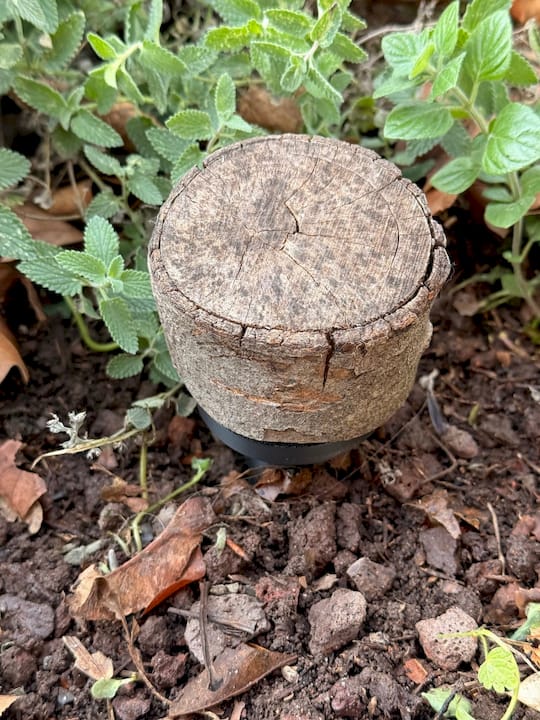
Nano containers and simple sleeves are extremely inconspicuous but offer less protection. Useful for short-term interim storage, not for months-long stays outdoors.
Magnetic containers and ammo boxes belong in stable, hard-to-reach hiding spots. They offer more volume but also more visibility, which only makes sense with appropriately protected placement.
| Container Type | Seal | Robustness | Capacity | Attachment |
|---|---|---|---|---|
| PETling | good | medium | small to medium | eyelet, carabiner |
| Aluminum PETling | very good | high | small to medium | eyelet, chain |
| Robust PETling (keep2go type) | very good | high | medium | eyelet |
| Nano/Sleeve | simple | low | very small | magnet, adhesive surface |
| Magnetic container/Ammo box | good | high | large | magnet |
Those opting for a complete set can find suitable PETling variants and complementary items for various cache types in Geocaching Equipment and Accessories.
How Do You Properly Prepare a Coin for Hiding?
Before a coin embarks on its first journey, you only need to take a few crucial steps. Owners and finders often make the same mistakes here.
- Drill only if absolutely necessary: If you want to add an eyelet, check the material beforehand and apply rust protection. Afterward, test the watertightness before the coin goes into the field. It's usually better to use a ready-made sleeve or chain on existing eyelets instead of drilling yourself.
- Laminate the instruction sheet: A short, laminated note with the task and carefully worded owner contact has proven effective in the community and increases the chance that finders will pass the coin on correctly.
- Respect activation: Owner rules apply. The tracking number remains private; it does not belong in public logs or photos.
- Avoid risky accessories: SD cards or USB sticks as additions sound creative but bring technical and sometimes legal problems. Avoid them completely.
Pro Tip: Occasionally treat the threads and sealing ring of metal PETlings with silicone grease. This keeps the seal pliable and significantly extends its lifespan.
How Do You Protect Coins from Theft Without Overloading the Cache?
A container safe might sound like a secure solution, but in practice, it rarely delivers the desired effect. Simpler methods often work better.
A PETling instead of a large container noticeably reduces the attractiveness for theft because it is smaller and less conspicuous. Fixing or chaining it initially seems logical, but it can provoke vandalism rather than prevent it, as obvious safeguards attract more attention. Inconspicuous hiding almost always beats visible security.
- PETling instead of an ammo box if the hiding spot is exposed.
- No visible chains or locks on small containers.
- Plan for regular maintenance by the owner; a PETling requires significantly less.
- In case of repeated theft: pause the cache briefly or deliberately make the contents less attractive.
If you manage a location with a consistently high risk, you should consider a more stable hiding spot, such as the CacheWerk Ammo Box with a concealed screw mechanism. For less frequented, quieter locations, a simple PETling is usually sufficient.
Transport on the Go: Properly Packing Backpacks, Bags, and Starter Kits
When hiking or on several caches in a row, organization is key. Coins should be stored separately in small cases or zip bags, never loose in a pocket where moisture and friction can quickly leave their mark.
- Small cases or zip bags per coin, separate from keys and coins.
- A Crossbody Bag with Opencaching logo keeps everything at hand without you having to rummage through your backpack.
- Starter bundles consisting of a PETling and logbook are ready for immediate use and save space in your luggage.
- Collector coins stay in their own cabinet at home; traveling coins only briefly in your luggage.
Those who combine geocaching with longer tours can find more packing tips for multi-day excursions in the Practical Guide to Geocaching and Hiking.
Why Simple Solutions Almost Always Win with Geocoins
The geocaching community tends to solve security problems technically: thicker containers, screwed-down hiding spots, complicated mechanisms. However, experience shows something different. Low-maintenance, inconspicuous solutions like PETlings, zip bags, and laminated notes almost always beat elaborate security measures because they are quicker to deploy and offer less surface area for attack.
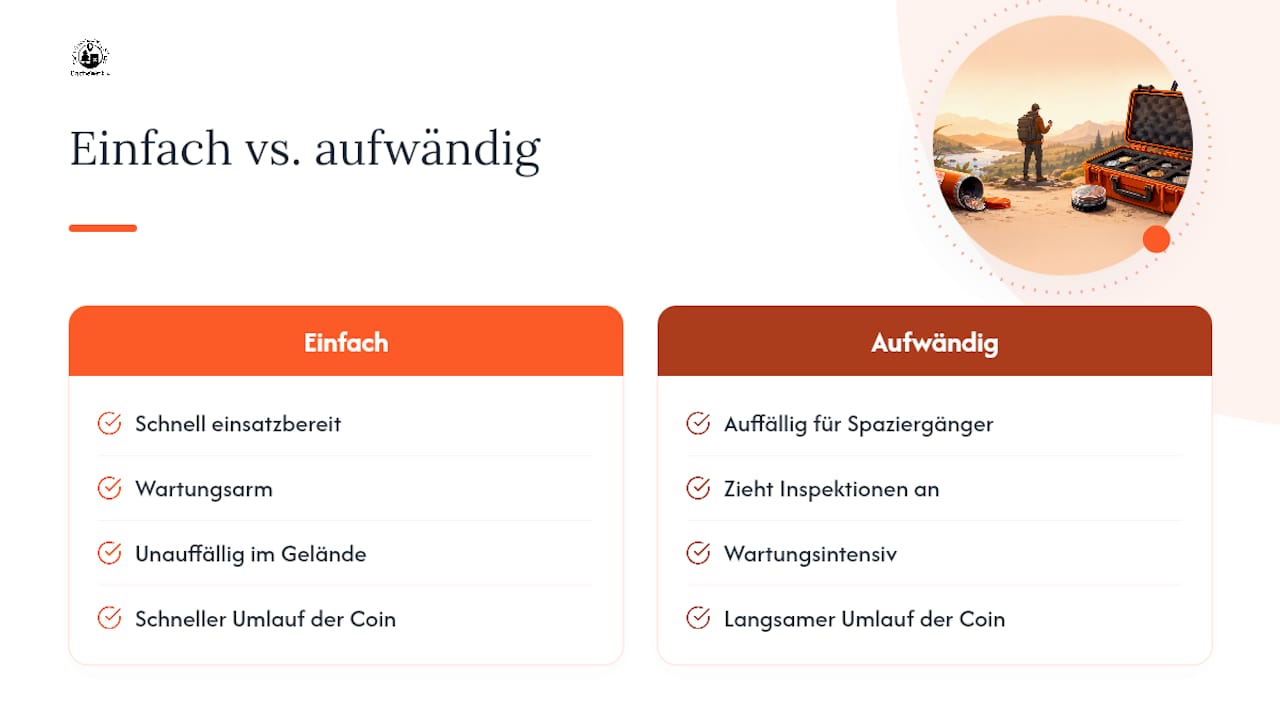
The biggest misconception is assuming a hiding spot must be "theft-proof." This doesn't exist. What works is inconspicuousness combined with quick circulation. A coin that sits in a well-camouflaged PETling for two weeks is safer than a coin in a massive but conspicuous ammo box that every passerby inspects.
Owners also often underestimate how much a short, laminated instruction sheet increases the success rate. Finders who immediately know what to do are more likely to pass the coin on correctly, rather than keeping it out of uncertainty. So, if you're investing in storage, invest in clarity first, not steel.
— Benedikt
These CacheWerk Products Directly Solve Your Storage Question
Instead of improvising coin transport in film canisters or loose bags, a well-thought-out set that includes protection, a logbook, and attachment is worthwhile.
Cachewerk's Geocaching Starter Bundles combine a PETling, weather-resistant logbook, and holder or suspension in one set, ready for immediate use without you having to gather individual parts. For stable, permanent hiding spots, the Ammo Box with its trick design offers a concealed screw mechanism that can withstand even heavily frequented locations. For those who prefer individual solutions, the Survey Point Hiding Spot offers a 3D-printed variant with an integrated PETling holder, designed for long-term, weather-resistant installations. For daily transport on the go, the Crossbody Bag with Opencaching logo is suitable, keeping coins, spare pens, and small items within reach.
Browse the shop and put together your own storage set before your next coin travels again.