
Sustainable Geocaching: creative and eco-friendly
Geocaching is considered a harmless outdoor hobby, but the reality is more complicated: Many geocaches are hidden illegally, without permission and without regard for nature or law. Worldwide, there are millions of active caches, but a disturbingly high percentage of them violate protected areas, property rights, or leave visible traces in nature. This guide shows you how to understand legal basics, adhere to ecological rules, and simultaneously build creative, sustainable hiding spots that excite seekers and protect the environment.
Table of Contents
- What does sustainable cache hiding really mean?
- Legal Regulations and No-Go Zones
- Environmentally Friendly Practices for Hiding Caches
- Sustainable Materials and DIY Innovations
- Differences: Sustainability Urban vs. Rural
- Maintenance and Control: How to Keep Your Cache Sustainable
- Resource-Saving Geocaching with CacheWerk
- Frequently Asked Questions
Key Takeaways
| Point | Details |
|---|---|
| Observe permissions | Caches may only be hidden with the permission of the owner or administration. |
| Protect nature | No digging or damaging plants, and always avoid protected areas. |
| Environmentally friendly materials | Use local, natural, or recycled materials for durable hiding spots. |
| Distinguish city and country | Different rules apply in the forest than in the city – always consider terrain and risks. |
| Control ensures sustainability | Regular maintenance keeps the cache attractive and environmentally friendly. |
What does sustainable cache hiding really mean?
Sustainability in geocaching is not just a buzzword. It concretely means: no permanent intervention in nature, no litter, no damage to vegetation or wildlife. Whoever places a cache takes responsibility for that location as long as the cache is active.
The conflict of objectives is real. A thirst for adventure meets ecological and legal requirements, and whoever ignores this conflict risks not only trouble with authorities but also harming the entire hobby. The balance between creativity and the protection of sensitive ecosystems is not an option, but an obligation.
“A well-placed cache leaves no trace other than joy for the seekers.”
Typical problems with thoughtless hiding:
- Caches in nature reserves without permission
- Hiding spots on private property without the owner's permission
- Containers made of non-weather-resistant plastic that disintegrate
- Camouflage with foreign materials that stand out or alter nature
- Lack of maintenance, causing caches to become sources of litter
In the following sections, you will learn everything about legal limits, environmentally friendly methods, sustainable materials, and the differences between urban and rural hiding spots. We will also show you how you can creatively design urban hiding spots without breaking rules.
Legal Regulations and No-Go Zones
Sustainable geocaching begins before the first step into the terrain: with the knowledge of where you are allowed to place a cache at all. Many geocachers underestimate the legal complexity behind a seemingly simple hiding spot.
Owner permissions are indispensable, protected areas are taboo, and caches must never be buried. Those who ignore this risk fines, criminal charges, and in the worst case, the reputation of the entire hobby.
| Zone | Status | Note |
|---|---|---|
| Public Parks | Often allowed | Community permission recommended |
| Private Property | Forbidden without permission | Obtain written permission |
| Nature Reserve | Generally forbidden | No exceptions |
| Waters and Shores | Restricted | Observe water law |
| Forest (public) | Conditionally allowed | Inform forestry office |
| Heritage Sites | Forbidden | Monument protection law applies |
Nature reserves, breeding and retreat areas for animals, and areas with logging must generally be avoided. This also applies to breeding and fawning seasons in spring, when animals are particularly sensitive to disturbance.
Top 5 Legal Mistakes in Cache Placement:
- Placing a cache on private property without permission
- Creating a hiding spot in a designated nature reserve
- Burying a cache or attaching it to living trees
- Not leaving contact details on the cache
- Not removing or updating the cache after its expiration
Pro Tip: An ideal permission is written, includes the exact location, duration, and the name of the person responsible. Keep it digitally on your smartphone so you can show it immediately during a check by forest rangers or police.
Environmentally Friendly Practices for Hiding Caches
From the legal background, we now move on to proven methods for geocachers to combine environmental protection and fun. The principle is: camouflage by adaptation, not by intervention.
No damage to vegetation, no burying of caches, no tearing off branches or moss. Those who camouflage a cache use what is already there and change nothing permanently.
Step-by-step guide for sustainable cache placement:
- Location analysis: Check if the location is legally permitted and ecologically sensitive.
- Obtain permission: Contact property owners or the responsible authority.
- Choose container: Weatherproof, durable, preferably made from recycled or natural materials.
- Plan camouflage: Use existing stones, bark, or natural structures without damaging them.
- Placement: Place the cache so that no animal is disturbed and no plant is damaged.
- Documentation: Photograph the location for future inspections.
- Create listing: Clear instructions for seekers to avoid unnecessary searching that impacts the environment.
“The geocaching scene is often self-regulating, but without external control, hot spots with visible paths and damage quickly emerge.”
Adhering to path regulations and avoiding sensitive zones is not a restriction of fun, but the basis for geocaching to remain possible in the long term. Those looking for environmentally friendly hiding ideas will find many creative alternatives to classic plastic containers today.
Pro Tip: Local materials such as flat stones, pieces of bark, or dried moss are excellent for camouflage. They are inconspicuous, do not rot quickly, and blend perfectly into the landscape. Never take these materials directly from nature; instead, use fallen material from the ground.
Sustainable Materials and DIY Innovations
Once the methods are right, the appropriate material is crucial. Much more is possible with a smaller ecological footprint than many geocachers think.
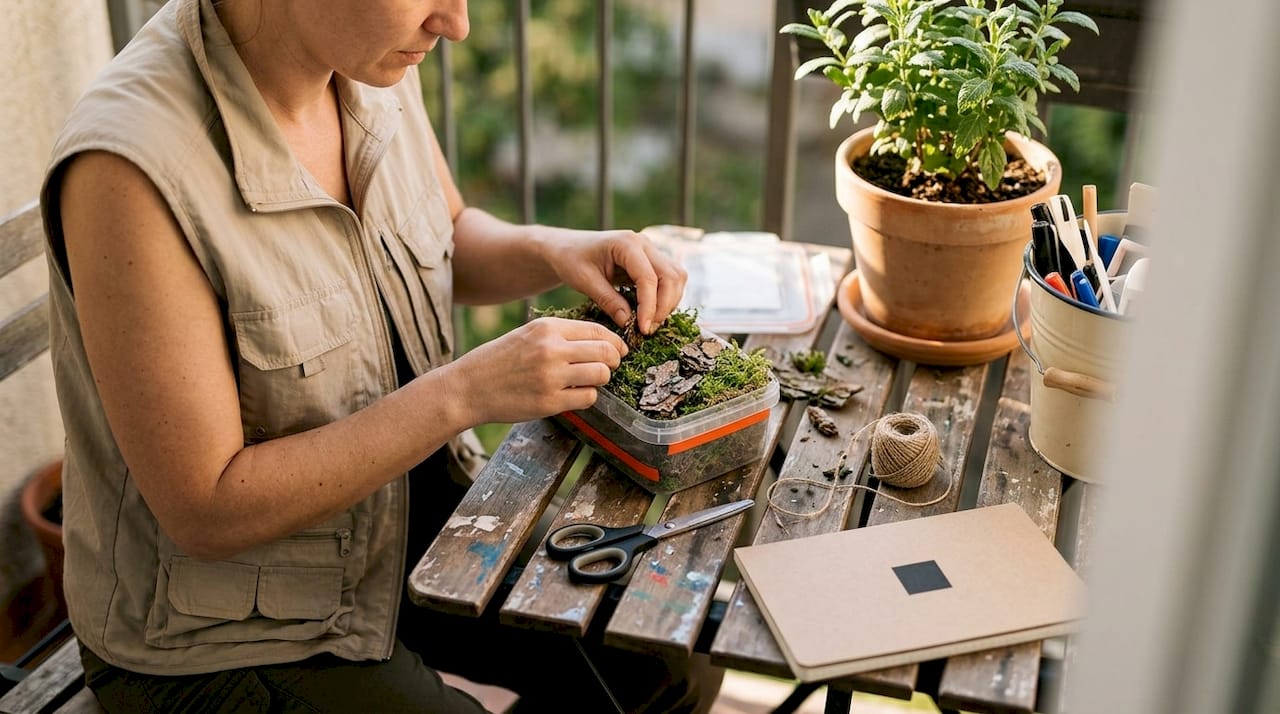
Natural camouflage with moss, bark, and stones, as well as fake rocks instead of plastic, are now the preferred solutions for experienced geocachers. Those who build themselves have full control over material selection and durability.
| Material | Sustainability | Durability | Camouflage |
|---|---|---|---|
| Wood (treated) | Medium | Medium | Very good |
| Glass (recycled) | High | High | Low |
| Plastic (conventional) | Low | High | Good |
| Fake Rock (PETG print) | Medium to high | Very high | Excellent |
| Metal (stainless steel) | Medium | Very high | Low |
| Natural stone (hollow) | Very high | Very high | Excellent |
| Recycled plastic | Medium | High | Good |
The best sustainable DIY solutions for geocachers:
- Fake Rocks made from PETG: Weatherproof, deceptively real, and durable, ideal for rural hiding spots
- Magnetic caches made from stainless steel: Robust, corrosion-resistant, and inconspicuous for urban metal structures
- Wooden boxes with beeswax coating: Natural, biodegradable, and easily camouflaged
- Recycled film canisters or medicine containers: Compact, watertight, and resource-saving
- Bark hiding spots with Velcro: Easy to attach without nails or glue
Those looking for sustainable cache building ideas should pay particular attention to the combination of durability and camouflage. A cache that disintegrates after one winter is neither sustainable nor fair to seekers.
Differences: Sustainability Urban vs. Rural
Sustainable geocaching is not a one-size-fits-all solution. City and country demand different approaches, different materials, and different sensitivities.
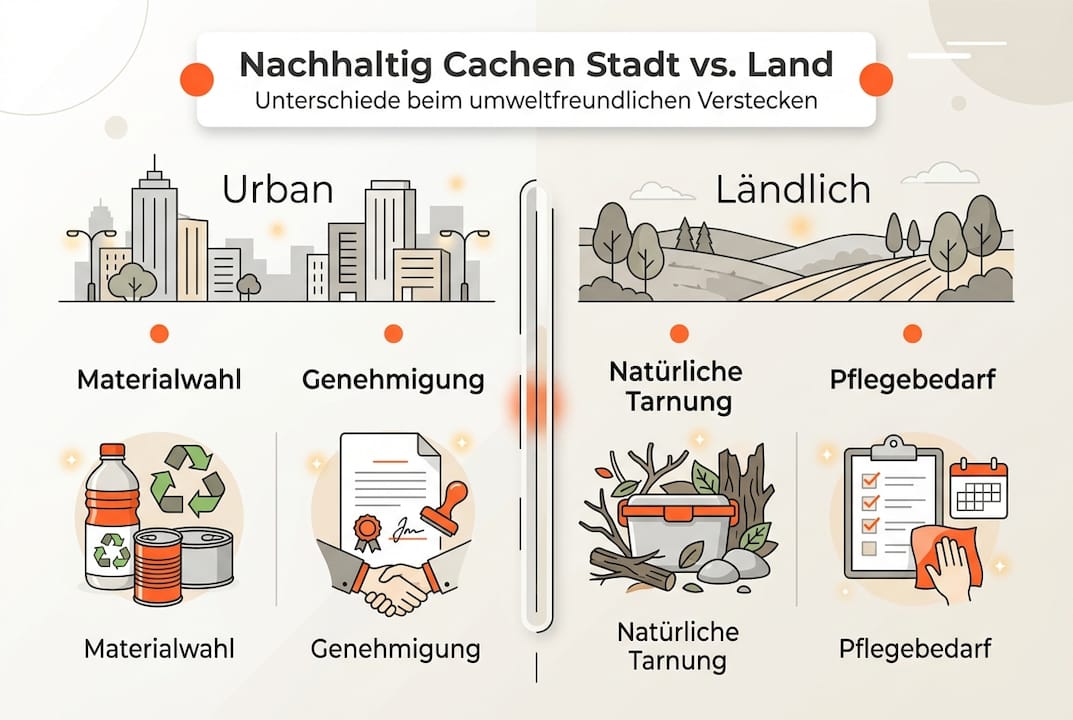
In urban areas, public spaces serve as the base, private property is taboo, and in rural areas, path regulations and nature conservation take precedence. The challenges are fundamentally different.
Best Practices for Urban Hiding Spots:
- Inconspicuous camouflage on existing structures (lampposts, benches, bridges)
- No hiding spots on private buildings without permission
- Choose vandalism-proof containers
- No hiding spots near schools or sensitive facilities
- Regular inspection due to high visitor frequency
Best Practices for Rural Hiding Spots:
- Only search and place on marked paths
- Respect breeding and fawning seasons (avoid March to July)
- No hiding spots near water bodies without permission
- Camouflage exclusively with natural materials from the ground
- Inform the forestry office or nature conservation authority in advance
“Family-friendliness and no vandalism are the most important principles when placing caches in public spaces.”
Family-friendliness and no vandalism are crucial so that caches can last in the long term and are not removed by authorities. Those who know different hiding strategies for urban and rural areas place caches that last for years.
Maintenance and Control: How to Keep Your Cache Sustainable
A sustainable hiding spot does not end with the first find. Regular maintenance and incorporating community feedback are just as important as the initial placement.
Statistic: Over 3 million active geocaches are listed worldwide. A significant portion of these are never checked again after initial placement, leading to litter problems, damaged containers, and conflicts with authorities.
The risks of uncontrolled hiding spots are high: containers disintegrate, logbooks get wet, and seekers leave trampled paths while desperately searching for a long-rotted cache.
Inspection and maintenance intervals for sustainable caches:
- After initial placement (Week 1): Read first logs, check feedback, verify coordinates.
- Monthly (Months 1 to 3): Check container for watertightness and condition.
- Semi-annually: Complete on-site inspection, replace logbook, renew camouflage.
- After extreme weather: Immediate inspection after storm, flood, or severe frost.
- Annually: Renew permissions, update listing, document cache condition.
Community feedback is invaluable. Reading the logs of your seekers carefully allows you to detect early when a container is causing problems or the camouflage has been exposed. Use the cache maintenance tips from the community to continuously improve your hiding spot.
Resource-Saving Geocaching with CacheWerk
Those who want to geocache sustainably need the right materials and ideas. This is exactly where CacheWerk comes in.
On cachewerk.de you will find a curated selection of sustainable geocaching accessories specifically developed for responsible geocaching. From weatherproof PETG-printed fake rocks to inconspicuous magnetic caches and personalized trackables, CacheWerk offers solutions for urban and rural hiding spots. All products are designed for durability so that your cache does not become an environmental problem after one winter. Stop by and get inspired by ideas that combine creativity with responsibility.
Frequently Asked Questions
May I hide a cache in a nature reserve?
No. Nature reserves must be avoided, as caches can harm flora and fauna there and are legally prohibited.
Which materials are recommended for sustainable geocaches?
Natural camouflage and durable materials like fake rocks, wood with natural protection, or recycled containers are ideal because they do not burden the environment.
How often should I check my cache?
At least twice a year and after any extreme weather event. Regular maintenance prevents your cache from becoming an environmental problem.
Do I need permission for my cache?
Yes, always. Caches may only be placed with the permission of the landowner or the responsible authority.
Are magnetic caches in bodies of water sustainable?
No. Magnetic caches in bodies of water are to be rejected for environmental and legal reasons and are expressly forbidden in many protected areas.
