
Sustainable Geocaching: Protecting Nature & Finding Caches
Many geocachers believe their treasure hunt is automatically eco-friendly. After all, you're out in nature, without engine noise or exhaust fumes. But without clear sustainability principles, even well-intentioned caches can cause real damage: trampled biotopes, damaged trees, disturbed animals. Sustainable geocaching means actively taking responsibility, not just passively enjoying nature. In this article, you'll learn what sustainability in geocaching truly means, what rules apply, and how to create creative, nature-compatible caches.
Table of Contents
- What does sustainability mean in geocaching?
- Tips for sustainable cache hiding in nature
- Creative ideas for nature-compatible cache hiding and material selection
- Best Practice: Sustainable GeoTours and educational approach
- Maintenance of existing caches and waste reduction: The key to sustainability
- Implementing sustainable geocaching in practice: Products and solutions
- Frequently asked questions about sustainable geocaching
Key Insights
| Point | Details |
|---|---|
| Observe rules | Adhering to environmental guidelines and local laws protects nature and ensures sustainable caching experiences. |
| Act practically | Hiding caches in the right place, taking trash with you, and regularly maintaining existing caches makes geocaching sustainable for the future. |
| Creative solutions | Natural camouflage and durable materials ensure caches remain inconspicuous and environmentally compatible. |
| Promote education | GeoTours and EarthCaches combine adventure with knowledge and make sustainable geocaching an experience. |
What does sustainability mean in geocaching?
Sustainability in geocaching is not just a buzzword. It's about minimizing the impact on nature while ensuring the long-term viability of the hobby. Those who carelessly hide caches today risk prohibitions in protected areas and harm the entire community.
Groundspeak's geocache guidelines explicitly demand respect for the environment, adherence to local laws, and regular cache maintenance. These are not recommendations, but prerequisites for a cache to be listed.
What this specifically entails:
- Minimizing interference: No digging, no breaking branches, no altering the natural environment
- Regular maintenance: Defective containers, soaked logbooks, and trash must be removed promptly
- Respect for protected areas: Nature reserves, national parks, and biotopes have their own rules that take precedence
- Compliance with local laws: The Federal Nature Conservation Act and state regulations always apply
| Criterion | Sustainable Geocaching | Conventional Geocaching |
|---|---|---|
| Location selection | Roadside, paved paths | Often in the middle of the terrain |
| Container selection | Durable, weather-resistant | Often simple plastic containers |
| Maintenance | Regularly planned | Often neglected |
| Permits | Obtained | Rarely considered |
"When you place a cache, you take responsibility for that location, not just for the container." This attitude is at the core of sustainable geocaching.
With this basic understanding, it becomes clear why sustainability in geocaching is not just a trend, but a prerequisite for treasure hunting.
Tips for sustainable cache hiding in nature
The theory is clear. But how do you practically implement sustainability when hiding a cache? Here are the most important rules for practice.
According to the rules for geocaching in the forest: no off-trail walking, no damaging trees, and consistent protection of sensitive biotopes. This sounds simple, but is often underestimated.
Five basic rules for sustainable locations:
- Always place caches along the edge of a path or on paved trails, never in dense undergrowth
- Completely refrain from using nails, hooks, or screws in trees
- Avoid bat roosts and caves, especially during the protected period from October to April
- Keep distance from bird nests and wildlife crossings
- Obtain permission from the forestry office before placing a cache in forested areas
An often overlooked fact: Over 50% of forest areas in Lower Saxony are subject to special protection regulations. Those who place a cache there without permission risk not only the archiving of the cache, but also legal consequences.
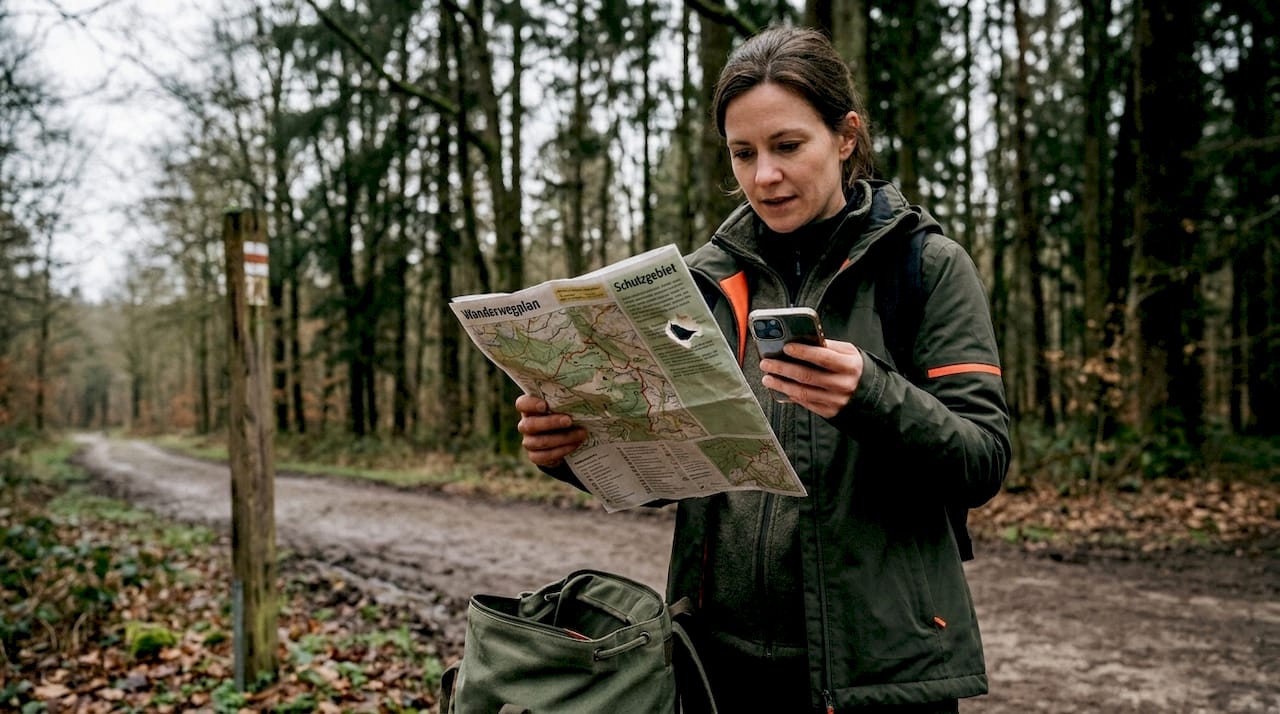
Pro-tip: Use the map function on geocaching.com to identify protected areas in your region before selecting a location. Many reviewers immediately reject caches in sensitive zones.
For creative caches: creativity and nature conservation are not mutually exclusive. A well-camouflaged cache at the roadside is often more exciting than a poorly placed one in the middle of a biotope.
Creative ideas for nature-compatible cache hiding and material selection
Choosing the right container is crucial for sustainability and longevity. Not every material can withstand wind, rain, and temperature fluctuations.
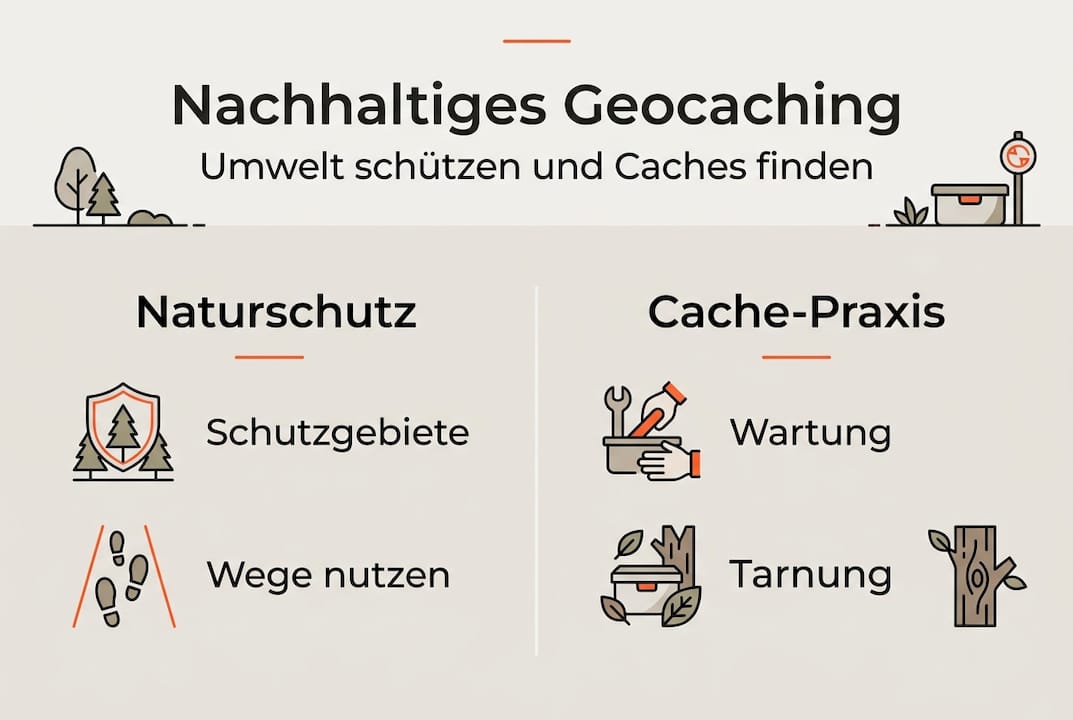
The hiding theme 2025: Back to Nature shows: natural camouflage, weather-resistant containers, and obtaining permits are the three pillars of a sustainable cache.
| Container Type | Durability | Camouflage | Environmental compatibility |
|---|---|---|---|
| Plastic (PETG) | Very high | Good for coloring | Medium |
| Stainless steel | Very high | More difficult | High |
| Wood | Medium | Very natural | High with treatment |
| Standard Plastic | Low | Poor | Low |
Which camouflages really work in nature?
- Bark camouflage: Containers with a tree bark look virtually disappear on tree stumps
- Stone optics: Artificial stone caches look deceptively real on forest paths
- Moss and natural materials: Loosely applied, but never glued, as the moss would otherwise die
- Earth colors: Brown and gray blend in with the forest floor
Pro-tip: Use containers printed from PETG for innovative products. PETG is weather-resistant, durable, and can be molded into almost any shape. This significantly reduces maintenance effort.
Regular maintenance significantly extends a cache's lifespan. Plan at least two checks per year: examine the logbook, test the container for leaks, and inspect the surroundings for damage.
Best Practice: Sustainable GeoTours and educational approach
GeoTours are a particularly clever format for sustainable geocaching. They bundle several caches along a thematic route and promote short distances and conscious exploration.
An outstanding example: The Oldenburg Climate Treasures have attracted more than 20,000 treasure hunters and directly link geocaching with climate protection topics. The tour shows how geocaching can raise awareness for environmental issues.
"Geocaching can combine education and adventure when done right." This is exactly what GeoTours like the Oldenburg Climate Treasures achieve.
What characterizes sustainable GeoTours:
- Thematic focus on nature, climate, or regional history
- Short distances between caches reduce the ecological footprint
- Clear rules for finders protect sensitive areas
- Educational content at each cache location
EarthCaches are another strong format. They have no physical container, but convey geological or ecological knowledge directly on site. Geocaching as an educational tool works particularly well when finders have to actively answer questions and learn something about their location.
| Format | Physical Cache | Educational Value | Environmental Impact |
|---|---|---|---|
| Traditional Cache | Yes | Low | Medium |
| EarthCache | No | Very high | Very low |
| GeoTour | Yes | High | Low |
GeoTours demonstrate how sustainable and creative approaches work in practice and integrate educational values.
Maintenance of existing caches and waste reduction: The key to sustainability
A new cache isn't always the best solution. Often, it's more sustainable to maintain and improve existing caches rather than placing new ones. Fewer caches, but better maintained ones, preserve nature in the long run.
Maintaining existing caches instead of laying new ones measurably reduces environmental impact. Every new cache means new visitors to a new location. Every maintained cache keeps visitors on known paths.
Four steps for sustainable cache maintenance:
- Regularly renew the logbook and check for moisture
- Inspect the container for leaks and damage
- Clear the area of trash and avoid creating new paths
- If necessary, adjust the location if damage to nature is apparent
CITO stands for Cache In Trash Out. The principle is simple: Whoever searches for a cache takes trash they find along the way with them. The CITO action in the Harz shows how effective organized trash collection campaigns can be. CITO is now a recognized standard for waste reduction in the geocaching community.
Those who collect trash while geocaching leave nature better than they found it. This is the core of CITO.
Pro-tip: Always carry a small trash bag with you. This way, you can spontaneously CITO without needing to be specially equipped. Many maintenance-friendly products are designed to directly support maintenance and waste avoidance.
The Federal Nature Conservation Act §39 Abs. 6 also stipulates that plants and animals in the wild must not be unnecessarily disturbed. Anyone who places or maintains caches in sensitive areas must always keep this in mind.
Implementing sustainable geocaching in practice: Products and solutions
Sustainable geocaching requires the right tools. Durable containers, clever camouflage, and low-maintenance solutions make the difference between a cache that gets archived after a year and one that provides joy for ten years.
At CacheWerk, you'll find exactly that: products designed for outdoor use that combine sustainability with creativity. Whether you're looking for an inconspicuous fake traffic sign cache for urban areas or robust, nature-compatible containers for the forest, the assortment covers both worlds. The equipment and accessories are designed for durability, so you have to restock and touch up less often. Less effort, more fun, and less strain on nature.
Frequently asked questions about sustainable geocaching
Why should sustainability be considered in geocaching?
Only through sustainable practices can nature remain healthy and geocaching be possible in the long term. Geocache guidelines demand environmental protection and maintenance as a basic prerequisite for every cache.
Where can I hide a cache in nature reserves?
Caches may only be placed at the edge of paths, never in dense biotopes. Trees and sensitive areas must be consistently protected according to the rules for geocaching in the forest.
What is CITO and why is it sustainable?
Cache in Trash Out means taking found trash with you and disposing of it while geocaching. The CITO action is a proven standard for active environmental protection in the community.
How can I make my cache as low-maintenance and nature-compatible as possible?
Weather-resistant containers, natural camouflage, and regular checks are the three most important factors for a durable, nature-compatible cache.
Can geocaching also be used as an educational format?
Yes, EarthCaches and GeoTours convey knowledge about nature and environmental protection directly on site. Geocaching as an educational tool is particularly effective when finders actively answer questions and discover new things.