Outdoor Cache Hiding Guide: Building Creative Geocaches

TL;DR:
- A robust, weatherproof hide protects the logbook and contents long-term.
- Proper camouflage and regular maintenance secure the cache from muggles and damage.
- Location, permission, and materials are crucial for a successful geocache.
Your carefully placed cache is muggled after three weeks, the logbook is soaked, or the container is lying openly in the grass. Many geocachers are all too familiar with this scenario. However, these problems can almost entirely be avoided with the right planning, suitable materials, and a bit of creativity. This guide shows you step-by-step what really matters for a robust outdoor hide: from choosing the right location and the best containers to camouflage and maintenance. Whether you're a beginner or an experienced cacher, you'll find everything you need here.
Table of Contents
- What makes a good outdoor cache hide?
- Materials and tools: What you need for your hide
- Step-by-step guide: Hiding your outdoor cache
- Avoiding mistakes and maintaining your cache: Common pitfalls
- The real adventure: Why creative hides shape the community
- Equipment and support for your perfect outdoor geocaching
- Frequently asked questions about outdoor cache hides
Key Takeaways
| Point | Details |
|---|---|
| Weatherproof selection | A good outdoor hide needs robust, sealed containers and suitable camouflage. |
| Observe rules | Always get permission and maintain distance from sensitive areas. |
| Precise coordinates | Take time for accurate GPS data so seekers can succeed. |
| Maintenance counts | Regular checks protect your cache from archiving and frustration in the community. |
What makes a good outdoor cache hide?
A successful outdoor hide meets several requirements simultaneously. It must be weatherproof, well-camouflaged, accessible, and environmentally friendly. Sounds like a lot? It's not, once you understand the basic principles.
The most important criterion is weather resistance. Containers must be sturdy, waterproof, and include a logbook so the cache functions for months. A cheap plastic container without a sealing ring rarely lasts longer than one season.
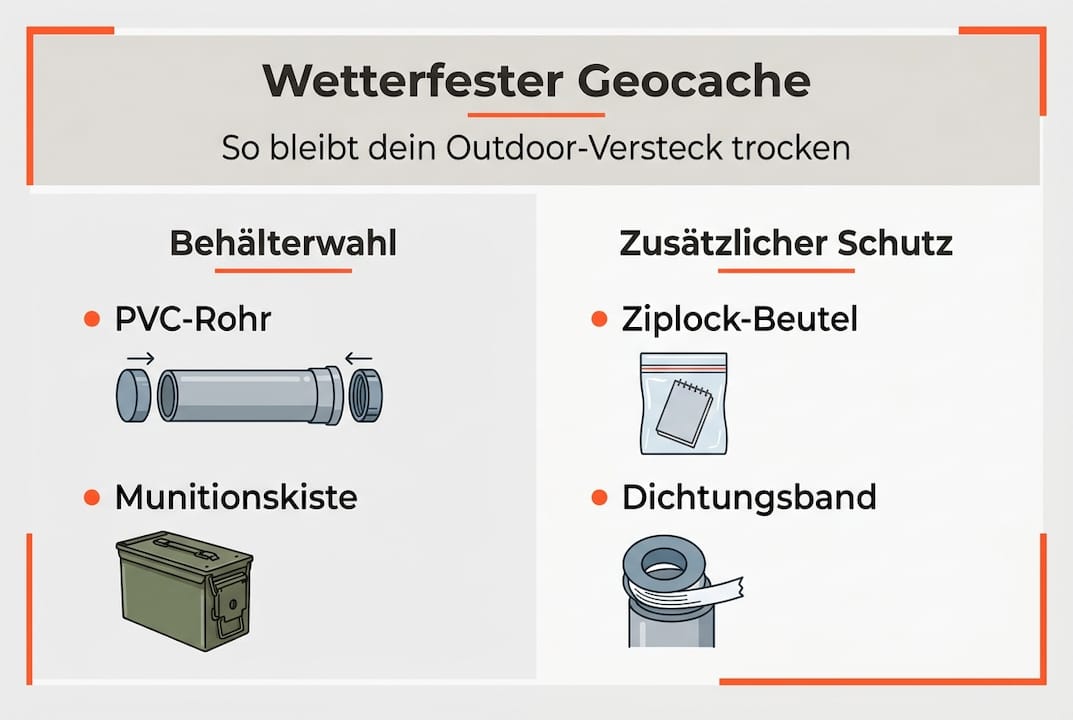
Equally important is the legal aspect. Landowner permission is required, problematic locations must be avoided. This means: no hiding on private property without permission, no placing in nature reserves, and no placement near schools or public facilities.
Here's a direct comparison between typical mistakes and best practice:
| Typical Mistake | Best Practice |
|---|---|
| Container without seal | Waterproof container with rubber seal |
| Hide on private property | Obtain permission or choose public land |
| No camouflage | Use natural materials or fake objects |
| One-time placement, never checked again | Plan for regular maintenance |
| Too exposed location | Sheltered, inconspicuous spot |
For creative hides, the camouflage should also blend with the surroundings without damaging nature. Moss should not be torn off, bark not removed from living trees.
Note: A good hide is not the most difficult, but the most well-thought-out. Those who enjoy the community also think of the finders.
The most important characteristics at a glance:
- Waterproof, sturdy container with logbook
- Location with permission and distance from prohibited zones
- Natural or inconspicuous camouflage
- Regular maintenance and inspection
- Consider accessibility for different age groups
Anyone who considers these points from the start lays the foundation for a safe geocache that will bring joy for a long time.
Materials and tools: What you need for your hide
The choice of the right materials determines whether your cache survives a year or just three weeks. Four properties are key here: stability, watertightness, inconspicuousness, and environmental friendliness.
DIY creative containers like PVC pipes, ammo boxes, film canisters, and recycled household items are particularly popular because they are robust and versatile. Each container type has its own strengths and weaknesses:
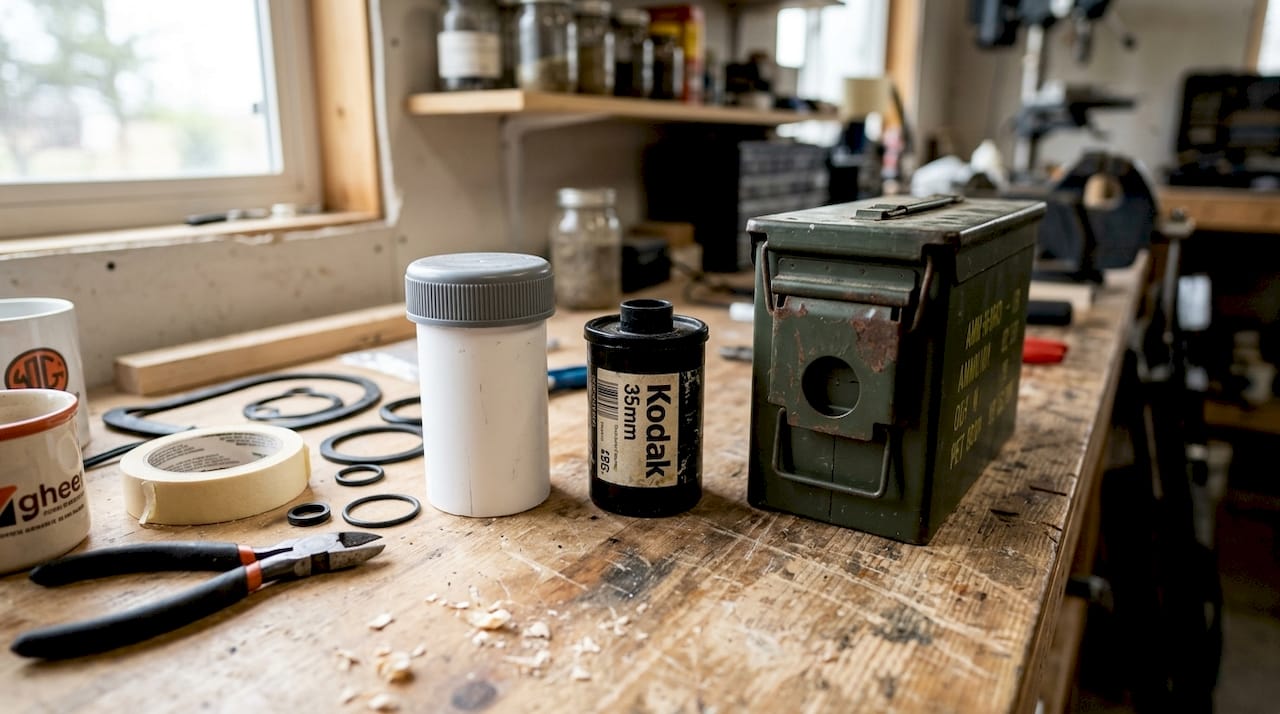
| Container Type | Advantages | Disadvantages |
|---|---|---|
| Ammo Box | Very robust, waterproof | Heavy, conspicuous |
| PVC Pipe | Inexpensive, adaptable | Needs good end caps |
| Film Canister | Small, easy to camouflage | Little space for content |
| Screw-top Jar | Transparent, inexpensive | Fragile |
| Special Fake Objects | Perfect camouflage | More expensive to purchase |
Various options are available for camouflage:
- Natural materials: moss, bark, stones, branches
- Fake objects: artificial rocks, fake screws, tree stump imitations
- Magnets: for urban hides on metal surfaces
- Color and texture: paint containers in earth tones
For tools, you should have the following: a GPS device or smartphone with good accuracy, duct tape and sealant for repairs, cable ties and wire for fastening, and gloves for protection when placing.
Pro-tip: Always use an additional Ziploc bag as an inner protective layer for the container. This way, the logbook stays dry even if the outer seal fails.
For creative geocaching containers, it's worth considering 3D-printed special parts made of PETG. This material is weather-resistant, dimensionally stable, and can be shaped into almost any form. Especially for unusual shapes and urban camouflages, it is hard to beat.
Also, think about the logbook itself: weatherproof paper or laminated sheets significantly extend its lifespan. A small pencil, preferably attached with a string, completes the setup.
Step-by-step guide: Hiding your outdoor cache
Now it's time to get down to business. With the right preparation, placing your cache will go smoothly.
- Scout the location: Visit the location beforehand without the container. Check accessibility, safety, and whether muggles (non-geocachers who don't know the game) frequently visit the spot.
- Obtain permission: Clarify with the property owner or the responsible authority if you are allowed to place a cache.
- Prepare the container: Fill in the logbook, check for watertightness, and store everything securely in the Ziploc bag.
- Place the cache: Securely attach the container without damaging plants or permanently moving rocks.
- Apply camouflage: Use existing natural materials or fake objects that blend with the surroundings.
- Measure coordinates: Record coordinates precisely, stabilize the GPS for 30 to 60 seconds before saving the position. Multiple measurements increase accuracy.
- Create documentation: Photograph the hideout from different angles for your own reference.
- Perform a final check: Recheck safety, accessibility, and compliance one last time.
Statistic: Caches with inaccurate coordinates receive up to three times more negative logs than precisely measured hides.
Pro-tip: Measure the coordinates on different days and at different times. GPS signals can fluctuate by several meters depending on weather and satellite position. The average of three measurements is significantly more reliable.
For tips on coordinate measurement and other technical details, it's worth looking at our further resources. Beginners, in particular, often underestimate how much GPS accuracy depends on the location. Under dense foliage or between tall buildings, the deviation can be considerable.
Avoiding mistakes and maintaining your cache: Common pitfalls
The hide is placed, the cache is online. Now the real work begins. Many cachers make the mistake of never checking back after listing.
Regular maintenance protects against negative logs and archiving. An unmaintained cache attracts bad reviews and will eventually be archived by the platform, i.e., permanently deactivated. This is annoying and easily avoidable.
The most common mistakes at a glance:
- Too conspicuous placement: A bright orange container in green bushes will be noticed by everyone, including muggles.
- Excessive creativity without function: A hide that is so complex that even experienced cachers can't find it is no fun.
- Incorrect camouflage: Camouflage that fades or washes away after a week does not provide lasting protection.
- Lack of maintenance: Flooded containers, soaked logbooks, and missing pens frustrate finders.
- Too difficult access: A cache that can only be reached with climbing gear but is listed as easy causes frustration.
Remember: The balance between challenge and findability is the core of a good cache. Too easy is boring, too difficult is frustrating.
To avoid mistakes when hiding, we also recommend actively involving the community. Ask trusted cachers in your area to check the cache occasionally if you can't be there yourself. The community network is an underestimated tool for cache maintenance.
You should also regularly keep an eye on cache safety tips. Safety-relevant changes at the location, such as construction work or altered access routes, can quickly turn a cache into a problem.
The real adventure: Why creative hides shape the community
At CacheWerk, we are convinced: The best caches are not the most difficult, but those that tell a story. A hide that makes you think, surprises you, or simply perfectly matches the surroundings, stays in memory. And that's exactly what holds the geocaching community together.
Many of our customers report that they developed their most creative ideas from setbacks. A cache that was muggled three times made them think about truly clever camouflage. Frustration turned into innovation.
Durable hides have a direct impact on the gaming experience of the entire community. A cache that has been active and maintained for years becomes a local legend. It attracts new players and motivates experienced cachers to keep coming back.
So invest not only in good material but also in creativity and consistency. You can find inspiration for new hides in the community, in blogs, and of course with us. The most beautiful moments in geocaching happen when a finder laughs incredulously because they only spot the hide on the second glance.
Equipment and support for your perfect outdoor geocaching
You now know what really matters for an outdoor cache. But the best knowledge is of little help without the right products. At CacheWerk, you'll find exactly what you need: from robust containers and camouflage materials to unusual special solutions.
Check out our discover geocaching equipment and let our product range inspire you. Our creative cache with a traffic sign look is particularly popular, perfect for urban environments and reliably deceiving muggles. All products are designed for durability and weather resistance, so your cache brings joy for a long time. We are happy to help you make your next hide the highlight of the region.
Frequently asked questions about outdoor cache hides
What materials are best suited for a weatherproof geocaching hide?
Sturdy containers like PVC pipes, ammo boxes, and film canisters reliably protect the contents from moisture and are durable. Recycled household items with a good seal also work very well.
How do I find the optimal location for my hide?
Choose a weather-protected spot with the owner's permission and sufficient distance from prohibited areas to adhere to rules and safety. Publicly accessible areas without nature conservation status are ideal.
How do I measure the correct coordinates for my cache?
Ensure your GPS remains stable at the hideout for 30 to 60 seconds before saving the coordinates. Measuring multiple times and averaging significantly increases accuracy.
How can I effectively camouflage my outdoor hide?
Use natural materials like moss, bark, or fake objects for camouflage without damaging the location or environment. Earth-toned paint also helps to make the container inconspicuous.
How often should I check my cache and what is important for maintenance?
Check your cache regularly for completeness and watertightness, as unmaintained caches are archived and receive negative reviews. A personal check at least every two to three months is recommended.