
Outdoor Cache Workflow 2026: Planning and Implementation
A structured outdoor cache workflow 2026 is the basis for geocaches that last a long time, are easy to maintain, and truly delight finders. Those who approach their placements without a system quickly struggle with soggy logbooks, hard-to-reach maintenance spots, and frustrated seekers. This can be avoided with the right tools, clear planning steps, and modern materials such as 3D-printed PETG containers or low-power electronics. This article shows you how to build your workflow from site selection to long-term maintenance and gives you concrete tips for family-friendly tours and smart technology.
What tools and materials do you need for the Outdoor Cache Workflow 2026?
Good cache planning begins with the right equipment. Those who cut corners here will pay later with frequent maintenance trips.
Containers and Protective Materials
Weatherproof containers are the foundation of every outdoor cache. PETlings, ammo boxes, and 3D-printed PETG caches are among the most proven options. PETG is dimensionally stable, UV-resistant, and tolerates temperature fluctuations much better than simple PLA. A well-built container can last at least 13 months outdoors if the seal and material selection are right. This means less maintenance and more satisfied finders.
| Container Type | Strengths | Typical Location |
|---|---|---|
| PETling | Light, inexpensive, widely used | Forest, meadow, city outskirts |
| Ammo Box | Very robust, waterproof | Terrain, rock, forest |
| 3D Print PETG | Individually moldable, durable | Urban, creative hides |
| Film Canister | Small, inconspicuous | City caches, micros |
Technical Aids for Navigation
GPS apps like c:geo (Android, free) or FarOut (for long-distance trails) greatly facilitate site planning. For on-site navigation, a smartphone is sufficient, but a dedicated GPS device like a Garmin eTrex is more reliable with poor reception. If you're planning caches in hot regions or on long tours, you need to calculate the water requirement per person at 7.6 to 11.4 liters depending on the temperature. This sounds like a lot, but it is simply necessary at temperatures above 32°C.
- Weatherproof containers (PETling, ammo box, PETG print)
- GPS app (c:geo, FarOut) or Garmin device
- Log strip in plastic tube, tightly rolled
- Sealing material (silicone, rubber seals)
- Notebook and pen for manual backup navigation
Pro Tip: Always place a second log strip as a spare in the container. Finders who don't have a pen with them will otherwise use it as a replacement and damage the original.
How do you develop an efficient outdoor cache workflow?
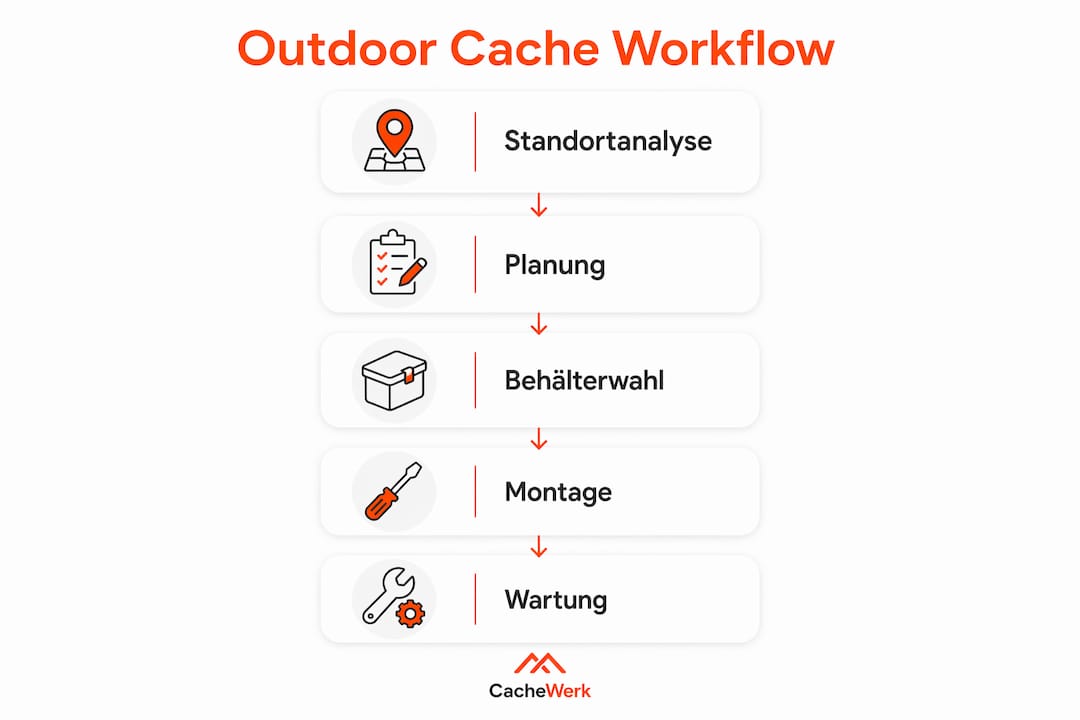
An efficient workflow follows a clear sequence. Anyone who skips these steps will notice it at the latest during the first maintenance visit.
Site Analysis and Legal Review
Before you hide a cache, check the location for three points: accessibility, legality, and long-term stability. In Germany, special rules apply to nature reserves and national parks. Water sources and legality must be checked before placement, for example, by consulting the competent authority or the forestry office. A location that is legal today may be closed in two years due to nature conservation regulations.
Step-by-step workflow for placement
- Scout the location: On-site inspection, take photos, record coordinates with a GPS device.
- Clarify legality: Contact the responsible authority, obtain permission if necessary.
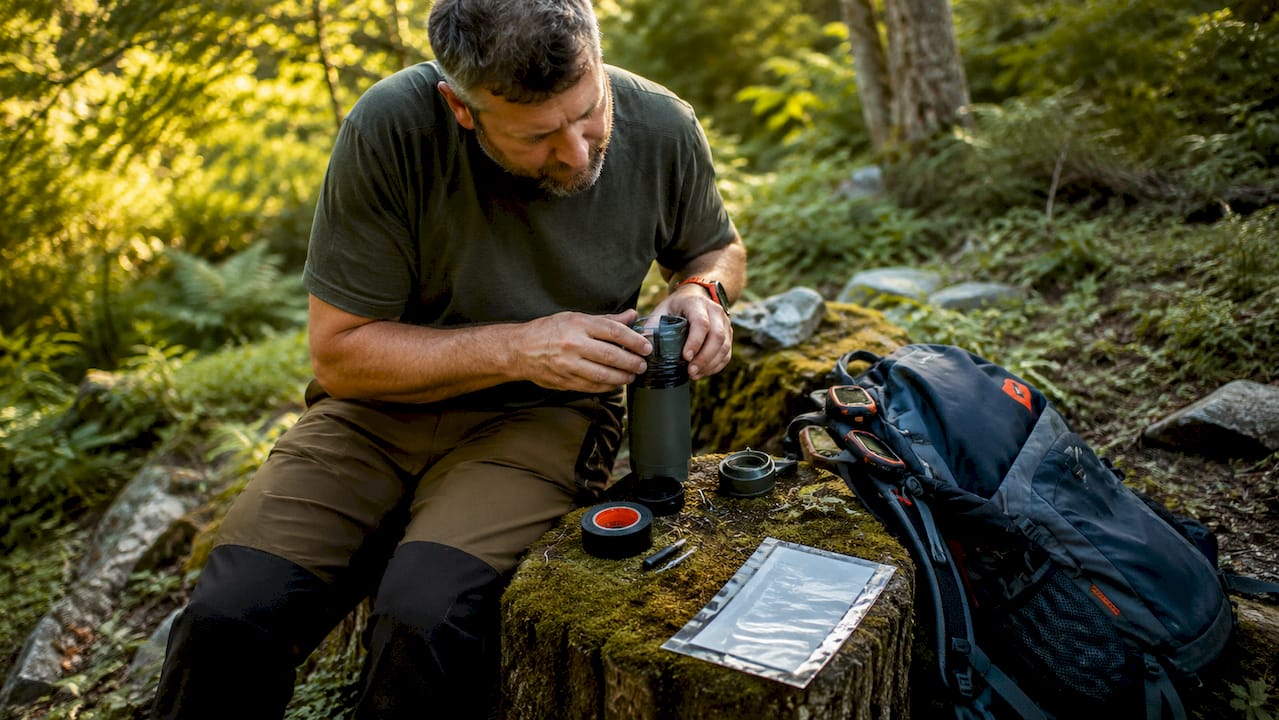
- Prepare container: Insert logbook, check seal, apply camouflage material.
- Place hide: Record final coordinates, enter cache in the listing.
- Set maintenance schedule: Note date for first check after 4 weeks, then semi-annually.
- Document contingency plan: Record alternative coordinates in case of a disruption.
Pro Tip: Create your maintenance plan directly when creating the listing. If you postpone it, you'll forget it. A simple calendar entry every 6 months is sufficient.
Navigation without GPS: The Box Method
The Box Method for navigation uses two cardinal directions and counted steps to relocate a cache without a GPS marker. For example, you remember: "30 steps North, then 15 steps East." The alternative route runs mirrored. This method is particularly useful when the GPS signal fails under dense foliage or the battery is dead. It complements digital tools but does not replace them.
What technologies make caches durable and secure?
Modern materials and electronics significantly extend the lifespan of a cache. The difference between a cache that is waterlogged after three months and one that lasts two years is almost always in the construction.
Material Selection and Moisture Protection
Wood as a building material requires consciously planned leeway for expansion and special sealing techniques to prevent moisture damage. Silicone seals on lids and seams are mandatory. To protect log strips, roll them tightly and insert them into a plastic tube. Tightly rolled log strips are easier for finders to handle and stay drier.
- Silicone seals on all openings
- Roll log strips into a plastic tube
- Place desiccant packets (silica gel) in the container
- UV-resistant paint or film for wooden containers
- Screw-top containers instead of snap-locks for damp locations
Smart Electronics for Interactive Caches
| Component | Function | Advantage |
|---|---|---|
| Transistor Switch | Separates circuits when not in use | Extends battery life |
| Arduino (Low-Power Mode) | Controls puzzles or LEDs | Flexibly programmable |
| Separate 5V Circuit | Powers power-hungry parts | Protects main battery |
Smart caches with transistor switches and independent 5V circuits significantly extend battery life. This is not a luxury, but a must for caches that cannot be maintained frequently. An Arduino in low-power mode consumes only a fraction of its normal power in standby. Ignoring this means replacing batteries after a few weeks.
Pro Tip: For smart caches, always use an external testing option, such as a hidden reset button. This allows you to quickly check if the electronics are still working during maintenance without fully opening the cache.
How do you design family-friendly cache outings?
Family-friendly geocaching follows different rules than solo tours. Children need quick successes and clear goals.
Families should plan a maximum of 3 to 5 caches per tour and limit the total duration to 1 to 2 hours. More caches quickly lead to frustration instead of joy for children aged 4 and up. The difficulty should be D1 to D2, meaning easy to find and without dangerous climbing.
- Choose attractive locations: Caches at castles, viewpoints, or caves significantly increase children's motivation.
- Include rewards: Small trade items in the cache motivate children more than empty containers.
- Prioritize safety: Do not place caches on steep slopes, roadsides, or near water.
- Respect nature: Do not dig, do not damage plants, replace the cache carefully after finding it.
- Plan breaks: Rest briefly after each find, distribute snacks, celebrate success.
For safe and creative hides, Cachewerk offers specific recommendations that are particularly suitable for families. If you want to inspire children for geocaching in the long term, focus on short tours with guaranteed finds rather than long hikes with uncertain results. It's also worth combining family-friendly outdoor activities with geocaching to make the outing day more varied.
Key Takeaways
A successful Outdoor Cache Workflow 2026 requires weatherproof containers, clear site inspection, a fixed maintenance schedule, and, for smart electronics, energy-saving circuits are essential.
| Topic | Details |
|---|---|
| Container Selection | PETG and ammo boxes last at least 13 months outdoors with proper sealing. |
| Maintenance Planning | Place caches close to home to react quickly to problems. |
| Smart Electronics | Transistor switches and low-power Arduino circuits significantly extend battery life. |
| Family Tours | A maximum of 3 to 5 caches and 1 to 2 hours duration keep children motivated. |
| Navigation | The box method ensures rediscovery even without a GPS signal. |
What I've truly learned after years as a cache owner
I've built caches that were waterlogged after three weeks, and others that ran perfectly for two years. The difference was never the budget. It was always the preparation.
What surprised me most: Most cache problems don't arise outdoors, but at the desk. Anyone who doesn't carefully check the location, who doesn't test a seal, who doesn't create a maintenance plan, is guaranteed to go out more often than necessary. Placing caches near your home sounds unspectacular, but it's one of the most practical pieces of advice ever. You can react quickly if a finder reports a problem.
I personally find smart electronics fascinating. But I've also seen poorly planned Arduino caches die after two months because no one thought of separate circuits. Transistor switches and low-power circuits are not an optional extra. They are the prerequisite for smart caches to function at all.
What I do differently today: I build every cache as if I won't see it for a year. That forces me not to compromise on sealing, logbook, and electronics. And I test every container with water beforehand. Sounds trivial. But it saves a lot of frustration.
— Benedikt
High-quality hides from Cachewerk for your workflow
If you want to put your cache workflow on a solid foundation, you need containers that really last.
Cachewerk offers three proven options for this: The Geocaching Ammo Box Hide Trick Edition is robust, weatherproof, and reliably fools muggles. The Survey Point made of 3D-printed PETG with a ground sleeve is suitable for precise placements in the terrain. And the Geocaching Mini Birdhouse with a film canister or screw-top container is the first choice for family-friendly tours. All three hides fit directly into a structured geocaching workflow and save long-term maintenance efforts.
FAQ
What is an Outdoor Cache Workflow?
An Outdoor Cache Workflow is a structured process for planning, building, placing, and maintaining geocaches outdoors. It includes site analysis, material selection, coordinate recording, and a fixed maintenance plan.
Which container is best suited for outdoor caches?
Ammo boxes and 3D-printed PETG containers are the most durable options. A well-built container will last at least 13 months outdoors with proper sealing.
How many caches should a family tour include?
A maximum of 3 to 5 caches and a duration of 1 to 2 hours are recommended for families with children aged 4 and up. More caches quickly lead to exhaustion and a decrease in enjoyment.
How does the Box Method work for navigation?
The Box Method uses two cardinal directions and counted steps to relocate a cache without a GPS signal. A mirrored alternative route ensures rediscovery even with orientation problems.
How do I extend battery life in smart caches?
Transistor switches and separate 5V circuits for power-hungry components are the most effective measures. An Arduino in low-power mode consumes only a fraction of its normal power in standby.