Using a car as a trackable: mount it weatherproof and log it correctly

Yes, a car can easily be used as a geocaching trackable with a trackable sticker, because the sticker carries its own tracking code, which is activated on Geocaching.com. Important factors here are weatherproof material, thoughtful placement, and clear logging rules to maintain privacy. For those who want to be on the safe side, customizable trackables with a cleanly processed code are preferable to improvised DIY solutions.
In short:
- A stick-on trackable on a car is not a GPS tracker, but a visible logging element activated on Geocaching.com.
- The right materials, clean installation, and careful logging are crucial to make the trackable durable and data-secure.
- Visible stickers are ideal for events, while discreet placement protects privacy without compromising legal harmlessness.
- Personal, weatherproof trackables made from high-quality foil and PETG materials offer stable, years-long use without detachment.
- The most important aspects of use are creative design and correct logging behavior to ensure visibility and protection against misuse.
Table of Contents
- How does a trackable on a car work, technically and organizationally?
- How to apply the sticker and be found correctly
- Which material adheres to the paint without damaging it?
- How should owners and finders handle logging?
- Why personalized trackables from Cachewerk are a good fit for cars
- What is often underestimated about car trackables
- Suitable trackables and accessories for your car at Cachewerk
- Sources
How does a trackable on a car work, technically and organizationally?
A trackable on a car is essentially no different from a classic geocaching trackable, except it's on a vehicle instead of in a container. Each sticker carries an individual tracking code, usually a combination of letters and numbers, which can be activated on Geocaching.com. This code is registered once on Geocaching.com and linked to a name, a mission text, and a photo. After that, the "trackable" exists digitally, regardless of whether it's a metal tag, a pendant, or a sticker.
The difference to a GPS tracker for a car is crucial: a trackable sticker does not send real-time position data. It lives solely from other geocachers seeing it, typing in the code, and writing a log. Car GPS trackers, on the other hand, offer live tracking and geofencing, but primarily serve for theft protection and have nothing to do with the hobby.
Regarding visibility, there are two camps:
- Visible stickers are suitable for events, promotional tours, or if the car itself is intended to be an attraction.
- Semi-hidden variants, such as on the inside of the fuel cap, better protect privacy but are harder for finders to discover.
Legally, a sticker on one's own vehicle is unproblematic as long as it does not cover license plates or obstruct vision. In terms of insurance law, a trackable sticker counts as normal vehicle lettering and has no impact on existing policies.
How to apply the sticker and be found correctly
Before the first find is logged, the sticker must be firmly attached and visible. Placement depends on the purpose: if promoting an event or documenting a cache tour, place it visibly on the rear window or bumper. If you're out privately and don't want to attract every glance, choose a more discreet spot like the fuel cap or the inside of the tailgate.
For finders, the process is always the same:
- Locate the tracking code on the vehicle, usually printed small in a corner of the sticker.
- Type the code into Geocaching.com under "Enter Trackable Code."
- Select the appropriate log type, for example, "Discovered" for a mere sighting without contact with the owner.
Typical uses include on-tour trackables that document a travel route, memorial trackables for deceased relatives or pets, and event trackables that promote a specific geocaching meeting.
When logging, a simple rule applies: do not post photos that show license plates, home addresses, or other private details. And never ask other geocachers to follow the car to "live" grab the code; that completely contradicts the purpose.
Pro Tip: Photograph the code immediately after application and save it offline. If the sticker weathers later, you will still have access to the activation data.
Which material adheres to the paint without damaging it?
Not every film survives car washes, UV radiation, and frost equally well. For smooth surfaces like paint or glass, contour-cut premium film has proven effective; it lies thinly, hardly fades, and can be removed without residue later. For three-dimensional additional parts, such as small holders or frames around the sticker, PETG is suitable, a robust material that also makes 3D-printed geocaching accessories stable.
Before installation, preparation is more important than the adhesive strength itself:
- Clean the surface thoroughly and degrease it with isopropanol, otherwise, the film will peel off within weeks.
- Apply only at temperatures above 15 degrees Celsius; below that, the film becomes brittle and tears when the backing is removed.
- Press evenly with a squeegee or card, from the center outwards, to avoid air bubbles.
- Allow to cure for at least 24 hours after application before taking the car through a car wash.
For care, hand washing with mild soap is sufficient; aggressive wheel cleaners or solvents should not touch the sticker. High-quality film can usually be removed with some heat from a hairdryer and slow, even pulling, without damaging the paint. If you are unsure whether a certain surface is suitable, you will find further practical tips on equipment for the hobby in articles on GPS use in geocaching.
How should owners and finders handle logging?
With a trackable stuck to a car, two realities collide: the vehicle is constantly moving, but the log history still needs to be traceable. The common log types help keep things organized.
- Discovered: The finder saw the code, for example, in a parking lot, but had no direct contact with the owner.
- Retrieved: used for physical trackables that change owners; generally not applicable for a permanently mounted sticker on a car.
- Note: suitable for owners to document intermediate stops or special occasions without disclosing the exact route.
For owners, anonymized documentation is recommended, such as "traveling in Southern Germany" instead of an exact address. This way, the trackable's story remains traceable without strangers being able to track the exact location of their vehicle live.
If the car is practically constantly on the road, only special stops should be logged—a meeting, an event, a notable cache tour—instead of every single sighting in a supermarket parking lot. This keeps the log list readable and genuinely interesting for other geocachers.
Why personalized trackables from Cachewerk are a good fit for cars
A trackable on a vehicle is only worthwhile if the material and design match, and that's exactly what Cachewerk specializes in. The shop offers customizable geocaching trackables where the design, name, and mission text can be freely chosen, ideal as a memorial trackable for a special person or pet that has accompanied you in the car permanently.
- Weatherproof processing that remains stable for months even in rain and sunlight.
- Individually designable codes and motifs instead of off-the-shelf standard designs.
- 3D-printed additional parts made from PETG for those who want to create more than just a sticker.
A sticker that peels off after three washes is no longer a trackable, but just trash. That's precisely why material quality matters more than the cheapest offer for this product type. Those who want to carry their trackable on their car for years invest once in a solid base instead of re-sticking it annually.
What is often underestimated about car trackables
Most guides on car trackables focus on the technology, the code, activation, and logging. What often gets overlooked is that a car trackable is not a GPS tracker and should not be advertised as one. Anyone looking for real-time location tracking will end up with subscription-based tracking systems with recovery service anyway, which is a completely different product with a different purpose.
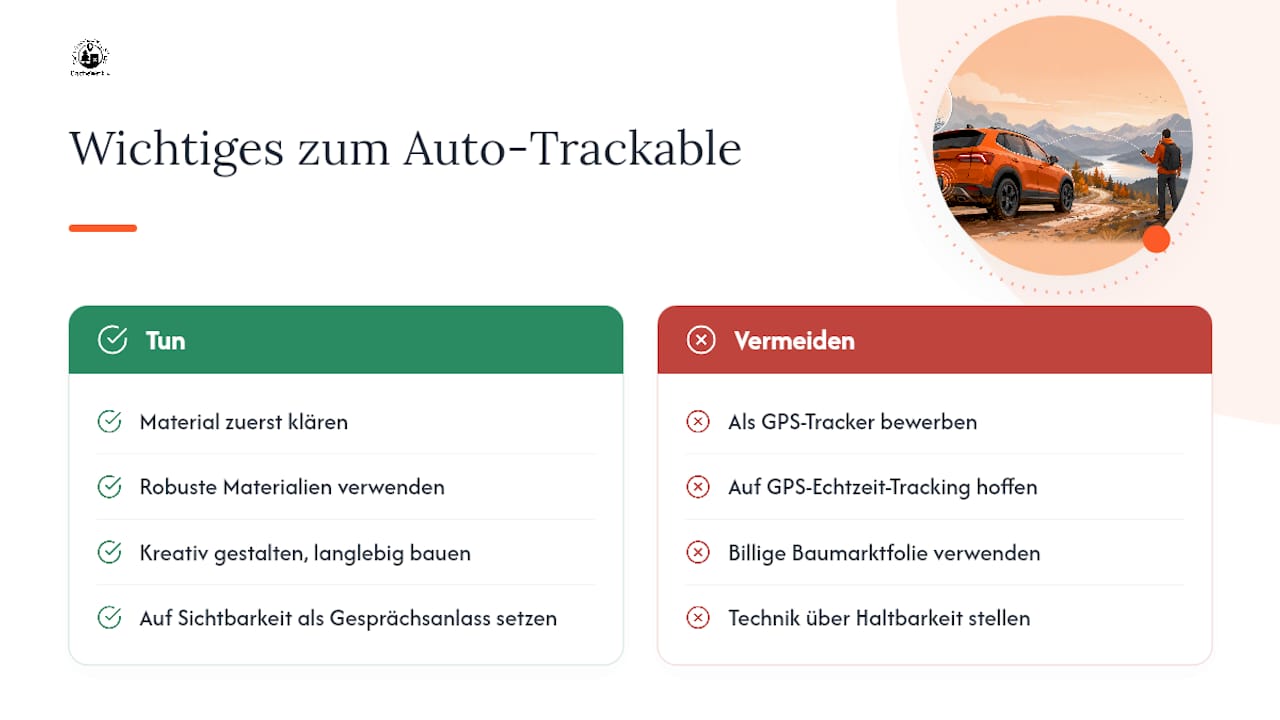
The real value of a car trackable lies elsewhere: it turns a vehicle into a conversation starter in parking lots, at geocaching meetups, or at rest stops. This visibility is often underestimated because it cannot be measured in kilometers or live data.
My advice to new owners: clarify the material first, then get creative. A lovingly designed memorial trackable made with brittle hardware store film loses its effect within a summer. Those who, instead, opt for robust materials get a trackable that collects stories for years instead of ending up in the trash after three months.
— Benedikt
Suitable trackables and accessories for your car at Cachewerk
Unlike an electronic GPS tracker, with a trackable sticker, you don't pay a subscription or ongoing fees; you buy a weatherproof product once and use it for years. Two solutions are offered for this purpose, which have proven effective in practice.
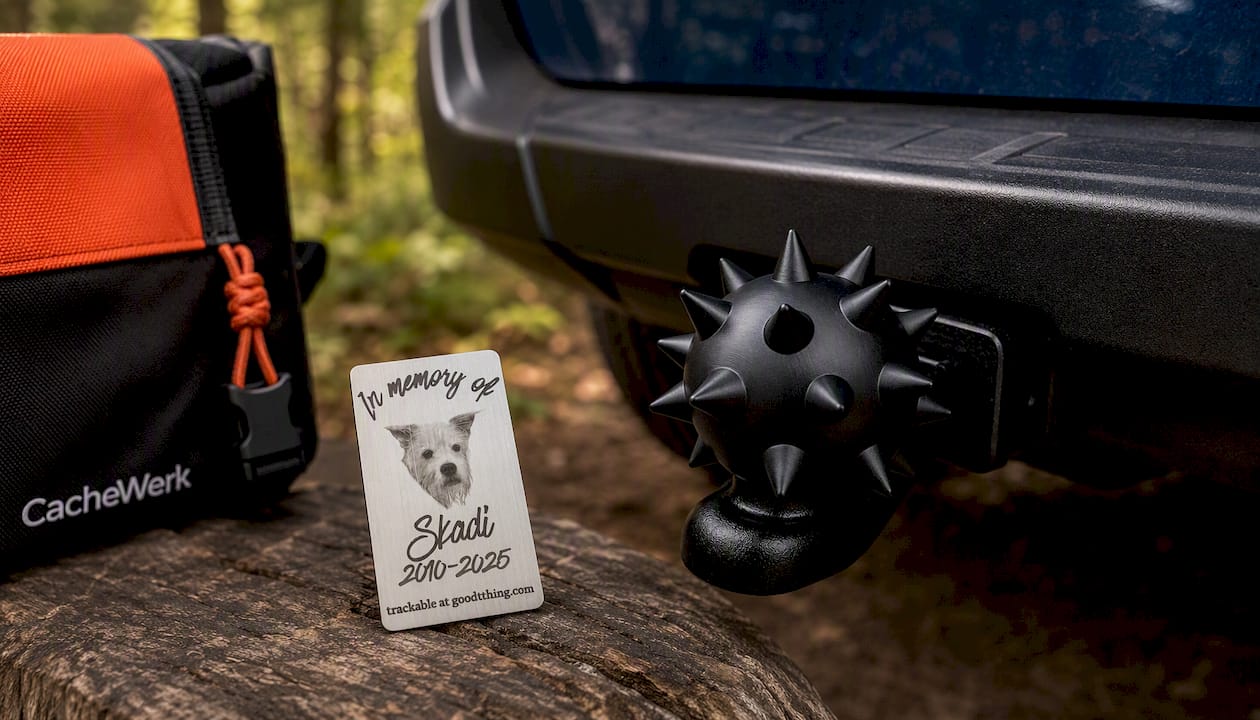
The customizable Geocaching Trackable can be individually designed with names, photos, and mission text, perfect as a memorial for a special person or a pet that accompanied you in the car. If you want to visually enhance your vehicle, the trailer hitch cover in a mine design is a striking accessory made of robust PETG, which can also be used as a visible trackable element while protecting the hitch.
Both products are designed for durability and are easy to maintain. Visit the shop, choose your design, and start your own car trackable this season.