
Traditional vs. Creative Caches: Clever Geocaching Design
TL;DR:
- Traditional caches are easy to navigate and ideal for beginners and families.
- Creative caches impress with surprise elements, puzzles, and innovative hiding spots.
- Both cache types combine the best for a diverse and exciting geocaching experience.
Many people first think of a small plastic container under a rock when they think of geocaching. That's true, but it's only a tiny part of the truth. The world of caches is surprisingly diverse: from simple film canisters to deceptively real fake signs, there are hiding spots that astonish even experienced geocachers. Knowing the difference between traditional and creative caches will elevate your geocaching experience to a whole new level. This guide shows you what lies behind both concepts, how to compare them directly, and how to plan your next adventure more intelligently.
Table of Contents
- What are Traditional Caches?
- Creative Caches: Types, Mechanisms, and Design Ideas
- Direct Comparison: Traditional vs. Creative Caches
- Practical Tips: How to Find and Place Your Favorite Cache
- Why Diversity Makes All the Difference in Caching
- Creative Cache Ideas and Equipment from CacheWerk
- Frequently Asked Questions
Key Insights
| Point | Details |
|---|---|
| Traditional Caches Explained | These classic hiding spots offer simple, direct searching at fixed coordinates and are ideal for beginners. |
| Creative Caches Bring Variety | Innovative hiding spots with special camouflage or mechanics ensure exciting search experiences. |
| Balanced Cache Mix Motivates | A combination of traditional and creative caches makes geocaching more attractive for everyone. |
| Practical Tips for Your Own Caches | With creativity, knowledge of rules, and good planning, your own hiding spots will become highlights. |
What are Traditional Caches?
The traditional cache is the foundation of the entire geocaching sport. It follows a clear principle: You get GPS coordinates, navigate there, and find the container at that exact spot. No detours, no puzzles, no intermediate stops. Traditional caches are the classic form: a physical container is hidden precisely at the published GPS coordinates. This makes them particularly accessible for beginners and reliable for anyone who simply wants to be outdoors.
Typical container shapes and sizes include:
- Nano-Cache: Tiny, often magnetic, ideal for urban hiding spots
- Micro-Cache: Film canister or similarly small containers
- Small-Cache: Small plastic containers, often with a logbook
- Regular-Cache: Classic screw-top container or Tupperware
- Large-Cache: Ammo can or large container with trade items
The process is always the same: turn on GPS device or smartphone, enter coordinates, start walking, search, sign the logbook, carefully hide the cache again. This simplicity is a strength, not a weakness. Traditional caches are perfect for families, newbies, and anyone who wants to combine a relaxed walk with a small sense of accomplishment.
Important for cache owners: Traditional caches must follow certain rules. This includes a minimum distance of 161 meters from other caches, as well as avoiding protected areas or private property without permission. Regular maintenance is mandatory to keep the logbook dry and the container functional.
Globally, this cache type accounts for the largest proportion of all active caches. This is no coincidence. Traditional caches are easy to create, easy to find, and understandable for everyone. However, to discover creative hiding spots, you need this basic understanding as a starting point.
Pro-Tip: When hiding a traditional cache, pay attention to natural materials for camouflage. A container that blends in with its surroundings lasts longer and is less likely to be found by muggles (non-geocachers).
Creative Caches: Types, Mechanisms, and Design Ideas
Now that the basics are clear, let's move on to what truly excites many geocachers: the variety and sophistication of creative hiding spots. Creative caches are innovative, unconventional hiding spots, containers, or mechanisms within the Traditional type or other types like Mystery. The goal is not just finding, but astonishing.
What makes a cache creative? At its core, it's about the seeker looking twice because they don't immediately recognize what they're seeing. A rock that isn't a rock. A sign that conceals a hollow space. A screw that turns out to be a nano-cache.
Popular ideas for creative cache types:
- Magnetic Nano-Caches: Tiny containers that stick to metal structures
- Camouflaged Everyday Objects: Fake tree stumps, false electrical outlets, fake screws
- Mechanical Puzzles: Locks, number combinations, or lever mechanisms
- Interactive Elements: QR codes that lead to the next clue
- Thematic Hiding Spots: Caches that match the history of a place
"The best creative cache is one where you laugh after finding it and think: Of course! How did I miss that?" This is the feedback that truly motivates owners.
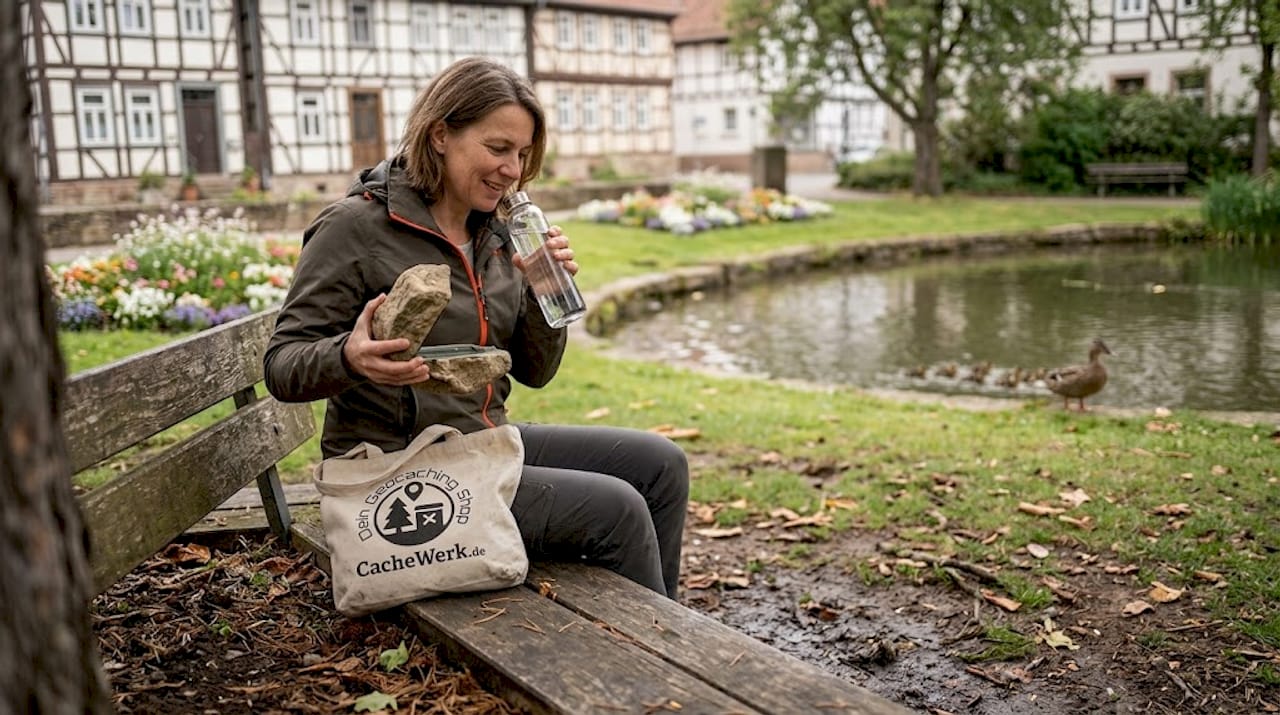
Practical examples from the community show: Hiding spots that are perfectly integrated into the environment are particularly popular. A trade sticker for geocaches can become part of a thematic cache and enrich the experience for finders. Such details make the difference between an average and an unforgettable cache.
For owners: Creativity does not automatically mean more maintenance effort. A well-designed cache also lasts without constant checks. It's important to use weather-resistant materials and design the mechanism so that it still functions after a hundred openings.
Pro-Tip: Test your creative cache before publishing it with someone who doesn't know it yet. If that person finds it within a fair amount of time, the balance between camouflage and discoverability is well achieved. Examples of creative geocaches can be found in the CacheWerk blog.
Direct Comparison: Traditional vs. Creative Caches
After the individual considerations, let's move on to a practical direct comparison. Both cache types have clear strengths and are suitable for different situations.
| Feature | Traditional Cache | Creative Cache |
|---|---|---|
| Navigation | Directly to coordinates | Often with puzzles or waypoints |
| Difficulty | Mostly low to medium | Medium to high |
| Target Audience | Beginners and families | Experienced geocachers and puzzle enthusiasts |
| Maintenance Effort | Low to medium | Medium to high |
| Surprise Effect | Low | High |
| Compliance with Rules | Easy to adhere to | Requires more planning |
| Material Usage | Simple | Often more elaborate |
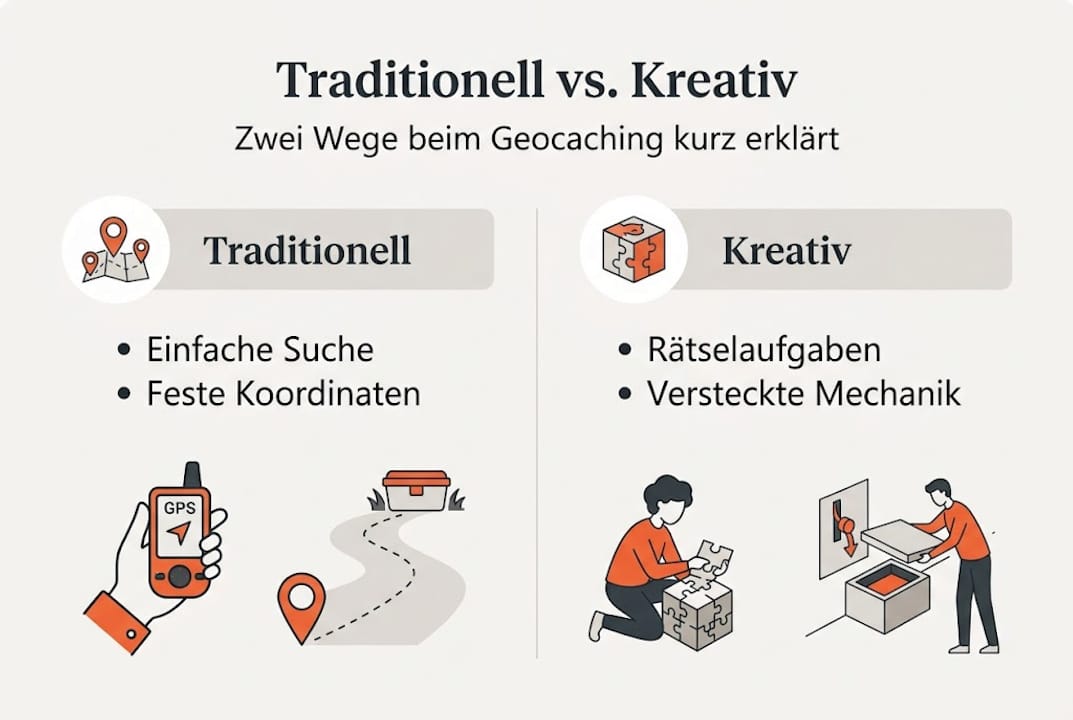
Traditional caches require direct navigation and searching, while creative caches add challenges such as puzzles, multi-stations, or interactive elements. This doesn't mean one is better than the other. It depends on the context.
Which cache type is suitable for whom?
- Traditional caches are ideal for families with children, geocaching newbies, relaxed hikes, and places that speak for themselves
- Creative caches delight experienced geocachers, puzzle enthusiasts, teams, and anyone looking for a special challenge
What can an owner learn from this comparison? If you're placing your first cache, start with a traditional hiding spot. The rules are clearer, maintenance is easier, and community feedback helps with learning. If you already have experience, you can experiment with creative elements and compare new cache designs to expand your offerings.
A balanced mix of both types makes a region more attractive to geocachers. Offering only difficult, creative caches deters beginners. Hiding only simple containers loses experienced geocachers. More outdoor ideas show how diverse outdoor experiences can be designed.
Practical Tips: How to Find and Place Your Favorite Cache
Now that the difference is clear, the focus is on practical implementation. Whether you're looking for a cache or want to place one yourself, these steps will help you.
How to find creative and traditional caches:
- Use the Geocaching app or Geocaching.com and filter by cache type and difficulty
- Read the cache description carefully; it often contains hints about the mechanism
- Look at the logs of other finders, without reading spoilers, to get a feel for the cache
- Bring the right tools: flashlight, tweezers for nano-caches, and a pen
- Take your time and observe your surroundings before you start searching
How to place your own cache:
- Choose a location with meaning or a special view
- Check the geocaching rules for your location, minimum distances, and permissions
- Choose a container that fits the environment and is weather-resistant
- Test the cache with a friend before publishing it
- Write a good description that sparks curiosity but doesn't reveal too much
For creative designs, maintainability, rule compliance, and the balance between camouflage and discoverability are priorities. This sounds technical, but at its core, it's simple: a cache must work, be allowed, and be findable.
Material selection is crucial. For traditional caches, robust plastic containers with a sealing ring are sufficient. For creative caches, it's worth using PETG printing, resin, or weather-resistant metal. These materials can withstand rain, frost, and intensive use.
Pro-Tip: Document your cache with photos immediately after hiding it. This way, you can quickly check during maintenance whether everything is still in place without fully retrieving the cache every time. More tips for creative caches can be found directly in the CacheWerk blog.
Why Diversity Makes All the Difference in Caching
After all the facts and tips, an honest assessment: the most innovative hiding spot is not automatically the best. We consistently see in the community that highly complex caches, while admired, are rarely found. This frustrates both owners and seekers.
Traditional caches create reliable feelings of success. Especially for children or geocaching newbies, finding a classic container is a real boost in motivation. That moment when the GPS hits zero and you start searching is for many the entry point to a lifelong passion.
Creative caches, on the other hand, foster curiosity, teamwork, and exchange within the scene. They are discussed, recommended, and remembered in the community. A truly ingenious mechanism gets talked about.
The strength lies in the interplay of both concepts. Creativity in geocaching does not mean replacing traditional caches, but enriching the offering. Those who appreciate and offer both types make geocaching better for everyone.
Creative Cache Ideas and Equipment from CacheWerk
You now know the difference between traditional and creative caches. The next step is getting the right equipment. At CacheWerk, you'll find exactly what you need, whether you're placing your first cache or planning an elaborate hiding spot.
From weather-resistant containers to well-thought-out equipment and accessories for every situation, CacheWerk offers products that truly work. Particularly popular is the fake traffic sign as a creative hiding spot: deceptively real, weather-resistant, and a guaranteed eye-catcher in the community. Quality and creativity are embedded in every product. Stop by and get inspired for your next cache!
Frequently Asked Questions
What is the main difference between traditional and creative caches?
Traditional caches are the classic form with a container at fixed coordinates, while creative caches use innovative mechanisms and unusual hiding spots that surprise seekers.
Are creative caches also suitable for beginners?
Many creative caches are more challenging, but there are simple creative variants that are also fun for beginners and offer a good introduction to the diversity of the sport.
What should I pay attention to when designing a creative cache?
Important aspects include weather-resistant construction, adherence to geocaching rules, and clever but fair camouflage. Maintainability and rule compliance always take priority.
Where can I find inspiration for creative hiding spots?
The CacheWerk geocaching blog offers numerous ideas and product tips for original hiding spots, suitable for both urban and rural environments.