
Was ist ein Own Cache? Kreative Verstecke und Tipps
Viele Geocacher stehen irgendwann vor der gleichen Frage: Was genau ist eigentlich ein Own Cache, und wie unterscheidet er sich vom normalen Suchen? Die Antwort überrascht oft. Ein Own Cache ist kein fester Cache-Typ wie ein Traditional oder Mystery. Stattdessen ist es einfach ein Geocache, den du selbst angelegt hast und für den du als Owner die volle Verantwortung trägst. Das klingt zunächst nach viel Aufwand. In Wirklichkeit steckt dahinter eine der kreativsten Möglichkeiten, die das Geocaching zu bieten hat. Dieser Artikel führt dich von der Definition über die wichtigsten Regeln bis zu konkreten Ideen, die deinen Own Cache wirklich unvergesslich machen.
Inhaltsverzeichnis
- Grundlagen und Definition des Own Cache
- Richtlinien und Verantwortung beim Own Cache
- Kreative und nachhaltige Gestaltung des Own Cache
- Von der Idee zur Praxis: Tipps für die eigene Cache-Platzierung
- Neue Sichtweise: Was beim eigenen Cache wirklich zählt
- Maßgeschneiderte Lösungen und Zubehör für deinen Own Cache
- Häufig gestellte Fragen zum Own Cache
Wichtige Erkenntnisse
| Punkt | Details |
|---|---|
| Begriff Own Cache | Ein Own Cache ist ein individueller, vom Besitzer selbst gestalteter Geocaching-Behälter. |
| Regelwerk beachten | Für jeden eigenen Cache gelten klare Richtlinien zur Platzierung und Wartung. |
| Kreativität und Nachhaltigkeit | Maßgeschneiderte Behälter und nachhaltige Materialien sorgen für ein einzigartiges Abenteuer. |
| Schritt-für-Schritt zur Praxis | Von der Planung über den Reviewer-Check bis zur nachhaltigen Wartung führt ein klarer Ablauf zum erfolgreichen Own Cache. |
| Community & Zubehör | Die Vernetzung und qualitatives Zubehör machen das eigene Geocaching-Projekt langfristig erfolgreich. |
Grundlagen und Definition des Own Cache
Der Begriff “Own Cache” bezeichnet schlicht jeden Geocache, den du selbst erstellt und angemeldet hast. Du bist der Owner. Das bedeutet, du wählst den Standort, gestaltest den Behälter, schreibst die Cache-Seite und kümmerst dich dauerhaft um das Versteck. Damit unterscheidet sich der Own Cache fundamental vom reinen Suchen, bei dem du nur Finder bist.
Was viele Einsteiger nicht sofort verstehen: Der Own Cache ist kein eigener Cache-Typ im technischen Sinne. Du kannst einen Traditional Cache, einen Multi-Cache oder sogar einen Mystery Cache als dein Own anlegen. Das Wort “Own” beschreibt also die Eigentümerschaft, nicht den Schwierigkeitsgrad oder die Versteckart. Diese Unterscheidung ist wichtig, damit du die Regeln richtig einordnen kannst.
Abgrenzung der Cache-Typen
| Cache-Typ | Anzahl Stationen | Besonderheit | Typischer Behälter |
|---|---|---|---|
| Traditional | 1 | Direkte Koordinaten | Dose, Nano, Magnetversteck |
| Multi-Cache | 2 oder mehr | Etappen, Zwischenhinweise | Variiert je Station |
| Mystery / Puzzle | 1 oder mehr | Rätsellösung nötig | Variiert |
| Own Cache | Beliebig | Du bist Owner | Völlig frei wählbar |
Der Vergleich zeigt: Als Owner bist du bei der Gestaltung sehr frei. Trotzdem gelten für jeden Typ dieselben grundlegenden Regeln.
Typische Merkmale des Own Cache
- Der Owner legt Koordinaten, Titel und Beschreibung selbst fest
- Der Behälter und das Logbuch stammen vom Owner
- Der Owner pflegt das Versteck dauerhaft
- Jeder Own Cache durchläuft eine Reviewer-Prüfung vor der Veröffentlichung
- Owner sind für Schäden an der Umgebung verantwortlich
Für DIY-Verstecktipps lohnt es sich, schon in der Planungsphase konkrete Ideen zu sammeln. Denn je origineller dein Versteck, desto mehr Freude bereitet es der Community.
Besonders wichtig zu wissen: Laut den offiziellen Guidelines sind beim Own Cache bestimmte Regeln verpflichtend, darunter kein Vergraben des Behälters, kein Anbinden an Bäume, keine Indoor-Verstecke ohne ausdrückliche Erlaubnis und eine klare Wartungspflicht für den Owner. Der Reviewer prüft vor der Freischaltung jeden Cache auf diese Kriterien.
Richtlinien und Verantwortung beim Own Cache
Sobald du weißt, was ein Own Cache ist, kommt das Thema Verantwortung ins Spiel. Geocaching lebt von Vertrauen: Vertrauen der Finder, der Grundstückseigentümer und der Natur. Als Owner trägst du dieses Vertrauen aktiv mit.
Die wichtigsten Grundregeln im Überblick
- Standortwahl: Wähle nur Orte, an denen du die Erlaubnis hast oder an denen keine Genehmigung nötig ist. Öffentliches Gelände ist oft unkompliziert, Privatgelände und Schutzgebiete hingegen erfordern Abklärung.
- Kein Graben: Das Versteck darf niemals eingegraben werden. Der Boden soll nicht beschädigt werden, weder für den Behälter noch für Hinweisschilder.
- Keine Baumbefestigung: Caches dürfen nicht an lebenden Bäumen befestigt werden. Permanente Befestigungen an Ästen oder Stämmen sind verboten.
- Indoor-Regelung: Einen Cache in Gebäuden oder überdachten Bereichen zu platzieren, ist nur mit ausdrücklicher Erlaubnis des Eigentümers erlaubt.
- Reviewer-Prozess: Vor der Freischaltung prüft ein ehrenamtlicher Reviewer deinen Cache auf Regelkonformität. Rückmeldungen des Reviewers solltest du ernst nehmen.
- Logbuch-Wartung: Das Logbuch muss regelmäßig gewechselt werden, sobald es voll oder nass ist.
- Regelmäßige Kontrolle: Als Owner bist du verpflichtet, deinen Cache in regelmäßigen Abständen persönlich zu überprüfen.
Wartung ist kein optionales Extra. Ein gut gewarteter Cache zeigt Respekt gegenüber der Community und der Natur. Finder freuen sich über ein frisches Logbuch und ein intaktes Versteck. Caches, die über Monate vernachlässigt werden, schaden dem Ruf des Geocachings insgesamt.
Beim Thema Outdoor-Standorte gibt es noch einen weniger bekannten Aspekt: Gerade in waldreichen Regionen sind offene Feuerstellen und stark frequentierte Plätze oft ungeeignet, da sie zu viel Aufmerksamkeit auf das Versteck lenken. Orientiere dich für die Standortwahl lieber an ruhigeren Orten. Wenn du zum Beispiel Outdoor-Feuerstellen kennst und dort einen Cache platzieren möchtest, prüfe vorher unbedingt, ob das Gelände dafür geeignet ist und keine Sicherheitsrisiken entstehen.
Profi-Tipp: Schreibe dem Reviewer eine kurze Nachricht, bevor du deinen Cache einreichst. Erkläre kurz die Besonderheit deines Verstecks und zeige, dass du die Regeln kennst. Das beschleunigt den Prüfprozess und vermeidet unnötige Korrekturrunden. Nutze jedes Feedback als Lernchance.
Für kreative Cache-Ideen gilt: Originalität ist gut, Regelkonformität ist Pflicht. Beides zusammen macht einen wirklich guten Own Cache aus.
Kreative und nachhaltige Gestaltung des Own Cache
Jetzt wird es richtig spannend. Die Gestaltung deines Own Cache ist der Teil, bei dem du wirklich frei bist. Du entscheidest, wie das Versteck aussieht, welches Material du verwendest und wie viel Aufwand du betreibst.
Warum Materialwahl so wichtig ist
Ein schlechter Behälter ruiniert das Erlebnis. Papier quillt auf. Dünner Plastik bricht bei Kälte. Nässe zerstört das Logbuch. Das Versteck bleibt vielleicht Monate oder Jahre im Freien. Also sollte das Material das aushalten.
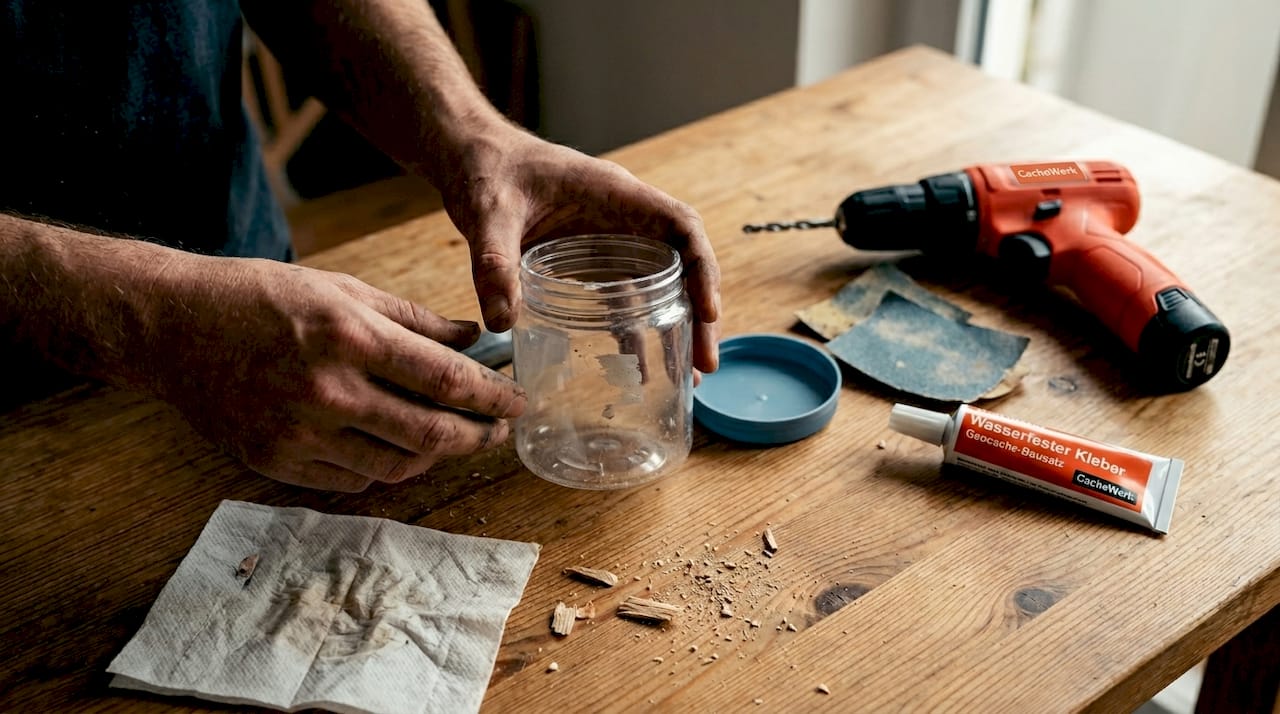
Die besten DIY-Inspirationen für Behälter verbinden Kreativität mit echter Haltbarkeit. Ein klassisches Beispiel ist die Holzstab-Loghülle: Ein ausgehöhlter Ast wird täuschend echt nachgebaut und enthält ein wasserdichtes Röhrchen für das Logbuch. Auf den ersten Blick sieht es aus wie ein gewöhnlicher Waldboden. Finder die das Versteck aufspüren, sind meist begeistert.
Materialvergleich: Nachhaltigkeit und Wetterfestigkeit
| Material | Wetterfestigkeit | Nachhaltigkeit | Tarnung | Haltbarkeit |
|---|---|---|---|---|
| PETG-Kunststoff (3D-Druck) | Sehr hoch | Mittel | Sehr gut anpassbar | Sehr hoch |
| Edelstahl | Sehr hoch | Hoch | Begrenzt | Extrem hoch |
| Holz (behandelt) | Mittel bis hoch | Sehr hoch | Sehr gut | Mittel |
| Standard-Plastikdose | Mittel | Gering | Schlecht | Niedrig |
| Magnetversteck (Metall) | Hoch | Hoch | Sehr gut (urban) | Hoch |
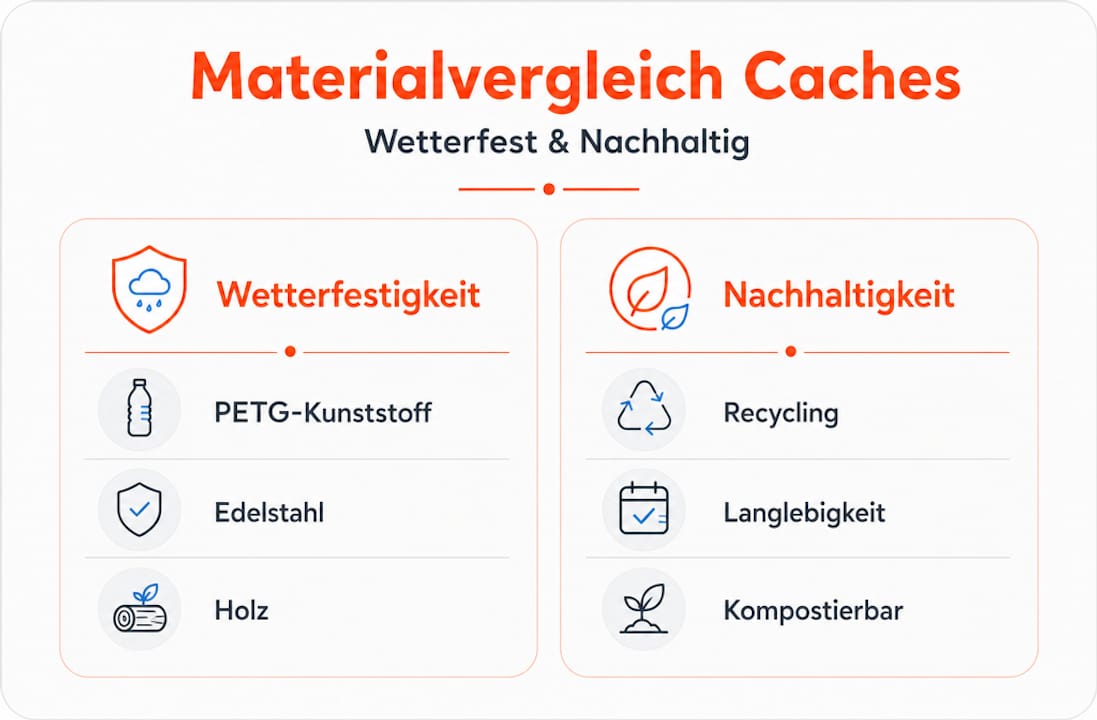
Wie du siehst, schlägt PETG-Kunststoff beim 3D-Druck fast alle anderen Materialien in puncto Anpassbarkeit. Das ist auch der Grund, warum 3D-gedruckte Verstecke in der Community so beliebt geworden sind. Du kannst sie in jede Form bringen und perfekt tarnen. Der urbaner Cache Guide zeigt, wie gut das im Stadtbereich funktioniert.
Laut Erfahrungsberichten aus der Geocaching-Community gilt bei selbstgebauten Behältern: maßgeschneiderte Behälter wie Holzstab-Loghüllen sorgen für einzigartige Erlebnisse, solange Langlebigkeit und Umweltschutz oberste Priorität haben.
Kreative Cache-Arten als Inspiration
- Holzstab-Loghülle: Täuschend echter Ast mit verstecktem Logbuchröhrchen
- Fake-Schild: Metallschild im Look eines echten Hinweisschilds mit Magnetversteck dahinter
- Baumstumpf-Imitat: 3D-gedruckter Stummel mit Deckel, kaum von echtem Holz zu unterscheiden
- Magnetdose unter Bänken: Kleine Metallkapsel mit starkem Magneten
- Steinhülle: Kunststoffstein mit Hohlraum, naturgetreu bemalt
- Vogelhaus-Cache: Miniaturvogelhaus mit Logbuchhalter im Inneren
- Fake-Schrauben und Bolzen: Hohle Metallschrauben an Geländern oder Zäunen
Profi-Tipp: Denke beim Gestalten immer an die Umwelt nach dir. Verwende keine Farben oder Klebstoffe, die in Boden oder Wasser ausbluten können. Wähle Materialien, die du zur Not vollständig rückstandslos entfernen kannst. Ein Cache, der keine Spuren hinterlässt, ist ein guter Cache.
Von der Idee zur Praxis: Tipps für die eigene Cache-Platzierung
Eine gute Idee allein reicht nicht. Die Umsetzung entscheidet darüber, ob dein Own Cache Monate oder Jahre Freude macht. Hier ist der Weg von der Planung bis zur aktiven Pflege.
Schritt für Schritt zum eigenen Cache
- Idee entwickeln: Überlege, welche Art von Erlebnis du Findern bieten möchtest. Soll es ein leichter Familienspaziergang sein oder ein herausforderndes Rätsel?
- Standort prüfen: Besuche den geplanten Ort mehrfach zu verschiedenen Tages- und Jahreszeiten. Prüfe, ob der Ort gut zugänglich ist und keine Sicherheitsrisiken bietet.
- Genehmigungen einholen: Klär im Vorfeld, ob der Standort öffentlich zugänglich ist. Bei Privatgelände oder geschützten Bereichen brauchst du schriftliche Erlaubnis.
- Behälter auswählen und vorbereiten: Wähle ein wetterfestes, langlebiges Behälterkonzept. Teste die Wasserdichtigkeit zuhause, bevor du das Versteck platzierst.
- Versteck platzieren: Platziere den Cache so, dass er nicht zufällig gefunden oder beschädigt werden kann. Vermeide Stellen mit sehr hohem Fußverkehr durch Nicht-Geocacher.
- Cache-Seite erstellen: Schreibe eine ansprechende Beschreibung. Gib Hinweise zur Schwierigkeit und zum Gelände. Füge ein passendes Foto hinzu.
- Reviewer-Prozess abwarten: Reiche deinen Cache ein und beantworte Rückmeldungen zügig. Halte alle nötigen Unterlagen bereit.
- Wartungsplan erstellen: Plane von Anfang an feste Termine für Kontrollbesuche ein, mindestens einmal pro Quartal.
Häufige Fehler, die du vermeiden solltest
- Standort ohne vorherige persönliche Ortsbegehung wählen
- Billiges Verpackungsmaterial verwenden, das keine Nässe aushält
- Logbuch zu klein wählen (es füllt sich schneller als erwartet)
- Den Cache direkt nach der Platzierung nicht noch einmal testen
- Keine Backup-Koordinaten oder Fotos vom Versteckort speichern
- Feedback vom Reviewer ignorieren oder lange unbeantwortet lassen
- Cache-Seite unvollständig oder unverständlich lassen
- Keine Ansprechbarkeit für Finder, die Probleme melden
Das klingt nach viel, aber in der Praxis ist es gut handhabbar. Viele erfahrene Owner nutzen eine einfache Tabelle oder App, um ihre Caches im Überblick zu behalten.
Community-Vernetzung als Qualitätsbooster
Sprich andere Geocacher an, bevor und nachdem du deinen Cache veröffentlichst. Bitte erfahrene Owner um ein informelles Review deiner Cache-Seite. Frage Finder nach ihren Eindrücken. Oft bekommst du wertvolle Hinweise, die du allein nie bedacht hättest.
Plattformen wie lokale Geocaching-Stammtische oder Online-Foren sind ideal für solches Feedback. Wer regelmäßig Kreativtipps für Cachebau studiert und in der Community aktiv ist, entwickelt sein eigenes Gespür für gute Verstecke schneller als jeder, der allein vor sich hin tüftelt.
Spannende urbane Verstecke zeigen besonders gut, wie viel Kreativität in einem kleinen Stadtgebiet möglich ist. Lass dich davon inspirieren, aber kopiere nicht blind. Dein Own Cache soll deine Persönlichkeit widerspiegeln.
Profi-Tipp: Lege dir direkt nach der Cache-Veröffentlichung einen Ordner auf deinem Smartphone an. Speichere dort Fotos vom Versteckort, Koordinaten, Materialnummern und Wartungstermine. Wenn du nach einem Jahr zurückkommst, erinnerst du dich sofort an alle Details und kannst schnell handeln.
Zu den Edge Cases der Geocaching-Guidelines gehören gerade im Bereich Wartung und Standortwahl viele Details, die Einsteiger überraschen. Je früher du diese kennst, desto weniger Probleme bekommst du mit dem Reviewer.
Neue Sichtweise: Was beim eigenen Cache wirklich zählt
Nach all den Regeln und Schritten möchten wir ehrlich mit dir sein: Die meisten Fehler beim Own Cache entstehen nicht durch mangelndes Regelwissen. Sie entstehen durch mangelnden Mut zur Eigenheit.
Viele angehende Owner lesen sich wochenlang in Regeln und Richtlinien ein und vergessen dabei, worum es eigentlich geht. Es geht darum, anderen Menschen einen Moment der Freude zu schenken. Einen Ort zu zeigen, den sonst niemand bemerkt. Ein kleines Rätsel zu stellen, das sich richtig anfühlt, wenn es gelöst wird.
Die besten Own Caches, die wir kennen, haben eines gemeinsam: Der Owner hatte eine klare, persönliche Idee. Nicht die ausgefeilteste Technik. Nicht den teuersten Behälter. Sondern eine ehrliche Begeisterung für einen bestimmten Ort oder eine bestimmte Geschichte.
Regeln sind trotzdem unverzichtbar. Nicht weil Geocaching-Plattformen es so wollen, sondern weil du mit deinem Cache Verantwortung für die Natur und für andere Geocacher übernimmst. Ein vergrabener Cache beschädigt den Boden. Ein schlecht gewartetes Versteck frustriert Finder und schadet dem Ruf des Sports. Das sind keine abstrakten Regeln, sondern echte Konsequenzen.
Der Unterschied zwischen einem Regelbrecher und einem guten Owner liegt nicht in der Absicht, sondern in der Konsequenz. Wer seinen Cache einmal im Jahr besucht und dann wundert, warum negative Logs kommen, hat das Prinzip noch nicht verstanden.
Community-Feedback ist kein Angriff. Es ist ein Geschenk. Finder, die sich die Zeit nehmen, einen ausführlichen Log zu schreiben, zeigen dir, was dein Versteck wirklich bei Menschen auslöst. Nimm diese Rückmeldungen ernst. Sie machen deinen nächsten Cache besser.
Nachhaltigkeit ist kein Trend. Sie ist die Grundlage guten Geocachings. Ein Cache, der die Natur schädigt oder Müll hinterlässt, hat im Wald nichts verloren. Wer mit Geocaching DIY-Perspektive an sein Versteck herangeht, denkt automatisch über Materialien, Standorte und langfristige Wirkung nach.
Unser ehrlicher Rat: Starte mit einem einfachen, aber gut gepflegten Cache. Lerne von den Reaktionen der Community. Steigere dann die Komplexität mit dem nächsten Versteck. Dieser schrittweise Aufbau macht mehr Spaß als der Versuch, beim ersten Mal sofort das perfekte Meisterwerk zu schaffen.
Maßgeschneiderte Lösungen und Zubehör für deinen Own Cache
Du hast jetzt alles Wichtige über Own Caches gelernt. Von der Definition über Regeln bis zu kreativen Ideen und der praktischen Umsetzung. Jetzt fehlt nur noch das richtige Zubehör.
Bei CacheWerk findest du genau das, was dein nächstes Versteck braucht. Ob du einen naturgetreuen Baumpilz Cache für den Waldstandort suchst oder einen urban getarnten Fake-Schild Versteck für die Stadt. Alle Produkte sind aus langlebigem PETG gefertigt und für echte Outdoor-Bedingungen ausgelegt. Du musst also nicht selbst basteln, wenn du keine Zeit hast. Aber wenn du Bastler bist, findest du in der Ausrüstung & Zubehör Kollektion alles, was du für individuelle DIY-Lösungen brauchst. Schau einfach vorbei und lass dich inspirieren.
Häufig gestellte Fragen zum Own Cache
Was unterscheidet einen Own Cache von einem traditionellen Cache?
Ein Own Cache beschreibt jeden Geocache, den du selbst erstellt hast, unabhängig vom Typ. Ein traditioneller Cache folgt einem einfachen Prinzip mit direkten Koordinaten, während der Own Cache auch als Multi oder Mystery gestaltet sein kann. Der Owner übernimmt beim Own Cache die volle Verantwortung für Gestaltung und Wartung.
Muss ich als Cache-Owner regelmäßig meinen eigenen Cache überprüfen?
Ja, die Wartungspflicht ist verpflichtend und umfasst regelmäßige Kontrollbesuche sowie den Wechsel des Logbuchs bei Bedarf. Wer das vernachlässigt, riskiert die Archivierung seines Caches durch den Reviewer.
Welche Materialien sind für einen nachhaltigen Cache am besten geeignet?
Besonders gut eignen sich langlebige Materialien wie Edelstahl, wetterfestes Holz oder PETG-Kunststoff aus dem 3D-Druck. Diese Materialien halten Witterungseinflüssen stand und hinterlassen bei sorgfältiger Nutzung keine schädlichen Spuren in der Natur.
Darf ich meinen Cache überall verstecken?
Nein. Laut den offiziellen Guidelines sind Grabungen, Befestigungen an Bäumen und Indoor-Caches ohne Erlaubnis ausdrücklich verboten. Jeder Standort muss vor der Einreichung sorgfältig geprüft werden.
Wie finde ich Inspiration für mein eigenes Cache-Versteck?
Geocaching-DIY-Blogs, Community-Foren und spezialisierte Plattformen wie CacheWerk bieten eine Fülle an originellen Ideen. Besonders hilfreich ist auch das direkte Gespräch mit erfahrenen Cachern beim lokalen Stammtisch oder bei Geocaching-Events.