
Maintaining a Cache: Practical Guide for Long-Lasting Geocaching Fun
You've hidden a cache, the first finds are coming in, the logs sound positive – and then, eventually, the first "Needs Maintenance" reports appear. Damp logbook, torn bag, faded camouflage. Many owners are familiar with this scenario, and it frustrates not only the finders but also you as the cache owner. The good news: With a structured approach and the right equipment, the condition of your cache can be maintained at a high level permanently. This guide shows you how to professionally maintain your cache, avoid common mistakes, and ensure long-term fun for the community.
Table of Contents
- Prerequisites and Equipment for Cache Maintenance
- Step-by-Step Guide: Professionally Maintaining Your Cache
- Common Mistakes and Solutions in Cache Maintenance
- Quality Control and Sustainable Maintenance: Ensuring Long-Term Success
- Why Cache Maintenance is More Than a Duty: A Plea for More Sustainability in Geocaching
- Easy Cache Maintenance with Professional Equipment
- Frequently Asked Questions about Cache Maintenance
Key Insights
| Point | Details |
|---|---|
| Good Preparation | With the right equipment and planning, you save time and stress during cache maintenance. |
| Regular Checks | Bi-annual checks and attention to log hints maintain quality and fun. |
| Owner Remains Responsible | Even with third-party maintenance, the primary responsibility for the cache remains with the owner. |
| Avoid Errors | Address typical problems early, such as filled logbooks or damaged containers, to minimize effort. |
Prerequisites and Equipment for Cache Maintenance
Before you embark on your first maintenance tour, it's worth clarifying the basics. Who is responsible? What do you need? And how do you prepare optimally?
The Responsibility Lies with the Owner
As a cache owner, you bear full responsibility for the condition of your hide. This is not just an informal expectation of the community but a clear rule on geocaching platforms. According to the Owner Responsibility in the Geoclub forum, the owner remains permanently responsible for maintenance, regardless of whether they currently have time or not.
This specifically means: You are the one who reacts to hints in the logs, repairs damage, and ensures playability. It's worth reading up on what the Owner Role and Duties entail in detail. In short: An unmaintained cache is not an isolated problem; it burdens the entire community.
Checklist of the Most Important Tools and Materials
A well-stocked maintenance bag saves you double trips and unnecessary effort. The following overview shows what you should definitely have with you:
| Category | Material | Usage |
|---|---|---|
| Container | Replacement cache box or bag | In case the original container is damaged |
| Logbook | Pre-printed logbooks or paper strips | Replacement for full or wet logbook |
| Seal | Silicone sealant or sealing tape | Repair leaky containers |
| Camouflage | Replacement camouflage foil, paint, natural material | Realigning damaged camouflage |
| Hygiene | Latex or nitrile gloves | Protection when handling contents |
| Tools | Tweezers, small knife, cable ties | Removing moisture, securing |
| Trade | Small items for trade compartment | Restocking contents for traditional caches |
Pro Tip: Set up a dedicated maintenance bag that is always packed. This way, you're spontaneously ready when you're near your cache and can quickly check on it.
In addition, it is recommended to take a checklist on paper or on your smartphone. Document what you found, what you replaced, and when you were last on site. This documentation helps you recognize patterns. For example, if moisture gets into the logbook every autumn, you can take targeted countermeasures.

Practical Preparation for the Inspection Tour
Before each maintenance visit, check the current logs of your cache on the geocaching platform. Look for hints like "container open," "logbook full," or "contents damp." Such messages show you exactly what you need to focus on. Plan your visit so that you have enough time to thoroughly complete all tasks and don't rush.
Step-by-Step Guide: Professionally Maintaining Your Cache
With your equipment packed, it's now about conducting the maintenance visit methodically and thoroughly. A clear sequence of steps saves time and ensures you don't overlook anything.
Step 1: Check Location and Surroundings
As you approach, observe the area around the hide. Is the hide still safe? Have trees been cut down, paths rerouted, or new buildings erected? Are muggles (non-geocachers) nearby? All these factors influence whether your cache is still suitable for this location.
Also, check if the clue signs, coordinates, or other elements of your listing are still correct. Sometimes the landscape changes without the owner noticing.
Step 2: Inspect the External Condition of the Container
Carefully remove the container without drawing unnecessary attention. Check the outside for cracks, scratches, or discoloration. Camouflage that has come loose is a direct signal to muggles. Replace damaged camouflage film immediately and adapt the camouflage to the current environment. In summer, a hide looks different than in winter.
Step 3: Check and Ensure Watertightness
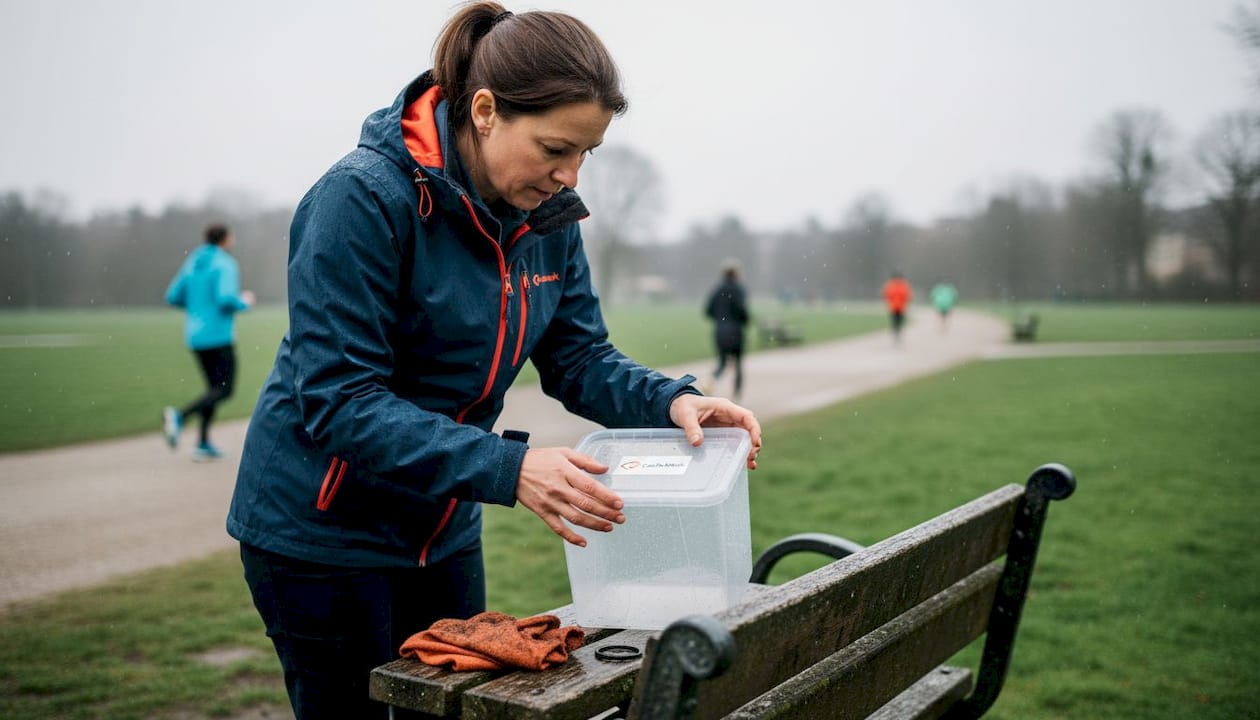
Carefully open the container. Do you smell moisture or mildew? This is a sure sign of a leak. Check the lid, sealing ring, and threads for damage. Dry any damp spots with a cloth and then replace the seal. For heavily damaged containers, a complete replacement with a high-quality new model is worthwhile.
Pro Tip: Test new containers beforehand by placing a piece of paper towel inside and leaving the container outside for a week. If the paper remains dry, the watertightness is sufficient for use.
Step 4: Check Logbook and Contents
The logbook is the heart of every cache. A full, damp, or illegible logbook greatly frustrates finders. Replace the logbook if it is more than 80 percent full. Take the old logbook home to digitize the entries if necessary and preserve the cache's history.
Is there water in the container? Then remove it thoroughly and add a drying packet, such as silica gel. For caches with a trade compartment, replenish the contents with small, clean items. Dispose of broken or moldy trade items on site.
Step 5: Document and Archive Everything
After your visit, log an "Owner Maintenance" on the platform. This signals to the community that the cache is in good condition. Also, note internally what you did. A simple table or notebook entry with the date and actions is perfectly sufficient.
Third-Party Maintenance: A Special Case
There are situations where you cannot be on-site in time yourself. Another experienced geocacher could maintain the cache on your behalf. But beware: Third-party maintenance is only allowed with the express permission of the owner. Without this permission, no one may tamper with your cache, even with the best intentions.
If you commission third-party maintenance, give clear instructions: What should be replaced? What should be checked? Only entrust this task to someone you fully trust and who carries the necessary materials. Further tips for cache owners will help you structure these processes well.
Important: Even with third-party maintenance, the overall responsibility for the cache always remains with the registered owner. Delegating the maintenance task does not absolve you of responsibility towards the community and the platform.
Common Mistakes and Solutions in Cache Maintenance
From practice, there are recurring mistakes that cache owners make, often due to time pressure or lack of routine. The good news: All of them can be avoided.
Overview of the Biggest Maintenance Mistakes
- Too infrequent maintenance intervals: If you only check your cache once a year, you risk a damaged condition going unnoticed for weeks and frustrating finders.
- Incorrect container choice: Inexpensive plastic containers without proper seals quickly absorb water during strong temperature fluctuations. Invest in robust, weather-resistant containers.
- Insufficient camouflage: Camouflage that comes off after two weeks of rain is worse than none at all. Use weather-resistant materials and check the camouflage regularly.
- No desiccant: Missing silica packets lead to condensation forming inside the container, especially with fluctuating temperatures.
- Forgetting to archive the log: Simply throwing away old logbooks is a shame. They are part of your cache's history and can be easily scanned.
- Ignoring Maintenance Logs: If several finders consecutively report a poor condition and you don't react, your reputation as an owner suffers considerably.
Damage, Vandalism, and Full Logbooks
Vandalism is unfortunately a reality in geocaching. If a cache has been deliberately destroyed, document the damage with photos before you repair it. Some platforms allow a damaged cache to be temporarily archived while you restore it.
If a logbook is full, react quickly. A finder who finds no space left in the logbook leaves no physical entry and is often disappointed. This is a common problem, especially with popular caches. If in doubt, insert two logbooks or plan tighter inspection intervals during peak season.
Pro Tip: Create a simple digital calendar with maintenance dates for each of your caches. Never postpone these appointments by more than four weeks. Consistency pays off in the long run.
When You Need Professional Help
For complex caches such as multi-caches or mystery caches with technical elements, you may need help from the community, for example, to check puzzle stages in hard-to-reach places. In cases of consistently high vandalism, it may also be advisable to temporarily disable the listing. Remember: The owner's duty always remains, even if the cache is currently out of service.
For difficult decisions regarding owner duties, you can find helpful guidance in the CacheWerk blog.
Quality Control and Sustainable Maintenance: Ensuring Long-Term Success
After avoiding mistakes, the long-term perspective now comes into focus. How do you ensure that your cache remains in good condition permanently? And how can you involve others?
Meaningful Inspection Intervals
The frequency of maintenance depends on several factors. Is your cache exposed to extreme weather conditions outdoors? Then annual maintenance is not enough. Is it well protected and rarely found? Then you can extend the intervals a bit.
As a rule of thumb: At least twice a year, every cache should be personally checked. For highly frequented caches, quarterly checks are recommended. An owner who takes one of their main responsibilities seriously develops a feeling for when a visit is necessary, often earlier than the next maintenance log indicates.
Comparison of Different Inspection Methods
| Method | Effort | Reliability | Recommendation |
|---|---|---|---|
| Regular personal visit | Medium to high | Very high | Always recommended as a basis |
| Evaluation of log comments | Very low | Medium | Supplementary, not a replacement |
| Commissioning a third-party maintainer | Low for owner | Dependent on person | Only when prevented and trusted |
| Seasonal inspection rounds | Low | High with planning | Ideal for multiple caches simultaneously |
| Automatic notification for NM-logs | Very low | Reactive, not proactive | Good complement to own initiative |
Motivating Others for Maintenance
Even if you are solely responsible as the owner, there are ways to involve the community. Thank finders publicly in your logs who have left constructive comments. Such positive feedback encourages others to also be attentive and make suggestions for improvement.
Some owners form informal groups where experienced cachers help each other maintain caches in hard-to-reach areas. This is a great form of geocaching community. Important: The agreements are transparent, permission is clearly given, and the owner always maintains an overview.
The following list shows further strategies for sustainable maintenance:
- Choose weather-appropriate materials: UV-resistant camouflage films and weather-resistant containers last significantly longer.
- Plan seasonal adjustments: Check seals before winter, renew camouflage before summer.
- Quality control after storms or floods: Extreme weather events require immediate inspection.
- Label logbooks with dates: If you note the insertion date on each logbook, you can quickly see when a change is due.
- Use cache rating: Caches with high favorite point values are often well-maintained and regularly serviced. Use this as a benchmark for your own goals.
Why Cache Maintenance is More Than a Duty: A Plea for More Sustainability in Geocaching
One can view cache maintenance as an annoying duty. Or one can see it as something greater. In our experience, the owners who approach their maintenance visits with joy and commitment are precisely those whose caches enjoy particularly high esteem in the community.
Maintenance as Part of Community Identity
Geocaching is a social hobby. Every cache is a small promise to everyone who searches for it: Here awaits a clean, functional experience. If this promise is not kept, not only the individual cache suffers, but also trust in the hobby as a whole. Maintained caches are ambassadors of geocaching.
```That sounds like a lot, but it's really not. A logbook refreshed once a year, camouflage briefly touched up, a drying desiccant replaced. Together, these small actions make a huge difference.
Mindfulness instead of effort
Many owners believe that good maintenance means a huge time commitment. That's only true if you put off maintenance. Those who take small, regular measures can get by with a quick check-up every few months. The opposite, namely years of neglect followed by a major repair, costs significantly more time and money.
Mindfulness here means: reacting to signals before they become problems. A single "logbook almost full" comment in the Finds is easy to overlook. Three such comments in one week are a clear signal. Those who read carefully will recognize this point early on.
How dedicated maintenance creates lasting fun
The most beautiful moment in geocaching is not the find itself. It's the feeling of arriving at a well-designed, well-maintained, and lovingly crafted hide. As an owner, you create this experience. Regular maintenance is the silent driving force behind every positive log, every favorite point, every enthusiastic recommendation among geocachers.
Further inspiring insights into responsibility at a glance show how true commitment strengthens the geocaching community. We are convinced: a well-maintained cache is the clearest sign that an owner truly wants to be part of this community.
Professional Equipment for Easy Cache Maintenance
For everyone who wants to keep their caches in top shape permanently, it's worth taking a look at the right accessories.
At CacheWerk, you'll find everything you need for professional cache maintenance. Discover high-quality geocaching equipment now, such as robust containers, replacement logbooks, camouflage materials, and desiccants. All products are specifically designed for the demands of cache owners, weather-resistant, durable, and well-thought-out. If you want to re-equip your cache or simply replenish it, also check out our camouflaged hides. Whether it's a classic forest hide or an urban spot, here you'll find the right one for every location. With the right material, maintenance is really fun.
Frequently Asked Questions about Cache Maintenance
How often should a geocache be maintained?
A cache should be personally checked and repaired if necessary at least twice a year and after conspicuous hints in the finder logs.
Can another geocacher maintain my cache?
Third-party maintenance is only allowed with the express permission of the owner. The overall responsibility for the condition and listing always remains with the registered owner.
What belongs to the basic equipment for cache maintenance?
A replacement logbook, silicone sealant, desiccant, trade items, gloves, and a small tool kit are the basics for every maintenance trip.
How do I know if my cache needs maintenance?
Repeated hints in the logs, reported moisture in the container, a full logbook, or a "Needs Maintenance" flag are sure signs that an on-site visit is necessary.