
What is a Geocaching Starter Kit? The perfect introduction
Many beginners believe that a GPS device alone is enough for geocaching. This is a common misconception. A complete geocaching starter set includes much more than just navigation. From weatherproof logbooks to special pens and robust containers, a well-thought-out complete package is needed. This article shows you which components are really important, how to choose the right set, and how to creatively expand your equipment later. You'll learn why a structured starter set makes getting started much easier and what mistakes you should avoid.
Table of Contents
- Key Insights for a Geocaching Starter Set
- What is a Geocaching Starter Set and Why is it Worthwhile?
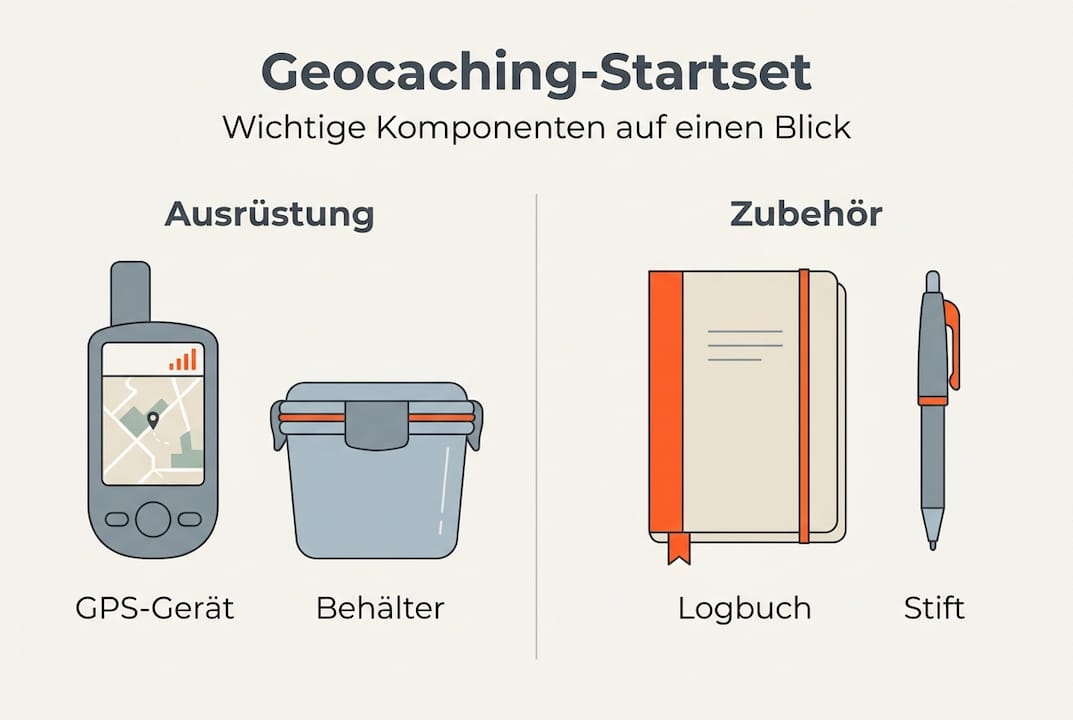
- Overview of the Most Important Equipment in a Geocaching Starter Set
- How to Choose the Right Geocaching Starter Set for Beginners?
- Creatively Expanding Starter Sets and Hiding Your Own Caches
- Discover Geocaching Equipment and Accessories at CacheWerk
- Frequently Asked Questions about Geocaching Starter Sets
Key Insights
| Point | Details |
|---|---|
| Advantages of the Starter Set | A starter set saves time in purchasing and reduces incorrect purchases by providing a tested, coordinated basic equipment. |
| Important Components | Core components include a GPS device with pre-installed geocaching software, a weatherproof A6 logbook, several waterproof containers in different sizes, outdoor pens, a starter collection of trade items, and instructions. |
| Pro Tip for Selection | Make sure the set includes three different container sizes so you can be flexible depending on the cache type. |
| Durable Equipment | Good components last for years with regular use and form the foundation for a lasting hobby. |
What is a Geocaching Starter Set and Why is it Worthwhile?
A geocaching starter set is a complete package for beginners that bundles all the important equipment beginners need to successfully search for and create caches. Unlike individual purchases, you receive a well-thought-out combination of GPS navigation technology, logbook, special pens, and various containers. These components are coordinated and cover the basic requirements of the hobby.
The main advantage lies in time savings. Instead of spending weeks researching which equipment is compatible and what quality standards apply, you get a tried-and-tested solution. The set significantly simplifies the preparation of your first tours. You can start immediately without having to deal with technical details.
Another plus point is cost-efficiency. Individual components quickly add up to higher amounts than a well-designed package. Manufacturers calculate sets so that you save money compared to buying items individually. You also avoid incorrect purchases, which often happen due to lack of experience.
Pro Tip: Make sure your starter set includes at least three different container sizes. This way, you'll be prepared for different types of caches, from micro-hides in the city to larger boxes in the forest.
Typical components of a starter set include:
- GPS navigation device with pre-installed geocaching software
- Weatherproof logbook in A6 format for at least 50 entries
- Three to five waterproof containers in various sizes
- Special outdoor pens that work even when wet
- Small trade items as a starter collection
- Instructions with basics and first tips
The difference from individual purchases is not just in the price. Sets are put together by experienced geocachers who know which combinations work in practice. You benefit from this knowledge without having to gain years of experience yourself. Especially for your first own cache, a set is ideal as you have all the necessary materials at hand.
The investment in a starter set pays off in the long run. High-quality components last for several years, even with regular use. You lay the foundation for a hobby that brings you into nature and at the same time sharpens your problem-solving skills. Many geocachers report that their first set accompanied them for years before they invested in specialized equipment.
Overview of the Most Important Equipment in a Geocaching Starter Set
The core components of a starter set each fulfill specific functions that together form a well-rounded overall package. Modern geocaching sets offer, in addition to the GPS device and logbook, additional items specifically tailored to outdoor conditions. Each element contributes to the success of your tours and should be carefully selected.
| Equipment Item | Main Function | Quality Feature | Typical Price |
|---|---|---|---|
| GPS Device | Navigation and Coordinates | Waterproof IPX7, 20h Battery Life | 150-300 Euros |
| Logbook | Documentation of Finds | Tear-resistant Paper, Weatherproof | 8-15 Euros |
| Container Set | Cache Hides | UV-resistant PETG, various sizes | 20-40 Euros |
| Outdoor Pens | Entries in Any Weather | Ink works down to -10°C | 5-10 Euros |
| Trade Items | Playful Aspect | Small, weatherproof items | 10-20 Euros |
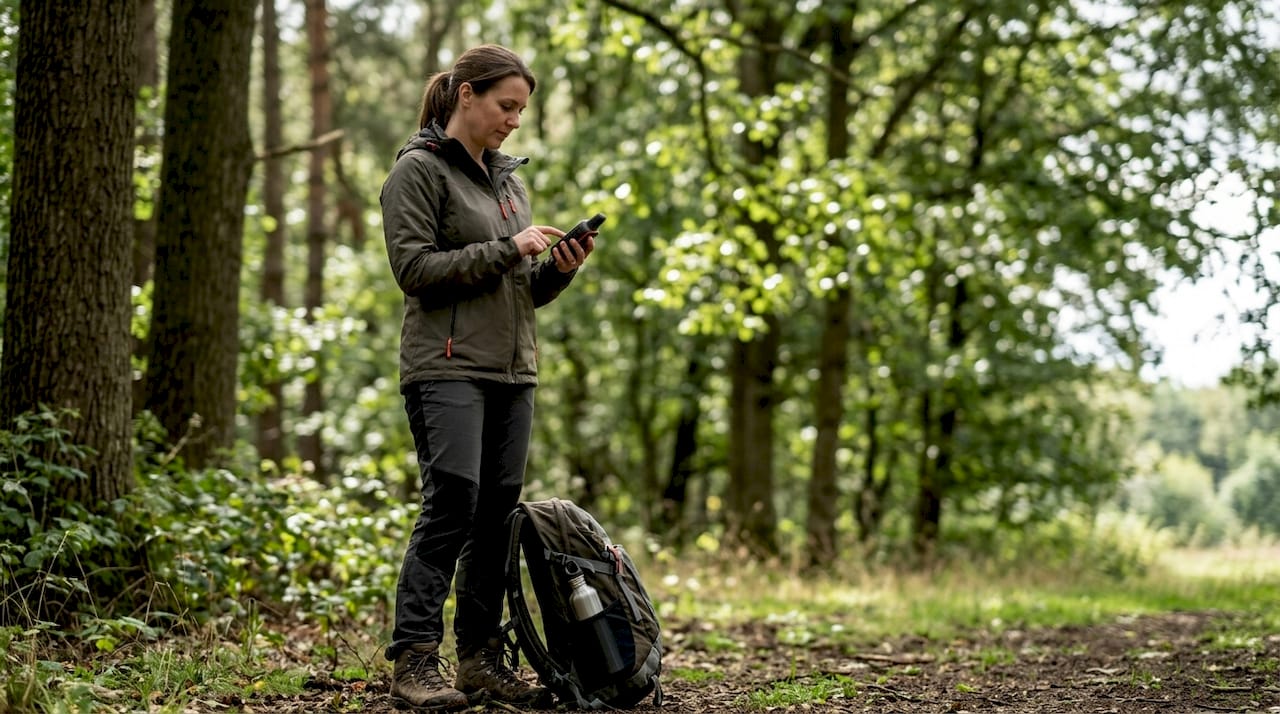
The GPS navigation device forms the heart of your equipment. Pay attention to intuitive operation and sufficient battery life for full-day tours. Modern devices offer pre-installed geocaching apps that simplify downloading and managing cache information. The accuracy should be at least 3 meters so that you can reliably find hides.
Logbooks document your successes and are important information for other geocachers. Choose models with at least 100g/m² heavy paper that does not immediately soak through even in damp conditions. A good logbook has a spiral binding that can be folded completely back. This allows you to write comfortably even in tight hiding spots.
Pro Tip: Laminate the first three pages of your logbook. These are used most often and otherwise wear out quickly. A simple trick that significantly extends the lifespan.
Containers protect your caches from weather and curious glances. A good set includes:
- Micro-containers for urban hides (magnetic)
- Small containers for standard caches (0.5-1 liter)
- Medium-sized boxes for regular caches (2-3 liters)
- Large containers for multi-caches with trade items
The choice of material is crucial. PETG plastic offers the best balance of robustness and UV resistance. Cheap containers made of normal plastic become brittle and break after a year. It's better to invest a little more here for durable quality.
Pens must function under extreme conditions. Normal ballpoint pens fail in cold or wet conditions. Special outdoor pens use pressure-based ink that flows even in sub-zero temperatures. Some sets also include pencils as a backup, which is useful for multi-day tours.
Trade items add the playful aspect to the hobby. Small figures, coins, or stickers particularly motivate young geocachers. Make sure the items are weatherproof and not too valuable. The symbolic exchange value counts more than the material one.
How to Choose the Right Geocaching Starter Set for Beginners?
Choosing the right starter set depends on your personal goals and available budget. The purchase of a geocaching starter set should be tailored to the needs of the individual beginner and the planned activities. A systematic approach helps to avoid incorrect purchases and start directly with the optimal equipment.
First, you should clarify your intended use. Do you primarily plan weekend tours in nature or are you looking for urban caches on your way to work? The answer determines which components have priority. For urban cachers, compact micro-containers are more important than large boxes. Nature lovers need more robust GPS devices with longer battery life.
Your budget sets the framework. Beginner sets start at around 100 Euros and go up to 400 Euros for premium packages. Cheaper sets cover the basics but do without extras such as spare batteries or additional containers. More expensive variants offer higher-quality GPS devices and more extensive accessories.
A practical checklist for selection:
- GPS device with at least 8 GB memory and color display
- Logbook with waterproof cover and at least 50 pages
- Three different container sizes including sealing rings
- Two outdoor pens of different colors
- Basic equipment of trade items (10-15 pieces)
- German instructions with tips for the first caches
- Carrying bag or backpack for transport
Compare different providers based on specific criteria. Price alone is not a good indicator of quality. Look at customer reviews and pay attention to details such as warranty services. Some manufacturers offer lifetime replacement for defective containers, which saves costs in the long run.
Technology and outdoor compatibility must match. A GPS device with a touchscreen is practical, but often difficult to operate in the rain. Buttons are more robust and also work with gloves. Consider the conditions under which you will primarily be outdoors.
Proper care of your equipment significantly extends its lifespan:
- Clean GPS device and containers with clear water after each tour
- Dry all components completely before storing them
- Check sealing rings monthly for cracks or wear
- Store logbooks in sealable plastic bags
- Test pens for functionality before each tour
- Replace batteries in the GPS device every 6 months, even without use
Compatibility with common geocaching platforms is particularly important. Your GPS device should be able to import GPX files without problems. Some inexpensive models only support proprietary formats, which limits usability. Inform yourself about the technical specifications before purchasing.
The expandability of the set also plays a role. Can you buy individual components later, or do you have to buy a completely new set? Modular systems offer more flexibility as your needs grow. Make sure the manufacturer also has individual parts in its assortment.
Creatively Expanding Starter Sets and Hiding Your Own Caches
Once you master the basics, numerous opportunities arise to individually expand your starter set. Many geocachers supplement their starter set with special gadgets and individual hides to personalize the experience. The creative design of your own caches makes the hobby particularly exciting and brings you into the active community.
Expansion possibilities exist in all areas. Trackables like Travel Bugs or Geocoins add a collecting and trading component. These numbered objects travel from cache to cache and can be tracked online. Many geocachers develop a passion for collecting special designs.
For your own cache hides, you need creative ideas and suitable material. Urban camouflage transforms ordinary objects into perfect hides. A fake stone, a tree bark replica, or a camouflaged screw deceive even experienced seekers. The art lies in designing the hide so that it blends into the surroundings but remains discoverable for insiders.
Pro Tip: Photograph your hide from different angles before placing it. This way you can see if it stands out from a distance and optimize the camouflage.
Different cache types require adapted equipment:
- Traditional Cache: Simple hide with coordinates, only requires basic container
- Multi-Cache: Multiple stages, requires additional clue boxes
- Mystery Cache: Puzzle on site, needs special encryption elements
- Letterbox: Combination with stamps, requires individual stamp sets
| Cache Type | Additional Equipment | Difficulty Level | Popularity Level |
|---|---|---|---|
| Traditional | Standard container | Low | Very High |
| Multi-Cache | Several small boxes | Medium | High |
| Mystery | Puzzle components | High | Medium |
| Letterbox | Stamp set | Low-Medium | Medium |
| Night-Cache | Reflectors | Medium | Low |
Personalized sets are created through targeted additions. 3D-printed PETG components offer endless design possibilities. You can have containers made in any shape, from miniature treasure chests to thematic figures. These individual elements make your caches unique and ensure positive ratings.
Additional items that have proven useful:
- UV flashlight for invisible clues
- Magnetic nano-containers for urban hides
- Waterproof notepads for spontaneous ideas
- Small tool kits for on-site repairs
- Replacement seals for all container sizes
The community appreciates well-thought-out hides that combine creativity with functionality. A well-placed cache takes into account the environment, offers a fair challenge, and is maintainable long-term. Avoid locations that require frequent checks or could be quickly destroyed.
When placing your own caches, certain guidelines apply. Keep at least 161 meters distance from existing caches. Do not place anything on private property without permission. Pay attention to nature reserves and respect local regulations. These guidelines protect the hobby and maintain good relations with landowners.
Maintaining your caches is part of the responsibility. Plan quarterly inspection tours to repair damage and replace logbooks. A well-maintained cache receives better ratings and remains active longer. Some geocachers develop regular maintenance routes where they check several of their own caches in one day.
Discover Geocaching Equipment and Accessories at CacheWerk
Now that you know the basics and expansion possibilities, you might be wondering where to find high-quality components. At CacheWerk, you'll find a carefully curated selection of geocaching equipment, specially tailored to the needs of beginners and experienced cachers. The platform offers not only complete sets but also individual components for targeted expansions.
The assortment includes innovative hides made from 3D-printed PETG, which are both durable and creative. From urban camouflage to personalized trackables, you'll find everything for your individual projects. Particularly practical are the detailed product descriptions that help you with selection and make technical details transparent. If you are looking for innovative geocaching products, the shop offers a wide range of solutions for urban and rural hides. The specialization in unusual designs sets CacheWerk apart from general outdoor shops and guarantees that you receive products developed by geocachers for geocachers.
Frequently Asked Questions about Geocaching Starter Sets
What does a geocaching starter set typically include?
A standard starter set includes a GPS navigation device, weatherproof logbooks, several containers in various sizes, special outdoor pens, and basic trade items. Higher-quality sets supplement this with spare batteries, additional sealing rings, and a carrying bag. The exact composition varies depending on the manufacturer and price range.
Can you geocache without a starter set?
Basically yes, but it is significantly more complex. You can use a smartphone with a geocaching app and buy components individually. However, you will then lack the expertise in selecting compatible parts, and you usually pay more than for a well-thought-out set. For occasional tours, a smartphone is sufficient; for regular geocaching, the investment is worthwhile.
How do I properly care for my geocaching equipment?
Clean all components with clear water after each tour and dry them completely. Check sealing rings monthly for wear and replace them if necessary. Store logbooks in sealable plastic bags to keep moisture out. GPS devices should be stored in a dry, cool place when not in use.
Where can I find the best geocaching starter sets?
Specialized online shops like CacheWerk offer the largest selection of high-quality sets. There you benefit from expert knowledge and targeted advice. General outdoor shops often only have basic equipment without geocaching-specific components. Community recommendations in forums provide additional guidance in selection.
What additional equipment is worthwhile later?
UV flashlights for invisible clues, magnetic nano-containers for urban hides, and trackables sensibly expand your hobby. A small tool kit for on-the-go repairs and waterproof notepads are also practical. 3D-printed special hides made of PETG enable creative own caches. Only invest in expansions once you are confident with the basic equipment.
How long does a good geocaching starter set last?
With proper care, high-quality sets last for several years. GPS devices often function for 5-7 years before battery performance declines. PETG containers can withstand 3-4 years of intensive use with good maintenance. Logbooks and pens are consumables that need to be renewed regularly. The investment pays off through the longevity of the core components.