
Innovative Cache Hide Ideas for Geocaching Enthusiasts 2026
Choosing the perfect cache hide is an art. You need creativity, muggle-proofing, and a solution that suits your location. Urban environments require different strategies than rural areas. Technology can impress, but it comes with maintenance. This article shows you proven and innovative hiding ideas, compares their advantages and disadvantages, and helps you make the right choice for your next cache project. From simple DIY solutions to complex tech hides, you'll find practical inspiration here.
Table of Contents
- Key Takeaways
- Criteria for Innovative Cache Hides
- Rural and Nature-Based Hides
- Urban and Public Cache Hides
- Technological and Complicated Cache Hides
- Comparison and Recommendation: Which Hide Suits Your Project?
- Discover Special Cache Hides and Equipment at CacheWerk
- Questions and Answers on Innovative Cache Hiding Ideas
Key Takeaways
| Point | Details |
|---|---|
| Location dependent | The choice heavily depends on the location, and urban strategies differ from rural possibilities. |
| Prioritize Muggle Protection | The cache must remain hidden from muggles, and clever camouflage plus a puzzle helps in the long term. |
| Tech Hides Maintenance | While technical hides are impressive, they require regular maintenance such as battery changes and troubleshooting. |
| Choose robust materials | Weather-resistant materials like PETG, aluminum, or treated wood significantly extend the lifespan compared to cheap plastic containers. |
| Combination camouflage and puzzle | The best favorites arise from a clever mix of camouflage, location, and a suitable puzzle. |
Criteria for Innovative Cache Hides
Before you choose a hide, you should understand the basic selection criteria. Location is the most important factor. Urban environments offer different possibilities than forest areas. In the city, you can use public structures, while in the forest, natural camouflage works.
Muggle protection is second. Your cache must remain hidden from non-geocachers. A conspicuous hide will quickly be discovered and possibly damaged. The community prefers a combination of hide and puzzle, with maintenance being crucial for tech caches.
Technological hides are innovative and impressive. They attract many favorites but require significantly more maintenance. You need to regularly change batteries, check electronics, and troubleshoot. Mechanical and tech-based hides offer interesting alternatives here.
Robustness determines the lifespan of your cache. Weather-resistant materials like PETG, aluminum, or treated wood withstand years outdoors. Cheap plastic containers often fail after a few months. Invest in quality to save time in the long run.
Important considerations when choosing a hide:
- How often can you maintain the cache?
- What materials are available at the location?
- What is the muggle frequency?
- Does a puzzle fit the hide?
- What is the budget?
Pro-tip: Combine multiple camouflage methods for maximum muggle protection. A fake rock in a pile of stones is good; a fake rock with additional moss covering is better.
The balance between innovation and practicality is crucial. A too complex hide frustrates finders, while a too simple one bores them. Find the sweet spot for your target audience.
Rural and Nature-Based Hides
Rural environments offer fantastic opportunities for creative hides. The mini pseudo birdhouse has been in use for 1.5 years and remains muggle-proof in rural areas. You can build it yourself and attach it to trees. The natural look is perfectly deceiving.
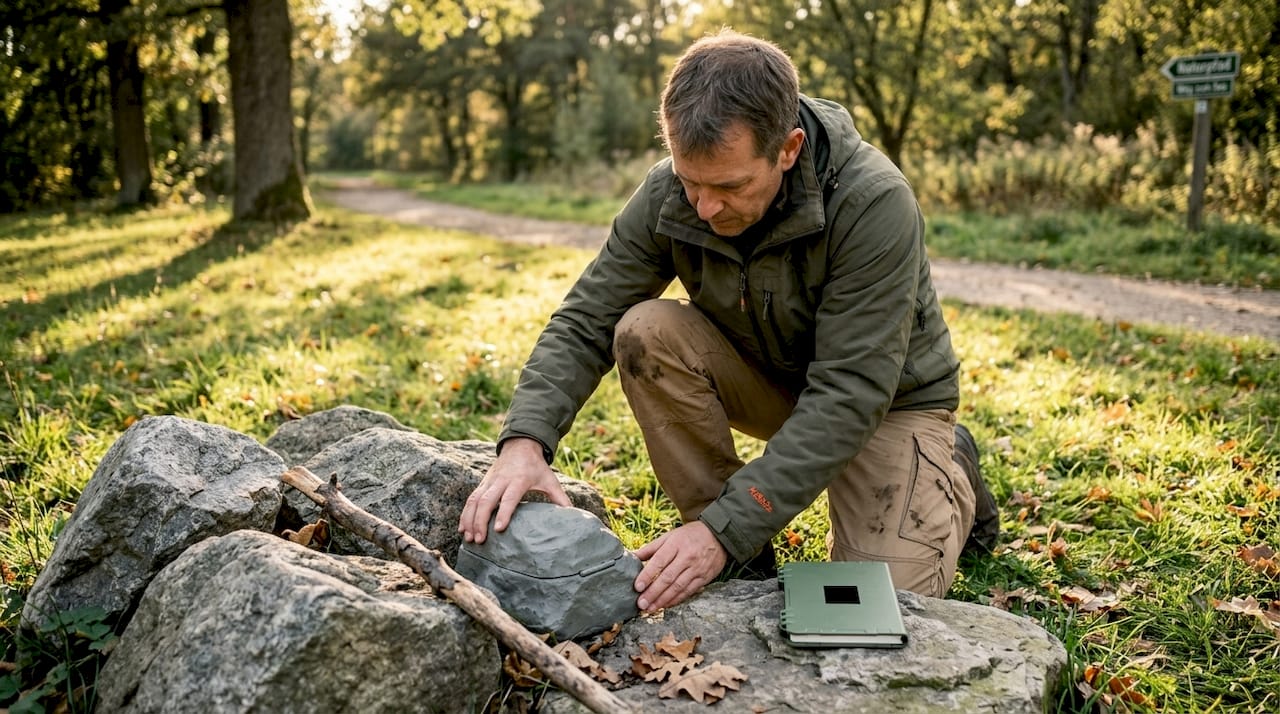
Fake rocks are classics for a good reason. They blend seamlessly with the environment. Modern resin versions look deceptively real. You can glue real moss to them or paint them to improve camouflage. In stone fields or by stream banks, they are practically invisible.
Tree hollows offer natural protection from weather and sight. You don't have to use a real hollow. Artificial tree hollows made of wood or plastic work just as well. Attach them at eye level for easy access. Make sure not to damage living trees.
Mechanical hides like Metamorphosis Aparecium are popular and innovative. These caches use LEGO mechanics, pole climbs, or rope pulls. They offer interaction without electronics. Geocachers appreciate the physical challenge.
Themed caches greatly encourage creativity. A frog theme fits perfectly with ponds or wetlands. You can use frog figures as a hide or incorporate them into the puzzle design. Such thematic elements make caches unforgettable.
Popular rural hide options:
- Hollow tree trunks with waterproof interiors
- Stone walls with removable elements
- Camouflaged pipes in the ground
- Birdhouses with false bottoms
- Root hides under fallen trees
Pro-tip: Use local materials for authentic camouflage. Collect bark, moss, and stones from the location to perfectly match your hide.
“The best rural caches are those where you stand right in front of them and still have to look twice. Natural camouflage beats artificial cleverness.”
Robust materials are essential in nature. Moisture, temperature fluctuations, and animals wear down hides. PETG holds up better than regular PLA. Aluminum does not rust like steel. Treated wood lasts longer than untreated. Think long-term when choosing materials.
Mechanical geocache hides offer the perfect middle ground between innovation and maintainability. They impress without electronic vulnerability.
Urban and Public Cache Hides
Urban environments require different strategies. Magnetic nano caches on poles, mini-libraries, and traffic signs are popular in urban areas and are the theme for 2026. These hides cleverly use existing infrastructure.
Magnetic nanos are the kings of urban caches. You attach them to lampposts, benches, or railings. They are tiny and inconspicuous. Make sure to use rust-proof magnets that hold even in the rain. Strong neodymium magnets prevent wind or vibrations from dislodging the cache.
Mini-libraries offer creative possibilities. Many cities have public bookshelves. You can disguise a cache as a book or hide it behind real books. This method also works in shop windows or waiting shelters.
Electrical boxes and traffic signs are perfect camouflage. Many have hollow spaces or mounting points. A small magnetic container behind a sign can remain undiscovered for years. However, check beforehand if placement is legal.
The concept of "Hidden in Plain Sight" is particularly relevant in 2026. Caches that everyone could see but no one recognizes as such are fascinating. A fake screw head, an artificial flower, or a chewing gum imitation work excellently.
Overview of urban hiding possibilities:
- Magnetic film canisters under benches
- Fake stones in flower boxes
- Hollow screws on public furniture
- Camouflaged containers in electrical boxes (exterior only!)
- Hides in art installations
| Hide Type | Advantage | Disadvantage | Best Environment |
|---|---|---|---|
| Magnetic Nanos | Inconspicuous, simple | Very small, weather-sensitive | Metal structures |
| Mini-Libraries | Creative, protected | Location-dependent | Cultural districts |
| Traffic Signs | Durable, accessible | Legal issues | Busy areas |
| Fake Objects | Innovative, deceiving | Complex manufacturing | Anywhere |
Pro-tip: Observe the location at different times of the day. A hide that is perfect at night can be problematic during the day with high foot traffic.
The balance between visibility and camouflage is central. Your cache should be findable for geocachers, but invisible to muggles. Test the hide with non-geocachers before activating it.
Special urban caches offer professional solutions specifically designed for urban environments. They combine inconspicuousness with robustness.
Technological and Complicated Cache Hides
Tech caches represent the pinnacle of innovation. Electronic caches with Arduino and NFC offer innovative features but require regular maintenance and are prone to defects. These hides use programming, sensors, and displays.
GPS-based caches only open at specific coordinates. You program an Arduino with a GPS module that checks the position. If the coordinates are correct, a servo motor unlocks the lock. These reverse geocaching boxes fascinate finders but require technical know-how.
NFC systems offer contactless interaction. Geocachers scan tags with their smartphone to receive codes. You can distribute multiple NFC points in a city that together yield the final code. This multi-cache variant is modern and interactive.
Servo mechanics enable movable hides. A small motor opens flaps, lifts lids, or rotates mechanisms. Combined with puzzles or number locks, complex challenges arise. However, the mechanics must be weather-resistant and reliable.
LCD displays show hints, puzzles, or progress indicators. They make caches interactive and modern. However, power consumption is high. You need large batteries or solar panels for longer runtimes.
Steps to build a tech cache:
- Plan the concept and necessary components
- Program and test the electronics at home
- Build a weather-resistant housing
- Install backup systems for failures
- Document maintenance intervals
Programmable key systems enable dynamic codes. You can change codes without visiting the cache. You can update puzzles or hints via mobile network or Wi-Fi. This flexibility is unique but comes with ongoing costs.
Tech caches have a high number of favorites but fulfill Murphy's Law with regular maintenance needs. Everything that can go wrong will go wrong. Plan for failures.
Common tech cache components:
- Arduino or Raspberry Pi as control unit
- GPS modules for positioning
- NFC readers for contactless interaction
- Servo motors for mechanical movements
- LCD displays for visual output
- Solar panels for sustainable energy
| Technology | Complexity | Maintenance Effort | Wow Factor | Cost |
|---|---|---|---|---|
| Arduino-based | Medium | High | Very High | 50-100€ |
| NFC System | Low | Medium | High | 30-60€ |
| GPS Lock | High | Very High | Extreme | 80-150€ |
| Servo Mechanics | Medium | Medium | High | 40-80€ |
Pro-tip: Always build in a mechanical backup access. If the electronics fail, geocachers can still log the cache. Document this emergency access in the listing.
The high maintenance effort is the biggest challenge. Batteries rarely last longer than three months. Moisture damages electronics. Software bugs occur. You must be willing to drive to the cache regularly.
Tech-based geocache hides show how innovation and practicality can be combined. Professional solutions reduce maintenance effort.
Comparison and Recommendation: Which Hide Suits Your Project?
Now you know the options. Which hide suits your project? The answer depends on your priorities. Each cache type has specific strengths.
Rural hides are durable and inconspicuous. They work ideally in nature locations with low muggle frequency. A mini birdhouse or fake rock survives years without maintenance. These hides are perfect if you cannot regularly visit the location.
Urban hides cleverly use public spaces. They require creativity and good location knowledge. Magnetic nanos or disguised objects fit dense urban areas. However, you need robust materials against vandalism.
Tech caches are innovative and attract favorites. They are suitable for owners who have technical know-how and can perform regular maintenance. The wow factor is unbeatable, but so is the effort.
The combination of camouflage and puzzle significantly increases the number of favorites. A cleverly hidden cache with an intelligent puzzle excites more than a simple hide. Consider how you can combine both elements.
| Hide Type | Durability | Maintenance | Innovation | Cost | Best for |
|---|---|---|---|---|---|
| Rural | Very High | Low | Medium | Low | Nature lovers |
| Urban | Medium | Medium | High | Medium | City cachers |
| Tech | Low | Very High | Very High | High | Tech enthusiasts |
| Hybrid | High | Medium | High | Medium | Experienced owners |
Decision criteria for your hide:
- How often can you visit the cache?
- What budget is available?
- What is your technical skill level?
- What does your target audience expect?
- How important is durability to you?
Pro-tip: Start with a simple hide and upgrade later. You can combine a fake rock with a puzzle before investing in expensive technology. Learn from the first experience.
Consider location, maintainability, and target audience when choosing. A tech cache in a remote forest is a maintenance nightmare. A simple nano in the city center bores experienced cachers. Find the right balance.
Compare mechanical and tech hides directly to find the best solution for your project.
Discover Special Cache Hides and Equipment at CacheWerk
You now have the knowledge to plan innovative caches. But implementation requires the right materials. CacheWerk offers a wide selection of special cache hides specifically designed for geocaching. From inconspicuous urban nanos to robust outdoor containers, you'll find professional solutions.
The platform offers suitable geocaching equipment and accessories for simple and complex cache projects. 3D-printed PETG hides offer weather resistance and durability. Personalized trackables make your cache unique. Camouflage materials and urban camouflage significantly improve muggle protection.
For technically demanding projects, you'll find components and finished systems. The products are tested and recommended by experienced geocachers. You save time searching for materials and can focus on creative design. High-quality hides last longer and reduce maintenance effort.
Questions and Answers on Innovative Cache Hiding Ideas
How do I properly maintain a tech-based cache?
Check batteries, electronics, and seals every three months. Test functions on-site and have spare parts ready. Document every maintenance visit in the cache listing so finders know the cache is working. Build a mechanical backup access for emergencies.
Which hiding idea is suitable for strong muggle presence?
Magnetic nano caches or disguised everyday objects work best. They go unnoticed even with direct eye contact. Place them at eye level on metal structures or use fake screws. Avoid conspicuous containers or unusual objects in highly frequented areas.
Are mechanical caches difficult to build?
Not necessarily. Simple cable pull or lever mechanisms can be implemented with basic knowledge. LEGO Technik offers many possibilities without special tools. Start with simple designs and increase complexity. Online tutorials and the geocaching community can help with problems.
How do I best combine hide and puzzle?
The hide should support the puzzle, not hinder it. A frog hide fits an animal puzzle. A mechanical hide can be part of the solution. Make sure both work together and do not contradict each other. Test the combination with friends before publication.
Which materials last longest outdoors?
PETG, aluminum, and treated hardwood are top. PETG is UV-resistant and waterproof. Aluminum does not rust and lasts decades. Hardwood with weather protection glaze survives several years. Avoid normal PLA, untreated wood, or cheap plastic, which quickly fail.