
Poolhacks 2026: Pool mit 3D-Druck clever aufwerten
Poolhacks 2026 sind definiert als gezielte Upgrades am Pool durch maßgeschneiderte 3D-Druck-Elemente, die Ästhetik, Komfort und Wartung verbessern. Der Trend geht klar weg von Einheitslösungen aus dem Baumarkt, hin zu individuell gedruckten Teilen aus UV-beständigem PETG, die jahrelang halten. Wer seinen Pool wirklich aufwerten will, kombiniert praktische Halterungen und Verkleidungen mit smarter Automatisierung. Cachewerk hat genau diese Verbindung aus 3D-Druck und Funktionalität im Blick und zeigt dir, wie du dein Poolerlebnis 2026 auf ein neues Level bringst.
1. Welche 3D-Druck-Elemente eignen sich am besten für Pool-Upgrades?
3D-gedruckte Halterungen für Poolroboter und Technikverkleidungen aus UV-beständigem PETG verbessern Wartung und Optik am Poolrand deutlich. Das ist kein Luxus, sondern eine echte Arbeitserleichterung. Wer schon mal einen Poolroboter auf dem Boden hat herumliegen sehen, weiß, wie unschön das wirkt.
Die wichtigsten 3D-Druck-Elemente für deinen Pool:
- Maßgeschneiderte Poolabdeckungen für Pumpen und Filterkästen, die Technik verbergen und gleichzeitig Belüftung sicherstellen
- Halterungen für Poolroboter direkt am Beckenrand, damit das Gerät nach dem Einsatz sauber und griffbereit hängt
- Technikverkleidungen für Schlauchverbindungen und Steuerboxen, gedruckt in passender Farbe zum Pool
- Modulare Organizer für Reinigungszubehör wie Kescher, Bürsten und Teststreifen
- Befestigungsclips für Solarfolien oder Abdeckplanen, die exakt auf den Beckenrand passen
PETG ist das Material der Wahl. Es ist UV-beständig, wetterfest und verformt sich nicht bei Hitze. Andere Materialien wie PLA werden unter direkter Sonne weich und verlieren ihre Form nach wenigen Wochen.
Profi-Tipp: Drucke alle Außenteile mit mindestens 4 Wandlinien und 30% Füllung. Das erhöht die Stabilität deutlich, ohne den Materialverbrauch zu verdoppeln.
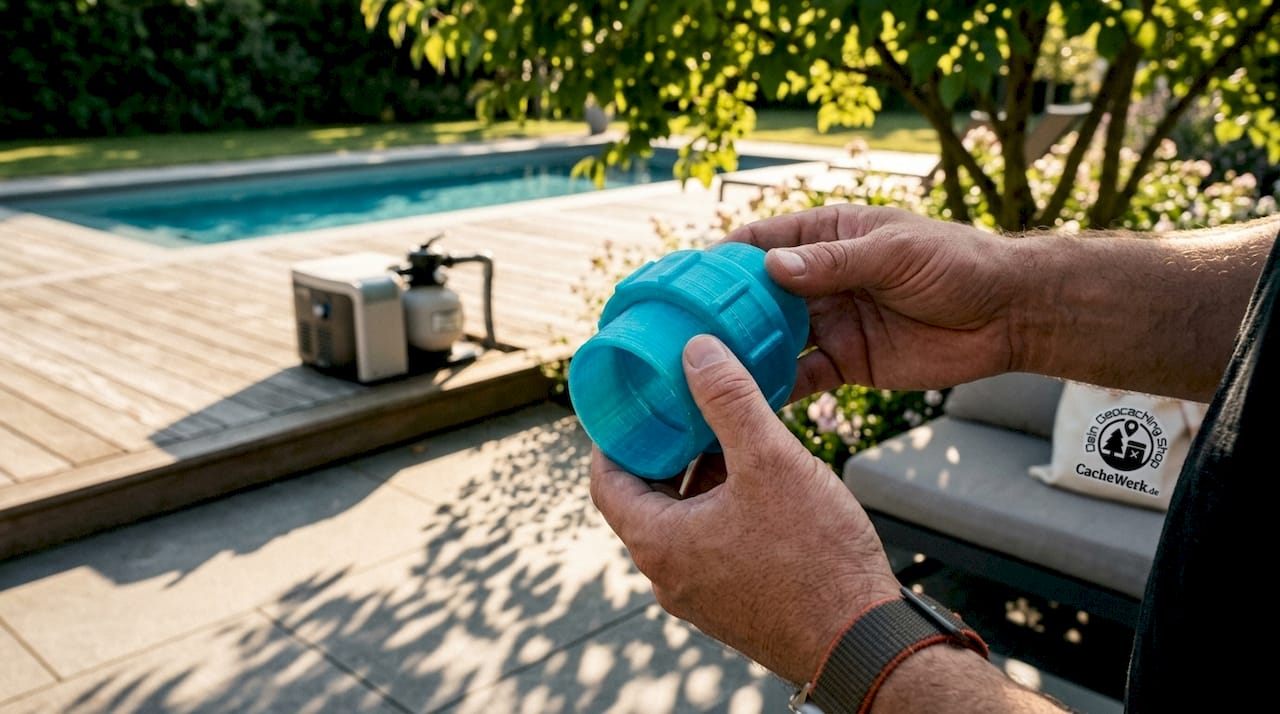
2. Kreative Deko- und Komfortelemente am Pool selbst drucken
Komfort am Pool entsteht durch Details. Und genau da spielt 3D-Druck seine Stärken aus. Du kannst Teile drucken, die es im Handel schlicht nicht gibt, weil sie zu spezifisch für deinen Beckenrand, deine Terrassendielen oder deine Lieblingsglasform sind.
Hier sind konkrete Ideen, die du direkt umsetzen kannst:
- Klemmbare Getränkehalter für den Beckenrand, die Gläser bis 0,5 Liter sicher halten und sich ohne Werkzeug befestigen lassen. Klemmbare Lösungen tragen dabei bis zu 50 lbs Tragkraft, was für Getränke und leichte Snackschalen mehr als ausreicht.
- Poolspielzeug-Organizer zum Einhängen am Leiter oder Beckenrand, damit Wasserpistolen und Tauchstäbchen nicht auf der Terrasse herumliegen
- Modulare Sitzplatzerweiterungen aus PETG, die als Ablagefläche neben Liegestühlen dienen
- Personalisierte Namensschilder für den Pool oder die Gartenbar, wetterfest und in jeder Farbe druckbar
- Halterungen für Outdoor-Lautsprecher direkt am Beckenrand, passgenau für dein Modell
- Poolbar-Aufsätze zum Klemmen an den Beckenrand, die als kleine Ablage für Sonnencreme, Handy und Getränk dienen
Profi-Tipp: Nutze Thingiverse oder Printables für fertige Designs. Viele Poolbesitzer haben dort schon Modelle hochgeladen, die du direkt anpassen und drucken kannst, ohne selbst modellieren zu müssen.
Der Vorteil gegenüber Kaufteilen liegt auf der Hand. Du passt Farbe, Größe und Form exakt an deinen Pool an. Kein Kompromiss, kein “passt eigentlich ganz gut”.
3. Praktische Poolpflege-Hacks 2026 mit 3D-Druck
Wartung ist der Teil, den die meisten Poolbesitzer am liebsten vermeiden würden. 3D-Druck kann hier konkret Zeit sparen. Nicht durch Magie, sondern durch bessere Organisation und smarte Halterungen.
- Modulare Verrohrungshalter halten Schläuche und Leitungen ordentlich am Beckenrand fixiert, statt dass sie auf dem Boden liegen und stolpern. Modulare Verrohrung mit Smart-Home-Steckdosen ermöglicht effizientere Steuerung und Wartung 2026.
- Abdeckungen für Technikräume aus PETG schützen Pumpen und Filter vor Schmutz und Spritzwasser, lassen sich aber in Sekunden abnehmen
- Halterungen für Wasserteststreifen und Chemikaliendosierer direkt am Pool, damit alles griffbereit ist und nicht erst gesucht werden muss
- Kabelführungen für Poolbeleuchtung oder Pumpensteuerung, die sauber am Beckenrand verlaufen
Intelligente Automatisierung mit Bio-Filtration spart bis zu 30% Reinigungszeit. Das klingt viel, aber wer schon mal eine Saison mit App-gesteuerter Pumpe verbracht hat, glaubt es sofort. Die 3D-gedruckten Halterungen sind dabei das Bindeglied zwischen smarter Technik und sauberem Erscheinungsbild.
Der optimale pH-Wert liegt konstant bei 7,2 im Bereich 7,0–7,4. Regelmäßige Prüfungen im Sommer sind dafür Pflicht. Ein 3D-gedruckter Wandhalter direkt am Pool, der Teststreifen, Notizblock und Stift aufnimmt, macht diese Routine deutlich angenehmer.
Profi-Tipp: Drucke dir eine kleine Box mit Deckel für deine Chlortabletten oder Aktivsauerstoff-Granulat. Wetterfest, beschriftet und immer am gleichen Platz. Das klingt simpel, spart aber echte Zeit.
4. Einfache 3D-Druck-Projekte für Poolbesitzer zum Selbermachen
Wer noch nie etwas gedruckt hat, denkt oft, 3D-Druck sei kompliziert. Ist es nicht. Die einfachsten Poolprojekte sind in unter zwei Stunden Druckzeit fertig und brauchen keine Vorkenntnisse im Modellieren.
- Schritt 1: Design wählen. Auf Plattformen wie Printables oder Thingiverse gibt es hunderte kostenlose Poolzubehör-Modelle. Suchbegriffe wie “pool holder”, “pool organizer” oder “pool clip” liefern sofort Ergebnisse.
- Schritt 2: Material kaufen. PETG-Filament in Weiß oder Grau kostet etwa 20–30 € pro Kilogramm. UV-beständige Materialien wie PETG sind Pflicht für alles, was dauerhaft in der Sonne liegt.
- Schritt 3: Druckeinstellungen anpassen. Schichthöhe 0,2 mm, 4 Wandlinien, 25–30% Füllung. Das reicht für die meisten Poolteile.
- Schritt 4: Drucken und testen. Einfach loslegen. Wenn ein Teil nicht passt, kostet ein Neudruck nur wenige Cent an Material.
- Schritt 5: Befestigen. Die meisten Poolteile klemmen oder werden mit Edelstahlschrauben befestigt. Kein Kleber, kein Bohren in den Beckenrand.
Profi-Tipp: Starte mit einem Getränkehalter für den Beckenrand. Das Modell ist einfach, der Druck dauert unter 90 Minuten und du siehst sofort, ob dein Drucker gut kalibriert ist.
Wer keinen eigenen Drucker hat, kann lokale Makerspaces oder Online-Druckdienste nutzen. Viele Bibliotheken und Volkshochschulen bieten inzwischen 3D-Druck-Kurse an, wo du deine ersten Teile direkt vor Ort drucken kannst.
5. Fertige 3D-Druck-Teile kaufen oder selbst drucken?
Fertige 3D-gedruckte Poolstücke bieten Zeitersparnis und Qualitätskontrolle, während DIY maximale Individualisierung und Kostenkontrolle ermöglicht. Beide Wege haben ihre Berechtigung. Die Frage ist, was dir wichtiger ist.
| Kriterium | Fertig kaufen | Selbst drucken |
|---|---|---|
| Zeitaufwand | Gering, sofort einsatzbereit | Mittel bis hoch, je nach Projekt |
| Kosten | Höher pro Teil | Gering bei eigenem Drucker |
| Individualisierung | Begrenzt auf verfügbare Modelle | Vollständig anpassbar |
| Materialqualität | Geprüft, zertifiziert | Abhängig von Filament und Einstellungen |
| Technisches Wissen | Nicht nötig | Grundkenntnisse hilfreich |
| Für wen geeignet | Einsteiger, Zeitsparende | Bastler, Tüftler, Kreative |
Wer einen eigenen Drucker hat und Spaß am Tüfteln hat, fährt mit DIY besser. Wer einfach schnell ein funktionierendes Teil will, greift zu fertigen Produkten. Und wer beides will, kauft fertige Basisteile und druckt spezifische Ergänzungen selbst.
Cachewerk bietet mit dem AquaWerk FlowJet genau diesen Mittelweg: Ein fertig gedrucktes, qualitätsgeprüftes Teil, das sofort funktioniert und trotzdem das Poolerlebnis sichtbar aufwertet.
Wichtige Erkenntnisse
Der effektivste Poolhack 2026 ist die Kombination aus UV-beständigen PETG-Teilen, smarter Automatisierung und konsequenter Pflegeroutine, weil erst diese drei Faktoren zusammen dauerhaften Nutzen bringen.
| Thema | Details |
|---|---|
| Materialwahl für 3D-Druck | PETG ist Pflicht für alle Außenteile, da es UV-beständig und formstabil bei Hitze ist. |
| Einstieg für Anfänger | Fertige Designs von Printables nutzen und mit einem einfachen Getränkehalter starten. |
| Wartung vereinfachen | 3D-gedruckte Halterungen und Organizer direkt am Pool sparen täglich Zeit bei der Pflege. |
| Kaufen vs. Selbstdrucken | Fertige Teile sparen Zeit, DIY spart Geld und ermöglicht maximale Anpassung. |
| Smarte Integration | App-gesteuerte Pumpen und Bio-Filtration in Kombination mit 3D-Druck-Halterungen senken den Pflegeaufwand spürbar. |
Was ich nach zwei Sommern mit 3D-Druck am Pool gelernt habe
Ich war anfangs skeptisch. Ein Getränkehalter aus dem Drucker, der am Beckenrand klemmt, klingt nach Bastelkram. Aber nach dem ersten Sommer war klar: Diese kleinen Teile machen einen echten Unterschied im Alltag.
Das Überraschendste war die Haltbarkeit. PETG-Teile, die ich im Mai gedruckt habe, sahen im September noch genauso aus. Kein Verblassen, keine Verformung, kein Bruch. PLA hatte ich vorher einmal versucht, das war nach drei Wochen Sonne Geschichte.
Was ich unterschätzt habe: die Wartungshalterungen. Ich habe mir eine einfache Wandbox für Teststreifen, Notizblock und pH-Senker gedruckt und direkt neben der Pumpe befestigt. Klingt banal. Aber seitdem messe ich den pH-Wert tatsächlich regelmäßig, weil alles griffbereit ist. Vorher war das Zeug irgendwo in der Garage.
Mein ehrlicher Rat: Fang nicht mit dem kompliziertesten Projekt an. Drucke zuerst etwas Kleines, das du sofort brauchst. Und wenn du keinen eigenen Drucker hast, schau dir fertige Teile an, bevor du investierst. Der AquaWerk FlowJet von Cachewerk war für mich so ein Einstieg: fertig, funktioniert sofort und sieht gut aus.
Der Trend 2026 geht zu nahtlos integrierten Pools mit Biofiltration und KI-Sensorik. Das ist schön und gut. Aber die einfachen 3D-Druck-Hacks, die du an einem Wochenende umsetzen kannst, bringen im Alltag oft mehr als jede smarte Technik.
— Benedikt
Dein Pool-Upgrade aus dem 3D-Drucker
Wer seinen Pool mit wenig Aufwand aufwerten will, findet bei Cachewerk eine fertige Lösung: den AquaWerk FlowJet, einen 3D-gedruckten Fontänen-Aufsatz für Bestway und Intex Pools.

Das Teil passt auf gängige Poolpumpen, ist aus UV-beständigem PETG gefertigt und verwandelt die Wasserrückführung in ein optisches Highlight. Kein Werkzeug, keine Montage, einfach aufstecken und fertig. Für Poolbesitzer, die sofort ein sichtbares Ergebnis wollen, ohne selbst drucken zu müssen, ist der AquaWerk FlowJet der direkteste Weg zum Pool-Upgrade 2026.
FAQ
Was sind Poolhacks 2026 genau?
Poolhacks 2026 sind gezielte Upgrades am Pool durch selbst gedruckte oder fertige 3D-Druck-Teile, die Komfort, Optik und Wartung verbessern. Der Begriff umfasst alles von einfachen Getränkehaltern bis zu modularen Technikverkleidungen.
Welches Material eignet sich für 3D-Druck am Pool?
PETG ist das beste Material für alle Poolteile im Außenbereich, weil es UV-beständig, wetterfest und formstabil bei Hitze ist. PLA verformt sich unter direkter Sonneneinstrahlung und ist für den Außeneinsatz nicht geeignet.
Brauche ich einen eigenen 3D-Drucker für Poolhacks?
Nein. Fertige 3D-gedruckte Poolteile wie der AquaWerk FlowJet von Cachewerk sind sofort einsatzbereit und brauchen keinen eigenen Drucker. Wer selbst drucken will, kann auch lokale Makerspaces oder Online-Druckdienste nutzen.
Wie schwierig sind einfache 3D-Druck-Projekte für den Pool?
Einfache Projekte wie Getränkehalter oder Beckenrandclips sind für Anfänger gut geeignet. Fertige Designs auf Plattformen wie Printables sind kostenlos verfügbar und brauchen keine Modellierungskenntnisse.
Wie oft sollte ich den pH-Wert meines Pools prüfen?
Der pH-Wert sollte im Sommer mehrmals pro Woche geprüft werden, mit einem Zielwert von 7,2 im Bereich 7,0–7,4. Ein 3D-gedruckter Wandhalter direkt am Pool mit Teststreifen und Notizblock macht diese Routine deutlich einfacher.