Geocaching in the nature park permitted: rules you need to know

Short answer: Yes, but only under clear conditions. A cache in a nature park is permitted if you stick to the trails, clear the location with the responsible administration, and do not touch any sensitive habitats. Before hiding your cache, contact the forestry office or park management, plan the cache directly on the trail, and avoid hiding it in tree hollows, deadwood, or wetlands. Anyone who follows these three steps will be geocaching perfectly legally in the vast majority of German nature parks.
In short:
- Placing a geocache in a nature park is only permitted if you stick to the trails, contact the administration in advance, and do not touch any sensitive habitats.
- In nature conservation areas, caches are generally prohibited unless explicit permission has been granted by the owner.
- Keeping a maximum distance of three to five meters from the trail is mandatory in most parks to prevent damage from trampling.
- Hiding caches in tree hollows, wetlands, or deadwood is strictly prohibited because these provide refuge for animals.
- If permission is denied, placing a multi-cache along permitted trails can be a sensible alternative.
Table of Contents
- What does the law say about caching in a nature park?
- What specific rules apply in national parks and nature conservation areas?
- How to proceed with obtaining permission
- How do you place a cache in an eco-friendly way?
- Owner Checklist: What you must check before publishing
- Practical knowledge: Which materials last the longest in a nature park?
- Why stricter rules actually help the community
- Suitable hiding spots for your next nature park cache
- Important contacts for your permission request
- Sources
- FAQ
What does the law say about caching in a nature park?
Germany distinguishes between several protection categories, and the differences are far from trivial for geocachers. A nature park is legally much more open than a nature conservation area or national park. The situation is different in nature conservation areas: activities that can lead to permanent disruption are strictly prohibited, and both hiding and searching for geocaches are generally not allowed there unless the landowner explicitly agrees, as the position paper of the LFU Rhineland-Palatinate clarifies.
The general right to access the forest allows you to stay there for recreational purposes. However, that is not the same as having permission to bury, fasten, or permanently place anything there. This is exactly where the right of access and the requirement for permission diverge: you are allowed to search almost anywhere, but you are not allowed to hide things.
Those who do not respect these boundaries risk more than just trouble. The consequences of violations range from:
- Archiving of the cache by the geocaching operator as soon as an authority files a complaint
- Fines under state nature conservation law if a protected area has been demonstrably disturbed
- Reputational damage to the entire geocaching community, because park administrations often enact more restrictive rules for everyone following negative experiences
Authorities actively map problematic caches and report them to forestry offices, as shown by the practices of the Saxon Switzerland National Park. Archiving is by far the most common mechanism used to remove eco-unfriendly hiding spots.
What specific rules apply in national parks and nature conservation areas?
Compared to national parks, nature parks are usually more generous, but there are fixed ground rules here as well, which differ from state to state and park to park. Anyone who follows the sequence below will be in the clear in almost every German protected area:
- Stay on the trails: Caches must be located almost exclusively immediately along marked trails; in practice, this often means a maximum distance of 3 to 5 meters. The Bavarian Forest National Park, for example, mandates a maximum of three meters.
- Avoid forbidden hiding spots: Tree hollows, rock crevices, deadwood, and moorlands are refuges for animals and must not be repurposed as cache hiding spots.
- Avoid night caches: In sensitive parks, night-time searches are often completely prohibited because they disturb nocturnal species.
- Label containers: Many administrations require a clear label with the word "Geocaching" so that hikers and foresters can immediately identify the find.
- Respect seasonal closure periods: Certain areas are temporarily completely closed during breeding or rearing seasons, even for existing caches.
Furthermore, exchange items should never be organic or have strong odors. A cookie in the container attracts wild animals, and that is exactly what no park administration wants.
How to proceed with obtaining permission
Before you even buy a container, check the protection status of your planned location on your state's official map. Then, call the responsible national park administration or forestry office—do not send an email; it is usually faster, and you can get immediate answers to your questions.
For your inquiry, you generally need:
- the exact coordinates of the planned hiding spot
- the cache type (Traditional, Multi, Mystery)
- the distance to the nearest marked trail
- a draft of the listing text with explicit reference to the requirement to stay on the trails
Pro tip: Send the administration a photo of the planned location with a brief explanation of why the site is unproblematic. This is often more convincing than a purely formal written request and significantly speeds up the response.
The result can vary: approval, approval with conditions, a request to move the location, or denial. If denied, a virtual stage or a multi-cache along a permitted trail is often a better alternative than a second attempt in the same spot. The Southern Black Forest Nature Park recommends exactly this approach in its own guidelines.
How do you place a cache in an eco-friendly way?
The distance from the trail is the most important factor. In particularly sensitive parks, you should plan for no more than three meters of distance, while in less strict nature parks, up to five meters is usually unproblematic. The reason is simple: every meter off the trail means additional trampling damage caused by searchers walking cross-country.
When choosing a container: it should be robust, waterproof, and inconspicuous from the outside, but clearly recognizable as a geocache from the inside. A good cache container survives rain, frost, and curious forest animals without you having to check on it constantly. Consistently avoid:
- Drilling into trees or rocks
- Climbing into treetops for placement
- Burying in the ground, even if it is "only a little bit"
- Using identifiable nesting sites or deadwood piles
Where a classic placement along the trail doesn't work, multi-caches with stations along the route or virtual stages are the more eco-friendly solution. They do not cause additional foot traffic and can be approved in almost any location where a physical cache would be rejected. You can find more information on how to combine geocaching and hiking in the corresponding practical guide.
Owner Checklist: What you must check before publishing
- Check the protection status of the area on the official map (nature park, nature conservation area, or national park)?
- Clarified ownership status: state, municipal, or private forest?
- Contacted the responsible administration and documented written consent?
- Does the listing text contain a clear reference to the requirement to stay on the trails?
- Is the container weather-resistant, robust, and clearly labeled as a geocache?
- Noted seasonal closure periods and recorded them in your calendar?
- Set up a maintenance plan, ideally with access directly from the trail?
Keep the administration's approval in writing, even if it was just a short email, and note the name of your contact person. In the event of complaints, every hour counts: contact the authority immediately, offer to adjust the location, and archive the cache yourself before the administration does it for you. This preserves your relationship with the park management for future caches.
Practical knowledge: Which materials last the longest in a nature park?
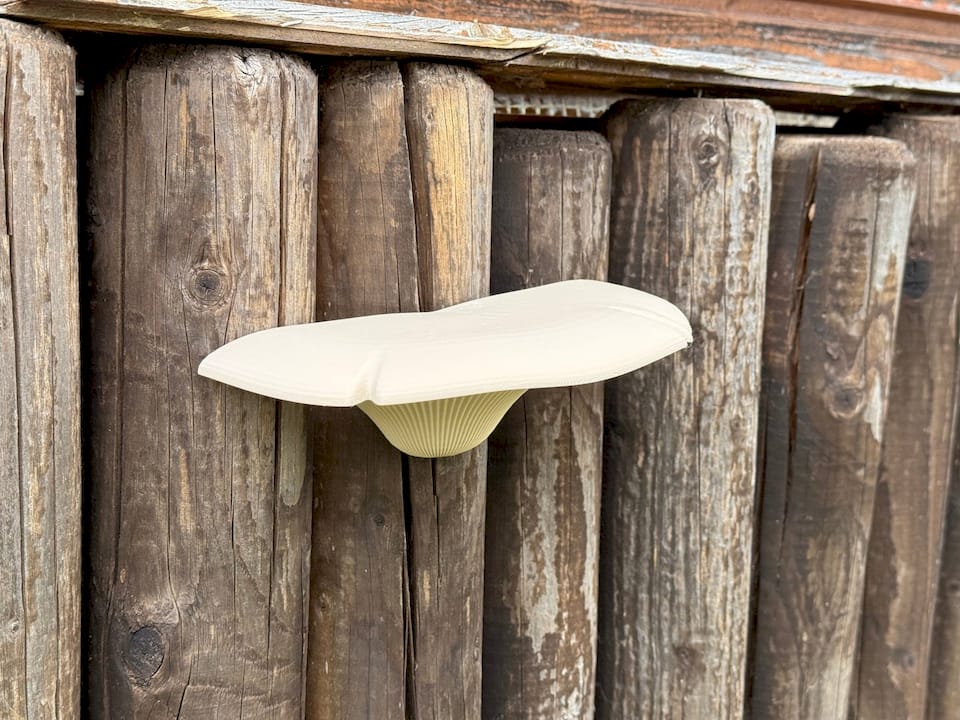
Weatherproof containers made of PETG plastic have proven to be particularly durable in practice because the material handles temperature fluctuations and moisture much better than classic film canisters. Combined with a waterproof logbook, the maintenance effort is significantly reduced, which counts double in protected areas: every unnecessary maintenance trip means additional foot traffic.
Good design for nature park caches follows three principles:
- Inconspicuous from the outside, but immediately recognizable once the container is opened
- No interference with habitats, i.e., no drilling, no climbing, no burying
- Maintainable directly from the trail without creating additional trodden paths
A practical rule of thumb from several park guidelines: a maximum of three meters distance from the trail, no attachment to living trees, and clear labeling as a geocache, as recommended by the Eifel National Park. Anyone looking for suitable hiding spots will find exactly these features built into various products. Further technical details on weatherproof execution can be found in the tutorial for durable cache hiding spots.
Why stricter rules actually help the community
Most discussions about caching in nature parks revolve around prohibitions, but that is too simplistic. Mandatory permission requirements are not a vote of no confidence against geocachers; they are a trust mechanism that allows administrations to continue permitting the hobby at all. Where owners hide caches in deadwood or tree hollows on their own authority, authorities eventually react with blanket bans for entire trail sections. That affects everyone, not just the careless ones.
What I believe is underestimated: the community's code of honor—principles such as "Cache In, Trash Out" and consistently staying on the trails—is more credible to park administrations than any official letter. Administrations quickly notice whether a caching community acts responsibly or not, and that often decides how leniently future requests are treated.
My advice to owners: invest ten minutes in a phone call to the forestry office before you even order a container. That is the step most people skip, and it is exactly the step that prevents archiving later on.
— Benedikt
Suitable hiding spots for your next nature park cache
There are practical alternatives to the improvised jam jar in the undergrowth: well-thought-out hiding spots built from the start for the exact conditions required by park administrations—weatherproof, inconspicuous, and without the need for drilling, gluing, or digging.
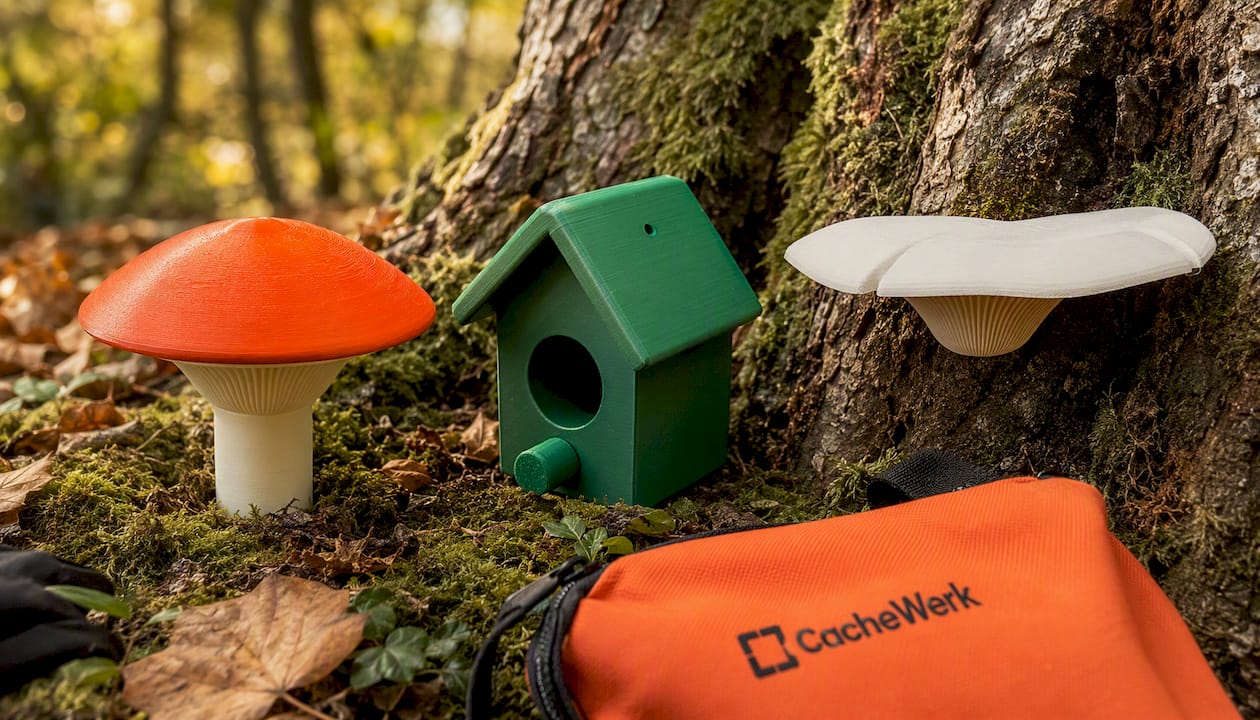
The tree fungus geocache hiding spot blends visually into almost any forest edge and does not require permanent attachment to living trees. The geocaching mushroom hiding spot is 3D-printed from weatherproof PETG and comes with its own logbook compartment, ideal for trail-side locations with high humidity. The geocaching birdhouse medium can be opened via a screw mechanism and thus maintained quickly from the trail, without you having to trample additional paths into the forest. Further maintenance tips can be found in the creative hiding tips in the blog. Take a look at the three products in the shop and choose the hiding spot that fits your planned nature park location.
Important contacts for your permission request
Before you place a cache in a nature park, it is worth taking a look at the official guidelines of the respective administration, as details differ from region to region:
- Rules for eco-friendly geocaching in Rhineland-Palatinate (LFU RLP)
- Bavarian Forest National Park – Geocaching
- Saxon Switzerland National Park – Geocaching
- NABU Schleswig-Holstein – Management of protected areas
When in doubt, always ask the responsible local authority directly; there are no nationwide rules here.
Sources
- Rules for nature-friendly geocaching in Rhineland-Palatinate (LFU RLP)
- Bavarian Forest National Park – Geocaching
- Saxon Switzerland National Park – Geocaching
FAQ
Where are you allowed to hide geocaches?
Locations with the landowner's consent are permitted, usually directly along marked trails. In nature reserves and many national parks, a new cache also requires express approval from the administration.
What is not allowed in a national park?
As a rule, leaving marked paths, damaging trees or deadwood, and placing caches without prior approval are prohibited. The Bavarian Forest National Park also expressly prohibits night caches.
What is not permitted in a nature reserve?
In nature reserves, actions with a lasting disruptive effect are generally prohibited, which includes the unauthorized placing and searching of geocaches, provided the owner has not given consent.
What rules apply in national parks?
National parks usually mandate strict adherence to paths, an approval requirement for new caches, and fixed distance limits, often three meters from the path. Violations often lead to the cache being archived by the administration.
Do you need approval for every cache in a nature park?
Not necessarily, but in many cases, yes. In state forests, consent is sometimes considered granted if you comply with the code of conduct, while private or municipal lands almost always require an active request.