
Qu'est-ce qu'une Mystery Cache ? Des énigmes créatives dans le géocaching
Les Mystery Caches représentent plus de 30% de tous les géocaches dans le monde, ce qui en fait l'une des variantes les plus populaires. Ces trésors énigmatiques mettent au défi les géocacheurs non seulement physiquement, mais aussi mentalement. Tandis que les caches traditionnelles peuvent être atteintes directement, les Mystery Caches exigent des solutions astucieuses pour déterminer les coordonnées finales. Elles combinent l'aventure en plein air avec des casse-têtes complexes, offrant ainsi une expérience de jeu unique pour les esprits créatifs.
Table des matières
Points clés concernant les Mystery Caches
| Point | Détails |
| Définition | Les Mystery Caches sont des géocaches basées sur des énigmes, dont les coordonnées finales ne sont déterminées qu'en résolvant des tâches. |
| Diversité | Elles utilisent des énigmes mathématiques, logiques et cryptées, ainsi que des outils techniques comme des codes QR ou des applications. |
| Cachettes | Des méthodes de camouflage innovantes et des matériaux résistants aux intempéries augmentent considérablement la durée de vie et le plaisir de jeu. |
| Planification | L'équilibre entre difficulté et accessibilité est décisif pour le succès de ses propres Mystery Caches. |
| Complexité | Toutes les Mystery Caches ne sont pas extrêmement compliquées, beaucoup misent sur des indices astucieux et simples. |
Introduction : Qu'est-ce qu'une Mystery Cache ?
Une Mystery Cache est un géocache avec un composant d'énigme intégré, qui va au-delà de la simple chasse au trésor. Contrairement aux caches traditionnelles, où les coordonnées sont directement connues, les géocacheurs doivent d'abord résoudre des tâches dans les Mystery Caches. Les coordonnées finales restent cachées jusqu'à la résolution réussie.
Les caractéristiques typiques comprennent :
-
Des énigmes à résoudre avant ou pendant la recherche
-
Des coordonnées finales qui ne deviennent accessibles qu'après une résolution correcte
-
Des possibilités de conception créatives pour les propriétaires, allant bien au-delà des cachettes standard
-
Des évaluations de difficulté moyenne plus élevées par rapport à d'autres types de caches
Les Mystery Caches offrent une énorme liberté de conception. Les propriétaires peuvent utiliser des formules mathématiques, des énigmes logiques, des cryptages ou des approches combinées. L'éventail va des simples énigmes numériques aux défis cryptographiques à plusieurs niveaux. Cette diversité rend les Mystery Caches particulièrement attrayantes pour les joueurs qui apprécient les défis mentaux.
La distinction avec d'autres types de caches est claire. Les Multi-Caches mènent à travers plusieurs stations physiques jusqu'à la cible, les caches traditionnelles ne nécessitent pas d'énigmes. Les Mystery Caches, quant à elles, combinent ces deux éléments et sollicitent la réflexion avant même le premier pas sur le terrain. Pour un aperçu de toutes les variantes, les types de géocaches les plus courants offrent une orientation précieuse.
Énigmes et mécanismes des Mystery Caches
La fascination des Mystery Caches réside dans leur nature énigmatique. 60% des Mystery Caches utilisent plus d'un type d'énigme, ce qui augmente considérablement la complexité et l'attrait. Les propriétaires combinent différentes approches pour créer des défis uniques.
Types d'énigmes fréquemment utilisés :
-
Énigmes mathématiques avec des formules pour le calcul des coordonnées
-
Casse-têtes logiques comme des Sudokus ou des suites de nombres
-
Chiffrement au moyen du chiffre de César, du code Morse ou de systèmes binaires
-
Approches combinées qui tissent plusieurs méthodes ensemble
-
Énigmes basées sur des images avec des indices cachés dans des photos ou des graphiques
La créativité et le travail d'équipe jouent un rôle central dans la résolution. De nombreuses Mystery Caches peuvent être résolues plus efficacement en équipe, car différentes perspectives ouvrent de nouvelles approches de solution. Un joueur peut être fort en mathématiques, tandis qu'un autre déchiffre plus rapidement les textes cryptés.
Conseil de pro : Adaptez toujours les énigmes à votre public cible. Une énigme trop difficile frustrera les débutants, tandis que des tâches trop simples ennuieront les géocacheurs expérimentés. Des indications claires de difficulté dans la description aident à gérer les attentes et à cibler le bon groupe de joueurs.
Une bonne conception d'énigmes se caractérise par une logique compréhensible. Même les tâches complexes devraient être résolubles avec les informations fournies. Des indices ambigus ou des informations clés manquantes entraînent de la frustration et des évaluations négatives. L'équilibre entre défi et équité détermine le succès à long terme d'une Mystery Cache.
Techniques de dissimulation et matériaux innovants
La mise en œuvre physique des Mystery Caches bénéficie énormément des méthodes de dissimulation modernes. 85% des Mystery Caches utilisent des matériaux résistants aux intempéries et durables, ce qui prolonge considérablement leur durée de vie et réduit l'effort de maintenance. Le choix du bon matériau dépend fortement de l'emplacement.
Les techniques de dissimulation éprouvées comprennent :
-
Camouflage urbain avec des conteneurs camouflés qui restent invisibles en milieu urbain
-
PETlings magnétiques pour une fixation rapide sur des structures métalliques
-
Cache-poteaux camouflés qui s'intègrent parfaitement dans les paysages urbains
-
Conteneurs résistants aux intempéries avec des joints pour la protection contre l'humidité
-
Fabrications spéciales pour des environnements particuliers comme les dessous de ponts ou les garde-corps
Des cachettes innovantes améliorent considérablement l'expérience de jeu. Une cache astucieusement camouflée, difficile à découvrir malgré une visibilité directe, ravit les découvreurs et génère des avis positifs. L'art consiste à placer les cachettes de manière à ce qu'elles soient accessibles, mais pas évidentes.
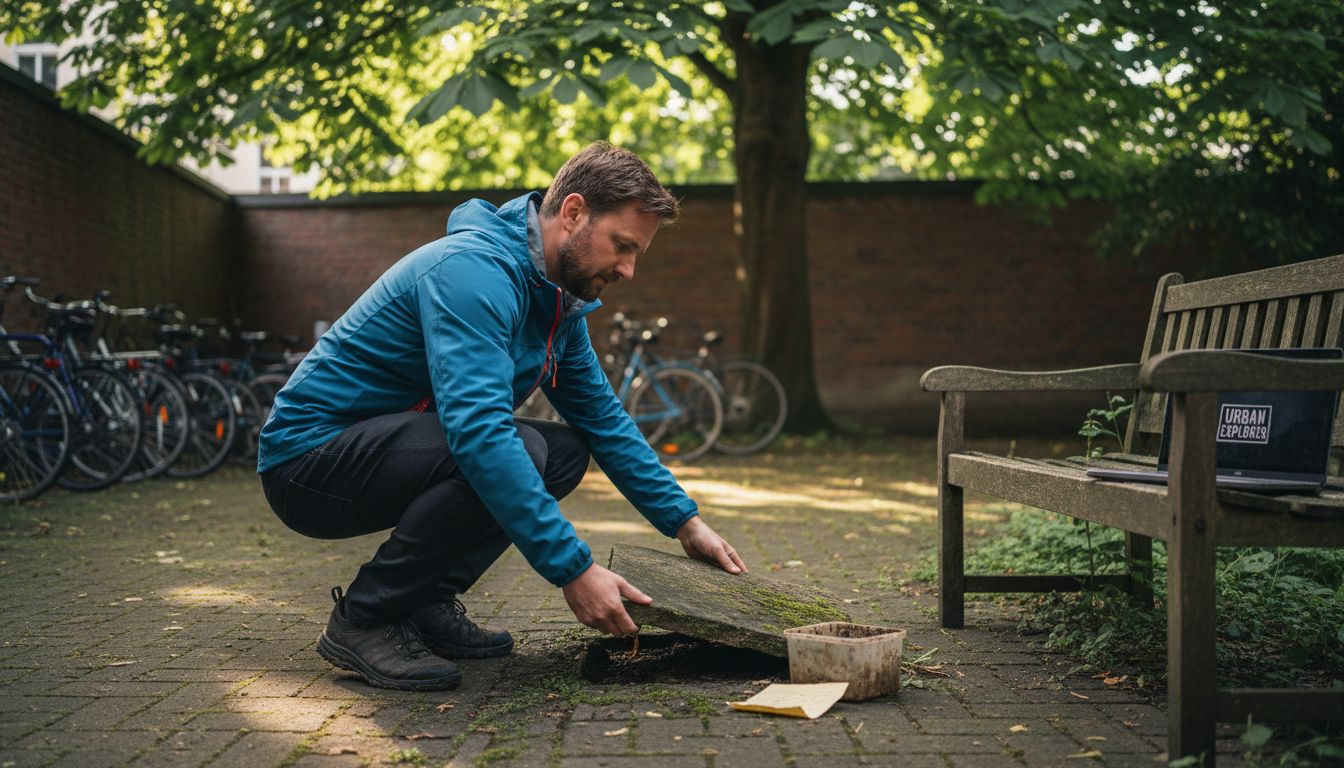
Lors du choix des matériaux, le propriétaire doit tenir compte de l'emplacement. Les environnements urbains nécessitent des solutions différentes de celles des paysages naturels. Dans les villes, les conteneurs magnétiques et le camouflage urbain conviennent, tandis que dans les forêts, les camouflages naturels comme les morceaux d'écorce ou les imitations de pierre fonctionnent mieux. Les fixations magnétiques offrent l'avantage d'une installation rapide sans outils.
Outils techniques et intégration numérique
La technologie moderne étend considérablement les possibilités de conception des Mystery Caches. 25% des Mystery Caches nouvellement enregistrées intègrent des composants techniques, ce qui permet de nouvelles mécaniques de jeu et augmente l'interactivité. Ce développement combine le géocaching traditionnel avec les innovations numériques.
Outils techniques courants :
-
Codes QR qui mènent à des énigmes ou des indices en ligne
-
Applications de géocaching avec outils d'énigmes et systèmes d'indices intégrés
-
Serrures électroniques avec des combinaisons de chiffres ou de lettres
-
Tags NFC pour la transmission d'informations sans contact
-
Éléments d'énigmes basés sur le GPS, qui fournissent des indices liés à l'emplacement
L'intégration de la technologie offre des opportunités considérables. Les éléments interactifs augmentent l'immersion et permettent des énigmes dynamiques qui s'adaptent aux actions des joueurs. Les composants en ligne permettent des défis basés sur le temps ou une interaction communautaire. Les indices numériques peuvent être débloqués progressivement, ce qui crée du suspense.
Conseil de pro : Des instructions claires et une technologie fiable sont cruciales. Testez minutieusement tous les composants techniques avant la publication. Proposez toujours une solution alternative au cas où la technologie tomberait en panne ou si les joueurs n'ont pas accès aux appareils nécessaires.
Des défis existent néanmoins. L'entretien technique nécessite des contrôles réguliers, car les piles se vident ou des mises à jour logicielles sont nécessaires. Tous les géocacheurs ne possèdent pas l'équipement ou l'affinité technique requis. Les propriétaires doivent tenir compte de ces facteurs lors de la planification et évaluer de manière réaliste l'accessibilité de leurs caches.
Planification et réalisation de ses propres Mystery Caches
La création d'une Mystery Cache réussie exige une planification minutieuse et une approche structurée. Les étapes suivantes mènent à l'objectif :
-
Développement du concept : Définir clairement le thème, le type d'énigme et le niveau de difficulté.
-
Choix des matériaux : Sélectionner des conteneurs résistants aux intempéries et des matériaux de dissimulation adaptés à l'emplacement.
-
Intégration technique : Décider si et quels outils techniques seront utilisés.
-
Phase de test : Faire résoudre l'énigme par plusieurs personnes ayant des niveaux d'expérience différents.
-
Emplacement final : Installer la cachette en toute sécurité et documenter toutes les informations pertinentes.
-
Plan de maintenance : Établir des intervalles de contrôle réguliers pour garantir le bon fonctionnement.
L'équilibre entre difficulté, accessibilité et sécurité détermine le succès. Une énigme trop difficile décourage, tandis qu'un manque de défi ennuie. Tenez également compte des aspects juridiques tels que l'accès à la propriété et les réglementations en matière de protection de la nature. Les cachettes ne doivent jamais présenter de danger ni endommager la propriété.
Conseil de pro : Tester avec différents niveaux d'expérience augmente considérablement les chances de succès. Invitez des débutants et des géocacheurs expérimentés à tester. Leurs retours permettent de déceler les faiblesses et d'adapter de manière optimale le niveau de difficulté et les indices.
Les erreurs typiques peuvent être évitées. Des énigmes trop complexes sans solutions claires frustrent les joueurs. Une protection insuffisante contre les intempéries entraîne des dommages rapides et des évaluations négatives. Un manque d'entretien se traduit par des composants défectueux et des géocacheurs déçus. Une documentation claire de toutes les étapes de résolution aide lors d'adaptations ultérieures.
Idées fausses courantes sur les Mystery Caches
De nombreuses idées fausses circulent autour des Mystery Caches, suscitant de fausses attentes. Clarifier ces malentendus améliore la compréhension et augmente le plaisir de jeu.
Hypothèses erronées typiques :
-
Les Mystery Caches sont toujours extrêmement compliquées et ne conviennent qu'aux experts
-
Toutes les Mystery Caches nécessitent des connaissances informatiques approfondies ou des connaissances spécialisées
-
Les énigmes sont volontairement ambiguës pour induire les joueurs en erreur
-
Les Mystery Caches sont moins accessibles que d'autres types de caches
-
Il est impératif d'avoir un équipement technique pour résoudre
De nombreuses Mystery Caches misent sur des indices astucieux et simples plutôt que sur des algorithmes complexes. Les propriétaires utilisent souvent des jeux de mots, des énigmes visuelles ou une logique de base qui ne nécessitent aucune connaissance spécialisée. L'évaluation de la difficulté dans la liste fournit une orientation fiable sur l'effort à prévoir.
Les différents types d'énigmes sont souvent confondus. Une énigme mathématique n'est pas automatiquement plus difficile qu'un texte crypté. Chaque type sollicite des compétences différentes. Certains joueurs résolvent les énigmes logiques intuitivement, tandis que d'autres s'en sortent mieux avec les cryptages. Cette diversité rend les Mystery Caches attrayantes pour un large éventail de joueurs.
Les bonnes attentes augmentent considérablement le plaisir de jeu. Ceux qui considèrent les Mystery Caches comme des défis impossibles seront rapidement frustrés. Une évaluation réaliste de ses propres capacités et le choix de niveaux de difficulté appropriés conduisent à des expériences positives et motivent à continuer.
Comparaison avec d'autres types de caches
Les Mystery Caches se distinguent fondamentalement des autres variantes de géocaches. La distinction met en évidence leurs caractéristiques et avantages particuliers.
| Caractéristique | Mystery Cache | Multi-Cache | Cache Traditionnelle |
| Composant d'énigme | Obligatoire | Optionnel aux étapes | Non présent |
| Coordonnées finales | Doivent être calculées | Déterminées progressivement | Directement connues |
| Conception créative | Très élevée | Moyenne | Faible |
| Difficulté moyenne | Élevée | Moyenne | Faible |
| Temps requis | Variable, souvent plus long | Dépend des étapes | Généralement court |
Les Mystery Caches ont en moyenne 35% d'éléments de conception créative de plus que les autres types. Les propriétaires utilisent la liberté de créer des expériences uniques qui vont bien au-delà des cachettes standard. Cette créativité se manifeste à la fois dans les énigmes et dans les cachettes physiques.
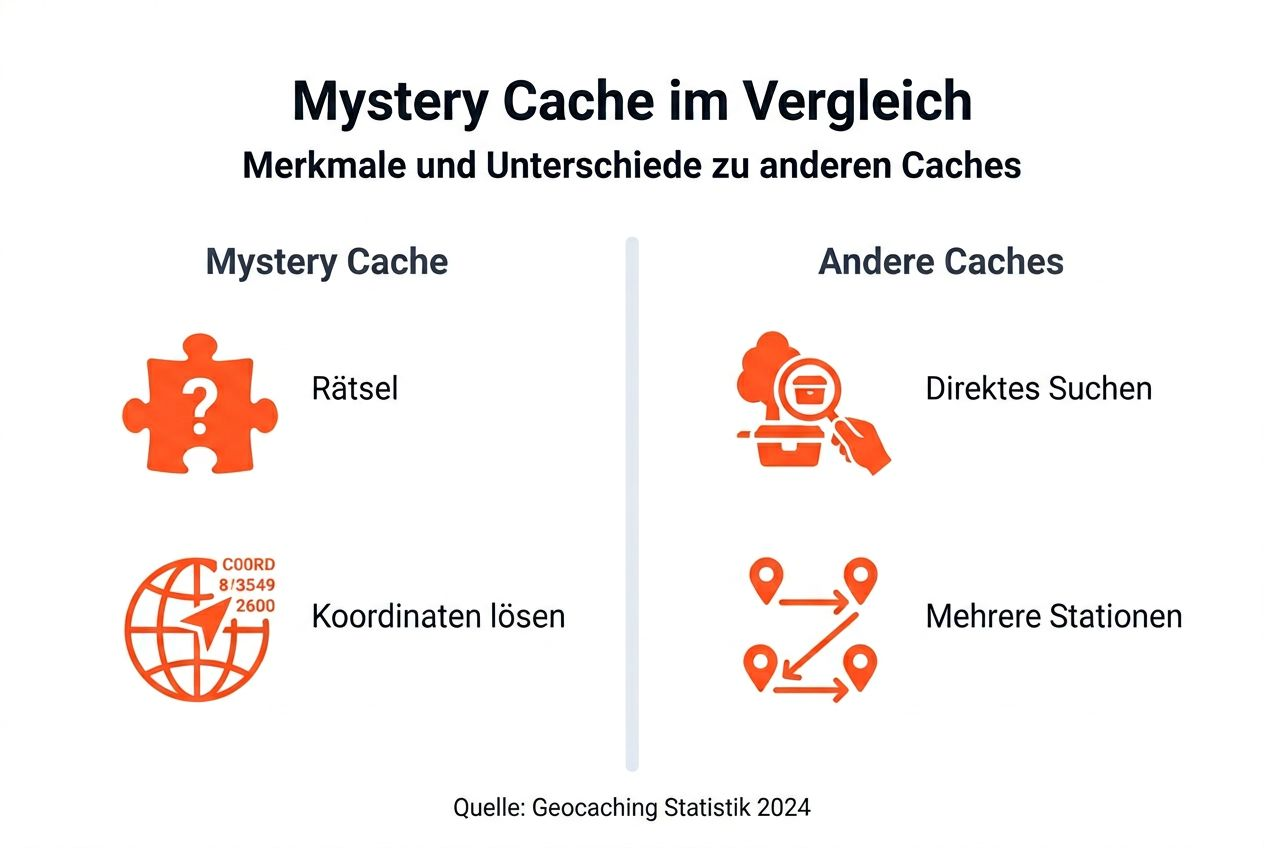
L'avantage principal réside dans le défi accru. Tandis que les caches traditionnelles sont souvent trouvées en quelques minutes, les Mystery Caches exigent un effort mental et des compétences en résolution de problèmes. Elles s'adressent aux géocacheurs qui recherchent une stimulation intellectuelle au-delà de la simple chasse au trésor. La combinaison d'un casse-tête et d'une activité de plein air les rend particulièrement attrayantes.
Pour un aperçu complet de toutes les variantes, l'article sur les types de géocaches les plus courants offre des informations détaillées. Les différents types de caches se complètent et permettent à chaque joueur de trouver le défi qui lui convient.
Exemples pratiques et inspiration pour des Mystery Caches créatives
Les Mystery Caches réussies servent de précieuses sources d'inspiration pour vos propres projets. L'analyse des concepts éprouvés montre quels éléments fonctionnent particulièrement bien.
Un exemple remarquable est le cache Enigma Quest, noté 4,9 étoiles. Cette Mystery Cache combine plusieurs types d'énigmes dans une histoire cohérente. Les joueurs doivent d'abord décrypter un document crypté, puis appliquer des formules mathématiques et enfin résoudre un puzzle logique. L'intégration harmonieuse de tous les éléments crée une expérience immersive.
Les facteurs de succès comprennent :
-
Des énigmes interactives qui impliquent activement les joueurs au lieu de nécessiter une lecture passive
-
Des cachettes résistantes aux intempéries avec un camouflage astucieux qui restent intactes même après plusieurs visites
-
Une utilisation créative de la technologie sans submerger les joueurs
-
Une cohérence thématique qui relie tous les éléments à une histoire
-
Des indices justes qui permettent des solutions sans trop en révéler
Le camouflage innovant joue un rôle clé. Les caches réussies utilisent intelligemment les éléments environnementaux pour intégrer les cachettes. Une cache près d'un pont historique pourrait lier des énigmes à l'histoire de la structure. Cette connexion thématique augmente l'immersion et l'effet d'apprentissage.
L'enthousiasme de la communauté naît de détails bien pensés. Les propriétaires qui réagissent aux commentaires et entretiennent les cachettes récoltent des avis positifs. Les mises à jour et l'entretien réguliers témoignent de l'engagement et favorisent le respect au sein de la communauté. Ces facteurs contribuent considérablement au succès à long terme.
Découvrez un équipement de qualité pour les Mystery Caches
Après toutes ces inspirations et conseils pratiques, la question du bon équipement se pose. La réalisation d'idées créatives de Mystery Caches nécessite des matériaux de haute qualité qui garantissent durabilité et fonctionnalité.
CacheWerk propose du matériel et des accessoires de géocaching spécialisés, parfaitement adaptés aux exigences des Mystery Caches. Des conteneurs résistants aux intempéries aux fixations magnétiques en passant par des solutions de camouflage innovantes, vous trouverez tout pour votre prochain projet. Les cachettes spéciales de géocaching permettent des conceptions extraordinaires, tandis que les matériaux de cachette de géocaching offrent des bases solides pour tout type de cache. Des matériaux de haute qualité réduisent les besoins d'entretien et garantissent que vos Mystery Caches raviront les joueurs pendant des années.
Questions fréquemment posées
Qu'est-ce qu'une Mystery Cache exactement ?
Une Mystery Cache est un géocache dont les coordonnées finales ne peuvent être déterminées qu'en résolvant des énigmes. Contrairement aux caches traditionnelles, les coordonnées ne sont pas directement disponibles. Les propriétaires créent des tâches qui peuvent inclure des calculs mathématiques, des énigmes logiques ou des cryptages.
Quels types d'énigmes sont utilisés ?
Les Mystery Caches utilisent une grande variété de types d'énigmes comme des formules mathématiques, des puzzles logiques, des chiffrements, des énigmes visuelles et des approches combinées. Plus de 60 % d'entre eux utilisent plusieurs types d'énigmes pour augmenter la complexité. L'éventail va des énigmes numériques simples aux défis à plusieurs niveaux.
Quelle est la différence entre un Mystery Cache et un Multicache ?
Les Mystery Caches nécessitent des énigmes pour déterminer les coordonnées finales, tandis que les Multi-Caches mènent à travers plusieurs stations physiques. Pour les Multi-Caches, on obtient des indices sur place, les Mystery Caches peuvent souvent être résolus à la maison. La conception créative des Mystery Caches est en moyenne 35 % plus élevée.
Faut-il des outils techniques pour résoudre les énigmes ?
Pas nécessairement, bien que 25 % des nouveaux Mystery Caches intègrent des composants techniques. Beaucoup peuvent être résolus avec un stylo, du papier et une pensée logique. Certains propriétaires utilisent des codes QR ou des applications, mais proposent généralement des solutions alternatives. Des connaissances de base en recherche en ligne sont utiles.
Comment planifier au mieux son propre Mystery Cache ?
Commencez par un concept clair et un public cible, choisissez des matériaux résistants aux intempéries et testez l'énigme avec différents niveaux d'expérience. Veillez à l'équilibre entre la difficulté et la résolvabilité. Documentez toutes les étapes précisément et prévoyez un entretien régulier. Des indices justes et des indications claires sur la difficulté augmentent considérablement le taux de réussite.
