
Types de caches urbaines : idées créatives pour les géocacheurs
Les caches de géocaching urbain vous confrontent à des défis particuliers. Entre la densité du trafic piétonnier, les Moldus curieux et les directives strictes, vous avez besoin de créativité et de savoir-faire technique. La ville offre d'innombrables possibilités de caches astucieuses, des nanocaches magnétiques aux constructions mécaniques sophistiquées. Cet article vous présente des techniques éprouvées, des solutions de bricolage et des gadgets innovants qui feront de vos caches urbaines un point fort pour la communauté.
Table des matières
- Points clés
- Critères d'évaluation des caches urbaines
- Caches camouflées : Méthodes de camouflage en milieu urbain
- Caches mécaniques à construire soi-même pour le géocaching urbain
- Gadgets techniques et idées de caches innovantes
- Comparaison des différents types de caches urbaines
- Acheter du matériel de géocaching et des caches créatives
- Questions fréquentes sur les caches de géocaching urbaines
Points clés
| Point | Détails |
|---|---|
| Méthodes de camouflage variées | Dans les zones urbaines, les solutions de camouflage telles que les nanocaches magnétiques, les imitations imprimées en 3D, les faux panneaux de signalisation et les imitations de pierres s'intègrent discrètement dans l'environnement. |
| Caches mécaniques à construire soi-même | Les mécanismes de bricolage augmentent l'interactivité des caches, par exemple grâce à une mini-mangeoire à oiseaux avec un mécanisme à ficelle qui, lorsqu'on tire dessus, libère le carnet de bord. |
| La communauté préfère les caches astucieuses | La communauté apprécie les caches astucieuses avec un bon emplacement, qui tiennent compte à la fois du camouflage et de l'entretien. |
| Camouflage et entretien | Un camouflage de qualité, un entretien régulier, la conformité aux règles et la durabilité garantissent le succès urbain. |
Critères d'évaluation des caches urbaines
Une cache urbaine réussie répond à plusieurs critères simultanément. La forte densité de Moldus exige une discrétion maximale, tout en gardant un œil sur l'entretien. Voici les facteurs les plus importants :
- Discrétion et camouflage : Votre cache doit s'intégrer dans l'environnement urbain et ne pas attirer l'attention. Les fixations magnétiques sur des objets métalliques ou les faux objets fonctionnent mieux que les conteneurs voyants.
- Accessibilité pour l'entretien : Les caches urbaines nécessitent un contrôle régulier. Choisissez des emplacements que vous pouvez visiter sans problème, sans paraître suspect.
- Conformité aux règles : La distance minimale de 161 m par rapport aux autres caches s'applique également en ville. Évitez complètement les endroits sensibles comme les cimetières ou les fixations aux arbres.
- Durabilité : Les conditions urbaines sont difficiles. L'humidité, les variations de température et les contraintes mécaniques mettent votre cache à rude épreuve. Les matériaux robustes sont payants.
L'équilibre entre ces facteurs détermine le succès ou l'échec. Une cache parfaitement camouflée ne sert à rien si vous ne pouvez pas l'entretenir. Un emplacement facile d'entretien échouera si les Moldus le découvrent quotidiennement. Les sections suivantes vous montreront comment maîtriser cet équilibre.
Caches camouflées : Méthodes de camouflage en milieu urbain
La technique « Hidden in plain sight » (caché à la vue de tous) domine les caches urbaines. Au lieu de cacher quelque chose, vous le faites ressembler à une partie naturelle de l'environnement. Ces méthodes ont fait leurs preuves :
- Nanocaches magnétiques : De minuscules conteneurs avec de puissants aimants adhèrent aux structures métalliques. Les poteaux de lampadaire, les balustrades et les panneaux de signalisation offrent d'innombrables possibilités de caches.
- Imitations imprimées en 3D : Des répliques de vis, de boulons ou d'autres objets urbains trompent même les géocacheurs expérimentés. Le matériau PETG résiste aux conditions urbaines.
- Faux panneaux de signalisation : Des panneaux personnalisables avec un espace pour le carnet de bord et les objets d'échange. Ils s'intègrent parfaitement dans le paysage urbain.
- Imitations de pierres : Des pierres artificielles avec un espace creux s'adaptent aux espaces verts et aux parcs. Adaptées aux couleurs, elles ne sont pas remarquées.
Conseil de pro : Photographiez l'emplacement sous différents angles avant de placer la cache. Vous verrez ainsi les perspectives des Moldus et pourrez optimiser le camouflage. Portez une attention particulière à la hauteur des yeux et aux angles de vue typiques.
L'art réside dans le détail. Un aimant légèrement sale semble plus authentique qu'un aimant neuf et brillant. Des toiles d'araignées sur un faux panneau augmentent la crédibilité. Les produits de géocaching créatifs constituent la base, mais votre touche personnelle fait la différence.
Caches mécaniques à construire soi-même pour le géocaching urbain
Les mécanismes de bricolage apportent de l'interactivité à vos caches. La mini-mangeoire à oiseaux avec mécanisme à ficelle montre comment des constructions simples peuvent avoir un grand effet :
- Choix des matériaux : Bois résistant aux intempéries, colle imperméable et peinture acrylique constituent la base. Un PETling sert de conteneur de journal.
- Construction du mécanisme : Une ficelle relie le PETling à un mécanisme coulissant. En tirant, le conteneur monte et libère le carnet de bord.
- Application du camouflage : Peignez la mangeoire à oiseaux dans les couleurs de l'environnement. Un vieillissement artificiel avec de la saleté et de légers dommages augmente l'authenticité.
- Montage : Fixez la mangeoire à oiseaux dans un endroit discret. La ficelle doit être reconnaissable pour les chercheurs, mais invisible pour les Moldus.
La cache en tube offre une autre solution élégante. Un tube étroit contient un rouleau de papier de logbook que les chercheurs retirent avec une tige. Cette construction a résisté plus de 1,5 an sans problème.
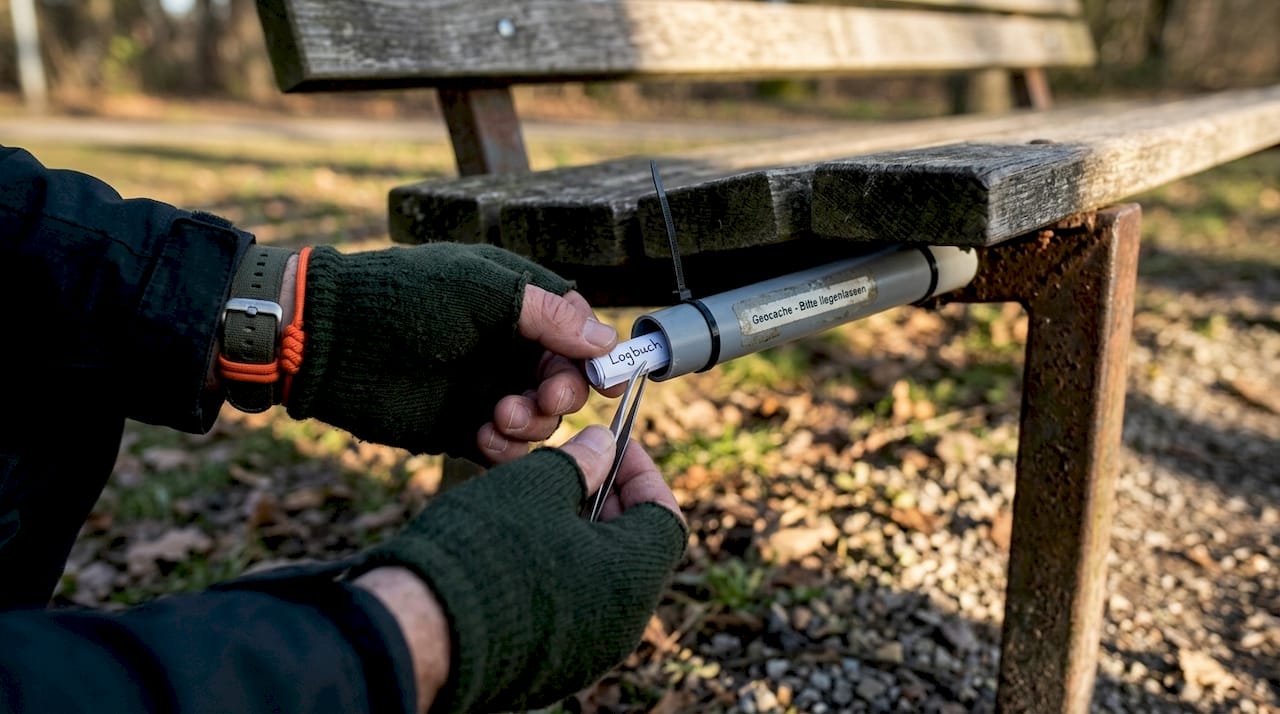
Conseil de pro : Testez chaque mécanisme au moins 50 fois avant de le placer. Les caches urbaines connaissent une forte fréquentation. Un mécanisme qui se bloque après dix passages cause de la frustration et des efforts de maintenance.
Les idées de caches mécaniques vont du simple au complexe. L'important est la fiabilité. Un mécanisme simple et parfaitement fonctionnel est préférable à une construction compliquée et sujette aux pannes.
Gadgets techniques et idées de caches innovantes
La technologie élève les caches urbaines à un nouveau niveau. La boîte de géocaching inversé basée sur Arduino combine GPS, servos et écran LCD pour une expérience interactive :
- Module GPS : Mesure la distance jusqu'à la destination et donne des indications de direction
- Écran LCD : Affiche la distance, les énigmes ou les instructions
- Mécanisme servo : Déverrouille la boîte uniquement au bon endroit
- Gestion de la batterie : Des composants économes en énergie permettent un fonctionnement de plusieurs mois
Les perches télécommandées avec cache ascendant offrent des moments spectaculaires. Le chercheur active un mécanisme qui soulève le conteneur d'une cachette. De tels gadgets techniques de géocaching nécessitent de la planification, mais récompensent par des expériences inoubliables.
| Fonction technique | Complexité | Impact communautaire |
|---|---|---|
| Déverrouillage basé sur GPS | Élevé | Très élevé |
| Affichage d'énigmes sur LCD | Moyen | Élevé |
| Mécanisme télécommandé | Élevé | Très élevé |
| Déclencheurs basés sur capteurs | Moyen | Moyen à élevé |
La cache Metamorphosis Aparecium a recueilli 915 points favoris grâce à son mécanisme ingénieux. La communauté récompense la sophistication technique lorsqu'elle est combinée à une bonne exécution. En revanche, les expériences techniques bâclées sont frustrantes.
Conseil de pro : Documentez vos caches techniques en détail. Les pièces de rechange, les schémas de câblage et les guides de dépannage accélèrent les réparations. En cas de panne technique, chaque minute compte.
Comparaison des différents types de caches urbaines
Chaque type de cache a ses forces et ses faiblesses. Cet aperçu vous aidera à choisir :
| Type de cache | Camouflage | Effort de maintenance | Difficulté | Points favoris |
|---|---|---|---|---|
| Nanocache magnétique | Très élevé | Faible | Facile | 50-100 |
| Faux panneau de signalisation | Élevé | Moyen | Moyen | 100-200 |
| Mécanisme DIY | Moyen | Moyen à élevé | Moyen à élevé | 150-300 |
| Gadget Arduino | Élevé | Élevé | Très élevé | 300-900+ |
| Imitation 3D | Très élevé | Faible | Facile à moyen | 75-150 |
La communauté préfère l'emplacement et une cache astucieuse aux simples énigmes. Une cache moyenne dans un endroit parfait est préférable à une cache géniale dans un mauvais endroit.
Avantages et inconvénients en détail :
- Nanocaches magnétiques : Placement rapide, grande discrétion, mais taille du logbook limitée et vulnérabilité à la perte d'aimant
- Caches mécaniques : Grand divertissement, mais nécessitent beaucoup d'entretien et sont sujettes au vandalisme
- Gadgets techniques : Facteur "wow" maximal, mais coûteux, complexes et sujets aux pannes
- Faux objets : Bon équilibre entre camouflage et capacité, mais effort de fabrication
Choisissez en fonction de vos compétences, du temps disponible et de votre budget. Une nanocache parfaitement entretenue l'emporte sur une cache Arduino négligée. Comparez les caches créatives selon vos priorités.
Acheter du matériel de géocaching et des caches créatives
La réalisation de vos idées nécessite les bons matériaux. CacheWerk propose une sélection complète pour les géocacheurs urbains.
Des caches standard aux caches spéciales en passant par l'équipement complet de géocaching, vous trouverez tout pour vos projets. Les produits en PETG imprimés en 3D résistent aux conditions urbaines. Les nanocaches magnétiques, les faux objets et les accessoires pour constructions mécaniques permettent la réalisation de tous les concepts présentés. La qualité et la durabilité sont au centre des préoccupations, afin que vos caches perdurent des années.
Questions fréquentes sur les caches de géocaching urbaines
Comment entretenir au mieux les caches urbaines ?
Contrôlez les caches urbaines toutes les quatre à six semaines, car la forte fréquentation entraîne une usure plus rapide. Remplacez immédiatement les carnets de bord humides et vérifiez le fonctionnement des pièces mécaniques.
Existe-t-il des règles spécifiques pour les caches urbaines ?
Oui, la distance minimale de 161 m par rapport aux autres caches s'applique partout. Évitez complètement les cimetières, les terrains d'école et les propriétés privées. Les fixations aux arbres sont particulièrement problématiques en milieu urbain.
Quels matériaux sont particulièrement adaptés ?
Le plastique PETG, l'acier inoxydable et le bois résistant aux intempéries résistent le mieux aux conditions urbaines. Évitez le carton, le papier ordinaire et le bois non traité. Les aimants doivent être inoxydables.
Comment éviter les Moldus et assurer le camouflage ?
Placez les caches hors des lignes de vue directes des trottoirs et des fenêtres. Utilisez les heures de pointe pour l'entretien, lorsque de nombreuses personnes sont présentes et que les individus ne se remarquent pas. Le camouflage doit fonctionner sous tous les angles.
Les gadgets techniques valent-ils la peine pour les débutants ?
Commencez par des solutions mécaniques simples et augmentez progressivement la complexité. Les gadgets techniques nécessitent des connaissances en programmation et un engagement élevé en matière d'entretien. Acquérir d'abord de l'expérience avec des caches standard.
Combien de temps durent en moyenne les caches urbaines ?
Les nanocaches magnétiques bien entretenues durent deux à trois ans, les caches mécaniques un à deux ans. Les gadgets techniques nécessitent souvent des réparations après six à douze mois. La durée de vie dépend fortement de la fréquence d'entretien et de la qualité de l'emplacement.