
Check-list pour les caches de géocaching : créatives et sûres
Planifier une cache de géocaching à la fois créative et conforme aux règles représente un défi pour de nombreux passionnés. L'équilibre entre originalité, sécurité et directives officielles exige une planification minutieuse. Cette liste de contrôle vous guidera à travers toutes les étapes importantes, du choix de l'emplacement à la maintenance à long terme, en passant par la mesure précise des coordonnées. Vous recevrez des conseils pratiques pour les bricoleurs, des comparaisons de différentes méthodes de camouflage et des instructions concrètes pour éviter les erreurs typiques et réaliser des caches innovantes.
Table des matières
- Points importants de la liste de contrôle pour les caches de géocaching
- Critères pour le choix de la cache de géocaching parfaite
- Mesure et documentation précises des coordonnées
- Camouflage créatif et respectueux de l'environnement des conteneurs de géocaching
- De la création du listing à la maintenance régulière
- Découvrez des caches de géocaching spéciales chez Cachewerk
- Questions fréquentes sur la liste de contrôle pour les caches de géocaching
Points clés
| Point | Détails |
|---|---|
| Respecter la distance des sites | Les géocaches doivent être placées à au moins 161 mètres des autres caches actives. |
| Enregistrer des coordonnées précises | Des mesures GPS stables, des mesures multiples et une moyenne permettent d'obtenir des coordonnées fiables. |
| Choisir un emplacement approprié | Les emplacements doivent être accessibles au public, sûrs et intéressants, et les terrains privés nécessitent une autorisation écrite. |
| Camouflage respectueux de l'environnement | Le camouflage doit être respectueux de la nature et ne pas causer de dommages à l'environnement, aux biens ou à la flore. |
| Assurer une maintenance régulière | La maintenance régulière comprend la vérification de la position, la mise à jour des coordonnées et la preuve des autorisations. |
Critères pour le choix de la cache de géocaching parfaite
Le choix du bon emplacement est crucial pour le succès et la longévité de votre cache. Les géocaches doivent être distantes d'au moins 161 mètres des autres caches actives afin d'éviter les chevauchements et de donner à chaque cache son propre caractère. Cette règle protège la diversité de la communauté et empêche qu'une zone ne soit surchargée de trop de caches.
Lors du choix de l'emplacement, vous devez prendre en compte plusieurs facteurs simultanément. L'emplacement doit être accessible au public, sûr et intéressant, en accordant une attention particulière aux zones de conservation de la nature et aux propriétés privées. Les parcs publics, les sentiers de randonnée et les sites historiques offrent des conditions idéales, car ils sont légalement accessibles et peuvent raconter des histoires passionnantes. Les propriétés privées nécessitent toujours une autorisation écrite du propriétaire, que vous devrez prouver lors de la création du listing.
Les zones dangereuses sont en principe interdites. Cela inclut :
- Les voies ferrées actives ou la proximité immédiate des routes de circulation
- Les pentes raides ou les formations rocheuses instables
- Les installations industrielles avec interdiction d'accès
- Les zones militaires restreintes
- Les zones avec des populations d'animaux sauvages connues pendant les périodes de reproduction
Les zones de conservation de la nature exigent une sensibilité particulière. Dans de nombreuses régions, les géocaches y sont généralement interdites, dans d'autres, elles ne sont autorisées qu'avec une autorisation des autorités. Informez-vous à l'avance auprès de l'autorité de conservation de la nature compétente et documentez soigneusement toutes les autorisations.
« Un emplacement de cache parfait allie accessibilité et esprit de découverte. Il invite à la flânerie sans mettre en danger la nature ou les biens. »
L'intérêt d'un lieu augmente considérablement l'attractivité de votre cache. Les antécédents historiques, les particularités géologiques ou la signification culturelle transforment une simple cache en une expérience. Recherchez les histoires locales et intégrez-les dans la description de votre cache pour offrir une réelle valeur ajoutée aux chercheurs.
Mesure et documentation précises des coordonnées
Après le choix de l'emplacement, vient la phase la plus exigeante techniquement : la détermination des coordonnées GPS. Des coordonnées imprécises entraînent de la frustration chez les chercheurs et des évaluations négatives pour votre cache. Mesurer précisément les coordonnées avec un GPS stabilisé, vérifier plusieurs fois et faire la moyenne est la règle de base pour les propriétaires de cache professionnels.
Suivez cette procédure éprouvée pour une précision maximale :
- Positionnez-vous exactement à l'endroit de la cache et attendez que votre appareil GPS reçoive au moins 8 satellites. L'indicateur de précision doit être inférieur à 5 mètres.
- Notez les premières coordonnées et marquez la date et l'heure.
- Répétez la mesure à différentes heures de la journée, idéalement le matin et le soir, pour compenser les influences atmosphériques.
- Effectuez au moins trois mesures distinctes, cinq de préférence.
- Calculez la moyenne de toutes les valeurs de latitude et de longitude.
- Documentez toutes les mesures individuelles et la valeur moyenne dans un carnet séparé ou un document numérique.
Les conditions atmosphériques influencent considérablement les signaux GPS. Un ciel couvert, des cimes d'arbres denses ou des bâtiments élevés peuvent dégrader la précision de plusieurs mètres. Planifiez donc vos mesures pour les jours de ciel clair et effectuez-les dans des endroits avec une vue dégagée sur le ciel, même si la cache elle-même se trouve sous des arbres.
Conseil de pro : Demandez à un ami géocacheur expérimenté de tester les coordonnées avant la publication. Cette personne devrait essayer de trouver la cache sans indices supplémentaires. Si le taux de réussite est inférieur à 80 %, corrigez les coordonnées ou ajoutez des indices plus précis. Cette phase de test vous évitera d'innombrables messages « Needs Maintenance » plus tard et améliorera considérablement les évaluations.
Les smartphones modernes offrent des fonctions GPS, mais atteignent rarement la précision des appareils GPS dédiés. Pour les caches exigeantes en milieu urbain ou en forêt dense, il est préférable d'investir dans un appareil GPS extérieur de haute qualité avec prise en charge GLONASS ou Galileo. Ces systèmes combinent plusieurs réseaux satellitaires et atteignent des précisions inférieures à 3 mètres.
Camouflage créatif et respectueux de l'environnement des conteneurs de géocaching
Le camouflage détermine si votre cache sera ignorée par les Muggles tout en défiant les géocacheurs. Camoufler la cache sans nuire à l'environnement, utiliser des matériaux naturels et ne pas l'enterrer est la règle primordiale pour des caches durables. N'enterrez jamais les conteneurs, car cela endommage les racines et favorise l'érosion.
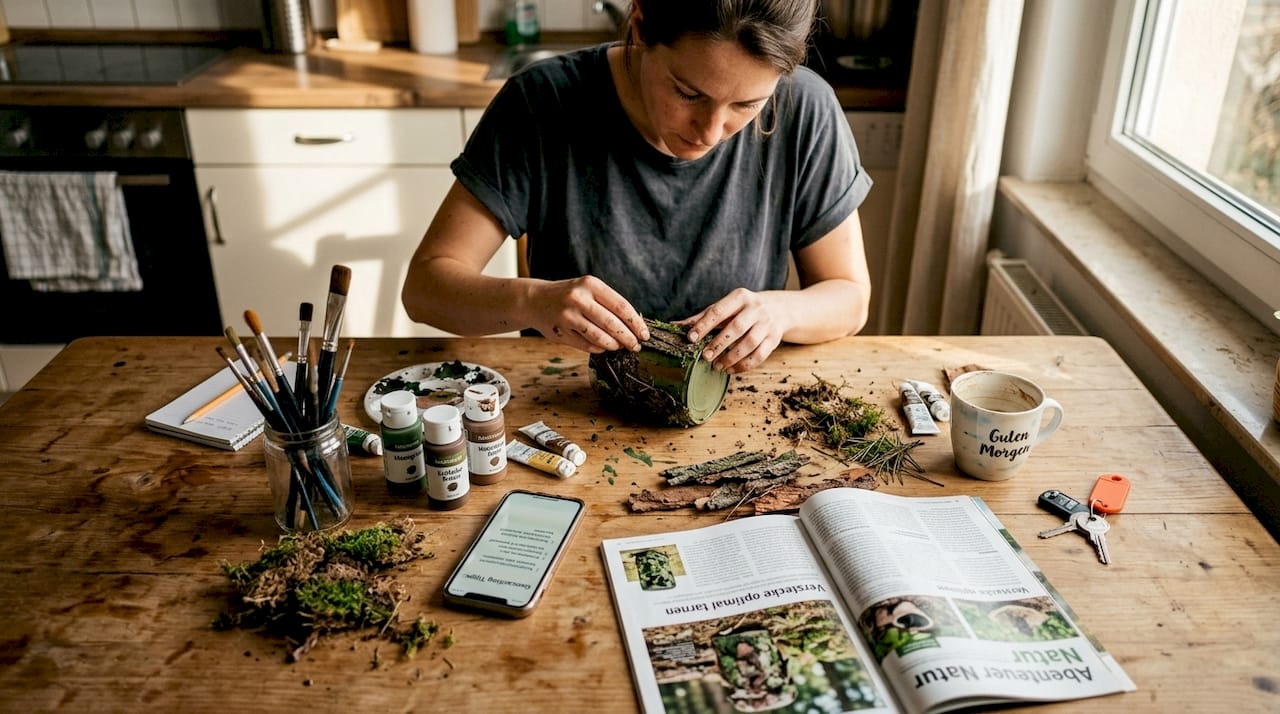
Les matériaux naturels s'intègrent harmonieusement dans l'environnement et se dégradent sans causer de dommages environnementaux. Utilisez des morceaux d'écorce, de la mousse, des pierres ou du bois mort pour la couverture. Ces éléments doivent être posés lâchement afin de pouvoir être facilement retirés et remis en place si nécessaire. Les matériaux artificiels tels que le film plastique ou la peinture en aérosol n'ont pas leur place dans la nature.
| Méthode de camouflage | Matériel | Durabilité | Respect de l'environnement | Niveau de difficulté |
|---|---|---|---|---|
| Formation rocheuse | Pierres naturelles | Très élevé | Excellent | Moyen |
| Couverture de mousse | Mousse vivante | Moyen | Bon (avec entretien) | Faible |
| Camouflage d'écorce | Écorce d'arbre | Élevé | Excellent | Faible |
| Fixation magnétique | Aimants en néodyme | Très élevé | Bon | Moyen |
| Imitation de bois | Matériaux résistants aux intempéries | Très élevé | Moyen | Élevé |
Pour les bricoleurs, d'innombrables possibilités créatives s'offrent. Des idées de bricolage comme les mini-nichoirs, les PETlings magnétiques et les conteneurs individuels en tuyau et en bois combinent fonctionnalité et originalité. Un mini-nichoir en bois résistant aux intempéries est une illusion parfaite, mais nécessite une vérification régulière des vrais nids d'oiseaux. Les PETlings magnétiques en tubes en plastique avec de puissants aimants en néodyme adhèrent aux structures métalliques et restent fonctionnels pendant des années.
Une solution particulièrement innovante consiste en des conteneurs fabriqués à partir de morceaux de tuyaux en PVC, fermés par des bouchons en bois. Cette combinaison est étanche, durable et peut être parfaitement camouflée avec de l'écorce ou de la mousse. Coupez un tuyau en PVC de 15 cm de long et de 5 cm de diamètre, scellez une extrémité avec un bouchon approprié et fixez l'autre extrémité avec un capuchon à vis. À l'intérieur, placez le carnet de bord dans un sac en plastique supplémentaire comme protection de secours.
Conseil de pro : Le choix du matériau de camouflage influence non seulement l'effet visuel, mais aussi les intervalles d'entretien. Les fixations magnétiques durent beaucoup plus longtemps en milieu urbain que les couvertures de mousse, qui doivent être renouvelées régulièrement. Planifiez en fonction de votre temps disponible pour les visites d'entretien et choisissez des solutions robustes en conséquence.
L'adaptation des couleurs renforce considérablement l'effet de camouflage. Utilisez des tons terreux comme le marron, le gris ou le vert, qui correspondent à la saison. Une cache parfaitement camouflée en automne peut être visible au printemps lorsque le vert frais domine. Réfléchissez si votre cache fonctionne toute l'année ou si des ajustements saisonniers sont nécessaires.
De la création du listing à la maintenance régulière
Après le camouflage physique, vient la présentation numérique. Un listing professionnel attire les chercheurs et communique clairement ce à quoi ils peuvent s'attendre. Commencez par vous inscrire sur geocaching.com et choisissez « Hide a Cache » depuis votre tableau de bord.
Le processus de création suit des étapes claires :
- Saisissez les coordonnées moyennes GPS et vérifiez la cohérence de l'affichage cartographique.
- Sélectionnez le type de cache (Traditionnel, Multi, Mystère) en fonction de votre concept.
- Donnez un nom mémorable qui éveille la curiosité sans trop en révéler.
- Évaluez la difficulté et le terrain de manière réaliste. Ne surestimez pas pour éviter les déceptions.
- Ajoutez une description complète, des attributs et des indices pertinents qui enrichissent l'expérience sans trop en dévoiler.
- Notez le code GC avant de soumettre pour vos dossiers.
Les attributs sont des outils puissants de communication. Ne marquez « Chiens autorisés », « Adapté aux poussettes » ou « Cache de nuit » que si ces caractéristiques sont réellement applicables. De faux attributs entraînent des commentaires négatifs et peuvent conduire à l'archivage. Ajoutez des indices avec parcimonie. Un bon indice donne une direction sans révéler la solution. « Magnétique » est mieux que « Sous le banc du parc à gauche ».
Testez impérativement votre cache avec une personne neutre avant la publication. Cette personne test doit :
- Recevoir uniquement les informations du listing, sans conseils supplémentaires verbaux
- Chercher la cache sans votre présence
- Donner un feedback honnête sur la difficulté et la qualité du camouflage
- Évaluer la qualité du carnet de bord et l'état du conteneur
Après la publication, commence la phase de maintenance, que de nombreux propriétaires sous-estiment. La maintenance régulière signifie réagir aux logs « Needs Maintenance » et remplacer les carnets de bord, idéalement tous les 3 à 6 mois en fonction de la fréquence des visiteurs. Lisez attentivement tous les logs, même les positifs. Ils contiennent souvent des indices cachés sur des problèmes émergents.
Créez un calendrier de maintenance avec des intervalles fixes. Notez :
- Date de la dernière visite
- État du conteneur et du camouflage
- Nombre d'entrées dans le carnet de bord depuis le dernier contrôle
- Réparations ou améliorations nécessaires
- Date prévue de la prochaine visite de maintenance
En cas de messages « Needs Maintenance », réagissez dans les 14 jours. Les messages de maintenance ignorés entraînent la désactivation temporaire par les réviseurs et nuisent à votre réputation. Remplacez les carnets de bord pleins de manière proactive, avant que les chercheurs ne doivent laisser des notes improvisées. Emportez toujours des carnets de bord de rechange, un stylo et du matériel de nettoyage lors des visites de maintenance.
Découvrez des caches de géocaching spéciales chez Cachewerk
Maintenant que vous connaissez toutes les bases pour des caches de géocaching réussies, vous souhaitez peut-être compléter votre planification avec des solutions professionnelles. CacheWerk propose une sélection complète de caches de géocaching spéciales, conçues aussi bien pour les débutants que pour les propriétaires expérimentés. Des conteneurs résistants aux intempéries aux solutions de camouflage innovantes en passant par les articles spéciaux imprimés en 3D sur mesure, vous trouverez tout ce dont vous avez besoin pour des caches durables et créatives. La plateforme complète vos projets de bricolage avec des accessoires et équipements de géocaching bien pensés, qui simplifient la maintenance et ouvrent de nouvelles possibilités de conception. Profitez de l'expertise d'une communauté spécialisée et donnez à vos caches un caractère professionnel.
Questions fréquentes sur la liste de contrôle pour les caches de géocaching
Quelle est la distance minimale entre les géocaches ?
Les géocaches doivent être distantes d'au moins 161 mètres à vol d'oiseau. Cette règle s'applique à toutes les caches actives et évite les chevauchements. Mesurez la distance avec des outils GPS ou la vue cartographique sur geocaching.com avant le placement.
Que faire en cas de terrain privé pour une cache ?
Vous avez besoin d'une autorisation écrite du propriétaire du terrain, que vous devez télécharger lors de la création du listing. Sans cette autorisation, votre cache sera refusée par les réviseurs. Documentez l'autorisation de manière permanente pour des preuves ultérieures.
À quelle fréquence une cache doit-elle être entretenue ?
Prévoyez des visites d'entretien tous les 3 à 6 mois, selon la fréquence des visiteurs et les conditions météorologiques. En cas de messages "Needs Maintenance", réagissez dans les 14 jours. Des contrôles réguliers évitent l'archivage et maintiennent la jouabilité à long terme.
Quels matériaux conviennent le mieux aux conteneurs de cache ?
Les plastiques résistants aux intempéries comme le PETG, le PVC ou le polypropylène offrent une durabilité optimale. Les conteneurs métalliques rouillent rapidement dans les environnements humides. Le verre est fragile et dangereux. Faites attention aux fermetures étanches et à la résistance aux UV pour une utilisation de plusieurs années.
Comment tester ma cache avant publication ?
Demandez à une personne indépendante de chercher la cache uniquement avec les informations du listing. Cette personne test ne doit pas recevoir d'indices supplémentaires verbaux et doit donner un feedback honnête sur la difficulté, la qualité du camouflage et la précision des coordonnées. Corrigez les points faibles avant de soumettre.
