
Structure d'une géocache : design créatif et matériaux 2026
De nombreux géocacheurs pensent qu'une cache n'est qu'une simple boîte dans la forêt. En réalité, une structure bien pensée détermine le succès ou l'échec de votre cachette. La combinaison d'un conteneur résistant aux intempéries, d'un design astucieux et d'une fixation stratégique fait la différence entre une cache qui dure des années et une autre qui se retrouve imbibée d'eau dans les buissons après quelques mois. Cet article vous montrera quels matériaux fonctionnent vraiment, comment construire des cachettes créatives et quelles méthodes de fixation rendront vos caches à l'abri des Muggles et durables.
Table des matières
- Principales conclusions
- Principes fondamentaux de la structure d'une géocache
- Comparaison de conteneurs de géocaches créatifs et durables
- Construction DIY et idées de cachettes créatives pour la géocache
- Techniques de dissimulation et méthodes de fixation pour les géocaches
- Découvrez les matériaux et accessoires de géocaching chez CacheWerk
- Foire aux questions sur la structure d'une géocache
Principales conclusions
| Point | Détails |
|---|---|
| Le choix des matériaux est décisif | Les conteneurs résistants aux intempéries avec des filetages externes protègent efficacement les carnets de log de l'humidité et prolongent considérablement la durée de vie de la cache. |
| Les designs créatifs augmentent le plaisir | Les cachettes individuelles, comme les fausses nichoirs, minimisent les perturbations des Muggles et augmentent considérablement la satisfaction des découvreurs. |
| La fixation magnétique offre de la flexibilité | Les aimants en néodyme d'une force de maintien de 2,4 kg permettent des fixations invisibles et stables sans laisser de traces permanentes. |
| La construction DIY réduit les coûts | Des matériaux simples comme les tubes en plastique et les colles résistantes aux intempéries permettent de construire des caches uniques à faible coût. |
| La structure influence le succès | L'interaction entre le conteneur, la cachette et l'énigme détermine la durabilité et l'expérience de jeu de votre géocache. |
Principes fondamentaux de la structure d'une géocache
Une géocache se compose de trois éléments fondamentaux : le conteneur, le carnet de log et la stratégie de dissimulation. Ces éléments doivent s'harmoniser parfaitement pour que votre cache soit non seulement trouvée, mais qu'elle dure aussi des années. Le conteneur protège le carnet de log des intempéries, tandis que la stratégie de dissimulation détermine à quel point votre cache est bien cachée des Muggles curieux.
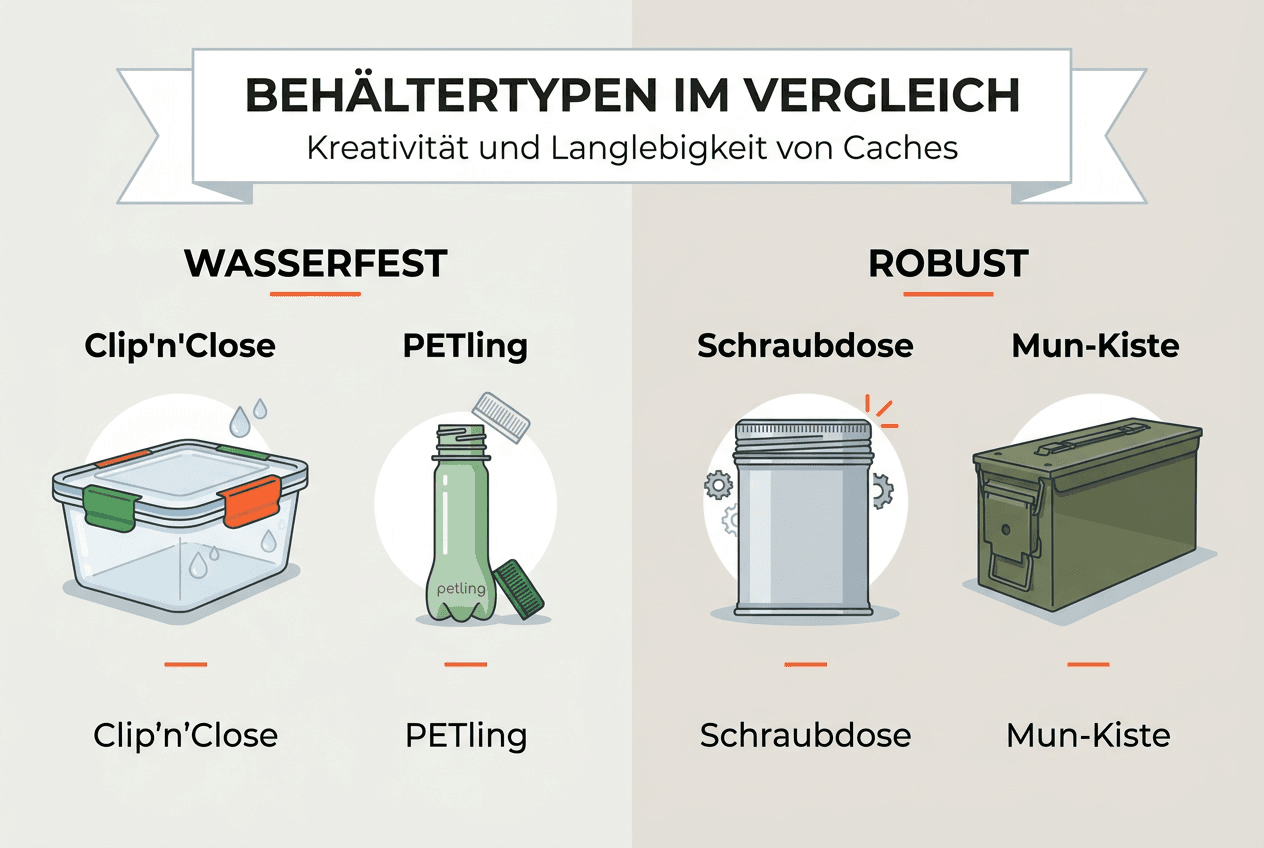
Le choix des matériaux est crucial. Les conteneurs de géocaches sans entretien doivent être résistants aux intempéries et maintenir le carnet de log au sec. Les types de conteneurs courants incluent les boîtes Clip’n’Close, les PETlings et les boîtes à vis, chacun offrant des avantages et des inconvénients différents. Le bon choix dépend de l'emplacement de votre cache et des conditions climatiques.
Les matériaux résistants aux intempéries sont non négociables. Un carnet de log détrempé frustre les découvreurs et détruit votre concept de cache. C'est pourquoi vous devriez opter pour des matériaux de géocache résistants aux intempéries éprouvés qui ont fait leurs preuves dans la pratique. Le plastique est généralement le meilleur choix car il est léger, bon marché et extrêmement résistant à l'humidité.
Les principaux types de conteneurs en un coup d'œil :
- Les boîtes Clip’n’Close offrent une bonne étanchéité et sont disponibles dans de nombreuses tailles
- Les PETlings sont compacts, transparents et idéaux pour les caches urbaines
- Les boîtes à vis avec des filetages externes empêchent l'infiltration d'eau même en cas de fermeture lâche
- Les conteneurs Pelican sont considérés comme une option premium avec une protection optimale
Votre stratégie de dissimulation n'influence pas seulement la durabilité, mais aussi la sécurité contre les Muggles. Une cache bien camouflée dans un endroit logique est moins susceptible d'être découverte ou endommagée par accident. Réfléchissez si votre cachette s'intègre à l'environnement et si le conteneur choisi peut y être placé discrètement.
Comparaison de conteneurs de géocaches créatifs et durables
Tous les conteneurs ne sont pas créés égaux. Des conteneurs de géocaches fiables comme les boîtes Clip’n’Close, les PETlings et les boîtes à vis ont fait leurs preuves au fil des ans. La différence cruciale réside souvent dans les détails : les filetages externes font la différence entre un carnet de log sec et un carnet détrempé.
Les conteneurs avec filetages externes sont plus résistants à l'eau, même si le couvercle n'est pas complètement vissé. Les PETlings, les boîtes à vis de 35 ml et les Mighty Mega Cache Containers utilisent ce principe. Avec des filetages internes, l'eau peut s'infiltrer par de minuscules interstices dès que la fermeture n'est pas parfaite.
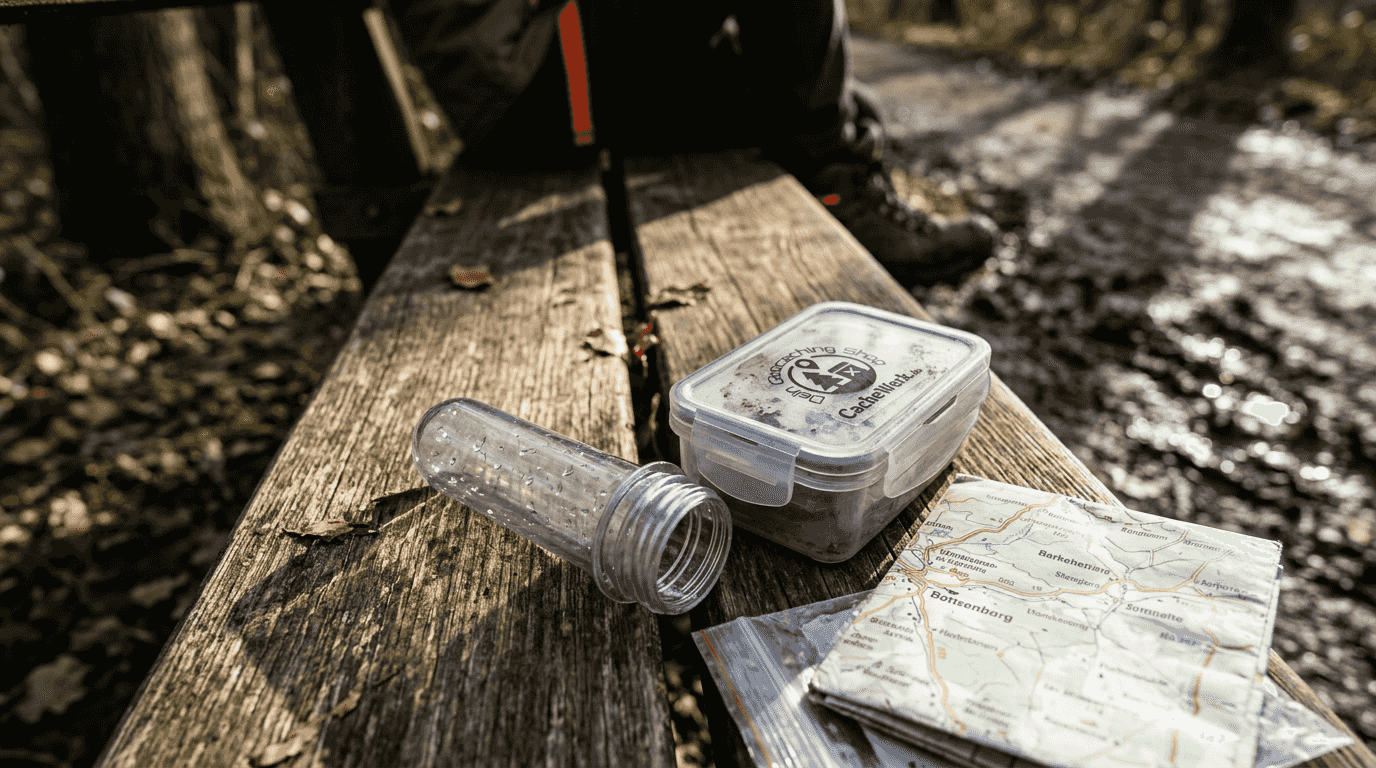
Voici une comparaison pratique des options les plus courantes :
| Type de conteneur | Résistance aux intempéries | Taille | Camouflage | Coût |
|---|---|---|---|---|
| Clip’n’Close | Très bon | Petit à grand | Moyen | Faible |
| PETling | Excellent | Petit | Très bon | Faible |
| Boîte à vis externe | Excellent | Petit à moyen | Bon | Faible |
| Conteneur Pelican | Excellent | Moyen à grand | Difficile | Élevé |
| Caisse de munitions | Bon | Très grand | Très difficile | Moyen |
Les grands conteneurs comme la caisse de munitions offrent beaucoup d'espace pour les objets d'échange, mais sont beaucoup plus difficiles à camoufler. Vous devez peser si l'espace supplémentaire vaut le risque accru de Muggles. Pour les caches urbaines, les solutions compactes sont généralement plus appropriées.
Les conteneurs Pelican sont considérés comme une option premium. Ils sont absolument étanches, extrêmement robustes et résistent même aux conditions extrêmes. Le prix plus élevé est justifié par la durabilité, surtout si votre cache se trouve dans un endroit difficile d'accès où l'entretien est difficile.
Conseil de pro : Assurez-vous toujours que les boîtes à vis ont un filetage externe. Même si les découvreurs ne ferment pas parfaitement le couvercle, votre carnet de log restera au sec. Cette petite décision de conception peut économiser des années d'efforts d'entretien.
Le choix du bon conteneur dépend de plusieurs facteurs. Tenez compte de l'emplacement, de la fréquence de visite attendue et de votre budget. Une comparaison des conteneurs de géocaches durables vous aidera à trouver la solution optimale pour votre projet.
Construction DIY et idées de cachettes créatives pour la géocache
Les caches individuelles se distinguent de la masse et offrent aux découvreurs une expérience inoubliable. L'auto-construction vous permet de créer des cachettes uniques qui correspondent parfaitement à l'endroit choisi. Avec des matériaux simples et un peu de créativité, vous pouvez créer des caches qui sont à la fois fonctionnelles et esthétiques.
Des conteneurs de cache uniques peuvent être construits à partir de matériaux simples comme des tubes en plastique, des chevilles en bois, du papier, de la colle et du ruban adhésif. Ces composants sont bon marché, faciles à travailler et étonnamment résistants aux intempéries si vous les traitez correctement. Le processus créatif est aussi amusant que la dissimulation ultérieure.
Instructions étape par étape pour un conteneur de cache personnalisé :
- Choisissez un tube en plastique approprié comme base, suffisamment grand pour votre carnet de log
- Fermez une extrémité avec une cheville en bois qui s'insère exactement dans le tube
- Collez la cheville avec de la colle résistante aux intempéries et scellez le joint
- Enroulez la connexion avec du ruban adhésif étanche pour une protection supplémentaire
- Créez un revêtement extérieur créatif qui correspond à l'environnement
- Testez l'étanchéité avant de cacher la cache
Le mini pseudo-nichoir est une idée de cachette créative éprouvée. Il se camoufle parfaitement dans un environnement naturel, est à l'abri des Muggles et peut être construit en différentes tailles. La conception est évolutive, vous pouvez donc l'adapter à différentes tailles de conteneurs.
L'avantage des caches auto-construites réside dans leur individualité. Vous pouvez choisir spécifiquement les matériaux pour les caches auto-construites et les adapter à votre lieu de cachette spécifique. Une cache cachée dans la forêt nécessite des matériaux différents de ceux d'une cache en milieu urbain.
Conseil de pro : N'utilisez que des colles résistantes aux intempéries comme Patex Repair Extrem pour les caches extérieures. Les colles artisanales normales échouent en cas d'humidité et de variations de température. Sécurisez les fixations magnétiques supplémentaires avec du ruban adhésif en tissu pour éviter qu'elles ne se détachent.
La créativité ne connaît pas de limites. Expérimentez avec différents matériaux et designs jusqu'à ce que vous trouviez la solution parfaite pour votre cache. Chaque cache auto-construite est une pièce unique qui ravit les découvreurs et reste longtemps dans les mémoires.
Techniques de dissimulation et méthodes de fixation pour les géocaches
La fixation de votre cache est cruciale pour sa durabilité et sa sécurité face aux Muggles. Les solutions magnétiques se sont avérées particulièrement efficaces, car elles sont invisibles, flexibles et extrêmement stables. La bonne technique empêche votre cache de se perdre ou d'être découverte par des personnes non autorisées.
Les aimants en néodyme de 10 mm de diamètre et 5 mm d'épaisseur offrent une force de maintien de 2,4 kg. Cette force est suffisante pour fixer solidement les PETlings et les conteneurs similaires aux structures métalliques. Les aimants sont suffisamment petits pour rester discrets, mais suffisamment puissants pour résister au vent et aux intempéries.
Aspects importants de la fixation magnétique :
- Utilisez des aimants en néodyme de haute qualité pour une force de maintien maximale
- Collez les aimants avec Patex Repair Extrem ou une colle extérieure comparable
- Sécurisez la connexion supplémentaire avec du ruban adhésif en tissu contre le détachement
- Testez la force de maintien avant la dissimulation finale
- Positionnez les aimants de manière à ce que la cache soit facile à retirer
Le grand avantage des fixations magnétiques réside dans leur flexibilité. Vous pouvez facilement repositionner la cache si nécessaire sans laisser de traces. Les découvreurs peuvent la retirer et la remettre en place sans effort, sans avoir à manipuler des mécanismes compliqués.
Des adhésifs appropriés sont essentiels pour la durabilité. Patex Repair Extrem adhère également aux surfaces en plastique lisses et résiste aux températures extrêmes. Les super-colles normales échouent souvent en cas d'humidité ou de froid. Investissez dans des matériaux de fixation professionnels pour éviter les déceptions ultérieures.
Conseil de pro : Évitez les aimants trop puissants. Alors qu'une force de maintien de 2,4 kg est idéale, des aimants plus puissants peuvent fixer la cache si solidement que les découvreurs peuvent à peine la détacher. Cela est frustrant et peut endommager la nature si quelqu'un tente de retirer la cache avec force.
Les méthodes de fixation alternatives comme les colliers de serrage ou le fil laissent souvent des traces visibles et sont moins flexibles. Les aimants offrent le meilleur équilibre entre sécurité, discrétion et facilité d'utilisation. Ils sont le premier choix pour les caches urbaines sur des structures métalliques.
Découvrez les matériaux et accessoires de géocaching chez CacheWerk
Maintenant que vous connaissez les bases des structures de cache créatives, vous vous demandez peut-être où trouver des matériaux de haute qualité. Chez CacheWerk, vous trouverez un large choix de conteneurs et d'accessoires durables et résistants aux intempéries, spécialement adaptés aux besoins des géocacheurs expérimentés.
Des caches de géocaching standard éprouvées aux solutions spéciales créatives, vous trouverez tout ce dont vous avez besoin pour des caches réussies. Les matériaux sont spécialement conçus pour une utilisation en extérieur et résistent même aux conditions extrêmes. Que vous planifiez une simple micro-cache ou une multi-cache élaborée, le bon équipement fait la différence.
Les bricoleurs apprécient particulièrement la collection Équipement et accessoires de géocaching. Vous y trouverez des aimants, des colles résistantes aux intempéries, des matériaux de camouflage et des composants innovants imprimés en 3D en PETG. Ces matériaux facilitent considérablement la construction de caches individuelles et garantissent des résultats professionnels.
Foire aux questions sur la structure d'une géocache
Qu'est-ce qui fait un bon conteneur de géocache ?
Un bon conteneur est absolument étanche, robuste contre les contraintes mécaniques et facile à ouvrir et à fermer. Les filetages externes offrent une meilleure protection que les internes, car ils empêchent l'eau de pénétrer même si la fermeture est lâche. La taille doit correspondre à l'emplacement de la cache afin qu'elle puisse être bien camouflée.
Comment protéger ma cache de l'humidité ?
Choisissez des conteneurs avec des filetages externes et testez leur étanchéité avant de les cacher. Placez le carnet de log dans un sac zip supplémentaire pour une double protection. Scellez tous les joints et les connexions avec du ruban adhésif résistant aux intempéries. Vérifiez régulièrement la cache et remplacez immédiatement les carnets de log détrempés.
Quelles méthodes DIY conviennent aux cachettes créatives ?
Le mini pseudo-nichoir est une méthode éprouvée et facile à reproduire. Les tubes en plastique avec des chevilles en bois comme bouchon offrent une alternative économique aux conteneurs commerciaux. Utilisez toujours des matériaux résistants aux intempéries et testez minutieusement votre construction. Les revêtements extérieurs créatifs faits de matériaux naturels améliorent considérablement le camouflage.
Comment fixer une cache en toute sécurité sans laisser de traces ?
Les aimants en néodyme d'une force de maintien de 2,4 kg sont idéaux pour les surfaces métalliques. Ils ne laissent aucune trace et peuvent être repositionnés à tout moment. Collez les aimants avec de la colle d'extérieur et sécurisez-les en plus avec du ruban adhésif en tissu. Évitez les colliers de serrage ou le fil, car ils laissent des marques visibles et peuvent endommager la nature.
Quels matériaux dois-je éviter lors de la construction d'une cache ?
Évitez le carton, le papier non protégé, les colles artisanales normales et les conteneurs avec des filetages internes de mauvaise qualité. Le bois non scellé pourrit rapidement. Les aimants bon marché perdent leur force d'adhérence. Le métal rouille dans un environnement humide. Optez plutôt pour des plastiques éprouvés, des colles résistantes aux intempéries et des aimants en néodyme de haute qualité pour des résultats durables.