
Importance of the Caching Community for Geocaching Culture
A geocaching community is a globally networked collective of people connected by the shared geocaching experience, combining social, ecological, and technical aspects. The term "Cachergemeinschaft" (geocaching community) essentially describes what geocaching experts refer to as a community: an active network of players, hiders, and nature enthusiasts. This community is far more than just a group of treasure hunters. It shapes culture, drives technological developments, and actively advocates for nature conservation. Understanding the significance of the geocaching community reveals why geocaching has been growing worldwide for over two decades.
What is a Geocaching Community and How is it Structured?
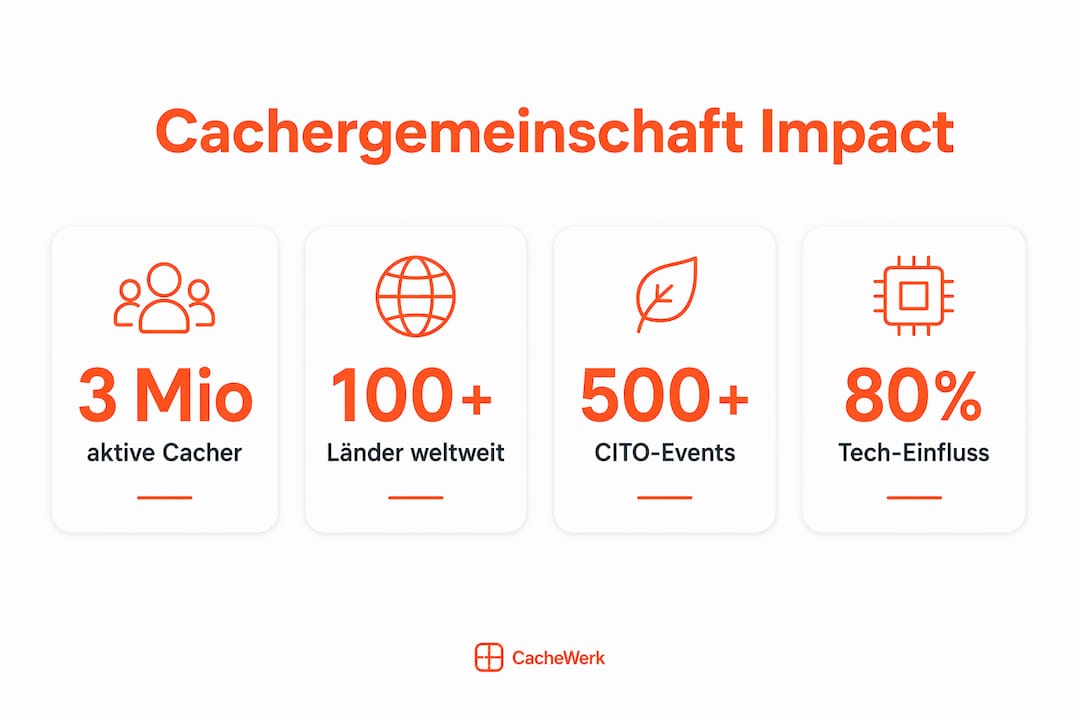
The geocaching community comprises around three million active participants worldwide. This number demonstrates that geocaching is no longer a niche phenomenon but a global leisure movement with genuine societal reach.
The community is made up of very diverse groups:
- Beginners who are just holding their first GPS device or app and are looking for their first cache
- Experienced geocachers who hide complex multi-caches and puzzle caches, demonstrating their craftsmanship
- Event organizers who plan and coordinate local gatherings, mega-events, or CITO actions
- Reviewers and moderators who voluntarily check caches and ensure quality standards
- Hobbyists and tinkerers who build creative hides from unusual materials
This diversity is no coincidence. Geocaching has always embraced openness. Anyone can participate, regardless of age, technical affinity, or physical fitness.
Digital and Real-Life Meeting Points for the Community
The geocaching community organizes itself through two channels simultaneously. On the one hand, there are digital platforms such as geocaching.com, Opencaching, or regional forums and blogs. On the other hand, events create real personal encounters that strengthen the sense of community. Regular meet-ups, known as geocaching gatherings, take place monthly in many German cities. There, geocachers exchange experiences, show off self-made hides, and plan joint tours.

Pro Tip: Newcomers to the geocaching community can quickly connect with local geocachers using the comment function on geocaching.com. Many experienced players respond to messages and are happy to give tips for the first cache container.
How Does the Geocaching Community Influence Geocaching Culture and Technology?
Through collective behavior, the community also shapes the market. Monopolies like Groundspeak and Garmin shape the technological landscape of geocaching, with the community indirectly exerting influence through its consumption patterns. Who uses which platform, which devices they buy, and which features they actively use ultimately determines the success of technological innovations.
A good example of this is the handling of new technologies. Technical innovations such as "Chirps" and "Wherigos" are often critically evaluated in geocaching circles. Many geocachers prefer proven GPS methods and view elaborate tech gadgets skeptically. This is not a step backward, but a clear signal from the community: reliability trumps complexity.
Specifically, this influence is evident in several areas:
- Platform choice: If the use of Opencaching grows, geocaching.com reacts with adjustments
- Feature acceptance: Chirp caches are rare despite technical possibilities because the community hardly adopts them
- Quality standards: Collective criticism of poor caches leads to stricter guidelines for reviewers
- Pricing: Public resistance to premium memberships has prompted platform operators to revise their models
Thus, the community is not a passive consumer. It is an active co-creator of the geocaching world.
What Significance Does the Geocaching Community Have for Nature Conservation?
Nature conservation is not mere lip service in the geocaching community. It is a lived practice. The clearest example of this is the CITO initiative, short for "Cache In Trash Out." Since 2022, more than 850,000 geocachers have participated in over 50,000 CITO events in 160 countries. This number shows that sustainable engagement in the geocaching community is not a fringe phenomenon but a central part of the culture.
CITO combines nature experience, social bonding, and sustainable commitment into an overall experience that strengthens the community. A duty becomes a shared adventure. This is psychologically smart: those who collect litter while spending time with like-minded people experience nature conservation as a positive experience, not a burden.
How a typical CITO event unfolds:
- Announcement: Organizers register the event on geocaching.com or Opencaching and set the meeting point and time frame
- Collecting: Participants comb an area with trash bags and grabbers, often in forests, parks, or near bodies of water
- Completion: Collected litter is documented and properly disposed of
- Logging: All participants log the event digitally, which increases the visibility of the action
- Community: This is often followed by a social gathering that strengthens social cohesion
Nature conservation in the community means not only consideration but also active participation with visible results. Anyone who has participated in a CITO event once will permanently change their view of nature while geocaching. This is the real value of this initiative.
Connection to Nature as the Core of Geocaching Identity
Geocaching leads people to places they would never have visited otherwise. A cache on the edge of a moor, on a mountain peak, or in a city park sharpens the view of the surroundings. This connection to nature is not a side effect. It is a core feature of geocaching identity and explains why environmental protection is so naturally embedded in the geocaching community.
How Does the Geocaching Community Foster Exchange and Creativity?
The community organizes itself through digital platforms and real-life meetings that promote exchange and creativity. Blogs, forums, and events are the three pillars of this communication. Each serves a different function.
| Channel | Strength | Typical Example |
|---|---|---|
| Geocaching Forums | Quick problem-solving, broad reach | Questions about technology, rule interpretation, hide ideas |
| Geocaching Blogs | Deep insights, personal experiences | Siegerland-CacheBlog, regional travel reports |
| Events and Meetings | Personal connection, direct exchange | Mega-Events, CITO, local meet-ups |
| Social Media Groups | Quick inspiration, visual content | Photos of hides, find reports |
Creativity in the geocaching community primarily arises through comparison. When people see how other geocachers build hides, they develop their own ideas. A bolt as a nano-cache, a deceptively real stone as a container, or a survey marker made with a 3D printer: these ideas don't originate in a single mind, but through collective exchange.
Technical features like "Chirp" are critically examined within the community, and success depends on the broad exchange of tips and workarounds. The same applies to creative hides: a good design prevails because the community praises it, imitates it, and develops it further. Bad ideas disappear because no one logs or recommends them.
The social "glue" of the geocaching hobby is found in regularly held events that foster a strong sense of community and reflect generational change. Younger geocachers bring different perspectives, are less car-centric, and search for caches in different areas. This changes the community without destroying its core.
Key Takeaways
The geocaching community is the social foundation of geocaching: it protects nature, shapes technology, and connects people worldwide through shared experiences.
| Topic | Details |
|---|---|
| Global Reach | Around three million active geocachers worldwide make geocaching a true mass movement |
| Nature Conservation through CITO | Over 850,000 participants in more than 50,000 events demonstrate how actively the community lives environmental protection |
| Influence on Technology | The community decides through user behavior which technical innovations prevail |
| Creativity and Exchange | Blogs, forums, and events are the channels through which ideas are born and spread |
| Generational Change | Younger geocachers change routines and target areas, creating new dynamics in the community |
What I've Truly Learned About Community After Years in Geocaching
For a long time, I thought geocaching was primarily an individual sport. You go out, search, find, log. Done. But that's not quite right.
The moment that changed my mind was a CITO event in a forest area near Siegen. There were perhaps thirty of us, most of whom I only knew from the forum. After two hours of collecting trash, we sat together, and someone showed a self-made cache from an old fuse box. The discussion that ensued was livelier than any online forum. This is the essence of the geocaching community: it turns a hobby into a practice that goes beyond the hobby itself.
What also concerns me, however, is that the generational change within the geocaching community noticeably alters routines and target areas. Younger geocachers think differently about mobility, natural spaces, and technology. That's good. But bridges are needed between generations. Experienced geocachers who share their knowledge and newcomers who bring fresh ideas – that's the combination that keeps a community alive.
My honest advice: Go to an event. Not for the statistics, not for the log. But because you'll meet people there who pursue your hobby with the same seriousness and humor as you do.
— Benedikt
Cachewerk: Equipment for Active Geocachers
Anyone who is part of the geocaching community knows: the right hide makes all the difference. Whether you want to place your first cache or expand your collection with a real highlight, at Cachewerk you'll find products that resonate with the community.
The Geocaching Rusty Bolt Cache is a deceptively real bolt with a nano-container that surprises even experienced geocachers. For beginners, the Geocaching Starter Bundle is recommended, with a PETling, logbook, and holder, everything you need for your first own cache. And for those who like it a bit more elaborate, the survey marker hide from the 3D printer offers a hide that generates real enthusiasm in the community. Browse the entire geocaching assortment and find your next favorite hide.
FAQ
What exactly is a geocaching community?
A geocaching community is a global network of geocachers who collectively play, hide caches, organize events, and interact through digital platforms and real-life meetings. It connects people of different age groups and backgrounds through a shared hobby.
How many people belong to the geocaching community worldwide?
The geocaching community includes approximately three million active participants worldwide. This number refers to active players and makes geocaching one of the largest organized outdoor leisure movements globally.
What is CITO and why is it important for the geocaching community?
CITO stands for "Cache In Trash Out" and is an initiative where geocachers collectively collect trash in nature. More than 850,000 geocachers have participated in over 50,000 events to date, making CITO one of the most visible signs of the community's environmental commitment.
How does the geocaching community influence technical developments in geocaching?
The community's usage behavior determines which technologies become widespread. Features like Chirp or Wherigo gain little traction because the majority of geocachers prefer proven GPS methods and critically examine new technologies.
Where can I, as a beginner, connect with the geocaching community?
The easiest way to start is through geocaching.com, where you can find local events and message other geocachers directly. Many regions also have active forums, blogs, and monthly meet-ups that are open to newcomers.