
Meaning of Cacher Restrooms: Retreats Explained
Cacher rest areas are specially chosen or designed retreats that offer geocachers rest, protection from overstimulation, and a short mental break during their tours. The term is not an official geocaching term, but it has become established in the community as a collective term for places where you can pause, recharge, and consciously approach the next section of your tour. The importance of rest areas grows directly with the increasing cache density. The more caches there are on a route, the more important it becomes to consciously manage breaks. Those who understand this will plan better tours and enjoy the game more.
What is the meaning of cacher rest areas?
Cacher rest areas are retreats that are specifically integrated into a geocaching tour to promote regeneration and concentration. The technical term for comparable concepts in a general context is "rest area" or "retreat." In the geocaching community, people informally speak of break caches, geocacher oases, or cacher rest areas. All three terms describe the same basic principle: a place where you briefly step out of search mode.
Even 10 to 15 square meters of retreat space are enough to measurably reduce stress and increase concentration. For geocachers, this means you don't need elaborate infrastructure. A bench in the shade, a shelter at the edge of the forest, or a quiet niche in the city fulfill the same function. The key is the separation from the surroundings, not the size of the place.
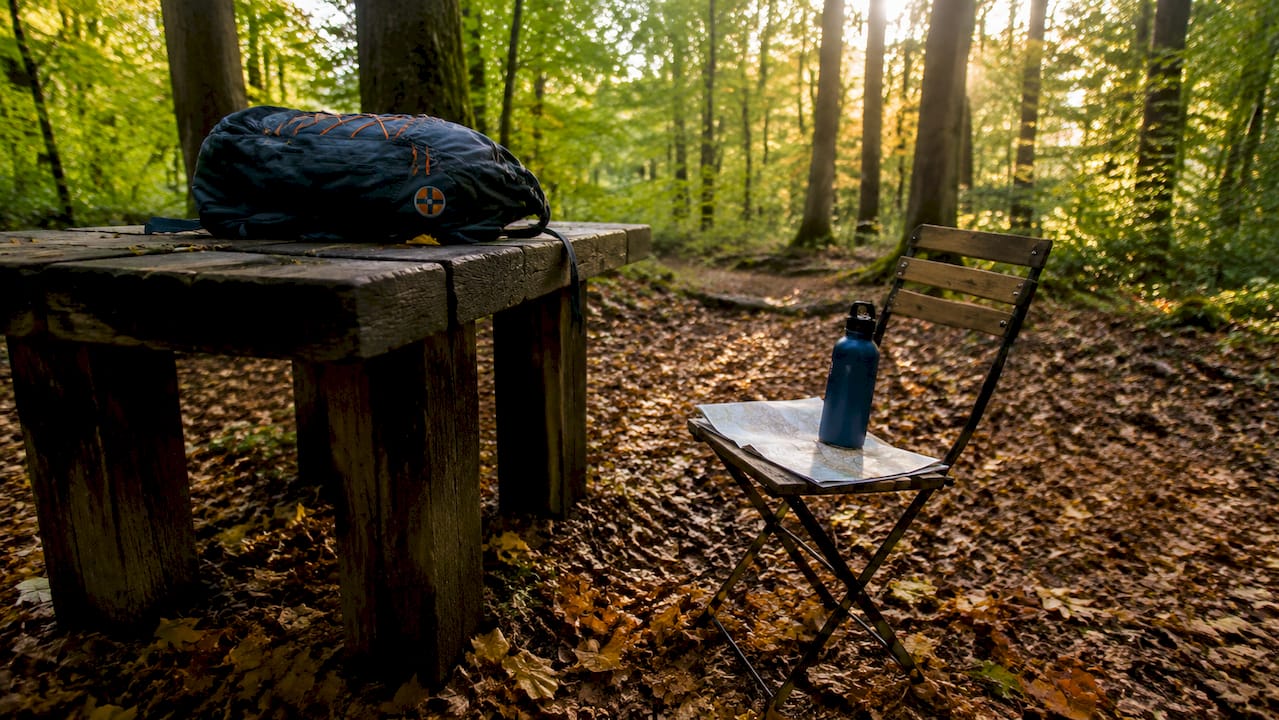
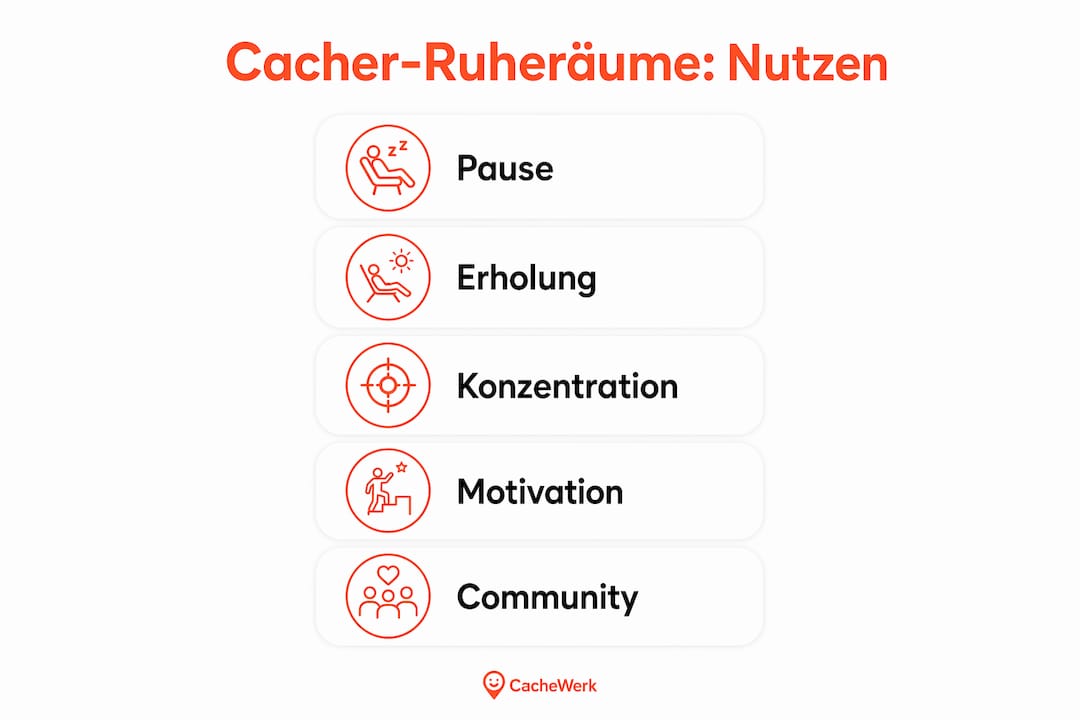
The main functions of a cacher rest area can be clearly defined. It protects against sensory overload from noise, visual stimuli, and social interaction. It gives you time to process what you've experienced and gather new energy. And it improves the quality of the entire tour because you continue searching more rested and focused.
Why are cacher rest areas gaining importance in the community?
The geocaching community is growing, and with it, the number of caches placed. This trend has direct effects on the gaming experience. Since 2025, there has been an increase in mass behavior, where many cachers collect as many finds as possible in a short time without truly enjoying the individual hiding places. Cacher rest areas act as a counterpoint to this trend. They encourage deceleration and significantly enhance the quality of a tour.
The high cache density also leads to more selective searching behavior. Geocachers choose tours more consciously and prefer routes that offer a complete experience. A well-placed rest area is a quality feature that distinguishes a tour from a mere list of finds. A cache owner who integrates such a place into their route signals to the community: This was planned with care.
The psychological function should not be underestimated. Retreats compensate for overstimulation from acoustic, visual, and social stimuli. This is particularly relevant for geocachers with neurodiversity or increased stimulus sensitivity. Retreats are not a luxury, but a sign of conscious handling of the different needs in the community.
Specific triggers for the growing need are:
- Increasing cache density on popular routes, leading to mental exhaustion
- Longer tours with more than 20 caches, where breaks ensure endurance
- Urban caching routes, where noise and distractions are particularly high
- Growing diversity of cachers, including families, seniors, and people with special needs
- Community expectations for creative and thoughtful cache experiences instead of pure find optimization
This change in the community makes the cacher rest areas explanation a topic that concerns every cache owner. Today, when planning a tour, one no longer just thinks about hide quality, but also about the overall experience.
What forms and design approaches are there?
Cacher rest areas exist in two basic forms: natural retreats and consciously designed break caches. Both have their justification and can be creatively combined.
Natural retreats utilize existing structures in the environment. Shelters, covered benches, forest clearings with seating, or quiet places away from busy paths are classic examples. Cachers use such places strategically in longer tours to ensure recovery and prevent exhaustion. The advantage: no effort for the cache owner, as the infrastructure already exists.
Consciously designed break caches go a step further. Here, the owner explicitly plans a cache as a rest area and equips it accordingly. The most important design elements are:
- Visual screening: Privacy provided by planting, wooden walls, or natural features like rocks and bushes
- Acoustic quiet: Choosing a location away from roads, railway lines, or heavily frequented paths
- Seating comfort: A sturdy bench, a tree stump with a flat surface, or a weatherproof seating element
- Weather-protected location: Roofing or natural protection from rain and direct sunlight
- Ease of maintenance: Materials that are durable and easy to care for, so the rest area remains attractive long-term
Pro-Tip: Combine your break cache with a small puzzle or task that can only be solved while sitting. This naturally forces finders to take a break and makes the rest area an unforgettable stop.
Multifunctional rest areas combine relaxation with game elements. A cache that can only be solved by observing a specific environment automatically invites lingering. Creative hides like a camouflaged logbook under a park bench or a weatherproof container in a shelter fulfill both functions simultaneously. The separation from the environment is more important than the size or equipment of the place. Even a small niche with a single bench can function as a full-fledged cacher rest area if it offers peace and distance from the hustle and bustle.
How do rest areas influence the geocaching tour experience?
Cacher rest areas change the tour experience on several levels. The most direct effect is stress reduction. Those who regularly take breaks make better decisions during the search, overlook fewer clues, and remain motivated longer. This is not a subjective feeling, but a measurable reaction of the nervous system to short recovery periods.
"Break caches and geocacher oases are important informal success factors for long tours. Underestimated knowledge about strategic rest areas often leads to early abandonment among beginners." (Orangetimes)
The following table shows a direct comparison between tours with and without planned rest areas:
| Feature | Tour without rest areas | Tour with rest areas |
|---|---|---|
| Mental endurance | Drops significantly after 10 to 15 caches | Remains stable throughout the entire tour |
| Risk of abandonment | High on long or challenging routes | Significantly reduced by targeted breaks |
| Experience quality | Focus on quantity of finds | Focus on quality and overall experience |
| Suitability for families | Limited for children and seniors | Well suited due to planned breaks |
| Cache ratings | Average | Tends to be higher due to overall experience |
Maintenance plays a crucial role in the long-term impact. Cache Needs Maintenance logs signal defects and remind owners of their duties. A neglected rest area quickly loses its feel-good factor. A broken bench, a rotten roof, or a soaked logbook destroy the experience the owner originally wanted to create. Regular maintenance is therefore not an optional task, but part of the concept.
The benefits of cacher rest areas are also evident in tour planning itself. Cache owners who incorporate rest areas think about their routes more holistically. They consider walking time, difficulty, and the needs of different target groups. The result is tours that are completed more often and receive better ratings.
How do you practically integrate rest areas into your cache tour?
The practical integration of cacher rest areas begins with tour planning. Experienced geocachers consciously plan break caches as strategic rest areas to avoid fatigue and premature tour abandonment. The first step is to analyze the planned route according to length, terrain type, and difficulty.
The following points will help you with the concrete implementation:
- Set break rhythm: For tours of 15 caches or more, plan at least one rest area after the first third of the route
- Choose location carefully: Look for natural shelters like huts, covered benches, or quiet places with seating
- Design the rest area as a cache: Place a cache directly at the rest area so that the stop has a playful reason
- Add comfort elements: A small logbook with a guestbook character, a hint about the surroundings, or a puzzle that requires attention
- Create a maintenance plan: Determine from the outset how often you will inspect the place and what materials you will need for repairs
Pro-Tip: Use outdoor comfort accessories like compact seating aids to create a comfortable rest area even in places without fixed seating. This significantly expands your options for choosing a location.
For urban tours, the challenges are different than in the countryside. Noise, passers-by, and a lack of green spaces make it more difficult to find real quiet zones. Here, it is worth looking at courtyards, church squares, covered passages, or small parks away from the main streets. These places often offer more peace than expected and are well suited as urban cacher rest areas.
The community appreciates tours that include such places. Those who build creative geocaches and plan rest areas as an integral part stand out from the crowd. Reviews and logs regularly show that finders particularly remember such stations and explicitly mention them. This is the strongest confirmation a cache owner can receive.
Key Takeaways
Cacher rest areas are not a nice extra, but a quality feature that determines the success of a tour and permanently increases the quality of the experience for all participants.
| Point | Details |
|---|---|
| Definition and function | Cacher rest areas are retreats for regeneration, reducing overstimulation and promoting concentration. |
| Growing relevance | Increasing cache density and mass behavior make rest areas a differentiating feature for high-quality tours. |
| Design and location | Separation from the surroundings is more important than size. Even small niches with seating comfort function as full-fledged rest areas. |
| Maintenance obligation | Regular inspection and maintenance ensure the feel-good factor and the long-term attractiveness of the rest area. |
| Practical integration | Break caches after the first third of a long tour measurably reduce the risk of abandonment and improve ratings. |
My Assessment of the Future of Cacher Rest Areas
I have been observing the development of cache density for years, and the trend is clear: more caches do not automatically mean more fun. What I hear more and more often in the community is the desire for tours that feel like a real experience, not a to-do list. Cacher rest areas are the simplest and most effective answer to this desire.
What surprised me most: the best rest areas are rarely the most elaborate. A simple bench with a view of a lake beats any elaborately constructed rest stop if the location is right. This shows me that geocaching is ultimately always about the feeling a place evokes.
My recommendation for beginners: Start with a single break station per tour. Choose a place where you would like to sit yourself. Place a cache there with a small guestbook. You will see how positively the community reacts to it. For experienced cachers: Take a look at the 2026 trends in hides. Rest areas are mentioned there as one of the most important quality features for future tours.
The community continues to evolve. Those who invest in the quality of their tours today build a loyal fan base. And a good rest area is the first step towards that.
— Benedikt
Creative Hides for Your Cacher Rest Area at Cachewerk
You now know what makes a good cacher rest area. Now comes the exciting part: implementation. At Cachewerk, you will find a wide selection of creative and weatherproof hides that are perfect as the centerpiece of a break cache.
Whether you're looking for a robust container for a shelter, a camouflaged hide for a park bench, or a high-quality logbook for your rest area cache: The assortment at Cachewerk offers you exactly the solutions you need. All products are designed for durability and easy maintenance, so your rest area remains attractive long-term. Check out the special hides at Cachewerk and get inspired by creative ideas for your next tour.
FAQ
What exactly is a cacher rest area?
A cacher rest area is a retreat on a geocaching tour that serves for relaxation and reduction of overstimulation. It can be a natural place like a shelter or a location deliberately designed as a break cache.
How big does a cacher rest area need to be?
Size is secondary. Even small niches with seating can function as full-fledged rest areas if they offer visual and acoustic screening.
Why do beginners often abandon long tours early?
Underestimated knowledge about strategic rest areas often leads to early abandonment among beginners, because exhaustion quickly sets in without planned breaks. A break cache after the first third of the route directly solves this problem.
How often does a cacher rest area need to be maintained?
Maintenance obligations depend on the location and material, but each rest area cache should be checked seasonally at a minimum. Cache Needs Maintenance logs from finders are a reliable early warning system for defects.
Are cacher rest areas also suitable for urban tours?
Urban cacher rest areas work well in courtyards, church squares, or small parks away from main roads. The key is separation from noise and visual retreat from the city hustle and bustle.