
Technology in Cache Design: Innovations for Geocachers
TL;DR:
- Modern geocaches use technologies like Arduino, NFC, and GPS for interactive experiences.
- Robust mechanical caches are durable, low-maintenance, and ideal in bad weather.
- Planning, testing, and community feedback are crucial for the longevity of tech caches.
Geocaching is no longer just a simple hide-and-seek game. Anyone who thinks it's just about small containers in the woods has missed the developments of recent years. Ambitious hobbyists and experienced geocachers now rely on NFC tags, Arduino microcontrollers, GPS-controlled mechanisms, and sophisticated puzzle boxes. These technologies transform a simple find into a real experience. At the same time, classic, mechanical methods remain strong because they are reliable, low-maintenance, and often surprisingly creative. In this article, we'll show you which technical possibilities really work, what their limits are, and how you can design your own caches cleverly and durably.
Table of Contents
- Technical Innovations in Cache Design
- Mechanical and Practical Methods: Durability and Integration
- Urban and Rural Cache Solutions: Creativity Meets Environment
- Typical Pitfalls and Proven Solutions for Tech Caches
- Practical Perspective: When Does High-Tech in a Cache Really Make Sense?
- Implementing Tech Caches Yourself with High-Quality Equipment
- Frequently Asked Questions About Technology in Cache Design
Key Takeaways
| Point | Details |
|---|---|
| Technology brings interaction | Arduino, NFC, and GPS enable particularly creative geocaches. |
| Robustness is crucial | Durable materials and weatherproof constructions ensure sustainable caches. |
| Urban-rural differences | In urban areas, gamification and camouflage are in demand; in rural areas, outdoor skills and nature integration matter. |
| Don't forget maintenance | Tech caches require regular care and testing to function reliably. |
Technical Innovations in Cache Design
The geocaching scene has evolved significantly in terms of technology. Where a film canister under a rock used to suffice, finders now expect interactive experiences. Electronic technologies such as Arduino and NFC are used in modern caches for interactive mechanisms. This opens up entirely new possibilities for cache owners who want to offer their guests something special.
Overview of the most popular technologies:
- Arduino microcontrollers: Inexpensive, flexible, and well-documented. Ideal for light, sound, locks, and puzzle boxes.
- NFC tags: Small, passive chips without a battery. Finders tap the tag with their smartphone to receive coordinates, hints, or puzzles. NFC tag geocaches are particularly popular in urban environments.
- GPS modules: Enable so-called reverse geocaching boxes that only open when the finder reaches the correct location.
- Sound modules: Play hints or puzzles as an audio file when a magnet or switch is activated.
- Reed switches and magnetic sensors: Trigger mechanisms without the need for visible buttons.
A concrete practical example: Reverse Geocaching Boxes with Arduino only open when the finder is physically at the right location. This combines navigation with a real "aha" moment. Such concepts are particularly suitable for final boxes in multis or for event caches.
If you want to learn more about the creative use of technology in urban environments, you'll find many practical ideas and approaches at Urban Geocaching Technology.
| Feature | Electronic Cache | Mechanical Cache |
|---|---|---|
| Cost | Medium to high | Low to medium |
| Maintenance effort | High | Low |
| Outdoor durability | Medium | High |
| Experience factor | Very high | High |
| Beginner-friendliness | Medium | High |
Pro Tip: Technology is particularly worthwhile when it directly improves the gameplay experience and is not used merely as an end in itself. An NFC tag that simply provides coordinates is less exciting than a mechanism that tells a story or solves a real puzzle. Before building, ask yourself: Would this cache be worse without technology? If so, its use is meaningful.
Mechanical and Practical Methods: Durability and Integration
Not everything needs to be powered by electricity. Robust designs with weatherproof materials, the integration of existing objects, and field puzzles are proven methods that often work more reliably than complex electronics.
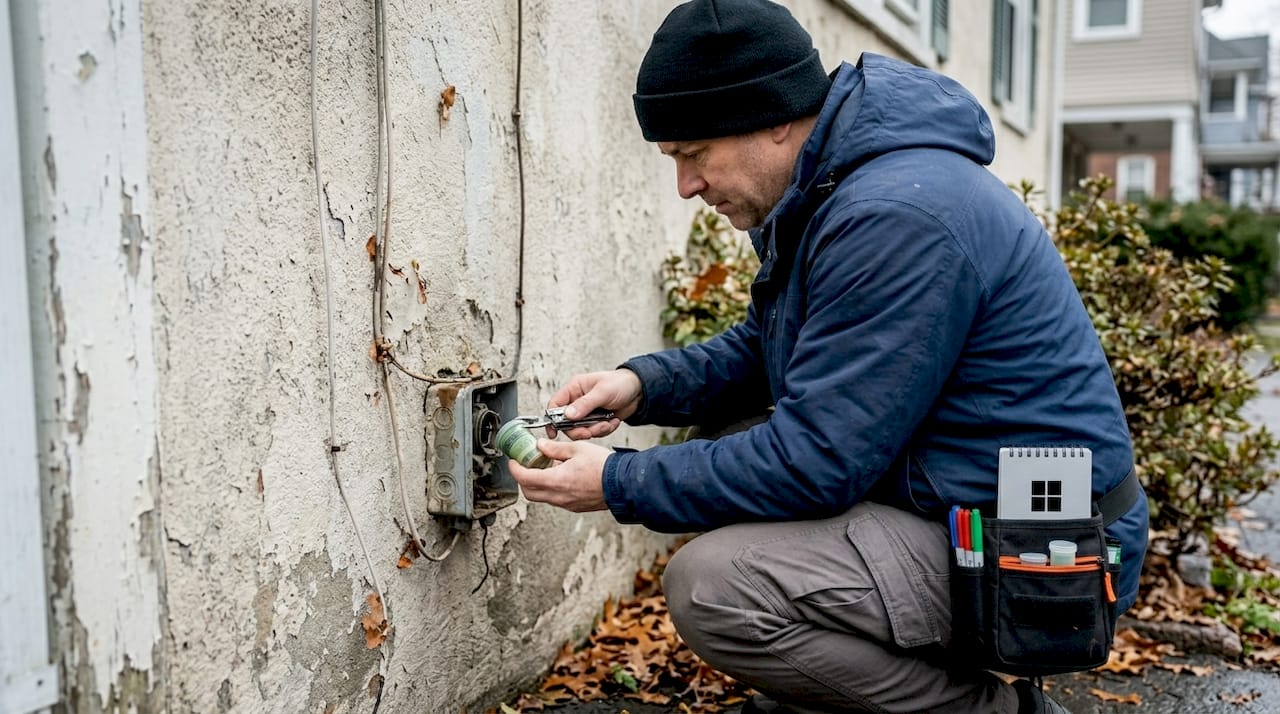
Mechanical caches use physical principles instead of electronics. Magnets, weights, springs, sliding mechanisms, and rotating discs create exciting puzzles without a single battery. This has clear advantages: no power outages, no short circuits due to moisture, no outdated software.
Important points when building mechanical caches:
- Material choice: PETG, ABS, and ASA are significantly better suited for 3D-printed outdoor parts than PLA, which deforms in heat.
- Seals and screw caps: Reliably protect logbook and contents from moisture.
- Utilize existing objects: Screw heads, bolts, conduits, or lampposts can be cleverly integrated as camouflage.
- Field puzzles: Physical puzzles where finders have to assemble or disentangle parts are maintenance-free and great fun.
- Sound modules without microcontrollers: Simple sound chips with magnetic sensors cost a few euros and are significantly more robust than Arduino solutions.
“A well-built mechanical cache can survive years outdoors without intervention. Electronics need care, mechanics need quality.” This principle from community experience still holds true today.
The integration of technology into existing everyday objects is particularly clever. An old electrical outlet on a house wall, a rusty screw box, or a seemingly empty flowerpot can be perfect hiding places. Such camouflages work without electronics and are barely noticeable to muggles (i.e., non-geocachers).
Pro Tip: Build mechanical caches so that you can open and maintain them without tools. A logbook that cannot be replaced without a screwdriver quickly becomes a maintenance burden. Plan for easy access from the start, especially if the cache is difficult to reach.
Those looking for ideas for urban caches will find many examples of how mechanical solutions work perfectly in urban environments.
Urban and Rural Cache Solutions: Creativity Meets Environment
Whether downtown or a forest path: the environment largely determines which cache solution makes sense. Multis with puzzles, indoor caches, and T5 climbing caches in the forest show how different the requirements are in urban and natural settings.
| Criterion | Urban Cache | Rural Cache |
|---|---|---|
| Camouflage | Inconspicuous, everyday | Natural, organic |
| Technology use | NFC, QR, sound modules | GPS boxes, mechanics |
| Vandalism risk | High | Low to medium |
| Maintenance access | Easy | Often difficult |
| Finder experience | Gamification, puzzles | Physical challenge |
In the city, gamification elements are particularly suitable. Finders solve puzzles at several stations, scan QR codes, or tap NFC tags to collect clues. Downtown Geocaching in Marburg shows how geocaching can enliven entire districts and guide finders through hidden routes. Such concepts combine exploration with puzzle fun.
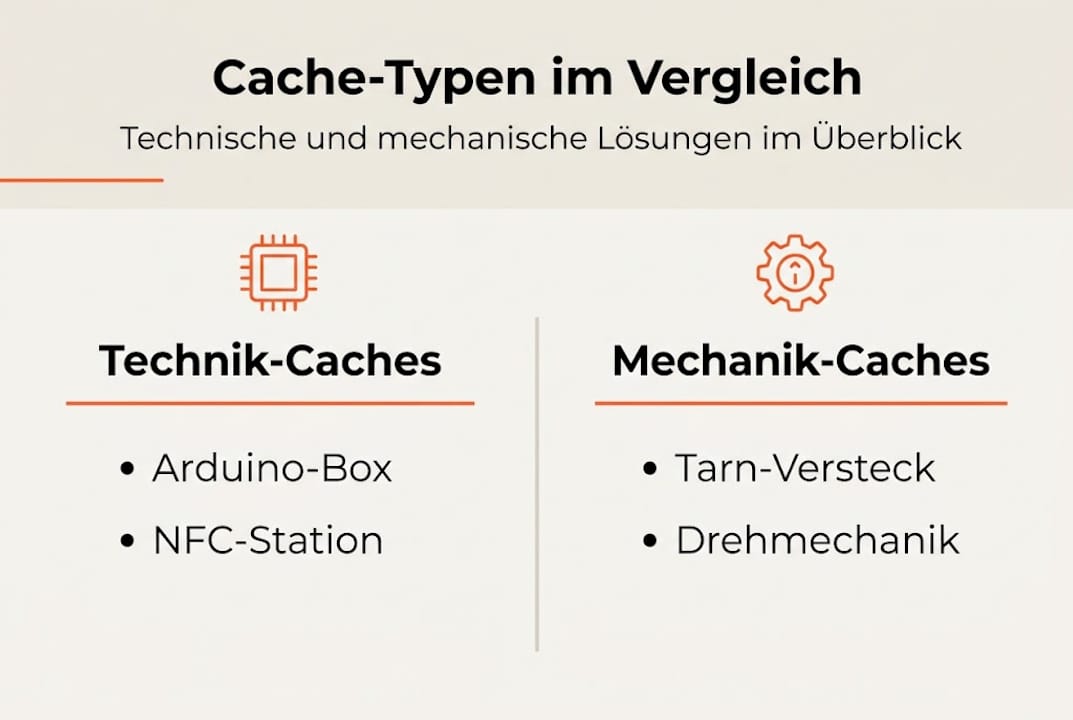
In rural areas, physical challenges are paramount. T5 climbing caches on rock faces, caches in treetops, or underwater containers require fitness and equipment. Here, technology is often secondary. What matters is nature itself as a backdrop and challenge. Nevertheless, GPS-controlled boxes or reverse geocaching mechanisms can also provide surprises here.
Creative camouflages differ greatly by environment:
- Urban: Screw heads, ventilation grilles, magnetic nanos under benches, fake chewing gum on railings
- Forest and Nature: Tree stumps, resin rocks, tree fungi, birch trunk replicas
- Mixed areas: Industrial buildings, train stations, bridges offer opportunities for both approaches
In the city caching tips, you will find concrete concepts that have proven successful in various urban environments. Particularly exciting: caches that guide finders through historic districts or art installations, conveying knowledge about the city.
Typical Pitfalls and Proven Solutions for Tech Caches
Technology in outdoor use is demanding. Technical caches often fail due to weather, power consumption, and vandalism. This is no reason to forego technology, but a clear indication that planning and testing are indispensable.
The most common sources of error:
- Moisture and condensation: Electronics in poorly sealed housings fail after the first rain. Silicone seals and IP67-certified housings are a must.
- Battery discharge in winter: Cold drastically reduces battery capacity. AA lithium batteries last significantly longer than alkaline batteries in freezing temperatures.
- Vandalism: Visible electronics invite destruction. Hidden mechanisms and robust housings reduce the risk.
- Lab conditions vs. outdoor: What works on the workbench often fails outdoors. UV radiation, temperature fluctuations, and vibrations affect electronics.
- Lack of documentation: If the cache owner no longer knows how their own cache works, maintenance is almost impossible.
“Anyone who has not tested their tech cache at least once under real outdoor conditions risks quick archiving.” Many experienced geocachers in the community share this experience.
Regular checks prevent archiving: Beta tests and community feedback help avoid errors before the cache is officially listed.
Pro Tip: Before publishing your tech cache, have at least three test finders check it under real conditions. Different smartphones, various weather conditions, and different technical experience levels of the testers will reveal weaknesses that you might not see yourself. Also, plan a "contingency solution": if the electronics fail, a mechanical backup mechanism should still lead finders to the goal.
Those who want to build long-lasting reliable tech caches will find further proven approaches and community experience reports at Tech Tips in Geocaching.
Practical Perspective: When Does High-Tech in a Cache Really Make Sense?
We see it again and again: a cache with elaborate electronics excites on the first find, but after three months, it's on the DNF list due to battery failure. A simple magnetic closure on a cleverly camouflaged object, on the other hand, lasts for years without intervention.
Our honest assessment: technology wins when it is inextricably linked to the location or the story of the cache. An Arduino that opens a treasure chest as soon as the finder enters the correct combination creates real added value. An NFC tag that merely provides the coordinates of the final box, however, is technology for technology's sake.
The best caches we know combine location intelligence with minimal but targeted technology. They use the environment as a central element and only employ electronics where they truly surprise. Community feedback during the beta phase is not an optional step, but the most important quality test of all. Those who build flexibly and respond to feedback create caches that will be remembered for years.
Implementing Tech Caches Yourself with High-Quality Equipment
If you're now inspired to implement innovative cache technology yourself, you'll find suitable accessories from specialized suppliers. Good products make the difference between a cache that is abandoned after one winter and one that delights for years.
At cachewerk.de, you'll find well-thought-out hides and accessories specifically designed for outdoor use. The Tree Mushroom Geocache Hide is a perfect example: lifelike, robust, and ideal for forest hides. For everything related to camouflage materials, small parts, and special hides, take a look at the Geocaching Equipment and Accessories collection. Quality pays off, especially if your cache needs to survive months without maintenance.
Frequently Asked Questions About Technology in Cache Design
Which technology is best suited for low-maintenance geocaches?
Mechanical designs with weatherproof materials are usually more low-maintenance than complex electronics, as they do not require power or software and are less prone to failure.
Are NFC-based caches also suitable for beginners?
Yes, simple NFC tags and reverse geocaching boxes can be used to create creative stages, but some crafting experience is beneficial to ensure watertightness and durability.
What mistakes should be avoided when building technical caches?
Insufficient weather resistance, lack of field testing, and no maintenance plan lead to technical caches quickly failing due to weather and vandalism.
How often should technology-based caches be maintained?
Regular checks, at least semi-annually, significantly increase their lifespan and reliability, preventing premature archiving.
