ASA vs. PETG for Geocaching: Which Filament Holds Up Outdoors?

For most outdoor hides, ASA is the better choice if a cache is permanently exposed to direct sunlight or high temperatures. PETG, on the other hand, wins for nanos, shady spots, and wherever you work without a closed printer enclosure. The decision depends on three factors: UV resistance, heat deflection temperature (HDT), and your printer equipment. ASA withstands years of sun exposure significantly better than PETG, but requires an enclosure and more printing experience.
- Choose ASA for: Open fields, roof hides, near vehicles, permanent sun exposure
- Choose PETG for: Nano caches, forest shade, humid environments, no printer enclosure available
- Practical options from Cachewerk: Ready-made hides such as the Survey Point Hide or the Geocaching Rusty Bolt Cache demonstrate how both materials perform in real-world use.
Key Insights
ASA significantly outperforms PETG in UV resistance and heat deflection temperature, while PETG is easier to print and perfectly sufficient for shady or short-term hides.
| Topic | Details |
|---|---|
| Material choice based on location | Choose ASA for permanent sun exposure and near vehicles, PETG for shade and nanos |
| Check printer equipment | Without an enclosure and ventilation, it's better to stick with PETG, as ASA is highly prone to warping |
| Maintain temperatures | Print PETG at 230 to 250 degrees, ASA at 240 to 260 degrees at the nozzle |
| Use post-processing | O-rings, silicone, and UV varnishes significantly extend the lifespan of both materials |
| Practical options from Cachewerk | Ready-made hides like the Rusty Bolt Cache or the Survey Point Hide as a material-appropriate alternative to self-printing |
Table of Contents
- ASA vs. PETG for Geocaching: Which Material Suits Which Hide?
- How do ASA and PETG Differ in Their Material Properties?
- What Print Settings Do PETG and ASA Need for Durable Cache Parts?
- How Do You Make 3D-Printed Cache Parts Weatherproof?
- What Practice Really Shows About ASA and PETG
- Ready-Made Hides Instead of Your Own Print Attempt: The Cachewerk Alternative
- Sources
ASA vs. PETG for Geocaching: Which Material Suits Which Hide?
The material question cannot be answered generally, because a nano in a city park has different requirements than a container hide in an open field. What matters is the actual location of your cache, not the theory in the datasheet.
1. Nano and Urban Hides
For small containers, print precision is paramount, not UV resistance. PETG prints reliably without an enclosure and provides clean threads for screw caps. The Geocaching Rusty Bolt Cache with its nano container shows how well PETG is suited for delicate urban stealth hides. PETG handles occasional rain well without changes in dimensions or fit.
2. Forest Floor and Shady Locations
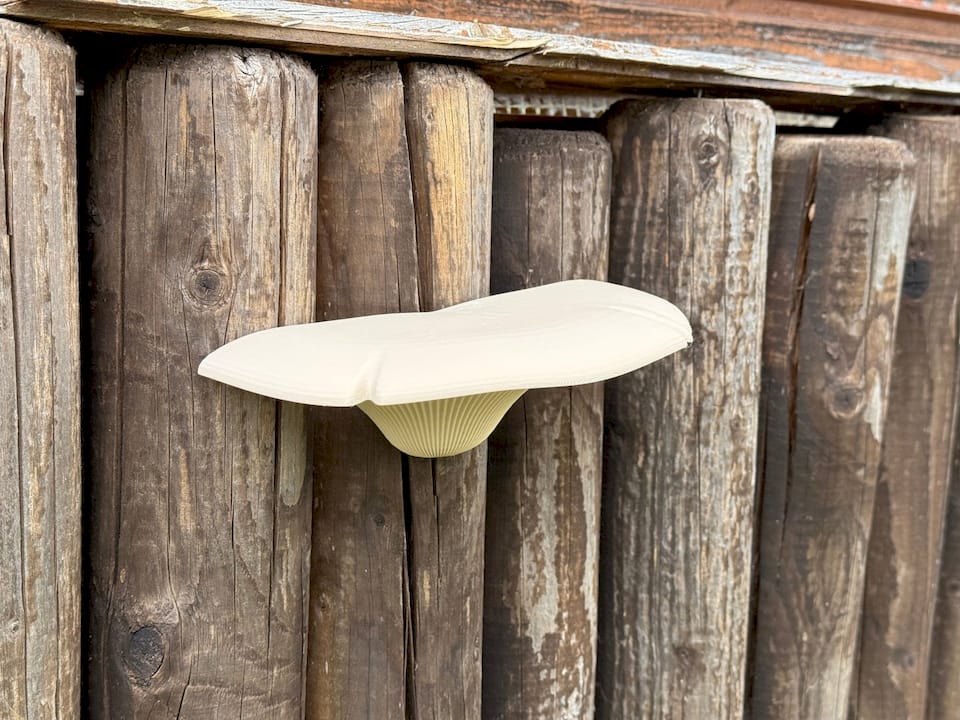
Here, the actual sun exposure is crucial. If the cache is permanently under dense foliage, PETG is usually sufficient for one to two seasons. If the location changes seasonally between shade and open clearings, ASA is advisable as a precaution. A Geocaching Mushroom Hide in the undergrowth has to withstand less UV load than one in a meadow.
3. Open Country, Roofs, and Vehicle Mounting
Direct sun for months on end is the ultimate test that PETG does not pass. Here, ASA pays off with its superior UV stability, as color and structure remain stable for years. Hides near vehicles, such as on tow hitches or under bumpers, also have to contend with heat buildup and vibration, which ASA handles better than PETG.
4. Decorative Parts vs. Load-Bearing Components
A logbook compartment or a cover that only occasionally gets exposed to wind and weather can easily be made of PETG. As soon as a component bears weight, operates in a clamping mechanism, or is subjected to tensile and compressive forces, for example, in screw caps with frequent use, ASA should be used. The combination of heat deflection temperature and impact strength makes ASA more robust against repeated mechanical stress.
5. Your Printer Equipment Matters
Practically speaking: If you don't have a closed printer enclosure, you shouldn't insist on ASA. Without an enclosure, the risk of warping for ASA increases significantly because the material is very sensitive to drafts and uneven cooling. PETG is much more forgiving here and delivers usable results even on open printers.
For beginners who don't yet have an enclosure, starting with a ready-made Geocaching Starter Bundle is a good option before investing in their own ASA prints.
How do ASA and PETG Differ in Their Material Properties?
The recommendations from the previous section are based on measurable differences, not gut feeling. Three values are decisive in practice: heat deflection temperature, UV behavior, and mechanical strength.
Heat Deflection Temperature (HDT)
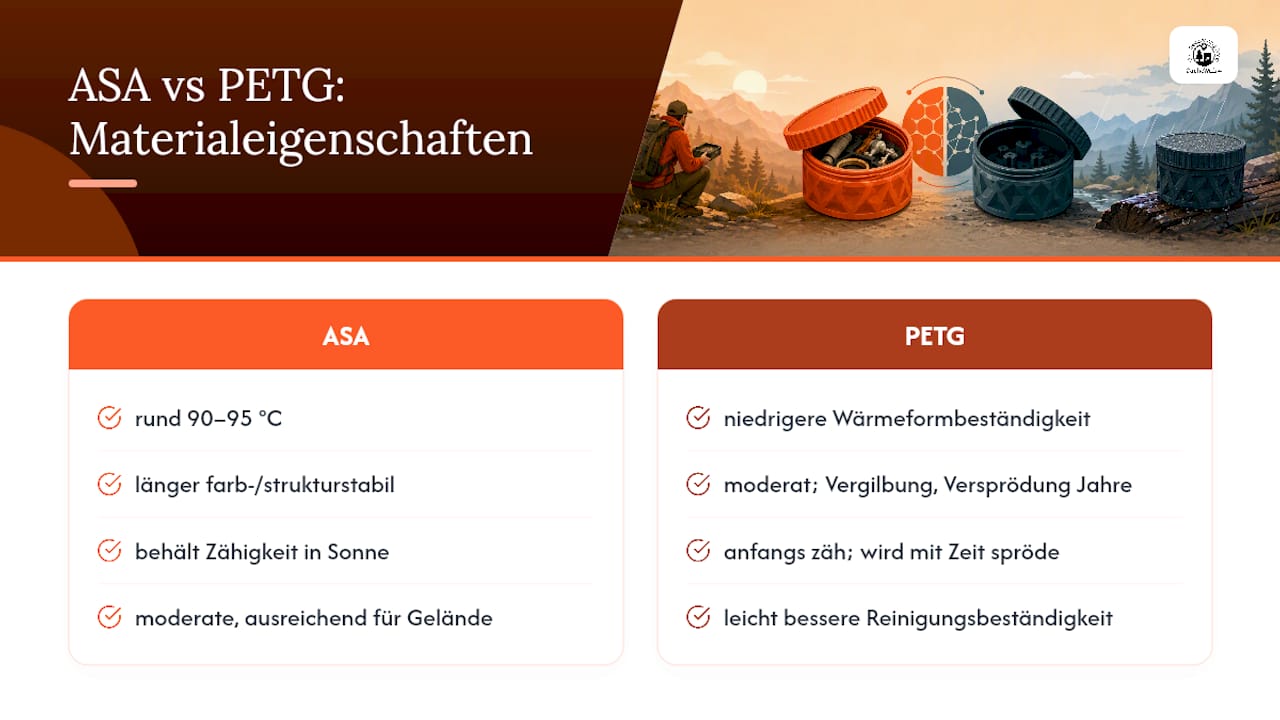
ASA achieves a heat deflection temperature of around 90 to 95 degrees Celsius, PETG has a lower heat deflection temperature than ASA. In practice, this means: a black ASA casing on a metal roof can withstand even summer heat build-up, while a PETG component at the same location can soften and deform. For vehicle mounting, where temperatures inside a parked car can easily reach 60 to 70 degrees, the difference is crucial.
For context: A dark plastic component in direct summer sun can reach surface temperatures significantly higher than the ambient air temperature. It is precisely in this area that it becomes clear whether a material merely "sounds weatherproof" or actually is.
UV Behavior over Months and Years
PETG is generally more UV stable than PLA, but only moderately resistant to years of direct sunlight. PETG often shows yellowing and increasing brittleness after prolonged exposure to direct sunlight, especially at edges and thin wall thicknesses. ASA was originally developed for outdoor use in the automotive industry and therefore remains color and structurally stable for longer.
Mechanical Values in Practical Language
Both materials perform similarly well in terms of tensile strength and impact resistance, falling within a practical range. PETG excels with good impact resistance straight off the printer, without post-processing. ASA retains this toughness even after months in the sun, while PETG becomes more brittle over time and is more likely to crack than deform on impact.
Chemical Resistance
PETG has a slight edge when it comes to contact with cleaning agents, solvents, or aggressive environmental chemicals. ASA shows moderate resistance, but is perfectly sufficient for the usual stresses in the field. If you regularly clean your hides with alcohol or disinfectant, for example after attempted vandalism, PETG is minimally safer.
What Print Settings Do PETG and ASA Need for Durable Cache Parts?
Incorrect temperatures are the most common reason for failed cache prints. Both materials react sensitively to nozzles that are too cold or too hot, but for different reasons.
1. Set Temperature Ranges
PETG prints reliably within a typical temperature range for the nozzle and print bed. ASA requires a bit more heat: 240 to 260 degrees at the nozzle and a bed at 90 to 110 degrees to ensure the first layer adheres securely.
2. Combat Retraction and Stringing in PETG
PETG tends to form strings between parts, known as stringing. A retraction distance of 4 to 6 millimeters at medium speed usually significantly reduces the problem. Additionally, a slightly reduced print temperature towards the end of the print and moderate part cooling, about 30 to 50 percent fan power, help.
3. Prevent Warping in ASA
ASA contracts more strongly than PETG when cooling and tends to peel off the edges of the part. A brim around the part, a heated chamber, and turning off part cooling for the first layers help to prevent warping issues.
4. Take Enclosure and Ventilation Seriously
ASA releases styrene fumes during printing, which are unpleasant in enclosed spaces and can be unhealthy over time. A closed printer enclosure with exhaust to the outside or a separately ventilated room is a must, not an option.
5. Design Details for Cache Parts
Wall thicknesses of at least 2 to 2.5 millimeters ensure sufficient stability for both materials. For nanos with screw caps, a slight oversize in the thread can be helpful, as PETG shrinks minimally when cooling. Snap-fit mechanisms work more reliably with ASA because the material remains elastic enough even after months outdoors not to break.
Pro Tip: Print a test contour from the respective filament before starting the complete cache housing. Five minutes of test printing can save you a complete misprint of several hours.
If you don't want to print yourself, the 3D print file for the Fake Hydrant Sign provides a pre-designed template with optimized wall thickness.
How Do You Make 3D-Printed Cache Parts Weatherproof?
Even the right material benefits from additional protection if the hide is to remain outdoors for years.
- Acetone Vapor Smoothing for ASA: The surface becomes more closed and smoother, which reduces water absorption. Only work with extraction and in well-ventilated rooms, as acetone vapors are flammable.
- UV-resistant varnishes and clear coat primers: Useful for PETG parts that are exposed to constant sun, as they delay yellowing and protect the surface from micro-cracks.
- Seals with O-rings and silicone: For the logbook compartment, a precisely fitted O-ring prevents moisture from entering without making the lid difficult to open.
- Adhesives for assembled parts: Two-component epoxy adhesive keeps PETG and ASA connections permanently weatherproof where pure screwing is not sufficient.
Pro Tip: Briefly check the seal on the logbook compartment during each cache visit. A crack of a few millimeters is enough for the logbook to get soaked after the next rain.
Replacing the seal or the entire component is usually worthwhile after two to three years outdoors, depending on sun exposure. In case of visible embrittlement or initial cracks, waiting is the worse option.
How do you store and dry filament correctly?
Both PETG and ASA absorb moisture from the air, with PETG doing so slightly more. Store opened rolls in a dry box with silica gel, ideally below 20 percent relative humidity.
- Dry before printing: PETG at 65 degrees Celsius for 4 to 6 hours, ASA at 70 to 80 degrees for a similar duration if the filament has been stored openly for a longer time.
- Field routine for existing caches: Visual inspection every few months, especially after severe weather events like hail or storms.
- Logbook change: Regularly check whether moisture has penetrated the compartment, regardless of the material used.
- Replacement intervals: ASA parts in direct sunlight should be checked regularly, PETG parts in the same location more frequently.
Why Can You Trust This Material Assessment?
The classification of ASA and PETG in this article comes from Benedikt, who has been working on 3D-printed geocache solutions at Cachewerk for years and directly incorporates material selection into product development and support.
- The PETG guide for geocache hides from Cachewerk shows concrete print profiles from our own product development.
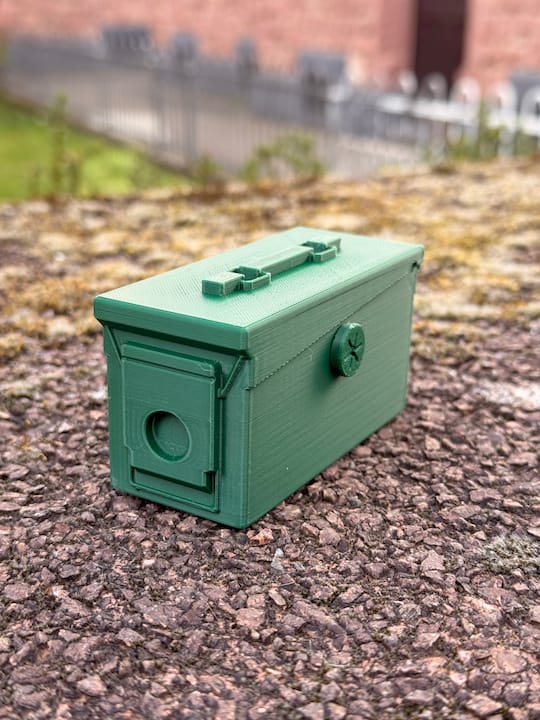
- Products like the Survey Point Hide with PETling and ground socket or the Geocaching Ammo Box demonstrate how material selection works in practice.
- For questions about individual materials or constructions, Cachewerk's support is directly available for individual advice.
| Criterion | Assessment |
|---|---|
| Proven material for sun exposure | ASA, due to higher heat deflection temperature and UV stability |
| Proven material for nanos | PETG, due to easier printability without enclosure |
| Practical reference | Own Cachewerk products as examples |
What Practice Really Shows About ASA and PETG
The material debate is often conducted too academically, with tabular values that hardly anyone verifies in the forest. What really matters: Most geocaches fail not due to the wrong polymer, but due to poor construction. A wall that is too thin made of ASA is just as ineffective as a wall that is too thin made of PETG.
Nevertheless, I would question the common opinion that PETG is generally "good enough" for outdoor caches. That's only true as long as the cache is not permanently exposed to direct sunlight. As soon as that is the case, the extra effort with ASA and an enclosure pays off, especially for hides that you don't want to replace every few months.
My priority for beginners: First honestly assess the printer equipment, then choose the material. A perfectly printed PETG part often lasts longer than a poorly calibrated ASA part with warping cracks. Design and care almost always beat the mere choice of material.
— Benedikt
Ready-Made Hides Instead of Your Own Print Attempt: The Cachewerk Alternative
Not every geocacher wants to deal with enclosures, retraction values, and warping tests before their first hide is placed in the field. This is exactly where Cachewerk comes in: ready-made, material-appropriate printed hides that you can use directly, without your own printer calibration.
For sun-exposed locations, the Geocaching Rusty Bolt Cache with its robust nano-container is ideal, remaining discreet in urban environments while withstanding the weather. If you need more volume, the Ammo Box Hideout in the Trick Edition offers a weatherproof solution with a clever opening mechanism. The Survey Marker Hideout with PETling and ground sleeve also demonstrates how thoughtful design and suitable materials work together.
If you prefer to print yourself but want to save on design work, take a look at Cachewerk's Geocaching Equipment and Accessories. There you'll find both ready-made hides and supplementary parts for your own projects, all from a single source.
Sources
- PETG vs ASA 3D Printing | Outdoor Use | Makelab
- PETG vs PLA: Which Filament Should You Use | MatterHackers
- PETG vs ASA - Functional Filament Compared | SpoolHound
- PETG Print Settings | all3dp