
Selection Criteria for Cache Locations: The Practical Guide
Selection criteria for cache locations are the parameters that determine whether a geocache will last long-term or be abandoned after a few months. A systematic filtering framework integrates physical, legal, and social criteria and should be reviewed annually. When placing a cache, one makes a decision that will shape maintenance effort, user experience, and legal security for years. Methods such as on-site risk assessments, maintenance plans, and structured location evaluations help avoid costly mistakes. This guide shows what you really need to consider when choosing a location.
1. Physical and Legal Restrictions in Location Selection
The first step in evaluating cache locations is checking the legal framework. Many cache owners underestimate how quickly a seemingly perfect location can fail due to legal boundaries.
Common legal pitfalls:
- Nature reserves and national parks: Caches are often fundamentally prohibited there, even without signage.
- Private property: Without written permission from the owner, any placement is risky.
- Protected historical sites: Fixing or altering them is punishable.
- Railway property and airport proximity: Security authorities react particularly sensitively here.
- Playgrounds and schools: Geocaching platforms like Geocaching.com generally reject such locations.
In addition to legal aspects, physical suitability is crucial. Weather resistance is not a nice-to-have but a basic requirement. A location that is dry in summer might be underwater in winter. Protecting locations from vandalism and weather effects significantly reduces the cache failure rate and ensures their preservation for years.
Pro-Tip: Visit the planned location at least twice: once when dry and once after heavy rain. This helps you identify flood risks that remain invisible in photos or maps.
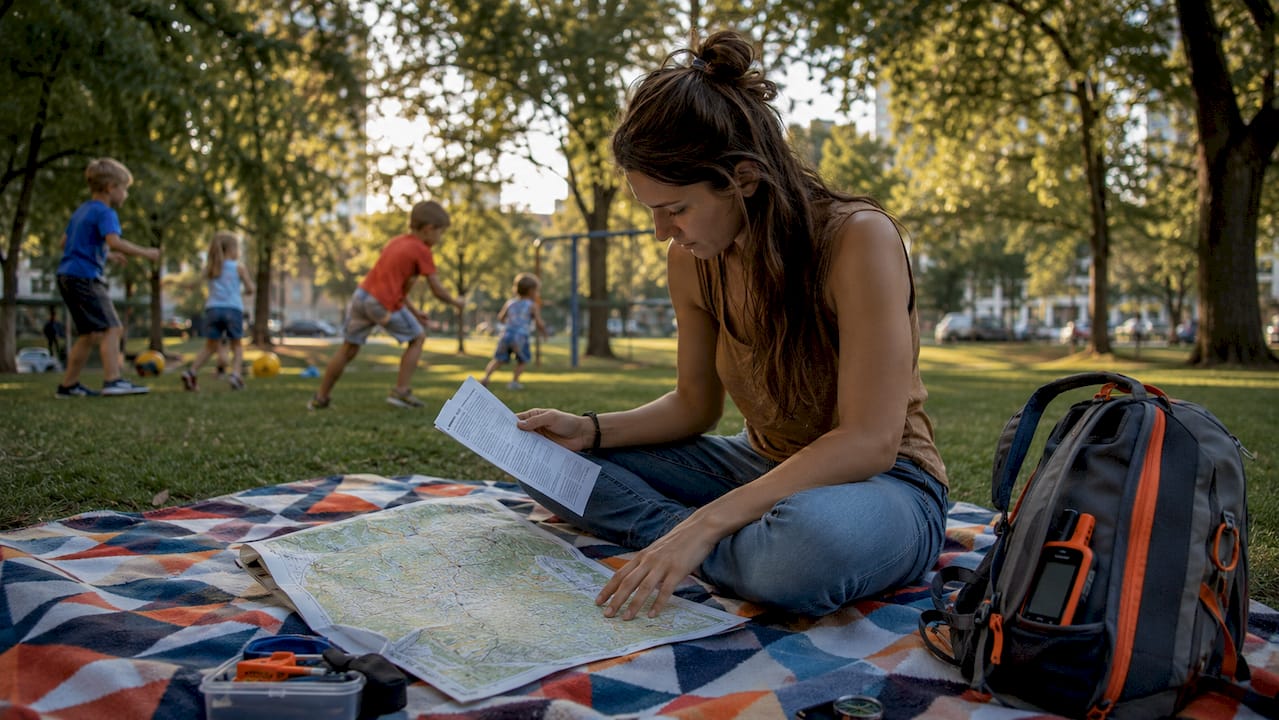
Permissions should always be obtained in writing. A verbal agreement from the property owner will not protect you if they change or alter their mind. Record contact details and the date of permission.
2. User Needs and Accessibility
Target-group-aligned location selection significantly improves search effort and satisfaction. A cache for hikers needs different characteristics than an urban cache for city tourists.
Hikers expect locations with views, nature experiences, or a story. City tourists look for caches that seamlessly fit into a sightseeing route. Both groups have different tolerances for difficulty and distance. Ignoring these differences leads to poor logs and high maintenance effort.
Key accessibility criteria at a glance:
- Accessibility: Is the location accessible to geocachers with limited mobility?
- Parking: Is there a safe starting point nearby?
- Path marking: Does an official path lead to the cache, or do you have to go off-road?
- Safety: Are there trip hazards, steep slopes, or dangerous areas nearby?
- Seasonal restrictions: Is the location accessible year-round or only in summer?
Physical accessibility for the cache owner is an underestimated factor. Hard-to-reach locations lead to maintenance delays and declining cache quality. Therefore, plan not only for seekers' accessibility but also for your own.
Pro-Tip: Read the first ten logs of your cache carefully. Seekers often describe problems with access or navigation that you, as the owner, may no longer perceive. This feedback is more valuable than any map.
For urban locations, it's worth looking at Geocaching in the city. Urban environments offer many opportunities but place special demands on camouflage and accessibility.
3. Safety and Preservation Features of a Good Location
Well-founded location selection significantly reduces cache failure rates. This specifically means: fewer emergency maintenances, fewer negative logs, longer cache lifespan.
An on-site risk analysis involves several dimensions. Vandalism is the most obvious risk, but not the most common. Moisture, UV radiation, and mechanical wear from many seekers destroy more caches than vandals.
Risk factors and their effects:
| Risk Factor | Probability | Impact on Cache |
|---|---|---|
| Moisture/Water | High | Logbook illegible, container damaged |
| Vandalism | Medium | Total loss of cache |
| Overgrown terrain | Medium | Cache no longer findable |
| Construction/Redevelopment | Low | Location permanently inaccessible |
| Animal damage | Low | Container damaged |
Geographic redundancy and buffer zones increase longevity and reduce the risk of vandalism. If you operate multiple caches in an area, you should distribute them so that the failure of one cache does not affect the others.
A planned invalidation strategy is important to react quickly to changes in the terrain. Construction, new fences, or changes in ownership can render a location unusable overnight. Having a plan B allows you to react professionally instead of panicking.
Pro-Tip: Photograph the location from three different angles during the initial placement. These photos will help you quickly find the cache again during maintenance, even if the surroundings have changed.
4. Creative Design Makes Even Difficult Locations Successful
Innovative cache offerings enhance the experience despite location disadvantages. A boring location with an exceptional hide gets better logs than a spectacular location with an ordinary film canister.
Creativity starts with the choice of hide. A custom-made ammo box that looks like a rock turns an unremarkable woodland into an experience. A mini birdhouse on a city tree transforms a gray street corner into a focal point. The camouflage is not just aesthetic; it also protects the cache from muggles and vandalism.
Ways to creatively enhance a location:
- Puzzle caches: A multi-stage puzzle leads seekers to an unspectacular endpoint, which is enhanced by the journey's experience.
- Thematic integration: A cache about city history in a historically unremarkable place gains significance through context.
- Unusual containers: Fake signs, bolt replicas, or deceptively real everyday objects increase the wow factor.
- Night caches: Reflectors or UV markings turn a familiar path into a new experience.
- Series caches: Multiple caches in an area create an overall experience that goes beyond the individual location.
It's important to match the hide with its surroundings. A fake sign works in the city but looks out of place in the forest. By harmonizing the hide and location, you create a cohesive overall picture.
5. Accessibility for Maintenance and Long-Term Operation
Operational accessibility for the cache owner determines whether a cache remains in good condition long-term. This factor is regularly underestimated in location selection.
A cache that can only be reached with a two-hour hike will be maintained less frequently. This is not a matter of willingness, but of reality. Maintenance intervals lengthen, problems remain unresolved longer, and quality declines. Plan for maintainability as a fixed criterion, not an afterthought.
Location selection as part of an operating model means: every cache needs a maintenance plan. How often will you visit the location? What happens if you are unable to for an extended period? Do you have someone who can step in if necessary?
For caches in remote areas, a maintenance partner from the local geocaching community is recommended. Many experienced geocachers are happy to help if asked. This social integration is also important for the cache's acceptance within the community.
6. Comparison of the Most Important Criteria for Cache Locations
The prioritization of selection criteria depends on the type of location. Urban and rural areas have different requirements.
| Criterion | Urban | Rural | Impact on Longevity |
|---|---|---|---|
| Legal Permission | Very High | High | Decisive |
| Vandalism Security | High | Medium | High |
| Weather Resistance | Medium | Very High | High |
| Seeker Accessibility | Very High | Medium | Medium |
| Maintainability for Owner | High | Very High | High |
| Creative Potential | High | Medium | Medium |
| Seasonal Restrictions | Low | High | Medium |
Legal permission is paramount in both environments. Without it, everything else is irrelevant. Weather resistance gains importance in rural areas because caches there are more exposed to the elements. Vandalism is primarily an urban problem.
Locations should be evaluated for operational resilience, not just attractiveness. A spectacular location that needs maintenance twice a year and constantly causes problems is worse than an inconspicuous location that works reliably for years.
Regular review is not a sign of weakness, but of professionalism. Systematically evaluating your cache annually allows you to identify problems early and react before seekers have bad experiences.
Key Takeaways
The best cache locations combine legal security, physical protection, and good maintainability, because only this combination guarantees a cache that brings joy for years.
| Topic | Details |
|---|---|
| Legal check first | Obtain written permissions before investing effort in location and hide. |
| Plan for maintainability | Choose locations that you can realistically visit every few months. |
| Know your target audience | Hikers and city tourists have different expectations for accessibility and experience. |
| Creativity compensates for location | An exceptional hide significantly enhances even an unspectacular location. |
| Annual review | Location conditions change; construction and new owners require proactive action. |
What I've Learned After Years as a Cache Owner
I've placed caches in locations that seemed perfect on paper but caused endless problems in practice. And I've placed caches in inconspicuous places that have run smoothly for years and received enthusiastic logs.
The biggest mistake I observe: cache owners choose locations based on the wow factor from the seeker's perspective, without taking the operator's perspective. A location at the top of a mountain sounds great. But if you have to check it after every winter and the hike takes six hours, you'll postpone maintenance. And postponed maintenance means bad logs.
What I do differently today: I visit each planned location twice, once as a seeker and once as a maintenance person. I specifically ask myself how long it would take me to replace the cache in an emergency. If the answer is "more than two hours," I think twice.
Social acceptance is another point that is often forgotten. A cache that disturbs residents or confuses passersby will sooner or later be reported or removed. I like to briefly speak with residents when planning a new location in a populated area. It takes five minutes and saves a lot of trouble.
My honest advice: Choose the location you can and want to maintain long-term. Not the one that looks best in the photo.
— Benedikt
Suitable Hides from Cachewerk for Every Location
Cachewerk offers hides specifically designed for different location requirements.
The Geocaching Ammo-Box Trick Edition is weather-resistant, deceptively realistic, and suitable for demanding locations where camouflage and durability matter. For nature-oriented locations with good visibility, the Mini Birdhouse Hide is a weather-resistant solution that blends harmoniously into its surroundings. For urban locations, Cachewerk's range also includes 3D-printed PETG special hides that perfectly integrate visually into urban environments. All products are designed to extend maintenance intervals and keep the cache in good condition long-term.
FAQ
What are the most important selection criteria for cache locations?
The most important criteria are legal permission, protection from weather and vandalism, accessibility for seekers, and maintainability for the cache owner. By checking all four points, you lay the foundation for a long-lasting cache.
Do I need permission for every cache location?
On public land, permission is often not necessary, but it is mandatory on private property, in nature reserves, and at protected historical sites. Always obtain permissions in writing.
How often should I check my cache location?
An annual check is the minimum. After severe storms, nearby construction work, or several negative logs, you should check the location immediately.
Can a poor location be enhanced by a creative hide?
Yes, creative solutions can compensate for location disadvantages. An exceptional hide or a well-designed puzzle provides positive experiences, even if the location itself is unspectacular.
What is the most common mistake in location selection?
The most common mistake is choosing a location based on attractiveness without considering maintainability. Hard-to-reach locations lead to maintenance delays and declining cache quality.