
Cache Typologies Explained: All Types at a Glance
Cache typologies are the systematic classification of all geocache types according to the search process, container shape, and special requirements. If you want an explanation of the different cache types, you'll find everything you need here: from classic Traditionals to multi-stage Multi-Caches, enigmatic Mystery-Caches, and physically non-existent Virtual Caches. Additionally, there are size classes and attributes that significantly shape the on-site experience. This knowledge will help you better prepare for every search, bring the right equipment, and, as a cache owner, create exciting hides.
What are cache typologies and how do the basic types differ?
Cache typologies describe the five basic types of geocaches: Traditionals, Multi-Caches, Mystery-Caches, Virtual Caches, and EarthCaches as a special virtual variant. Each type defines the path to the find, not just the container itself. This is the crucial difference from cache size, which forms its own classification system.
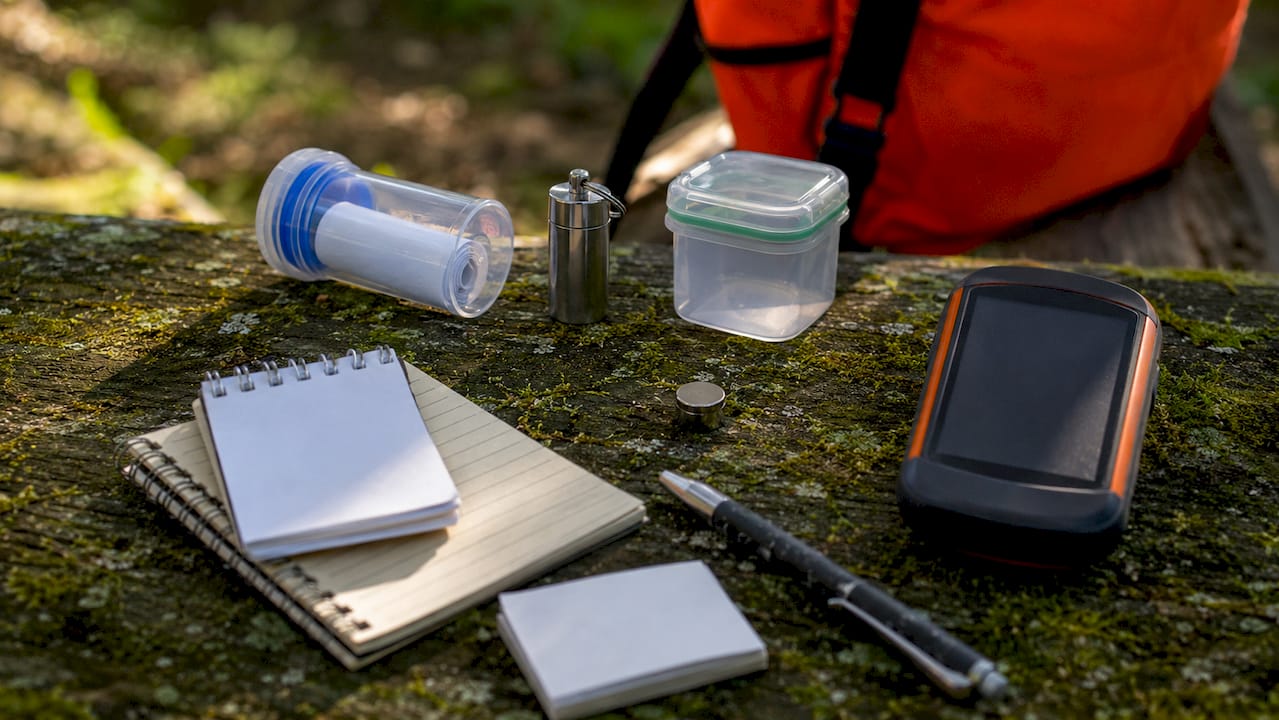
Cache types primarily show the route: direct, via stations, by puzzle, or entirely without a physical container. This principle is central to the user experience and determines how you prepare for a search.
An overview of the four most common types:
-
Traditional Cache (Tradi): The simplest cache type with direct coordinates, container, logbook, and possibly trade items. You go to the specified coordinates and find the cache there. Difficulty and terrain are important evaluation parameters in addition to size.
-
Multi-Cache: Multi-stage caches with several stations and tasks or clues. Each station provides information for the next until you reach the final. This makes Multi-Caches particularly varied and time-consuming.
-
Mystery-Cache: Here, you first solve a puzzle to determine the final coordinates. The starting point in the listing is not directly the hide. Mystery-Caches require brainpower before setting off.
-
Virtual Cache and EarthCache: Both types have no physical container. For a virtual cache, you prove your visit with a photo or by answering a question on site. EarthCaches are tied to geologically interesting locations and require answering knowledge questions about geology.
Pro-Tip: Always check the cache type in the listing carefully before each search. A Mystery-Cache often requires hours of preparation at your desk before you even leave the house.
How do cache sizes influence the search and trading behavior?
Geocache size classes range from Nano to Micro, Small, and Regular to Large. Each class directly influences what you can expect in the cache and how you find it. This is not a trivial matter, but a central part of cache planning.
Nano containers are particularly small, often magnetic, and offer little space. Despite criticism, they are often useful in urban areas because they attach inconspicuously to metal surfaces. A delicate touch is essential when finding them.
| Size | Volume | Logbook | Trade Items |
|---|---|---|---|
| Nano | under 10 ml | Logstrip | No |
| Micro | under 0.1 L | Logstrip | No |
| Small | 0.1–1 L | Small notebook | Sometimes |
| Regular | 1–20 L | Full logbook | Yes |
| Large | over 20 L | Full logbook | Yes, also Trackables |
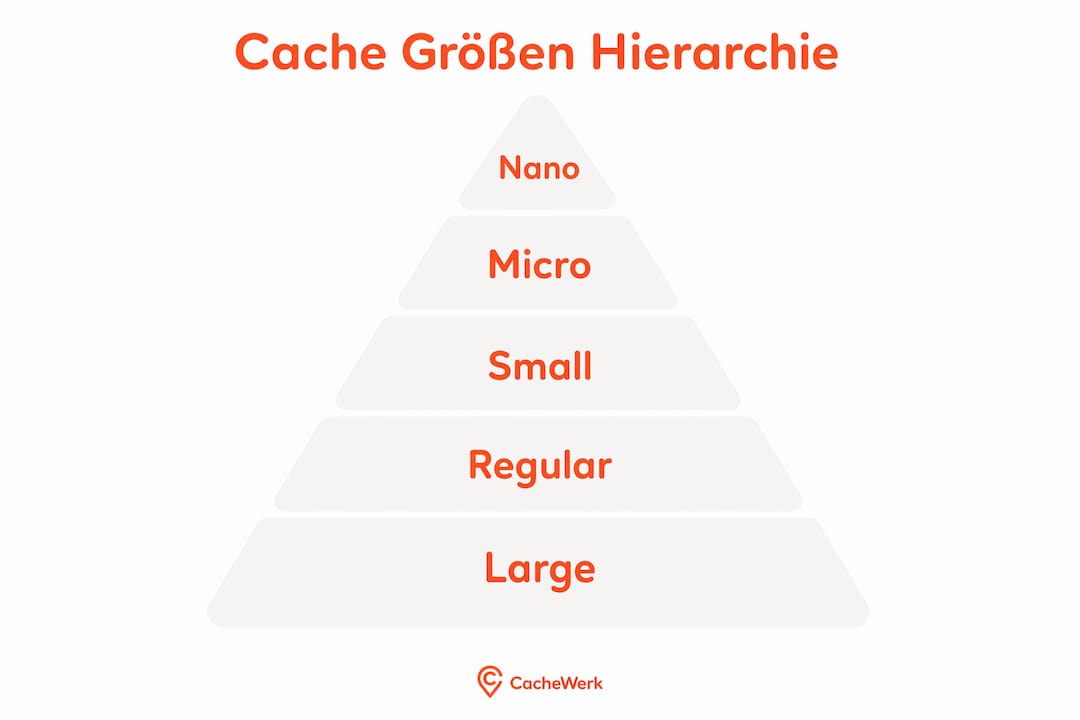
The combination of cache type and size significantly determines the search and trading experience. Nano and Micro usually only offer logstrips, while Regular and Large allow trade items and Trackables. This means: If you want to trade, you should specifically filter for Regular or Large.
Pro-Tip: Always read the size information in the listing before your outing. Anyone arriving with a keychain to trade at a Nano will be in for a nasty surprise.
What role do attributes play in preparing for different cache types?
Cache attributes are short symbols in the listing that provide finders with important information about equipment, terrain, and accessibility. Owners can choose up to 15 attributes that precisely describe the on-site experience. This sounds like a detail, but it is one of the most underestimated planning aids in geocaching.
Appropriate attributes create realistic expectations and reduce frustration. Knowing that a cache is only accessible during daylight hours or that dogs are not allowed helps plan the outing accordingly. This saves time and avoids bad moods.
Typical attributes and their meaning:
- Kid friendly: The cache is suitable for families with small children. No dangerous terrain, no long paths.
- Dogs allowed: Four-legged friends are welcome. Important for anyone who doesn't want to leave their dog alone.
- Available during daylight hours only: Searching at night is not possible or not safe. A headlamp won't help here.
- Climbing required: No find without climbing equipment or a head for heights. This warning prevents dangerous situations.
- Seasonal: The cache is only accessible during certain seasons, for example, due to snow or high water.
- Pregnancy: Some owners explicitly point out that certain physical limitations may make the search difficult.
Attributes can also be added or removed after a cache is published. This means finders should check attributes shortly before searching, not just when first reading the listing. Conditions on site change, and a good owner keeps their listing up-to-date.
Pro-Tip: Use the attribute filter on geocaching.com or in the app before planning a tour. This way, you avoid unsuitable caches and find exactly the hides that fit your group.
How do unforgettable geocaching experiences arise from type and size?
The combination of cache type and size is not a coincidence, but a design decision. A simple Traditional Nano in the city center appeals to different geocachers than a complex Multi-Cache with a Large container in the forest. Both have their place in the geocaching universe, but they fulfill completely different expectations.
Here are four typical experience profiles that show how type and size interact:
- Traditional Nano, urban: Quick search in the city, often magnetic on a lamppost or railing. No trading, only a logstrip. Ideal for city strollers with limited time.
- Mystery Regular, forest: Solve a puzzle, calculate coordinates, then an extended hike to the final. Trade items and perhaps a Trackable await in the container. Perfect for a day trip.
- Multi-Cache Small, mixed area: Several stations lead through a village or a park. Each station provides a part of the final coordinates. The container at the end offers space for a small logbook and a few trade items.
- EarthCache, geology: No container, no trade items. Instead, knowledge questions about a geological phenomenon on site. The reward is education and a special experience.
| Experience Profile | Cache Type | Size | Special Feature |
|---|---|---|---|
| City Dash | Traditional | Nano/Micro | Quick, inconspicuous, no trading |
| Family Outing | Traditional | Regular | Trading possible, kid-friendly |
| Puzzle Solver | Mystery | Small/Regular | Pre-solve puzzle, hike to final |
| Adventurer | Multi | Large | Stations, Trackables, long journey |
For cache owners: By consciously combining type and size, you manage your finders' expectations. A well-described listing with appropriate attributes and a clear size indication ensures satisfied finders and positive logs. The difficulty and terrain rating completes the picture and gives finders a realistic assessment before they start.
Key Takeaways
Understanding cache typologies helps you plan better, find more often, and as an owner, design more attractive hides.
| Point | Details |
|---|---|
| Know basic types | Traditionals, Multis, Mystery, Virtual and EarthCaches differ in the search process, not just the container. |
| Size matters | Nano and Micro only offer logstrips; Regular and Large allow trading and Trackables. |
| Use attributes | Up to 15 attributes per cache help prepare and avoid surprises on site. |
| Combine type and size | The conscious combination of both parameters creates clear expectations for finders and owners. |
| Keep listings current | Attributes can be adjusted at any time and should be checked before each search. |
My honest assessment after years on the hunt
I still remember my first Mystery Cache well. I just drove off without solving the puzzle, because I thought the coordinates in the listing were already the correct ones. Of course, I stood in front of an empty field. That was instructive.
What I've learned since then: Most frustrating experiences in geocaching don't come from difficult hides, but from a lack of preparation. And a lack of preparation almost always comes from ignoring the cache type and attributes. A Traditional is not just a Traditional if the terrain is rated 5 and the "Climbing required" attribute has been set.
As an owner, I see this even more clearly. Caches without current attributes more often receive negative logs or DNF entries (Did Not Find). Not because the hide is bad, but because finders arrive with wrong expectations. Anyone who hides their cache with a Nano container in a bush, but specifies "Regular" as the size, causes confusion and frustration.
My advice: Learn the typologies not as dry theory, but as a practical tool. Before planning a tour, filter by type, size, and attributes. Before publishing a cache, check whether your listing accurately reflects the reality on site. This is not a big effort, but it makes the difference between a good and a great geocaching experience.
— Benedikt
Your next cache is already waiting for you
You now know how cache typologies work and what sizes and attributes mean. All you need now is the right equipment to get started or hide your first cache.
At Cachewerk, you'll find everything you need. The Geocaching Starter Bundle with PETling, logbook, and holder is the perfect entry point for new cache owners. Those looking for more creative hides will find what they're looking for among the 3D-printed hides that blend seamlessly into their surroundings. From urban to forest, from Nano to Regular: Cachewerk has the right products for every cache type.
FAQ
What is the difference between Traditional and Mystery Cache?
A Traditional Cache leads directly to the hide via the specified coordinates. A Mystery Cache first requires solving a puzzle to determine the final coordinates.
How many attributes can a cache owner assign?
An owner can choose up to 15 attributes per cache. These attributes inform finders about terrain, equipment, accessibility, and special on-site conditions.
What can I expect in a Nano Cache?
Nano caches only have space for a logstrip. Trade items or Trackables do not fit inside. They are often magnetic and hidden in urban environments.
Can I still change attributes after publication?
Yes, attributes can be adjusted in the listing at any time. Owners should keep them current so that finders have realistic expectations and arrive well-prepared.
What is an EarthCache?
An EarthCache is a virtual cache without a physical container, tied to geologically interesting locations. Finders answer knowledge questions about the local geology and log digitally.