
Improving Geocache Durability: The Practical Guide
The durability of a geocache is defined as its ability to withstand weather, mechanical stress, and the test of time without losing its logbook, contents, or watertight seal. To make your caches long-lasting, you need three things: the right material, careful post-processing, and consistent maintenance. This guide on improving geocache durability will show you step-by-step how to build a cache that lasts for years in the field using modern 3D printing materials like PETG and ASA, as well as targeted sealing techniques. Geocaching HQ and the community confirm: most failures are not due to poor concealment, but to avoidable material defects and lack of care.
Which materials and print settings are suitable for weatherproof geocaches?
Material selection is the most important decision when building a durable geocache. PETG and ASA are the two most proven materials for 3D-printed outdoor caches. PETG convinces with good impact resistance, easy processing, and solid moisture resistance. ASA goes one step further: it is more UV-stable than PETG and withstands extreme temperature fluctuations, making it the first choice for sunny or weather-exposed locations. Nylon offers high flexibility but absorbs moisture, making it suitable only with additional sealing.
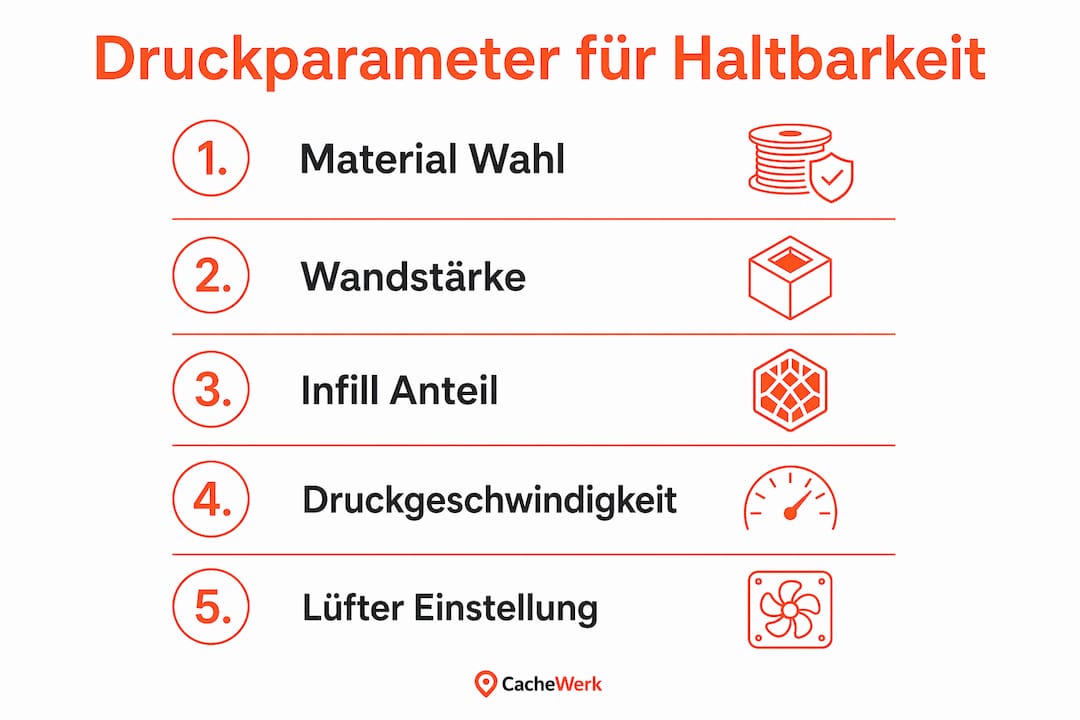
The print parameters determine whether a cache remains watertight or draws water. A minimum wall thickness of 2 mm, which corresponds to four to five perimeters with a 0.4 mm nozzle, and an infill of 30 to 50 percent are the minimum standard for normal caches. This combination ensures that the outer wall does not form micropores through which moisture can penetrate. Ignoring this risks a soaked logbook after the first rain shower.
For nano-caches and very small containers, stricter rules apply. 100% infill and at least 6 top and bottom layers are necessary here to reliably seal pores in the material. The smaller the object, the less room there is for compromise on density. This means longer print times, but significantly better long-term security.
| Material | UV Resistance | Moisture Resistance | Recommended Infill | Special Feature |
|---|---|---|---|---|
| PETG | Medium | Good | 30–50% | Easy to print, good impact resistance |
| ASA | Very Good | Very Good | 30–50% | Ideal for sunny locations |
| Nylon | Low | Poor (without sealing) | 50–100% | Only suitable with a protective layer |
| PLA | Poor | Poor | Not recommended | Unsuitable for outdoor caches |
Pro Tip: Print with a reduced speed of 30 to 40 mm/s for the outer walls and completely deactivate the fan for ASA. This improves layer adhesion and reduces warping, which increases the watertightness of the joints.
Anyone planning an individual 3D-printed cache should set these parameters in the slicer from the outset and not try to correct them later. The foundation determines everything else.
How do you prepare and properly seal your geocache?
A freshly printed cache is not yet a weatherproof cache. Post-processing makes the decisive difference between a container that lasts six months and one that lasts years. The following steps cover the entire process.
- Reworking threads: Threads should be reworked with a tap after printing. A slight offset in the slicer is recommended so that the lid and container fit precisely. A poorly fitting thread is the most common cause of leaky caches.
- Installing an O-ring: Milling a groove for an O-ring, for example with dimensions of 40 by 3 mm, is the most reliable method for permanent sealing. O-rings and silicone sealant at critical points keep water out even during prolonged immersion.
- Applying clear coat or epoxy resin: Two to three layers of clear coat or epoxy resin on the outside protect against UV radiation and mechanical abrasion. Allow each layer to dry completely before applying the next.
- Using silicone sealant strategically: Transparent silicone sealant closes remaining gaps at transitions, screw heads, or inserts. It remains flexible and does not crack with temperature fluctuations.
- Performing a leak test: Before deployment, a 24-hour water bath test is mandatory. Weigh down the cache, submerge it completely, and check the interior after 24 hours. If it's dry, the cache is ready.
Pro Tip: Apply clear coat to the inside of the lid as well. Condensation often forms from within and attacks untreated layers, leading to swelling and leaky threads in the long run.
The combination of an O-ring, epoxy resin sealing, and a water bath test is the gold standard for long-term geocache security. Anyone who consistently implements all three steps will deploy a cache that is still dry after two years.
Which maintenance intervals extend the lifespan of your geocache?
Regular maintenance is not an option; it is the basis for a functional cache. Maintenance intervals should be adapted to the cache type and local conditions, but should take place at least every few months. A cache in a damp forest needs more frequent checks than one in a dry city wall. The following step-by-step routine keeps your cache in shape permanently.
- Check location: Each time you visit, check if the cache is still securely in place, if water has entered, and if the camouflage is still intact. Repair visible damage immediately.
- Check logbook: A damp or full logbook is the most common finder problem. Replace it before finders complain about it in their logs. Carry fresh logbooks in a small plastic bag.
- Check seal and O-ring: Examine the O-ring and thread for cracks, deformation, or dirt. A dirty O-ring no longer seals reliably. Clean it with a damp cloth and apply a thin layer of silicone grease.
- Evaluate community feedback: Maintenance logs in the community are a direct early warning system. If multiple finders log "Cache needs maintenance," react immediately. Ignoring this risks archiving.
- Keep spare parts: Keep a small stock at home: replacement logbooks, O-rings in the appropriate sizes, silicone sealant, and clear coat. This way, any maintenance trip can be completed in ten minutes.
Geocaching HQ explicitly recommends placing caches close to home to enable quick maintenance. This may sound trivial, but it is one of the strongest levers for the longevity of a cache. A cache you can reach in twenty minutes will be maintained. One that requires two hours of driving will not.
Maintaining a durable geocache is not a big effort if you incorporate it into your routine. If you treat your caches like a small project and document them regularly, you will enjoy them more in the long run and have an active community around you.
How do you optimize transport and deployment for maximum durability?
Even the best cache can be quickly damaged by poor transport or an unfavorable placement. During transport, a padded bag or sturdy container protects the cache from bumps and scratches. Especially with caches that have threads or an O-ring, mechanical pressure can deform the seal before the cache is even in the field.
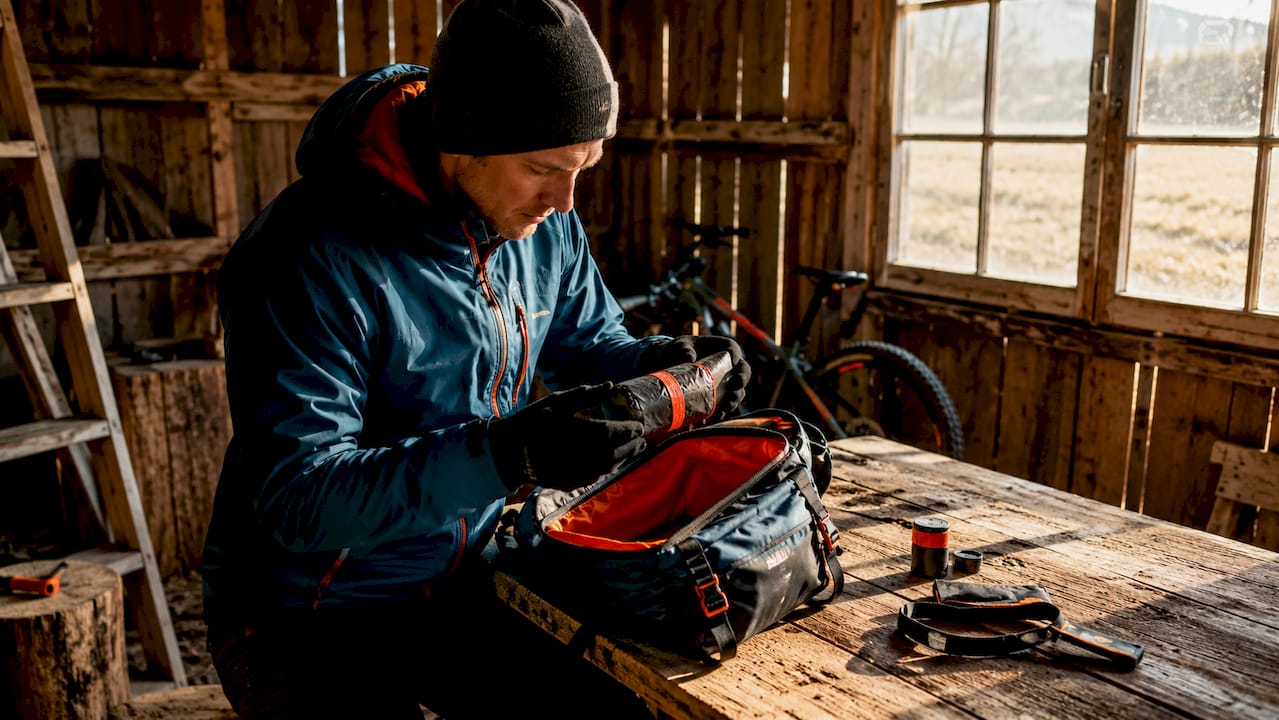
The choice of location influences durability at least as much as the material. Transport and deployment with protection from water and direct sunlight significantly extend the lifespan. A cache under a rock overhang lasts longer than one in an open meadow. Standing moisture is the biggest enemy, so the cache should never be in a natural hollow where water collects.
| Cache Type | Weather Protection | Durability | Maintenance Effort | Special Feature |
|---|---|---|---|---|
| Under rock overhang | Very good | Very high | Low | Ideal for PETG caches |
| In tree hollow | Good | High | Medium | Watch out for moisture |
| Magnet cache on metal | Medium | Medium | Medium | UV protection important |
| Freestanding in meadow | Poor | Low | High | Only with ASA and sealing |
| Urban nano cache | Good (covered) | High | Low | 100% infill necessary |
Avoid permanently attaching the cache with screws or adhesive. This complicates maintenance and makes replacement unnecessarily difficult if damaged. A detachable fastening with magnets or a bracket is the better choice.
Labels on the cache with clear text and owner contact information help finders treat the cache correctly. A simple "This is a Geocache" on a waterproof sticker or engraved directly into the material significantly reduces vandalism and misinterpretations by muggles. Labeling your cache as an official geocache also protects it socially.
For weatherproof labeling outdoors, the same principles apply as for durable outdoor materials: UV-resistant inks, waterproof substrates, and protected application.
Key Takeaways
The durability of a geocache depends on the combination of the right material, careful sealing, and consistent maintenance at regular intervals.
| Point | Details |
|---|---|
| Material choice is crucial | PETG and ASA with at least 2 mm wall thickness are the minimum standard for weatherproof caches. |
| Sealing is mandatory | O-ring, epoxy resin, and a 24-hour water bath test ensure permanent watertightness before deployment. |
| Maintenance beats material quality | Regular checks every few months extend the lifespan more than any premium material alone. |
| Location protects the cache | Placements under rock overhangs or covered significantly reduce weather damage compared to freestanding caches. |
| Proximity to home is a factor | Caches within a short distance are maintained more frequently and thus remain active and in good condition longer. |
What I've truly learned after years as a cache owner
Over the past years, I've built, deployed, and maintained many caches. And I tell you honestly: most mistakes don't happen during printing, but afterwards. A cache that was watertight in the water bath can still be wet after three months in the field because the O-ring was twisted when the logbook was inserted. This sounds trivial, but it is the most common cause of complaints in finder logs.
What truly surprised me: ASA is significantly easier to maintain in everyday use than I expected. I initially had concerns about the more difficult printing process, but an ASA cache that spent two summers in direct sunlight still looks almost new. A comparable PETG cache in the same location showed visible discoloration and slight embrittlement at the edges after one year.
What I want to pass on to the community: Don't underestimate the value of finder feedback. I read every log, even the short ones. If someone writes "logbook a bit damp," I go there within a week. Anyone who dismisses this as minor will lose their cache sooner than necessary. The community is your best early warning system; use it actively.
Feel free to experiment with 3D printing techniques. I've built caches with embedded magnets, with brass threaded inserts, and with two-color camouflage patterns. Not everything worked, but every attempt helped me progress. Geocaching thrives on this creativity, and a well-built, durable cache is a gift to all finders who will discover it in the coming years.
— Benedikt
Build durable geocaches with equipment from Cachewerk
If you really want to make your caches weatherproof and durable, you need the right equipment. At Cachewerk, you'll find everything you need for building, sealing, and maintaining your caches, from high-quality containers to camouflage material and special accessories for urban and rural caches.
The product range includes, among other things, 3D-printed special items made of PETG, which are already manufactured with optimized print parameters. You save yourself the effort of printing your own and get a cache that meets the standards described in this guide. Check out the Geocaching equipment at Cachewerk and find the right accessories for your next hide.
FAQ
Which material is best for weatherproof geocaches?
PETG and ASA are the recommended materials for 3D-printed outdoor caches. ASA offers better UV resistance and is particularly suitable for sunny locations.
How do I test if my cache is truly watertight?
The most reliable test is a 24-hour water bath test: weigh down the cache, submerge it completely, and check the interior for moisture after 24 hours.
How often should I maintain my geocache?
At least every few months, more frequently for damp or exposed locations. Geocaching HQ recommends placing caches close to home to allow for quick maintenance.
What to do if finders log "Cache needs maintenance"?
React immediately and visit the cache within a few days. Community logs are a direct early warning system and should never be ignored, as archiving is otherwise threatened.
Do I need an O-ring for every cache?
For screw caps, an O-ring is strongly recommended. Milling a groove and inserting a suitable O-ring, supplemented with silicone sealant, is the most reliable method for permanently waterproof geocache containers.