Common Cache Hiding Problems: Avoiding Mistakes

The ten most common geocache hiding problems are visibility to Muggles, proximity conflicts, unsuitable containers, inaccurate coordinates, missing permits, environmental risks, lack of maintenance, vandalism, faulty beta testing, and incorrect difficulty/terrain ratings. The good news is that most of these can be avoided from the outset with a solid checklist, independent beta testing, and the right container.
Here's a quick overview of the most common sources of error:
- Visibility and Muggle Risk – Hide is too exposed, seekers are observed
- Proximity Conflicts – too close to other caches or sensitive locations
- Unsuitable Container – poor seal, wrong size, not weatherproof
- Unclear or Incorrect Coordinates – measurement errors, signal obstruction, no averaging
- Missing Permits – private land, nature reserves without permission
- Environmental Risks – damage to plants, disturbed nesting sites, creation of desire paths
- Lack of Maintenance – logbook full or wet, container damaged, no maintenance plan
- Vandalism and Theft – Hide is too conspicuous or too easily accessible
- Faulty or Missing Beta Test – typos, unsolvable puzzles remain undiscovered
- Incorrect D/T Rating – Difficulty rating does not match on-site reality
The Hide Checklist in CacheWiki and the reviewer guidelines on geocaching.com are the most important criteria. Cachewerk also offers robust hides and accessories that eliminate many of these problems from the start.
Table of Contents
- 1. Which location errors most frequently lead to problems?
- 2. Which errors in container, material, and seal lead to failures?
- 3. How to camouflage and place a cache without causing damage?
- 4. Coordinates and GPS: How to measure precisely and avoid navigation errors?
- 5. Why are caches rejected or archived? Rules and permits at a glance
- 6. Maintenance and care: How often should you check your cache?
- 7. Symptom, Cause, Fix: Quick solutions for typical cache problems
- 8. Practical Tips: Materials, Beta Tests, and Durable Solutions
- Key Takeaways
- What really makes a good hide
- Robust hides directly from Cachewerk
- Useful resources and further links
1. Which location errors most frequently lead to problems?
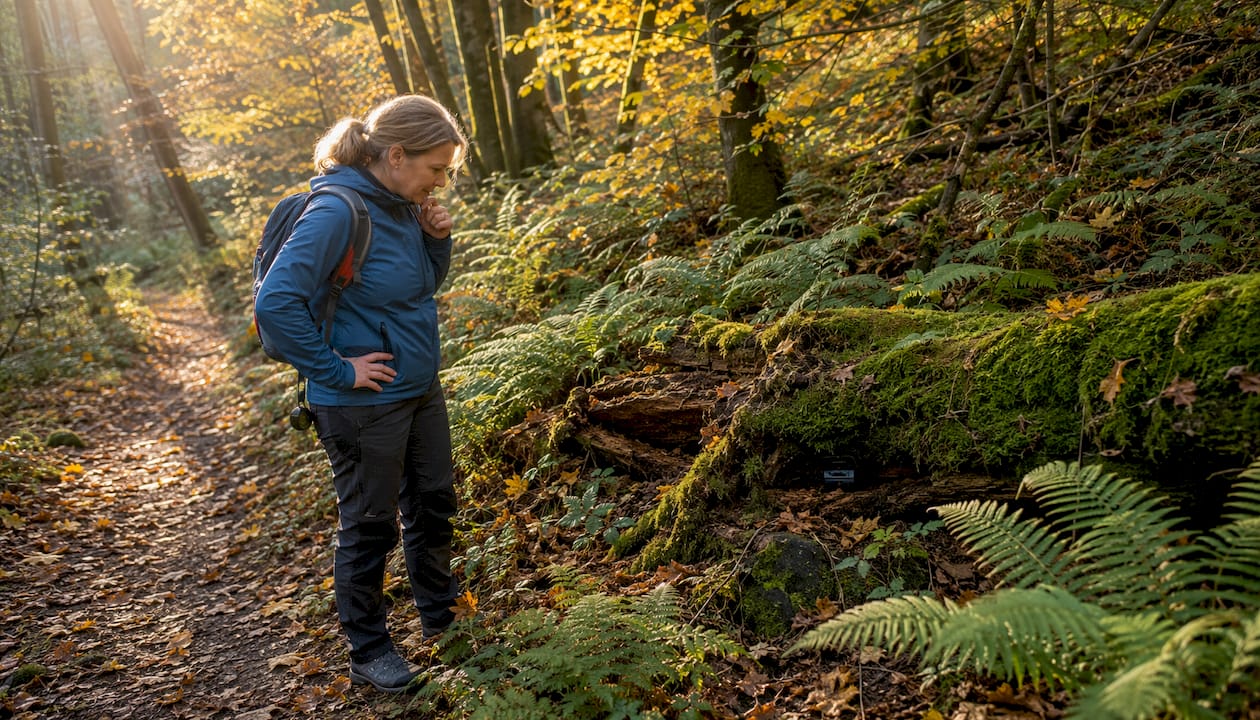
A poor location is the most common reason why caches cause problems shortly after publication. Experienced owners know: checking Muggle sightlines is the first step, even before the container is in hand.
Typical location pitfalls:
- Free-standing trees at the roadside that immediately attract attention
- Proximity to playgrounds, schools, or busy gathering places
- Nesting sites of birds or bats (seasonally closed)
- Military or government facilities without explicit permission
- Locations with regular party litter or visible desire paths indicating frequent visitors
The CacheWiki checklist explicitly advises against hiding at conspicuous terrain points and to pay attention to signs of regular human use. Those who only place their cache in locations they can reach within a few days also avoid the classic vacation cache problem: a hide that no one can maintain.
On-site checklist:
- Is there natural visual cover for seekers?
- How high is pedestrian traffic at different times of day?
- Are there signs of regular visitors (paths, litter, BBQ areas)?
- Is the location easily accessible for maintenance visits, even in winter?
- Is the location in a nature reserve or on private land?
Pro Tip: After hiding, step back five meters and look at the spot with the eyes of a non-cacher. If you immediately know where the cache is, the visual cover is insufficient. This short test takes two minutes and will save you many maintenance trips later.
Regional geocaching wikis and the responsible reviewer often know local restrictions better than general guidelines. It's worth asking beforehand, especially for regional specificities.
2. Which errors in container, material, and seal lead to failures?
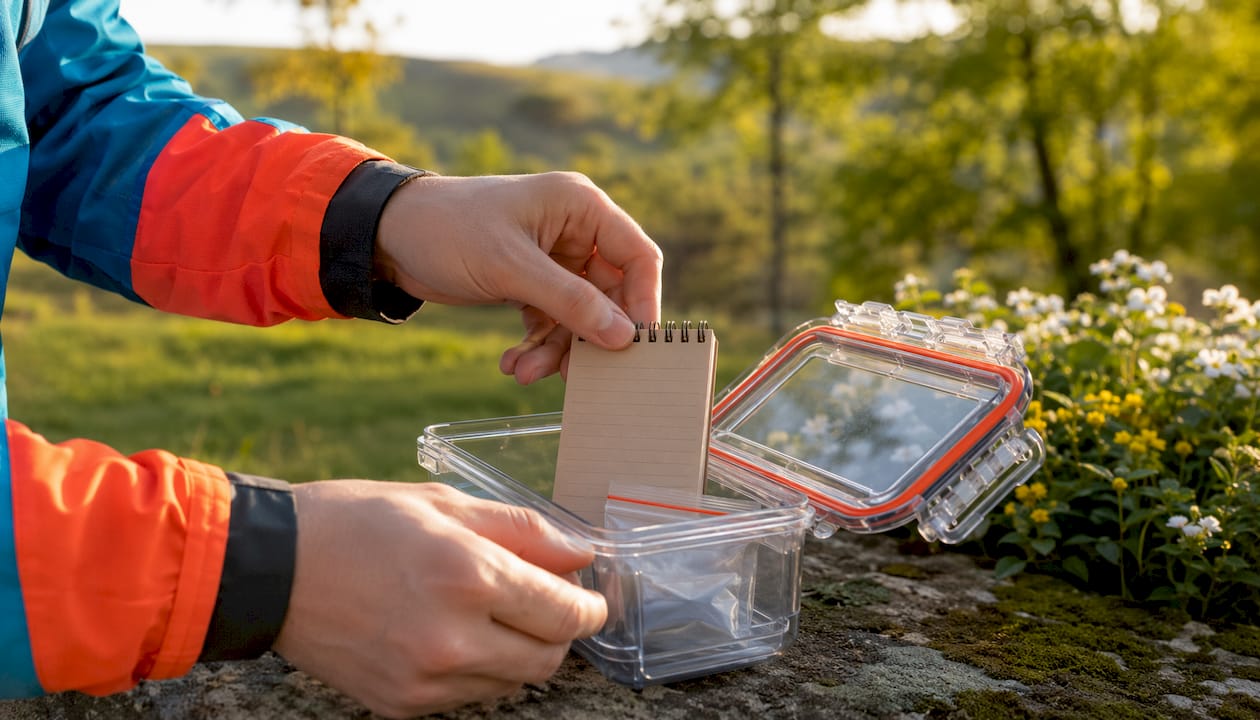
The container is the heart of every cache. Yet, it is one of the most common sources of error. Poor seals, logbooks that are too small, and unsuitable materials ensure that a cache causes problems after the very first rain.
Material types and their typical weaknesses:
- Simple plastic boxes – often not truly waterproof, lid deforms in frost
- PETling tubes – compact and popular, but the logbook must fit exactly, otherwise it swells
- Magnetic containers – practical for urban spots, but lose their adhesion due to rust or dirt
- 3D-printed PETG parts – weather-resistant, dimensionally stable, and suitable for creative camouflage forms
For urban deployments, it's worth looking at individual hides that blend visually into the surroundings while being robust. Cachewerk uses PETG for its own products because the material withstands temperature fluctuations and moisture much better than standard plastic.
Common errors at a glance:
- Sealing ring missing or porous
- Logbook too large, swells up and prevents the lid from closing
- Container color too conspicuous (signal red, white)
- No protection against condensation inside
- Container too small for the location (no space for trade items for Small/Regular)
Pro Tip: Always choose a logbook one size smaller than you think. A slightly smaller, weatherproof logbook with parchment paper or waterproof paper lasts significantly longer and saves you maintenance trips because you don't have to replace it after every rain.
Robust material selection and tested seals significantly reduce long-term maintenance requirements, as confirmed by the CacheWiki recommendations for material selection.
3. How to camouflage and place a cache without causing damage?
Good camouflage does not mean the cache has to be invisible. It should remain findable for seekers but appear uninteresting to Muggles. And it must not damage nature or property.
Safe camouflage techniques:
- Loosely placing natural materials (bark, moss, stones), not gluing them down
- Magnetic attachment to metal posts or signs without drilling
- Artificial stone hides that visually blend into gravel paths or masonry
- Camouflage film or tape on the container that matches the surrounding color
- Urban camouflage hides that look like everyday objects (e.g., signs, pipes)
What you should absolutely avoid: driving screws or nails into living trees, using a birdhouse as a hide (especially during breeding season), permanently pressing down plants, or removing stones from natural formations. The hide must be exactly restorable after finding. If you cannot ensure this, you have chosen the wrong spot.
Pro Tip: Test your camouflage material before placement in rain and after a frosty night. Moss that adheres perfectly in summer can freeze off in winter and expose the hide. PETG parts and weatherproof camouflage films withstand temperature fluctuations much better than organic materials.
Practical fastening ideas without property damage can be found in Cachewerk's DIY guide for geocachers.
4. Coordinates and GPS: How to measure precisely and avoid navigation errors?
Inaccurate coordinates are one of the most frustrating cache errors because they mislead seekers and produce DNF logs, even though the cache is still there. The most common causes are signal obstruction from buildings or tree canopies, single measurements without averaging, and using smartphone apps without waypoint averaging.
Common GPS problems:
- Single measurement under tree canopies or between building fronts
- Wrong coordinate system (WGS84 vs. other reference systems)
- Coordinates from the parking lot instead of the actual hide location
- Rounding errors in manual entry (typos in the last digit)
- No reconciliation between GPS device and smartphone app
Practical steps for better accuracy:
- Measure coordinates at least three times and use the average
- Use the waypoint averaging function of a dedicated GPS device (e.g., Garmin devices)
- On Android, the GPS Average app is suitable for quick, focused averaging
- Cross-check coordinates after measurement with a second person or a second device
- For Mystery and Multi-Caches: document all intermediate waypoints and include them in the listing
Reviewers use online maps for checking. Those who provide clear coordinates in the listing and, if necessary, a short reviewer note with an explanation, significantly speed up activation.
5. Why are caches rejected or archived? Rules and permits at a glance
Violations of guidelines are the most common reason a listing is returned. Reviewers systematically check every cache against the geocaching guidelines, and those who review the listing themselves before submission avoid most queries.
Common reasons for rejection:
- Proximity conflict with another cache (minimum distance not maintained)
- Hide in a nature reserve without proven permit
- Private property without written permission from the owner
- Inadmissible commercial content in the listing or container
- Coordinates located on military or government property
- Missing or incomplete reviewer note for complex cache types
Some areas require explicit permission, and in some places, hiding is fundamentally not possible. This may sound strict, but it protects the community from complaints and the closure of entire areas.
What belongs in a good reviewer note:
- Confirmation that a permit exists (if applicable, with contact person)
- Information on maintenance access (how to get there, are there seasonal restrictions?)
- Name or pseudonym of the beta tester
- Brief description of the container condition at the time of submission
Regional geocaching wikis and reviewer notes from the community help to understand local specifics before even starting to plan.
6. Maintenance and care: How often should you check your cache?
A cache is not self-sufficient. Those who place it once and then forget about it risk archiving, bad logs, and in the worst case, trouble with authorities or property owners.
Checklist for regular inspection:
- Check logbook: full, wet, or damaged?
- Check seal: porous, dirty, no longer closing?
- Trade items: still present, in good condition?
- Camouflage: still intact, or has wind/frost changed it?
- Environment: desire paths formed, litter nearby?
- Vandalism signals: container moved, broken open, or damaged?
Recommended maintenance intervals:
| Cache type | Recommended interval | Seasonal peculiarity |
|---|---|---|
| Urban Cache | Every 4–6 weeks | Check immediately after storm or frost |
| Rural Cache | Every 6–10 weeks | Check in spring after snowmelt |
| Nano/Magnet Cache | Every 3–4 weeks | Check adhesion after rain and frost |
| Multi-cache with stages | Every 4–8 weeks | Check all stages simultaneously |
Rough cost estimate for a maintenance kit:
- Replacement logbooks (5-pack): approx. €3–8
- Replacement seals: approx. €2–5
- Silica gel packets (moisture protection): approx. €3–6
- Replacement containers (PETling or Nano): approx. €2–10
Investing in robust containers from the start saves time and money in the long run. Cachewerk products made of PETG are designed for exactly this longevity.
7. Symptom, Cause, Fix: Quick solutions for typical cache problems
When a problem is reported, quick action is crucial. Here are the most common error patterns with immediate fixes:
| Symptom | Probable Cause | Fix |
|---|---|---|
| Logbook wet or swollen | Seal defective or container not properly closed | Replace seal, replace logbook, check container for watertightness |
| Several DNF logs in a row | Cache likely gone or coordinates inaccurate | Check on site, re-measure coordinates, update listing |
| Cache muggled | Hide too conspicuous or too easily accessible | Choose a new location, use a more inconspicuous container |
| Reviewer requests revision | Guideline violation or missing permit | Revise listing, supplement reviewer note, never create a new listing |
| Container damaged/broken open | Vandalism or weather damage | Replace container, check location for safety |
| Trade items missing | Frequent visitors or theft | Remove trade items or change cache to "no trading" |
| D/T rating criticized | Rating does not match reality | Adjust rating in listing, respond to hint in log |
Emergency checklist for archiving risk:
- Respond immediately to NM (Needs Maintenance) logs, within one week at the latest
- Proactively contact reviewer if maintenance takes longer
- Temporarily disable cache instead of leaving it online unmaintained
- If the location is permanently problematic: Archiving is better than a permanently bad cache
When should you involve reviewers or the city administration? Always when the location is safety-relevant (e.g., proximity to tracks, construction sites, or restricted areas) or when vandalism indicates organized disruption.
8. Practical Tips: Materials, Beta Testing, and Durable Solutions
Good caches don't happen by luck, but through preparation. Three things make the biggest difference: the right material, honest beta testing, and clear documentation.
Material recommendations:
- PETG for 3D-printed parts: dimensionally stable, UV-resistant, withstands temperatures from -20 °C to +70 °C
- Stainless steel magnets for urban magnetic containers: do not rust, reliable even when wet
- Parchment paper or waterproof paper for logbooks: survives even a wet summer
When beta testing: Choose beta testers from the region who don't know the owner personally. Close friends overlook mistakes because they search too benevolently. An unbiased tester finds number transpositions, unsolvable puzzles, and coordinate errors that you wouldn't notice yourself because you already know the way. Give the beta tester clear instructions, GPX data, and a short feedback form.
Pro Tip: When placing, immediately take photos of the hide from different angles and save a GPS screenshot. This documentation helps you with maintenance when you no longer remember exactly what the hide originally looked like months later. And it significantly speeds up the review process, as well-documented listings generate fewer queries.
Reviewers are volunteers. A complete submission with a clear reviewer note is not mandatory, but it shows respect and saves both sides time.
Key Takeaways
Most problems with cache hiding can be reliably avoided through a combination of careful site selection, a robust container, and independent beta testing before submission.
| Topic | Details |
|---|---|
| Check site selection | Clarify muggle visibility, nature conservation, and accessibility for maintenance before placing. |
| Choose the right container | PETG or weather-resistant materials with tested seals permanently reduce maintenance effort. |
| Organize beta testing | Independent testers from the region find coordinate errors and unsolvable puzzles more reliably than friends. |
| Adhere to reviewer guidelines | Review the listing yourself against the guidelines before submission to avoid rejections. |
| Cachewerk as a solution | Robust camouflage hides like the fake water shield or the post hide solve typical visibility and vandalism problems. |
What Really Makes Good Hides
Whoever hides a cache takes responsibility. Not just for a small container somewhere in the bushes, but for the impression the geocaching community leaves on muggles, authorities, and landowners. A poorly maintained cache that has been producing wet logbooks and collecting DNF logs for months harms not only its own reputation but the entire community.
What surprises me most is that the most common mistakes are not gaps in knowledge. Most owners know that coordinates should be averaged and that beta testing is useful. But they skip these steps because they want to go online quickly. That almost always comes back to haunt them. A cache that is meticulously planned from the start often runs for years without significant problems. One that started with shortcuts ends up costing significantly more time overall.
My advice: Treat your cache like a small project. Plan the location, test the container, have someone independently search, and document everything. The community will thank you with good logs.
Robust Hides Directly from Cachewerk
Those who want to eliminate typical problems such as visibility, vandalism, and moisture from the outset will find two particularly well-thought-out solutions at Cachewerk.
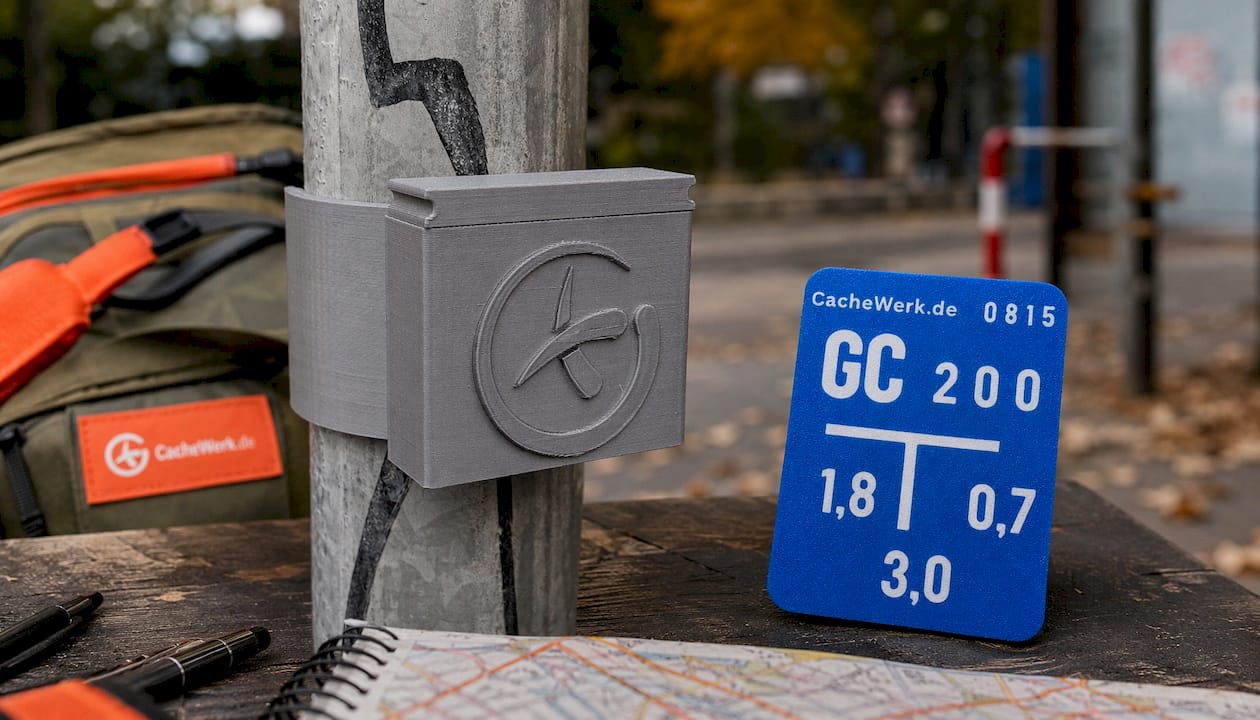
The fake water shield is an urban camouflage hide with a post holder that blends seamlessly into the cityscape. It looks like an ordinary sign, is inconspicuous to muggles, and simultaneously protects the container from weather and curious glances. Ideal for city caches where visibility is the biggest problem.
The post hide for signposts (Ø 60 mm) is 3D-printed from PETG, fits exactly on common street signposts, and holds reliably even in frost and rain. No gluing, no drilling, no damage. Both products specifically solve the most common cache problems: poor camouflage, susceptibility to vandalism, and maintenance effort due to moisture. Check out the current range on cachewerk.de and find the right hide for your next cache.
Useful Sources and Further Links
Important references for cache owners in Germany:
- Hiding geocaches – CacheWiki: Comprehensive overview of site selection, materials, reviewer rules, and maintenance; first point of contact for all owner questions
- Hide checklist – CacheWiki: Structured checklist for complete waypoints, reproducible placement, and avoidance of conspicuous terrain points
- Checklist for cache hiders – Geocaching Blog: Official blog with step-by-step instructions and notes on permits and environmental impact
- Hiding from a reviewer's perspective – Geocaching Blog: Reviewer perspective on common rejection reasons and tips for quick activation
- How do I hide a cache? – Opencaching-Wiki: Practical guide with beta testing recommendations and notes on self-responsibility at opencaching.de
- Hiding your first geocache – Geocaching Blog: Beginner's guide with a focus on muggle perspective and privacy screens
Cachewerk resources:
- Creative geocaching hides and tips: Practical article with camouflage ideas and safety tips directly from the Cachewerk team
- Step-by-step guide for geocachers: Complete guide with checklists, rules, and DIY tips
| Source | Focus | Especially useful for |
|---|---|---|
| CacheWiki Hiding | Location, material, reviewer | All owners, especially beginners |
| CacheWiki Checklist | Waypoints, reproducibility | Before submission |
| Geocaching Blog Reviewer | Rejection reasons, documentation | Before the first listing |
| Opencaching-Wiki | Beta testing, self-responsibility | Mystery and multi-cache owners |
| Cachewerk Blog | Products, DIY, camouflage | Owners looking for robust solutions |