
Ideen für multifunktionale Cache-Tools: Der Praxisguide
Multifunktionale Cache-Tools sind Werkzeuge, die mehrere Funktionen in einem kompakten Format vereinen und damit das Geocaching deutlich einfacher machen. Wer mit einem einzigen Gerät greifen, schneiden, öffnen und befestigen kann, spart Gewicht und Zeit im Gelände. Genau das macht diese Werkzeugklasse zu einem unverzichtbaren Begleiter für jeden Geocacher. Die besten Ideen für multifunktionale Cache-Tools verbinden dabei nicht nur Werkzeugfunktionen, sondern auch kreative Versteckkonzepte aus Edelstahl, PETG und anderen wetterbeständigen Materialien. Cachewerk zeigt dir in diesem Guide, welche Konzepte wirklich funktionieren.
1. Ideen für multifunktionale Cache-Tools: Kompakte Multitools für unterwegs
Das wichtigste Merkmal eines guten Geocaching-Multitools ist sein Gewicht. 11-in-1 Faltmodelle wiegen rund 53 Gramm. Das ist weniger als ein Schokoriegel und macht sich auf langen Touren kaum bemerkbar.
Solche Werkzeuge kombinieren Spitzzange, Kabelschneider, Flaschenöffner und mehrere Schraubendreher in einem faltbaren Körper aus Edelstahl. Der integrierte Karabiner ist dabei kein Gimmick. Er erlaubt das direkte Befestigen am Rucksack oder Gürtelschlaufe, sodass das Tool immer griffbereit bleibt.
- Spitzzange: Ideal zum Greifen kleiner Logbuchrollen oder Behälterdeckel
- Kabelschneider: Nützlich beim Befestigen von Tarnmaterial mit Draht oder Kabelbindern
- Flaschenöffner: Doppelt als Hebelwerkzeug für fest sitzende Deckel
- Schraubendreher (Kreuz und Schlitz): Für Verschlüsse und Befestigungen am Versteck
- Karabiner: Direkte Befestigung am Rucksack, kein Suchen im Rucksack mehr
Profi-Tipp: Wähle ein Multitool mit mitgelieferter Tragetasche. Die Tasche schützt vor Kratzern und hält alle Teile sauber, wenn das Werkzeug im Rucksack liegt.
Ergonomisch gestaltete Griffe reduzieren die Ermüdung bei längerem Einsatz spürbar. Wer mehrere Stunden im Gelände unterwegs ist und dabei Verstecke kontrolliert oder neu platziert, merkt den Unterschied schnell.
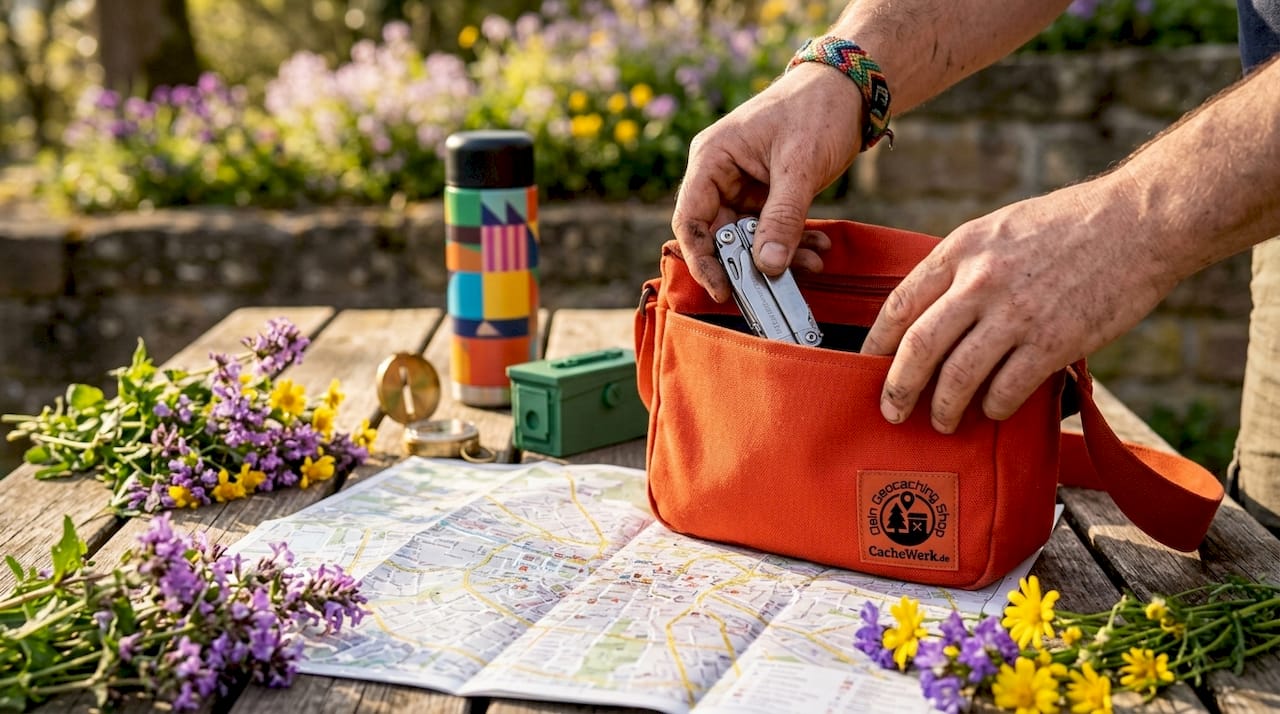
2. Kreative Versteckideen mit mehreren Funktionen
Ein gutes Cache-Versteck tut mehr als nur einen Behälter zu verbergen. Es täuscht, schützt und macht das Finden zum Erlebnis. Die besten Optionen für multifunktionale Cache-Verstecke vereinen Tarnung, Wetterschutz und einfache Logbuchentnahme in einem einzigen Objekt.
Steinverstecke sind ein klassisches Beispiel. Sie sehen aus wie gewöhnliche Steine, haben aber ein Fach von etwa 30 mm × 55 mm × 20 mm, das einen Micro-Cache-Behälter aufnimmt. Dieses Format passt zu Nano-Logbüchern und kleinen Tauschgegenständen. Der Stein liegt einfach auf dem Boden oder zwischen anderen Steinen und fällt dabei niemandem auf.
- Steinverstecke: Täuschend echte Attrappen für naturnahe Umgebungen, wetterfest und unauffällig
- Batterie-Attrappen: Funktionieren als Micro-Cache in städtischen Umgebungen, wo Elektronik normal wirkt
- Nano-Caches auf Pflanzstäben: Mechanische Lösung mit Magnetführung für einfachen Logbuchzugang
- Fake-Wasserschilder: Anpassbare Tarnverstecke für den urbanen Einsatz, die im Stadtbild unsichtbar wirken
- Ammo-Box-Verstecke im Trick-Design: Robuste Behälter mit überraschendem Öffnungsmechanismus
Profi-Tipp: Kombiniere ein Steinversteck mit einem kleinen Magneten an der Unterseite. So lässt sich der Cache an Metallunterlagen befestigen und ist gleichzeitig schwerer zu finden.
Eine besonders clevere DIY-Lösung ist der Nano-Cache auf Pflanzstäben. Zwei Pflanzstäbe führen das Logbuch mechanisch, ein Magnet hält es in Position. Das verhindert, dass das winzige Logbuch beim Öffnen herausfällt und verloren geht. Wer schon mal ein Nano-Logbuch im Gras gesucht hat, weiß, wie wertvoll diese einfache Lösung ist.
Für urbane Verstecke lohnt sich ein Blick auf den Urbaner Cache Guide von Cachewerk. Dort finden sich weitere Ideen, wie Verstecke im Stadtbild unsichtbar bleiben.
3. Materialien für langlebige Cache-Tools und Verstecke
Die Materialwahl entscheidet darüber, ob ein Cache-Tool oder ein Versteck eine Saison übersteht oder mehrere Jahre hält. Feuchtigkeit, UV-Strahlung und Temperaturschwankungen zerstören ungeeignete Materialien oft innerhalb einer einzigen Saison. Das ist kein theoretisches Problem, sondern Alltag für jeden Geocacher, der Verstecke in Wäldern oder an Gewässern platziert.
| Material | Einsatzbereich | Stärke | Schwäche |
|---|---|---|---|
| Edelstahl | Multitools, Werkzeuge | Korrosionsbeständig, langlebig | Schwerer als Kunststoff |
| PETG | Cache-Behälter, 3D-Druck | UV-beständig, flexibel, wasserdicht | Höherer Herstellungsaufwand |
| ABS | Einfache Behälter | Günstig, formstabil | Weniger UV-beständig als PETG |
| Naturstein | Steinverstecke | Perfekte Tarnung | Schwer, ortsgebunden |
Edelstahl ist für Werkzeuge die erste Wahl. Er rostet nicht, verbiegt sich kaum und übersteht auch raues Gelände ohne Schäden. Robuste Materialien schützen dabei nicht nur vor Abnutzung, sondern auch vor unerwarteten Witterungseinflüssen.
Für Cache-Behälter ist PETG das Material der Wahl. Im Vergleich zu PLA oder ABS hält PETG Temperaturschwankungen besser stand und wird durch UV-Strahlung nicht so schnell spröde. Cachewerk setzt bei seinen 3D-gedruckten Produkten gezielt auf PETG, weil es die Anforderungen des Outdoor-Einsatzes am besten erfüllt. Wer mehr über die Materialunterschiede bei 3D-Druck erfahren möchte, findet dort eine ausführliche technische Übersicht.
Zur Pflege gilt: Edelstahlwerkzeuge nach Kontakt mit Salzwasser oder starker Feuchtigkeit kurz abwischen und trocken lagern. PETG-Behälter brauchen keine besondere Pflege, sollten aber nicht dauerhaft direkter Sonneneinstrahlung ausgesetzt sein.
4. Einsatzbereiche: Welches Tool passt zu welchem Terrain?
Nicht jedes Multitool passt zu jedem Geocaching-Typ. Die Wahl hängt vom Terrain, der Cache-Größe und dem Schwierigkeitsgrad ab. Multifunktionale Werkzeuge reduzieren das Fehlerrisiko bei Reparaturen durch universelle Funktionen in einem einzigen Tool. Das spart Zeit, besonders wenn man weit vom nächsten Parkplatz entfernt ist.
Stadtgebiet
Im urbanen Umfeld zählt vor allem Unauffälligkeit. Ein kleines Multitool in der Hosentasche ist besser als ein großes Werkzeug, das Aufmerksamkeit erregt. Verstecke wie das Fake-Wasserschild von Cachewerk passen perfekt in dieses Szenario. Sie sehen aus wie echte Hinweisschilder und fallen im Stadtbild nicht auf.
- Kleines Faltmultitool (bis 100 g): Passt in jede Jackentasche, ideal für schnelle Einsätze
- Magnetwerkzeug: Nützlich für magnetische Nano-Verstecke an Metallstrukturen
- Pinzette oder Spitzzange: Für das Herausziehen von Logbüchern aus engen Behältern
Wald und Natur
Hier sind robustere Werkzeuge gefragt. Das Terrain ist unebener, Äste und Steine machen Werkzeuge anfälliger für Stöße.
- Multitool mit Säge oder Feile: Für das Befestigen von Verstecken an Bäumen oder Felsen
- Karabiner-Multitool: Direkt am Rucksack befestigt, immer griffbereit beim Wandern
- Steinversteck oder Holzattrappe: Fügt sich natürlich in die Umgebung ein
Schwieriges Gelände (Klettern, Wasser)
Hier gilt: so wenig wie möglich, so viel wie nötig. Jedes Gramm zählt.
- Ultraleichtes Multitool (unter 60 g): Minimiert das Gepäck ohne Funktionsverlust
- Wasserdichter Cache-Behälter aus PETG: Schützt Logbuch und Inhalt auch bei Nässe
- Befestigungsmaterial (Kabelbinder, Draht): Für sichere Montage an exponierten Stellen
Wer Geocaching mit Wandertouren verbindet, findet im Praxisguide von Cachewerk weitere Tipps zur Ausrüstungswahl für verschiedene Terrains.
5. DIY-Konzepte: Selbst gebaute multifunktionale Verstecke
Selbst gebaute Verstecke haben einen klaren Vorteil: Sie sind einzigartig. Kein anderer Cache sieht genauso aus. Das macht das Finden für andere Geocacher zu einem echten Erlebnis.
Selbstgebaute Nano-Caches auf Pflanzstäben brauchen nur wenige Materialien. Zwei Pflanzstäbe, ein kleiner Magnet und ein Nano-Behälter reichen aus. Die Stäbe führen das Logbuch beim Herausziehen, der Magnet hält es sicher in Position. Das ist praktische Cache-Tool-Konzeptarbeit ohne großen Aufwand.
Weitere DIY-Ideen, die gut funktionieren:
- Schrauben-Attrappe: Eine gewöhnliche Schraube mit hohlem Inneren, die an Metallkonstruktionen befestigt wird
- Ast-Versteck: Ein echter Ast mit ausgehöhltem Inneren und Schraubverschluss
- Pflasterstein-Attrappe: Aus PETG gedruckt, täuschend echt und wetterfest
- Magnetischer Schlüsselkasten: Klassisch, aber mit angepasster Tarnung sehr effektiv
Der Schlüssel bei allen DIY-Projekten ist die Materialwahl. PETG-Druck hält Witterungseinflüssen stand, während einfaches PLA schon nach wenigen Monaten im Freien spröde wird. Wer kompakte Outdoor-Ausrüstung kennt, weiß: Weniger Material, mehr Funktion ist immer die bessere Wahl.
6. Werkzeugergänzungen, die den Unterschied machen
Ein gutes Multitool ist der Kern, aber einige Ergänzungen machen das Geocaching-Setup erst komplett. Das Zusammenspiel von Greifen, Schneiden und Biegen minimiert Werkzeugwechsel und spart Zeit im Gelände. Aber manche Aufgaben brauchen eben doch ein spezialisiertes Zusatzwerkzeug.
Pinzette: Unverzichtbar für Nano-Logbücher. Wer schon mal versucht hat, ein aufgerolltes Logbuch mit bloßen Fingern aus einem engen Behälter zu ziehen, kennt das Problem.
Kleines Notizbuch und Stift: Klingt banal, ist aber oft vergessen. Ein wasserfester Stift funktioniert auch bei Regen.
Kabelbinder und Draht: Für das Befestigen von Verstecken an Ästen, Zäunen oder anderen Strukturen. Kabelbinder sind leicht, Draht ist flexibler.
Taschenlampe oder Stirnlampe: Für Verstecke in Höhlen, unter Brücken oder bei Nacht-Geocaching. Eine kleine LED-Lampe wiegt kaum etwas und kann entscheidend sein.
Magnetstab: Für magnetische Verstecke, die zu tief oder zu eng liegen, um sie mit der Hand zu erreichen. Besonders in städtischen Umgebungen sehr nützlich.
Wichtige Erkenntnisse
Multifunktionale Cache-Tools und kreative Versteckkonzepte aus wetterbeständigen Materialien wie Edelstahl und PETG sind die Grundlage für erfolgreiches und langlebiges Geocaching in jedem Terrain.
| Thema | Details |
|---|---|
| Werkzeuggewicht | Faltmultitools ab 53 g sind ideal für lange Touren ohne Mehrbelastung. |
| Materialwahl | PETG und Edelstahl überstehen Feuchtigkeit und UV-Strahlung deutlich länger als günstigere Alternativen. |
| Versteckkonzepte | Steinverstecke, Nano-Caches auf Pflanzstäben und Fake-Schilder vereinen Tarnung und Funktion. |
| Terrain-Anpassung | Stadtgebiet, Wald und Klettergelände erfordern jeweils andere Werkzeuge und Verstecktypen. |
| DIY-Potenzial | Selbst gebaute Verstecke aus PETG sind einzigartig und halten Witterungseinflüssen stand. |
Meine Erfahrung mit multifunktionalen Cache-Tools
Ich habe über die Jahre viele verschiedene Werkzeugkombinationen ausprobiert. Und ehrlich gesagt: Der größte Fehler war immer, zu viel mitzunehmen. Ein schwerer Rucksack macht keinen Spaß, wenn man drei Stunden durch den Wald läuft.
Das Umdenken kam, als ich zum ersten Mal mit einem einzigen 11-in-1 Multitool eine komplette Tour gemacht habe. Kein Werkzeugwechsel, kein Suchen im Rucksack. Alles an einem Karabiner befestigt, immer griffbereit. Das hat mein Geocaching-Erlebnis wirklich verändert.
Was mich aber noch mehr begeistert, sind die kreativen Versteckideen. Ein selbst gebauter Nano-Cache auf Pflanzstäben klingt nach wenig, aber wenn ein anderer Geocacher das Versteck findet und im Log schreibt, wie überrascht er war, dann ist das der eigentliche Lohn. Multifunktionale Verstecke sind nicht nur praktisch. Sie machen das Spiel für alle besser.
Mein Rat: Fang mit einem guten Multitool aus Edelstahl an. Dann experimentiere mit einem selbst gebauten Versteck aus PETG. Du wirst schnell merken, wie viel Spaß das macht und wie viel du dabei lernst.
— Benedikt
Kreative Geocaching-Verstecke bei Cachewerk
Cachewerk hat eine Auswahl an Verstecken entwickelt, die genau das bieten, was kreative Geocacher suchen: Funktion, Tarnung und Überraschungseffekt.

Die Geocaching Ammo-Box ist ein robustes Trick-Versteck für Micro- und kleinere Caches, das durch seinen unerwarteten Öffnungsmechanismus begeistert. Der Mini Hau-den-Lukas versteckt das Logbuch im Hammergriff und sorgt für echte Überraschungsmomente im Gelände. Für den urbanen Einsatz gibt es das Fake-Wasserschild, das sich individuell anpassen lässt und im Stadtbild vollständig unsichtbar bleibt. Alle Produkte sind aus wetterbeständigen Materialien gefertigt und direkt bei Cachewerk bestellbar.
FAQ
Was ist ein multifunktionales Cache-Tool?
Ein multifunktionales Cache-Tool ist ein kompaktes Werkzeug, das mehrere Funktionen wie Greifen, Schneiden und Befestigen in einem Gerät vereint. Es spart Gewicht und Platz im Rucksack bei Geocaching-Touren.
Welches Material ist am besten für Cache-Behälter geeignet?
PETG ist die beste Wahl für Cache-Behälter im Freien, weil es UV-beständig, flexibel und wasserdicht ist. Edelstahl eignet sich am besten für Werkzeuge und Multitools.
Wie schwer sollte ein Geocaching-Multitool sein?
Gute Faltmultitools wiegen rund 53 Gramm und sind damit leicht genug für lange Touren. Alles über 150 Gramm macht sich bei mehrstündigen Wanderungen spürbar bemerkbar.
Welche Versteckideen eignen sich für die Stadt?
Fake-Wasserschilder, Batterie-Attrappen und magnetische Nano-Caches funktionieren in städtischen Umgebungen besonders gut. Sie fallen im Stadtbild nicht auf und sind für Muggles kaum zu erkennen.
Kann ich multifunktionale Verstecke selbst bauen?
Ja, DIY-Verstecke aus PETG oder mit einfachen Materialien wie Pflanzstäben und Magneten sind gut umsetzbar. Sie sind einzigartig und halten Witterungseinflüssen deutlich besser stand als Verstecke aus einfachem PLA.