
Creative Urban Hiding Spots Explained: Tips for Geocachers
Creative Urban Hiding Spots Explained: Tips for Geocachers
Many geocachers immediately think of magnetic containers under benches or film canisters on lampposts when it comes to urban hiding spots. While that's true, it's far from everything. Cities are true treasure troves for creative hiding spots: rooftop gardens, art objects, bridges, historical landmarks, and much more are waiting to serve as the perfect backdrop for your next cache. In this article, you'll learn what urban hiding spots really are, which caches are particularly clever, how to permanently camouflage your hide, and how to create your own innovative urban cache. Whether you're a beginner or an experienced cacher, you'll find inspiration and practical knowledge for the city here.
Table of Contents
- What are Urban Hiding Spots? Basics and Concepts
- Typical and Unusual Urban Hides at a Glance
- Camouflage and Security: How Your Hide Remains Discreet
- Creating Your Own Urban Hiding Spots: Practice and Inspiration
- Our Experience: What Really Works and What Doesn't
- Professional Equipment for the Perfect Urban Hide
- Frequently Asked Questions
Key Takeaways
| Point | Details |
|---|---|
| Diversity of urban hides | The city offers far more caching opportunities than often assumed – from art objects to bridges. |
| Camouflage is crucial | Good camouflage increases the lifespan and fun of urban hides. |
| Creativity pays off | Independently developed and innovative hiding spots make urban geocaching experiences unique. |
| Observe legal aspects | Not every urban hide is permitted – obtaining permissions prevents problems. |
What are Urban Hiding Spots? Basics and Concepts
An Urban Hiding Spot is a location for a geocache in an urban environment. That sounds simple, but it isn't always. The city presents its own unique challenges: many people, little privacy, monitored areas, and an environment that is constantly changing.
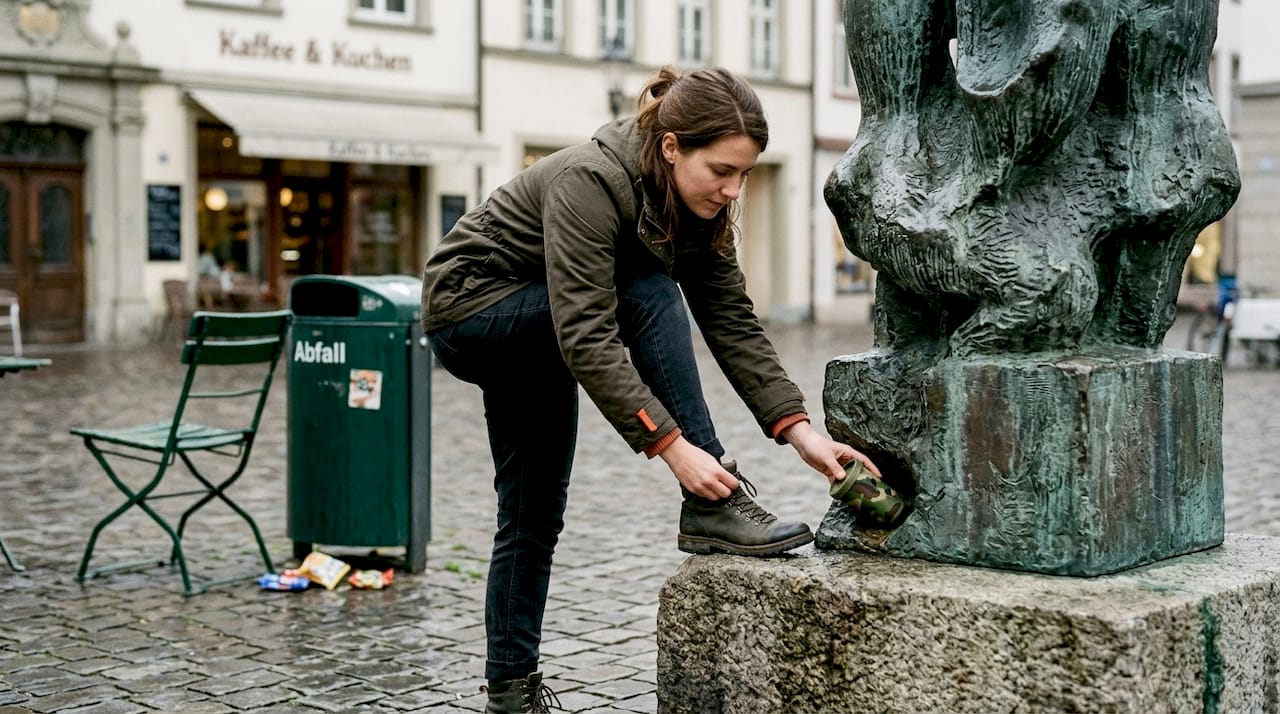
Basically, a distinction is made between classic and unusual hides. Classic spots include magnetic containers on metal poles, small containers under benches, or hidden tubes on fence posts. Unusual spots utilize the city's structure more creatively: bridge undersides, street art, display cases, or even public art installations.
Why does the city need special solutions? It's simple: in an urban area, the risk of a so-called Muggle Moment is much higher. In geocaching jargon, a "Muggle" is someone who is not a geocacher and accidentally discovers or reports the cache. A poor hide in the city is quickly exposed.
Good urban hides blend seamlessly into their surroundings. They go unnoticed by pedestrians and law enforcement alike, while remaining discoverable for geocachers.
Typical characteristics of good Urban Hiding Spots:
- Discreetness: The hide looks like a normal object in the cityscape.
- Weather resistance: Rain, heat, and frost don't affect the cache.
- Easy access: Geocachers can access the hide without attracting attention.
- Legality: The hide is located in a publicly accessible place.
- Creativity: It surprises and delights finders.
According to an overview of urban geocaching possibilities, popular spots include rooftop gardens, public art, historical landmarks, parks, benches, posts, jetties, bridges, statues, and fence posts. Products like magnetic fake stones or flexible slugs are particularly popular.
Those who want to delve deeper into the world of Urban Geocaching Explained will find many more inspirations for city adventures there.
Typical and Unusual Urban Hides at a Glance
The range of urban hides is larger than most people think. From the classic magnetic container to the deceptively real fake traffic sign, there are countless possibilities. The crucial thing is that the hide fits its surroundings and is secure.
Here's a structured overview with the most important hide types:
| Hide Type | Difficulty | Advantages | Risks |
|---|---|---|---|
| Magnetic container on metal post | Low | Easy to place, inexpensive | Quickly found, cliché |
| Fake stone / key stone | Medium | Very discreet, robust | Only works with suitable ground |
| Fake traffic sign | High | Extremely creative, hardly recognizable | Permission recommended, complex |
| Nano cache on bridge railing | Medium | Small, hard to spot | Weather-sensitive, access problems |
| Key container on art object | High | Thematically appropriate, creative | Permission required |
| Thermo tube / Fake bolt | High | Extremely discreet | Requires craftsmanship |
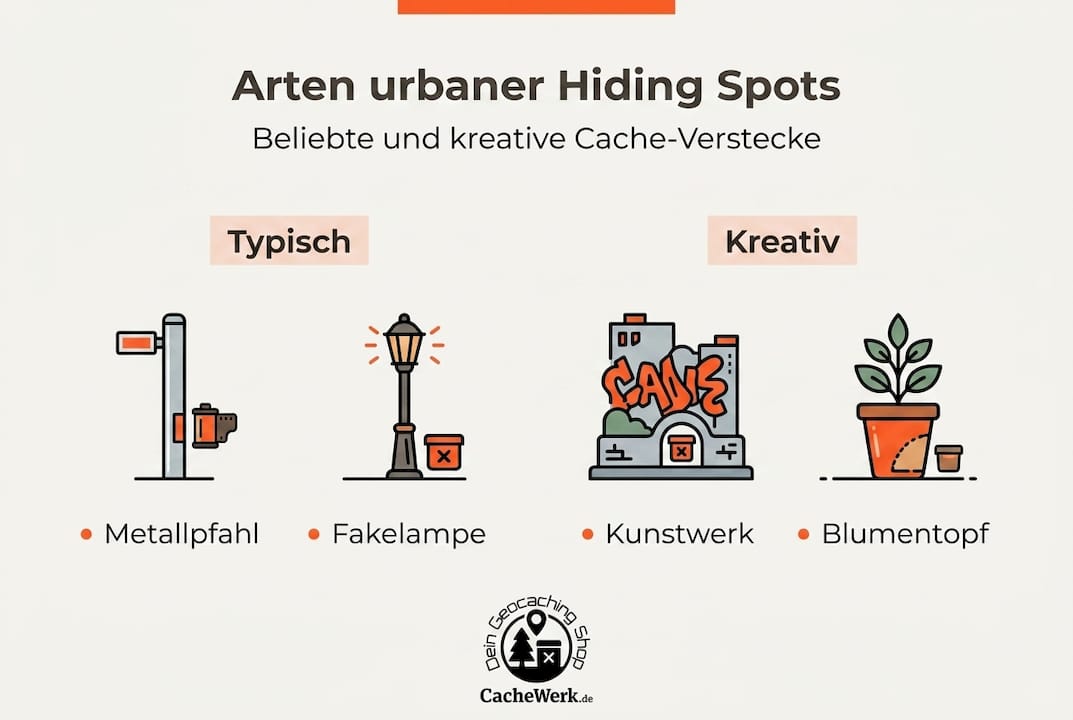
When it comes to creative geocaching ideas, it's clear: the better the hide fits the environment, the longer it survives in the urban wilderness.
What really makes innovation in hiding? It's not just about being as difficult as possible. Good hides combine several factors:
- Surprise element: The finder initially thinks it's a normal object.
- Thematic integration: The hide incorporates the surroundings, for example, a fake sign on a street with real signs.
- Durability: High-quality materials like PETG-printed housings can last for years.
- Serviceability: The cache owner can easily maintain the hide and replace the logbook insert.
Especially with urban hiding possibilities in cities, creativity pays off. Those who only opt for the cheapest option risk their hide being muggled, destroyed, or simply becoming boring after a few months. Quality and originality always pay off.
A particularly effective trick: place hides where people walk by daily but never look closely. A screw on a railing, a stone next to a bush, or a sticker on a mailbox can conceal deceptively real caches that no one suspects.
Camouflage and Security: How Your Hide Remains Discreet
Camouflage is the alpha and omega of a successful urban hide. Not only so that the cache isn't muggled, but also so that non-geocachers don't cause damage and the cityscape isn't disturbed. A good camouflage concept protects your cache in the long run.
Step by step to the perfect camouflaged hide:
- Site analysis: Observe the planned location at different times of day. How many people pass by? Are there surveillance cameras? Is access possible discreetly?
- Material selection: Choose materials that match the surroundings. Metal surfaces need metallic-looking caches. Natural stone environments are suitable for fake stones.
- Color and texture adaptation: Use colors and textures that appear natural in the surroundings. A brightly colored cache in a gray concrete wall stands out.
- Secure fastening: Magnetic mounts, screws, or Velcro ensure that the cache doesn't slip or get lost.
- Check weather protection: Test the hide for waterproofness before placing it. Damp logbooks are frustrating for everyone.
- Regular inspection: Visit your cache regularly and check if the camouflage and condition are still in order.
Products like magnetic fake stones and slugs are particularly effective in urban areas because they look completely like ordinary objects and do not attract unwanted attention.
Pro Tip: Test your hide by asking someone without geocaching experience to walk past the spot. If they don't notice anything unusual, the camouflage is successful.
A frequently underestimated aspect is acoustic camouflage. A container that rattles when touched or clicks loudly when opened can attract attention. Therefore, choose containers with dampened closures and pad the contents if necessary.
Technology tips for geocaching can also help: In addition to physical camouflage, digital aspects also play a role. Imprecise coordinates or clever clues can mislead Muggles even at the GPSr level.
Statistically, poorly camouflaged caches in urban areas are significantly more often damaged or muggled than those that are professionally designed. Well-camouflaged caches survive in the city on average two to three times longer than simple standard containers. This extra effort is definitely worth it.
Creating Your Own Urban Hiding Spots: Practice and Inspiration
Do you want to create your first urban cache? Then planning is the most important thing. Good hides don't happen spontaneously, but through careful observation, planning, and experimentation.
Step-by-step to your own urban hiding spot:
- Explore the location: Go to the potential spot multiple times and observe how people behave there. Do they walk through quickly or linger?
- Obtain permissions: Check if the location is publicly accessible. For private areas, monuments, or art objects, permission may be required. When in doubt, contact the responsible authority or owner.
- Select cache type: Choose the hide to match the location. Under a bridge, a nano cache is suitable; for an art object, perhaps a thematically appropriate key box.
- Develop a creative concept: Think about the story of your cache. What makes the location special? Are there historical references, local peculiarities, or visual highlights?
- Build and test the hide: Build the hide at home and thoroughly test it for waterproofness, stability, and camouflage before placing it.
- Create and publish the listing: Write an appealing cache description, choose the right difficulty level, and upload a title image.
Important points to consider when creating a hide:
- Respect the cityscape and do not leave any litter or damage.
- Only use materials that can withstand the weather.
- Keep the logbook small and dry so it lasts a long time.
- Find out about local geocaching rules and platform guidelines.
- Plan access so that finders do not attract attention.
According to an overview of urban hiding possibilities, cities offer a wide range, especially under bridges, near art objects, or in urban gardens. These locations combine natural inconspicuousness with a high experience value for the finder.
Inspired by our community, we particularly recommend daring ideas: What about a cache embedded in a real city map? Or a hide that looks like a component of a bicycle rack system? Those who approach urban geocaching with creativity leave a lasting impression on finders.
A strong practical tip: Test your cache yourself first, like a stranger geocacher. Only then will you realize if the coordinates are correct, the clues are clear, and the hide truly works.
Our Experience: What Really Works and What Doesn't
After many years in the geocaching community and countless conversations with experienced cachers, we have developed a clear opinion: creativity alone is not enough. Many hides die young because they are original but neither durable nor legally placed.
The truly successful urban hiding spots, which finders still rave about years later, are not necessarily the most unusual. They are the well-thought-out ones. A simple fake bolt on a railing that fits perfectly, lasts for years, and always stays dry, beats any spectacular but quickly muggleable cache.
A surprising finding from community feedback: Many geocachers prefer hides where the story is right. A cache that explains a special place or picks up a local history is much more often praised than a technically complex hide without context.
What we have also learned: Overused clichés such as the obligatory magnetic sticker on every third lamppost are increasingly met with indifference by the community. Those who take practical tips for urban geocaching seriously invest in originality, quality, and legal diligence. This is the basis for caches that truly remain memorable.
Professional Equipment for the Perfect Urban Hide
You now have the knowledge to plan and implement your own urban cache. The next step is the right equipment. Because even the most creative idea fails if the material isn't right.
At cachewerk.de you will find exactly what you need: from robust geocaching equipment and accessories to unusual hides such as the Fake Traffic Sign Hide. Our products are made from high-quality PETG material, are weather-resistant, and designed to blend seamlessly into the urban landscape. Whether you are planning your first urban hide or want to expand your collection: We have the right equipment for every situation. Stop by and get inspired!
Frequently Asked Questions
Which objects are particularly suitable for urban hiding spots?
Magnetic fake stones and slugs are ideal for urban hides, as they appear completely inconspicuous and are robust against weather influences. Small magnetic containers or nano caches are also classic and reliable options.
What needs to be considered when camouflaging urban hides?
Camouflage must both respect the cityscape and be robust against curious glances and weather. The color, texture, and material of the hide should match the immediate surroundings.
Can I use any location as a geocaching hide?
No, public and private areas often require permission. Always inform yourself about local rules, property rights, and the guidelines of the geocaching platform used.
Which places are particularly creative for urban caches?
Art objects, rooftop gardens, and bridges offer surprisingly creative ways to hide caches, as they provide many natural hiding spots and at the same time represent exciting locations for finders.