
Designing a Mystery Cache: Your Workflow from Idea to Maintenance
A puzzle cache is successful if you consistently work through six steps: Idea (theme, target group, and legal check), Design (puzzle mechanics and clue distribution), Prototype (technical implementation and spoiler protection), Beta Test (external testers, reviewer note, geochecker), Listing (listing text, photos, attributes), and Maintenance (maintenance plan, log monitoring). Approaching this puzzle cache design workflow systematically from the beginning saves you trouble later with reviewers and frustrated geocachers.
Three mandatory checks before submission:
- Solvability: Did a person without insider knowledge solve the puzzle?
- Reviewer Note: Is the solution documented comprehensibly for the reviewer?
- Geochecker: Are the final coordinates verifiable via a geochecker?
Pro Tip: Set a specific date for the first prototype before you start with the design. Without a deadline, the cache remains just an idea.
Key Takeaways
A structured puzzle cache design workflow with beta testing, geochecker, and reviewer note is the most reliable way to create a cache that works, gets approved, and brings long-term enjoyment.
| Topic | Details |
|---|---|
| Six-Phase Workflow | Idea, design, prototype, beta test, listing, and maintenance form the complete process. |
| Beta Testing is Mandatory | At least two external testers solve the puzzle before you submit it. |
| Set up a Geochecker | Validates guessed final coordinates without spoilers and is recommended on both platforms. |
| Consider Platform Differences | Geocaching.com allows private backend waypoints; Opencaching.de requires derivable final coordinates in the listing. |
| Cachewerk for Implementation | Starter bundles, camouflage containers, and special products from Cachewerk cover the physical part of the workflow. |
Table of Contents
- Which Analog and Digital Tools Do You Really Need?
- How to Design Your Puzzle Cache Step by Step
- What Differentiates Geocaching.com and Opencaching.de in Listing?
- How to Build and Test a Prototype Correctly?
- How to Maintain and Organize Your Puzzle Cache Long-Term?
- What are the Most Common Mistakes Owners Make with Puzzle Caches?
- Your Checklist Before Submission and Useful Resources
- Cachewerk Provides You with the Material for Every Step
- Sources
Which Analog and Digital Tools Do You Really Need?
Good tools make the difference between a cache that breaks in the bushes after three months and one that works for years.
Indispensable Analog Materials
- Weatherproof Logbook: Mandatory for every cache. No find without a logbook.
- PETling or robust container: Waterproof, durable, easy to camouflage.
- Mounting material: Cable ties, magnets, screws depending on the location.
- Camouflage material: Natural materials, paint, or ready-made camouflage containers.
For a quick start, the Geocaching Starter Bundle 1 and Starter Bundle 2 from Cachewerk are suitable: Both contain a PETling, logbook, and mounting/hanging, covering the basic equipment.
Those planning an urban puzzle cache will also find ready-made camouflage containers at Cachewerk: The Fake Water Meter Cover (customizable) blends seamlessly into the cityscape, the Geocaching Ammo Box Trick Edition deceives even attentive passers-by, and the Rusty Bolt Cache is a nano hide that is hardly noticeable as a rusty bolt. For puzzles with a mechanical component, the Blind Maze Tube is a creative choice: The invisible labyrinth hide makes opening it a puzzle in itself.
Most Important Digital Tools
- GC Wizard: Extensive tool collection for encryptions, coordinate calculators, and code analysis. Indispensable in the design phase.
- Geochecker (e.g., Certitude, GeoCheck.org): Validates guessed coordinates without revealing the solution.
- Spreadsheet (e.g., Google Sheets, LibreOffice Calc): For maintenance planning and beta test evaluation.
- Mapping tool (e.g., Google Maps, OpenStreetMap): For location planning and waypoint definition in the design phase.
- OCR/Converter Tools: Helpful if puzzles are based on image material or text recognition.
The Geocaching app received new tools for hiding traditional caches in 2026, which are also useful for puzzle cache owners when setting waypoints.
Pro Tip: Create a central spreadsheet that lists all your caches with location, last maintenance date, and Geochecker link. Three caches can still be remembered. From ten onwards, you'll need the table.
How to Design Your Puzzle Cache Step by Step
This workflow for puzzle caches guides you from the first idea to publication. Each phase has a clear goal and specific to-dos.
Phase 1: Idea and Concept
First, define your target audience. A cache for beginners (D/T 2/2) requires different puzzle mechanics than a hardcore mystery for experienced geocachers. Determine the theme, difficulty, and approximate location.
Then comes the legal check. In Germany: Caches on private land require the owner's permission. In nature reserves, national parks, and some forests, hiding is forbidden or requires permission. Check local regulations before investing time in design. Safety aspects also belong here: No cache should endanger finders or alarm uninvolved parties.
Also consider accessibility. Can you design the puzzle so that it is solvable for geocachers with limited mobility or color blindness? Setting appropriate attributes in the listing helps the community.
Phase 2: Design of the Puzzle Mechanics
Decide which type of puzzle you will use: encryption (ROT13, Caesar, Morse), image analysis, coordinate calculation, or a combination. Also common are hidden clues in the source code of the listing, invisible text, or clues that are only visible with a certain display.
Important design decision: Do you want to integrate standard tools like GC Wizard or build the puzzle so that these tools don't directly help? Both are legitimate but have consequences for your target group. Tool-friendly puzzles reach more geocachers; tool-resistant designs appeal to experienced puzzle solvers.
Also, determine where the final coordinates will be. On Geocaching.com, you can store them as a private waypoint in the backend. Opencaching.de does not have such an input mask.
Phase 3: Build a Prototype
Build the puzzle as a working prototype before placing the physical hide. For online puzzles, simple HTML/JavaScript files are suitable. In the community, MD5 hashes are discussed as pragmatic protection so that the solution is not directly readable in the source code.
The physical hide should also be ready in this phase: container, logbook, camouflage material. Test the assembly on-site before starting the beta test.
Phase 4: Beta Test and Reviewer Note
This is the phase that most owners underestimate. Have at least two people who were not involved in the development solve the puzzle. Beta tests with external testers are the most reliable method to check if a puzzle works for outsiders.
Write the reviewer note in parallel. It contains the complete solution, the solution path, and all information the reviewer needs to approve the cache. A good reviewer note significantly reduces queries.
Also, set up the Geochecker before submitting the listing.
Phase 5: Create Listing
Write a listing text that introduces the puzzle without spoiling it. Add all relevant attributes (accessibility, terrain, container size). Upload meaningful photos that show the location but don't reveal the hide. Set waypoints correctly, and place a subtle hint that helps in an emergency.
Phase 6: Define Maintenance Plan
Before publication, determine how often you will check the cache. Urban caches require more frequent checks than forest hides. Enter maintenance dates directly into your calendar.
Pro Tip: Photograph the hide from multiple angles during initial placement. When you come back for maintenance months later, you'll immediately know if anything has changed.
| Workflow Phase | Required Tools | Time Required | Risk / Complexity | Tips for Reviewer Approval |
|---|---|---|---|---|
| Idea | Map, notes | 1–2 hrs. | Low | Pre-check legal aspects |
| Design | GC Wizard, mapping tool | 2–6 hrs. | Medium | Test puzzle for outsiders |
| Prototype | HTML/JS, craft materials | 2 hrs. | Medium to high | Set up geochecker |
| Beta Test | Spreadsheet, testers | 1–3 hrs. | Low | Prepare reviewer note |
| Listing | Geocaching.com / Opencaching.de | 1–2 hrs. | Low | Include complete reviewer note |
| Maintenance | Calendar, spreadsheet | Ongoing | Low | Activate log monitoring |
What Differentiates Geocaching.com and Opencaching.de in Listing?
The biggest practical difference lies in the management of final coordinates.
On Geocaching.com, you can store the final coordinates as a non-public waypoint in the backend. Reviewers check this waypoint separately. The listing itself does not have to contain the final coordinates. This gives you more freedom in the listing text and protects the solution from spoilers.
On Opencaching.de, there is no separate input mask for private final coordinates. The final coordinates must either be hidden directly in the listing or be derivable in such a way that geocachers can calculate them from the puzzle itself. This requires a different approach to listing design.
What Belongs in the Reviewer Note?
- The complete solution to the puzzle, step by step
- The calculated final coordinates
- Notes on special circumstances (permissions, safety instructions, access restrictions)
- The link to the Geochecker
Pro Tip: Write the reviewer note as if you were explaining it to someone who has never seen the puzzle before. No jargon, no abbreviations.
A Geochecker is recommended for both platforms: It allows geocachers to check their guessed solution without publicly revealing the coordinates.
How to Build and Test a Prototype Correctly?
A prototype is not a luxury. It's the only way to know for sure that your puzzle works.
Building a Prototype: Online and Physical
For digital puzzle components, a simple HTML file with JavaScript is often sufficient. In the community, MD5 hashes are discussed as pragmatic protection: The solution is stored as a hash so that it is not directly readable in the source code. If you don't know HTML, you can also use a simple online form or a PDF puzzle.
The physical hide should be ready in parallel. Test the assembly under real conditions: Does the magnet hold in the rain? Is the container really waterproof?
Conducting a Structured Beta Test
- Select at least two external testers who are unfamiliar with the puzzle and have no insider information.
- Give them only what future geocachers will have: the listing text, the puzzle page, and the starting point.
- Ask them to answer the following questions in writing:
- How long did the puzzle take?
- Which steps were unclear or frustrating?
- Did you use external help (tools, internet)?
- Was the hint helpful or too much?
- Did you find the final coordinates and open the cache?
- Evaluate the answers and identify patterns.
Typical Pitfalls in Evaluation
- Insider knowledge: The puzzle requires knowledge that only insiders have. Solution: Formulate the puzzle more generally or provide a source.
- Missing source references: Testers don't know where to look. Solution: Include a subtle hint to the source in the listing.
- Technical barriers: The puzzle only works on certain devices or browsers. Solution: Test on multiple devices.
This "think-aloud" method shows you exactly where thinking errors arise.*
How to Maintain and Organize Your Puzzle Cache Long-Term?
A cache that is not maintained is a cache that will eventually be archived. Maintenance is not an afterthought, but part of the workflow.
Regular Maintenance Tasks
- Logbook check: Is the logbook still writable and dry?
- Condition check: Is the container intact, is the camouflage still convincing?
- Spoiler monitoring: Have geocachers published clues about the solution or location in their logs?
- Geochecker check: Is the Geochecker still working, is the URL active?
Automation and Organization
Calendar reminders are the simplest approach: Enter fixed maintenance dates, e.g., every three months for urban caches and every six months for forest hides. Those who operate multiple caches benefit from a central spreadsheet with status, last visit, and open tasks.
For log monitoring, you can activate email notifications for new logs on Geocaching.com. This way, you'll immediately see if someone reports a problem or hides a clue in the log.
| Maintenance Interval | Cache Type | Typical Tasks |
|---|---|---|
| Monthly | Urban nano cache | Logbook, camouflage, spoiler check |
| Quarterly | Urban puzzle cache | Container, geochecker, logs |
| Semi-annually | Forest/nature cache | Complete check, replace container |
| Annually | All caches | Update listing, check attributes |
What are the most common mistakes owners make with mystery caches?
Many caches fail not due to the idea, but due to avoidable implementation errors.
- Too much insider knowledge: The puzzle requires local or community-specific insider knowledge. Those not from the region have no chance.
- No geochecker: Geocachers cannot verify their solution themselves and search in the wrong place.
- Final coordinates in the wrong format: Decimal degrees instead of degrees/minutes, or vice versa. Always specify the format.
- Spoiler in the wrong place: A hint that reveals too much makes the puzzle worthless. A hint that says too little is frustrating.
- Missing reviewer note: The reviewer cannot release the cache because they don't know the solution.
- Legal issues: Cache on private property without permission, in nature reserves, or too close to schools and kindergartens.
Red Flags for Reviewers
Reviewers in Germany pay particular attention to: caches in nature reserves without permission, hides that could alarm uninvolved parties (e.g., deceptively realistic dummies), and listings without a plausible solution.
Quick Fixes
- Adjust listing: Include a general hint about the required source.
- Add hint: Include a subtle, multi-stage hint.
- Integrate geochecker later: Can also be done after publication.
- In case of damage on site: Immediately set cache to "Temporarily Unavailable," repair, then reactivate.
Pro Tip: Before submitting, read at least three logs from similar caches in your region. You'll immediately see what geocachers praise and what frustrates them.
Your Checklist Before Submission and Useful Resources
Before you click "Submit," go through this list:
- Solvability test: Has an external person completely solved the puzzle?
- Reviewer note: Does it contain the solution, final coordinates, and all special information?
- Geochecker: Set up, tested, link in the listing?
- Photos and attributes: Uploaded, accessibility and terrain set correctly?
- Maintenance plan: First date entered in the calendar?
- Environmental check: Location in Germany checked for nature conservation and permit requirements?
- Legal: Property owner informed, safety risks excluded?
Cachewerk Products Appearing in This Checklist
For the physical implementation, Cachewerk offers everything you need. The Starter Bundle sets provide containers, logbook, and holder in one. The Fake Water Sign is a ready-made urban camouflage hide with a post holder. The Blind Maze Tube is suitable for caches where opening itself is a puzzle. And the Rusty Bolt Cache fits wherever a nano hide is required.
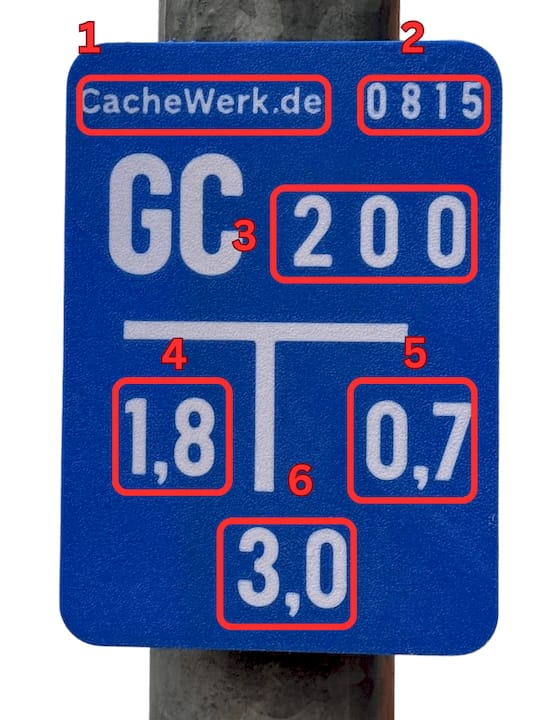
For beta testing and the reviewer note, you can find a step-by-step guide to puzzle creation on the Cachewerk blog.
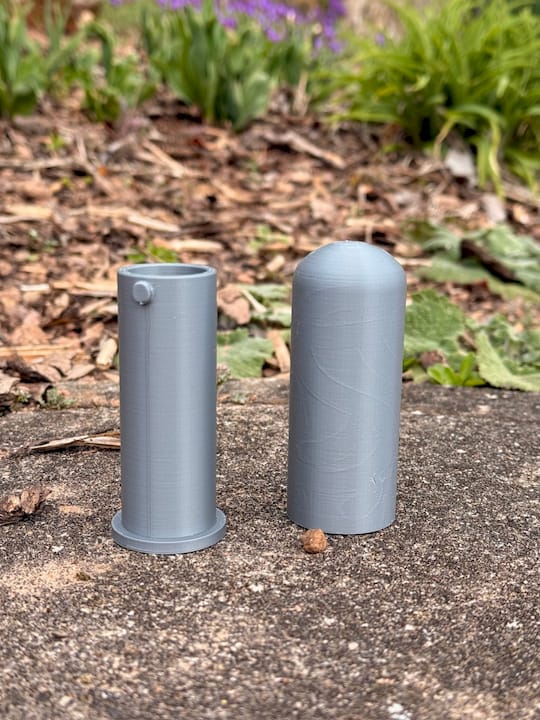
Pro Tip: Create your own template for the reviewer note and save it as a text file. For the next cache, you'll only need to fill in the blanks.
What Owners Really Learn During Creation
Beta testing is the step almost everyone skips on their first cache. The result: a puzzle that makes sense to the owner but seems like a secret language to everyone else. Once you've experienced an experienced geocacher failing at a task that was "so obvious," you'll think differently next time.
Simpler is almost always better. A puzzle with three clear steps is more fun than a construct with seven levels of encryption. The best caches in the community are often those where the "aha!" moment comes, not those where you give up after two hours.
And one more thing: maintenance is underrated creative work. A cache that still functions perfectly after a year is a sign of respect for the community. Set a date for your first prototype now. Not next week. Today.
Cachewerk provides you with the material for every step
Planning a mystery cache requires more than just a good idea. You need a hide that lasts, camouflage that convinces, and accessories that don't hinder your workflow.
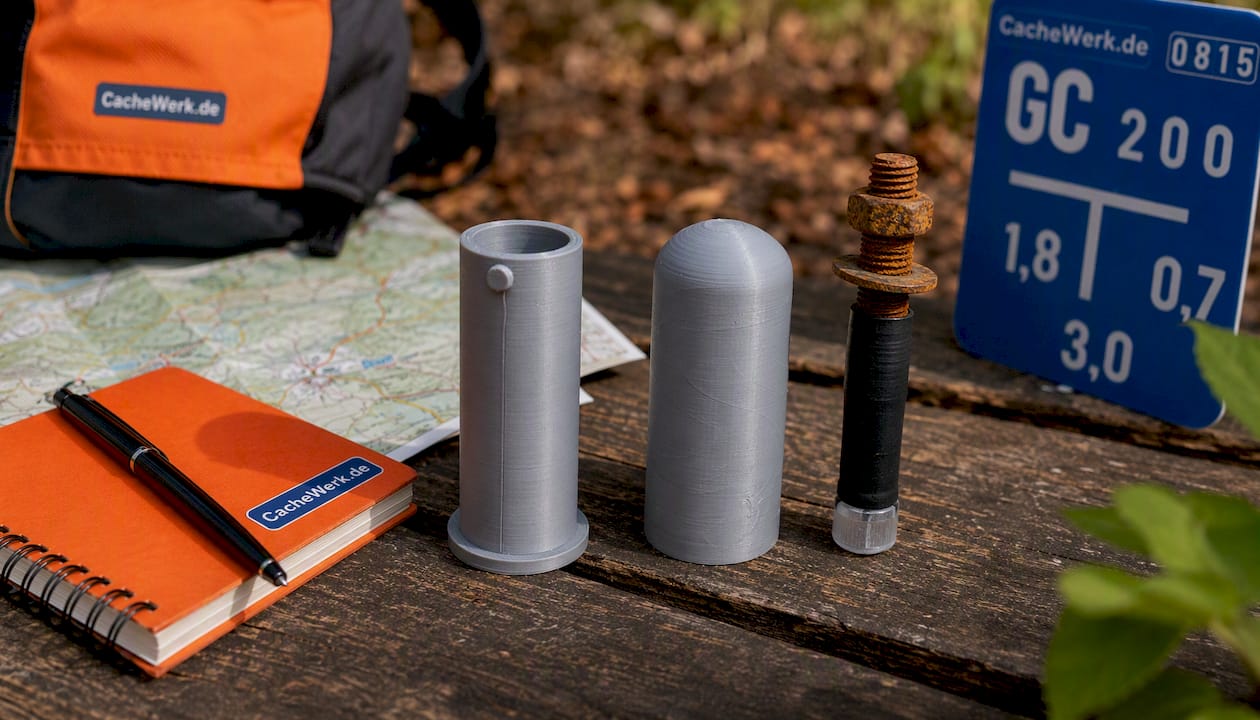
Cachewerk has exactly that in its assortment: from the starter bundle with PETling and logbook for the first cache to the Blind Maze Tube for elaborate mechanisms. The Fake Water Sign makes your urban cache invisible in the cityscape. The Ammo Box Trick Edition deceives even observant eyes. And the Crossbody Bag with the Opencaching logo keeps everything handy when you go out for a field test. All products are developed for use in Germany, weather-resistant, and ready for immediate use. Check out the complete range and order what you need for your next cache.
Sources
- How to win the heart of a mystery cache lover?
- Mysteries at Opencaching - Wolfgang Zimmer's Website
- Cache Types – Opencaching Wiki
- Mystery Geocaching #1 - Tips for solving the puzzle cache type