Electrical Socket Cache Ideas: The Best Hiding Spots for Your Geocache

For urban nano-hides, strong magnetic key hiders are the most reliable and low-maintenance solution. If you want to build an interactive gadget cache, a deceptively real-looking fake socket housing and an external USB power bank will get you the furthest. These two basic types cover the majority of all sensible socket cache ideas; everything else is fine-tuning.
Three options for different effort levels
- Nano (magnetic): A key hider or a magnetic hideout box on a metal surface, done in five minutes.
- Dummy (plastic cover): A painted socket cover without electronics, good effort-to-effect ratio.
- Gadget (powered dummy): A functional fake socket with a power bank for a small puzzle experience.
Important for all three: plan for a regular inspection interval and briefly check before placing whether the location is even permitted.
Key Takeaways
A socket cache works best if its camouflage matches the location, the power supply remains replaceable, and inspections are carried out regularly.
| Topic | Details |
|---|---|
| Best beginner idea | Magnetic key hiders for urban nano-hides, because they are low-maintenance and inconspicuous. |
| Power supply | Choose USB power banks instead of permanently installed batteries, as this simplifies replacement and repair. |
| Material for outdoor use | PETG instead of PLA for 3D-printed camouflage parts, due to UV resistance and toughness. |
| Inspection interval | Check urban caches every three months, bi-annual checks are sufficient for rural locations. |
| CacheWerk as a starting point | Starter bundles, ammo boxes, and the hydrant sign file provide ready-made basic building blocks for the ideas presented. |
Table of Contents
- Socket Cache Ideas: 12 Variations from Simple to Elaborate
- Material List and Tools for Socket Hides
- How Do You Power Electronic Gadget Caches?
- How Do You Choose the Right Location for Your Camouflage?
- Maintenance Schedule and Legal Notes for Socket Caches
- Why Robustness Is More Important Than Any Gadget
- CacheWerk Solutions for Your Next Socket Idea
- Sources
Socket Cache Ideas: 12 Variations from Simple to Elaborate
Not every idea suits every terrain. The following list is sorted by effort, so you can see directly where you should start.
- Magnetic Key Hider under metal surfaces. Adheres to lamp posts, distribution boxes, or railings. Low effort, medium muggle risk because metal surfaces are often touched by passers-by. Check every three months.
- Fake cover behind picture frames. Only works in protected indoor areas (clubhouses, museums with cache permission), not in public outdoor spaces. Low effort.
- Pop-up counter socket as a multi-hide. Built-in solutions like retractable sockets require precise cutouts and a solid sub-structure. Rarely practical for outdoor caches, but quite appealing as a station element in a multi with access to a fixed structure.
- Stone or pebble dummy with PETling. A classic that works almost everywhere. Medium effort, low maintenance as long as the plastic is UV-stable.
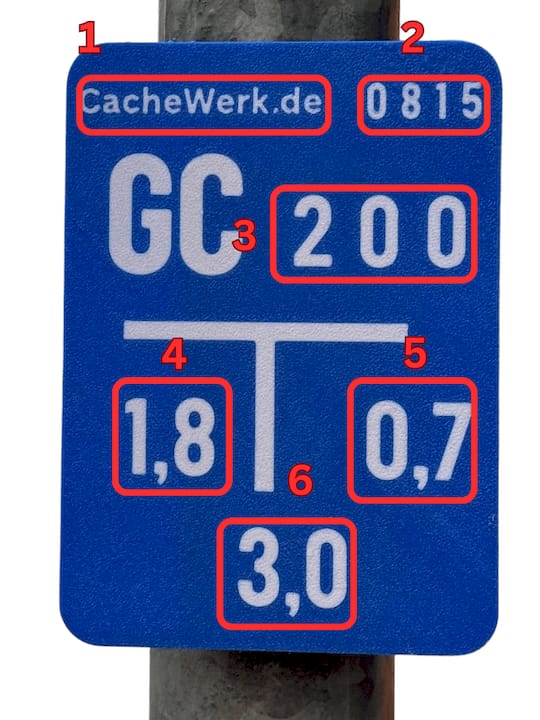
- 3D-printed hydrant sign. The fake hydrant sign file can be printed in PETG and looks completely inconspicuous in the cityscape. Medium to high effort, but extremely low muggle risk.
- Retractable built-in dummy in a wall niche or plinth. High effort, as you need a suitable recess.
- Ammo box with socket camouflage. A robust ammo box with a trick design easily withstands wind and weather and is suitable for larger trade items.
- Screw hide with magnet and secret compartment, disguised as a seemingly loose screw next to a control box. Low effort, very good camouflage at first glance.
- Mini-hammer trick hide. A tool handle with a hidden logbook, ideal for workshops, depots, or garden facilities with cache permission.
- Internal socket dummy in an inconspicuous cabinet or shed. Low to medium effort, but only with the owner's consent.
- Furniture-integrated cover. Principles from covering wall sockets can be applied to fixed benches or information boards, if you are allowed to use their back.
- Battery- or power bank-supported gadget station. A functional fake socket with an LED code display or a small puzzle mechanism, powered by a replaceable power bank.
Pro Tip: First build each idea as a cardboard model at the target location before gluing or drilling. Five minutes with cardboard will save you an hour of on-site correction.
Material List and Tools for Socket Hides
A solid socket cache stands or falls with the choice of container. Lock & Lock boxes, PETling tubes, and metal ammo boxes are the three standard sizes that can be integrated into almost any dummy.
- Container: Lock & Lock, PETling, Ammo Box (depending on cache size)
- Sealing: Silicone for joints, casting resin for permanently bonded electronic parts
- Mounting: Neodymium magnets with sufficient adhesive force, stainless steel screws, carabiners
- 3D Printing: PETG instead of PLA, due to UV resistance and toughness in outdoor use
- Tools: Dremel for fine finishing, cordless drill, soldering iron and multimeter for electronics projects
- Basic electronics equipment: Breadboard, fuses, USB power bank as power source
For magnets, it's worth looking at the pulling force in kilograms, not just the size. A small, strong magnet often holds more reliably than a large, weak disc.
How Do You Power Electronic Gadget Caches?
First build each circuit on the breadboard and test it for several days under real conditions before permanently installing anything. Experienced owners consistently rely on breadboard tests because errors can hardly be corrected once everything is potted.
- Build a prototype and run it for several days before permanently mounting anything.
- Choose a USB power bank as the standard solution. It is replaceable, widely available, and cheaper to maintain than permanently installed batteries.
- Use AA batteries as an alternative, but then pay attention to a suitable voltage converter if the circuit requires a different voltage. A water-resistant battery holder significantly reduces the risk of failure here.
- Install moisture protection: Use casting resin only if the circuit is already running flawlessly; otherwise, choose a removable encapsulation that can be opened if necessary.
- Plan for a fuse and reverse polarity protection to prevent a short circuit from destroying the entire electronics.
Pro Tip: Note in the cache listing whether and how the power bank may be removed by the finder. This prevents someone from pulling out all the wiring out of uncertainty.
How Do You Choose the Right Location for Your Camouflage?
First, stand at the planned location for a while and observe which colors, textures, and sightlines dominate there. A dummy that looks perfect in hardware store light can still immediately stand out against a weathered brick wall.
- Apply paint in several thin layers and use stencils with leaf motifs for irregular, natural edges, as experienced cache owners recommend for prototyping.
- Choose materials that match the environment: metal look for distribution boxes, stone structure for masonry, plastic for modern facades.
- Avoid hotspots with a high probability of vandalism, such as highly frequented playgrounds or bus stops with constant public traffic.
- Use subtle mounting points such as the underside of benches or edge profiles on buildings, instead of working in the middle of a visible area.
- Add a discreet hint in the listing for security, without revealing the solution directly.
Maintenance Schedule and Legal Notes for Socket Caches
You should check urban hides about every three months, while bi-annual checks are usually sufficient for rural locations. Robust materials and a good choice of location significantly reduce the risk of vandalism much more than any combination lock, which can fail eventually anyway.
- Check the seal, condition of the logbook, and fastening stability during each inspection.
- Look for typical signs of wear: brittle seals, rusting magnets, porous or yellowed PETG.
- Replace the housing as soon as moisture gets inside or the camouflage paint visibly flakes off.
- Never alter public infrastructure such as real distribution boxes or hydrants. If in doubt, ask the responsible authority or property owner before attaching anything.
Why Robustness Is More Important Than Any Gadget
Most new owners overestimate how much a clever gadget carries the cache and underestimate how much a simple, robust container determines its lifespan. A deceptively real hydrant sign without electronics can survive for years. A gadget station with shaky wiring is often dead after three months, no matter how impressive it seemed at first.
The common assumption that more technology equals more favorite points falls short. What really counts is the combination of convincing camouflage and a maintenance rhythm that you actually adhere to. A cache that no one checks will eventually become trash, no matter how original the idea once was.
Newcomers should first build a single magnetic or dummy idea, let it run for three months, and only then invest in electronics. This sequence saves frustration and money, and it quickly shows you whether your chosen location is viable at all.
— Benedikt
CacheWerk Solutions for Your Next Socket Idea
For many of the ideas mentioned, you don't need to start from scratch, but merely the right basic building block. The Geocaching Starter Bundle with PETling, logbook, and holder provides exactly what a nano-hide or a stone dummy needs, complete with a suitable holder. If your hide needs a suspension, for example on a branch or railing, the Starter Bundle with suspension is a better fit.
For the hydrant sign idea from the list, Cachewerk offers the corresponding 3D printing file for the fake hydrant sign directly for download. Print it in PETG with sufficient wall thickness, then it will hold up even in winter. If you are looking for a larger, robust hide, the ammo box with a trick design is a weatherproof solution for multis or larger trade items. And for on the go, there's the Crossbody Bag with an Opencaching logo, so your tools are always at hand when hiding. Check out the shop and start with the bundle that suits your next idea.
Sources
- Geocaching Magnetic Hideout Box With Log Sheet - Key Canister
- Installing USB Sockets and Hiding Sockets
- From the Idea to the Favorite Geocache
- New Can, New Luck