
Tutorial Camouflage Urban Outdoor: Stadtarnung 2026
Urbane Tarnung ist die gezielte Anpassung von Kleidung, Ausrüstung und Verhalten an die Farben, Strukturen und Lichtverhältnisse städtischer Umgebungen. Wer Geocaching in der Stadt betreibt oder Outdoor-Aktivitäten im urbanen Raum plant, braucht mehr als ein einfaches Grau-Shirt. Tarnmuster sind taktische Werkzeuge, bei denen Muster, Kleidung und Verhalten zusammenpassen müssen. Fehlt auch nur ein Element, reicht ein Lichtreflex auf dem Rucksack, um die gesamte Tarnung zu zerstören. Dieses Tutorial zum Thema Camouflage Urban Outdoor zeigt dir Schritt für Schritt, wie du dich in der Stadt wirklich unsichtbar machst.
Welche urbanen Tarnmuster gibt es und wie passen sie zu Stadtzonen?
Nicht jedes Tarnmuster funktioniert überall gleich gut. Das richtige Muster hängt von der Umgebung ab: Kleinteilige digitale Muster eignen sich für enge Gassen, großflächige Designs für offene Industriegebiete.
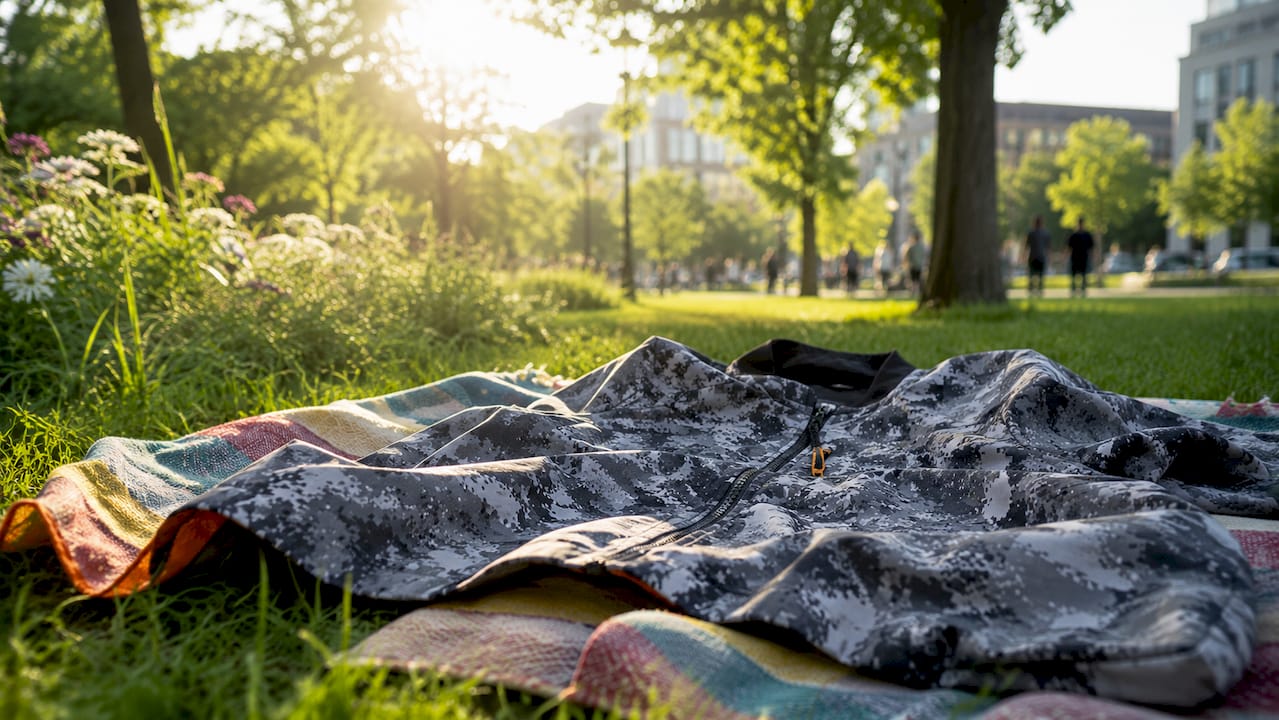
Digitale Grau-Muster wie Urban MARPAT nutzen eine sogenannte Dithering-Technik. Dabei werden winzige Pixel so angeordnet, dass sie das visuelle „Rauschen" einer Betonwand nachahmen. Tests zeigen eine 40% bessere Verbergung gegenüber einfarbigen Grautönen bei 25 Metern Entfernung. Das ist kein kleiner Unterschied.
Moderne Muster gehen noch weiter. Farbspektrum und Musterorientierung sind so gestaltet, dass sie auch im Infrarotbereich nicht auffallen. Das spielt für Geocacher zwar selten eine Rolle, zeigt aber, wie durchdacht gute urbane Tarntechnik ist.
| Stadtzone | Empfohlenes Muster | Farbpalette |
|---|---|---|
| Enge Gassen, Altstadt | Kleinteiliges Digitalmuster (z.B. Urban MARPAT) | Mittelgrau, Anthrazit, Beige |
| Industriegebiet, Hafen | Großflächiges Fleckmuster | Dunkelgrau, Rostbraun, Schwarz |
| Innenstadt, Geschäftsstraße | Einfarbig mit Textur-Accessoires | Anthrazit, Dunkelblau, Khaki |
| Dachflächen, Brücken | Horizontale Streifenmuster | Hellgrau, Weiß, Beton-Beige |
Wichtig beim Farbspektrum: Tiefes Schwarz kontrastiert unter städtischen Lichtverhältnissen und fällt auf. Dunkelgrau und Anthrazit sind die bessere Wahl. Wer das noch nicht wusste, hat sich vielleicht schon gefragt, warum die schwarze Jacke in der Stadt so sichtbar wirkt.
Die wichtigsten Mustertypen im Überblick:
- Urban MARPAT: Pixelbasiert, ideal für Beton und Asphalt
- Großflächige Fleckmuster: Für Industriezonen mit unregelmäßigen Strukturen
- Einfarbig mit Textur-Layering: Für belebte Innenstädte, wo Muster auffallen würden
- Horizontale Streifenmuster: Für Bereiche mit langen, geraden Linien wie Brücken oder Bahnhöfe
Wie wähle ich die richtige Ausrüstung für urbane Tarnung?
Matte, strukturierte Stoffe sind die Grundlage jeder guten Stadtarnung. Glänzende Materialien reflektieren Licht und machen dich auf 50 Meter sichtbar, selbst wenn das Muster perfekt passt.
Farbtöne sollten zur Jahreszeit passen. Im Winter wirken Betongrau und Hellgrau natürlicher, im Sommer kommen Khaki und Dunkeloliv hinzu, weil Stadtbäume und Grünflächen ins Bild kommen. Wer das ignoriert, trägt im Februar ein Sommermuster und fällt sofort auf.
Die Kombination verschiedener Texturen bricht die Silhouette. Netzschals und strukturierte Rucksäcke helfen dabei besser als ein einzelnes Muster allein. Das Prinzip: Je mehr unterschiedliche Oberflächen, desto schwerer ist die menschliche Form zu erkennen.
Empfehlungen für die Ausrüstungsauswahl:
- Jacke und Hose: Matte Ripstop-Stoffe oder Softshell ohne Glanzeffekt
- Rucksack: Strukturierter Cordura-Stoff in passendem Grauton, keine Metallschnallen ohne Abdeckung
- Schuhe: Dunkelgrau oder Schwarz, keine weißen Sohlen
- Accessoires: Netzschal, matte Handschuhe, Stirnband in Tarnfarbe
- Ausrüstungsgegenstände: Alle glänzenden Teile mit mattem Klebeband oder Farbe abdecken
Profi-Tipp: Klebe alle Metallteile an Rucksack und Ausrüstung mit mattem schwarzen Gaffer-Tape ab. Karabiner, Reißverschlusszipper und Schnallen sind die häufigsten Tarnkiller im urbanen Gelände.
Wie setze ich urbane Tarnung Schritt für Schritt um?
[Effektive Tarnung erfordert passende Muster und natürliche Bewegungen](https://cachewerk.de/blogs/geocaching-blog/urban camouflage schritt fur schritt anleitung). Wer sich perfekt kleidet, aber hektisch durch die Gegend läuft, fällt trotzdem auf. Die Umsetzung beginnt vor der eigentlichen Aktivität.
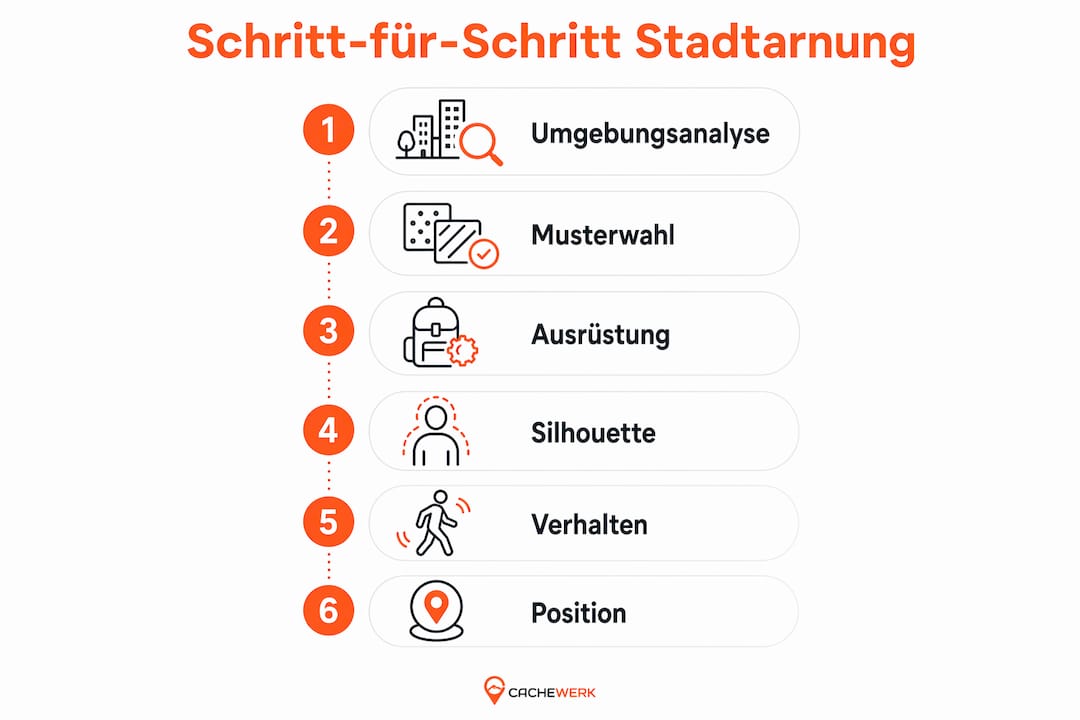
Schritt 1: Umgebungsanalyse
Analysiere das Einsatzgebiet vor der Tour. Notiere die dominanten Farben, typische Lichtquellen und die Hauptstrukturen. Eine Gasse mit alten Backsteinmauern verlangt andere Farben als ein modernes Glasgebäude-Viertel. Mach ruhig ein paar Fotos mit dem Smartphone, die helfen bei der Musterauswahl.
Schritt 2: Muster und Farbe auswählen
Wähle Muster und Farben anhand der Analyse. Kleinteilige Digitalmuster für enge, strukturierte Bereiche. Großflächige Muster für offene Zonen. Passe die Farbpalette an die Jahreszeit an.
Schritt 3: Ausrüstung anpassen
Gehe alle Ausrüstungsteile durch und eliminiere Reflexionspunkte. Klebe glänzende Flächen ab. Wähle einen Rucksack, der zum Muster passt oder zumindest nicht kontrastiert.
Schritt 4: Silhouette brechen
Vertikale und horizontale Linien zerstören die Erkennung der menschlichen Form im urbanen Umfeld. Nutze Netzschals, Accessoires mit unterschiedlichen Texturen und Schichten, um die typische Körperform aufzulösen. Das ist der Schritt, den die meisten überspringen.
Schritt 5: Verhalten anpassen
Bewege dich langsam und gleichmäßig. Vermeide abrupte Richtungswechsel. Lehne dich an Wände oder Strukturen, wenn du stehst. Halte Blickkontakt mit der Umgebung, nicht mit dem Boden. Wer nervös wirkt, fällt auf, egal wie gut die Tarnung ist.
Schritt 6: Position wählen
Stelle dich immer vor einen Hintergrund, der deinem Muster ähnelt. Vor einer Betonwand mit Urban MARPAT wirst du kaum gesehen. Vor einem hellen Schaufenster stehst du wie ein Schattenriss.
Profi-Tipp: Teste deine Tarnung vor der Tour: Stelle dich in verschiedene typische Positionen und lass jemanden aus 20 Metern Entfernung schauen. Was auffällt, muss angepasst werden.
Welche Fehler zerstören die urbane Tarnung?
Die häufigsten Fehler bei der Stadtarnung sind vermeidbar. Wer sie kennt, macht sie nicht.
„Optimale Tarnung kombiniert sinnvolles Verhalten und nicht reflektierende Ausrüstung. Fehlt eines davon, ist das Gesamtkonzept wertlos." (ASMC, März 2026)
Die typischen Fehler im Überblick:
- Glänzende Ausrüstung: Metallschnallen, Glaslinsen, Reißverschlüsse ohne Abdeckung. Ein einziger Lichtreflex macht dich auf 100 Meter sichtbar.
- Zu einfarbige Kleidung: Ein einfarbiges Grau-Outfit sieht aus der Nähe wie ein Grau-Outfit aus. Kein Muster, keine Textur, keine Tiefe.
- Falsches Schwarz: Tiefes Schwarz hebt sich unter städtischen Lichtverhältnissen ab. Anthrazit ist fast immer besser.
- Unnatürliche Körperhaltung: Steif stehen, Arme eng am Körper, Blick starr geradeaus. Das schreit nach Aufmerksamkeit.
- Muster ohne Umgebungsbezug: Ein Waldmuster in der Innenstadt ist keine Tarnung. Es ist ein Kostüm.
- Fehlende Schichtung: Wer nur eine Textur trägt, hat keine Silhouettenbrechung. Zwei bis drei verschiedene Texturen sind das Minimum.
Besonders der letzte Punkt wird unterschätzt. Die Kombination mehrerer Muster und Texturen erschwert die Erkennung der menschlichen Form deutlich mehr als ein einzelnes, perfektes Muster. Das Gehirn des Betrachters sucht nach bekannten Formen. Je mehr du diese Form aufbrichst, desto besser.
Spezielle Tipps für Geocacher: Caches tarnen und Touren planen
Geocaching in der Stadt stellt eine doppelte Herausforderung dar. Nicht nur du selbst musst unsichtbar bleiben, auch der Cache muss perfekt getarnt sein. Beides zusammen als Gesamtkonzept zu denken, macht den Unterschied zwischen einem guten und einem großartigen Cache.
Für die Cache-Tarnung gelten dieselben Grundprinzipien wie für die Personentarnung. Farbe, Textur und Form müssen zur Umgebung passen. Ein grauer Magnetbehälter an einem grauen Stahlträger fällt kaum auf. Derselbe Behälter an einer roten Backsteinmauer ist sofort sichtbar.
Praktische Tipps für Geocacher:
- Versteck an Strukturen anpassen: Nutze die Farbe und Textur der Umgebung als Vorlage. Betongrau für Betonwände, Rostbraun für alte Metallkonstruktionen.
- Form brechen: Runde Behälter fallen auf, weil kaum etwas in der Stadt rund ist. Eckige oder unregelmäßige Formen sind besser.
- Bewegung beim Suchen: Geh langsam und schau dich dabei um, als würdest du etwas anderes tun. Wer offensichtlich sucht, zieht Blicke an.
- Zeitpunkt wählen: Früher Morgen oder später Abend bieten weniger Beobachter und andere Lichtverhältnisse.
- Eigene Tarnung zum Cache abstimmen: Wenn du einen Cache in einem Industriegebiet versteckst, trage beim Legen und Suchen passendes Muster.
| Cache-Typ | Empfohlene Tarntechnik | Geeignete Umgebung |
|---|---|---|
| Magnetbehälter | Grau lackiert, matte Oberfläche | Stahlträger, Metallzäune |
| PETling | Betongrau oder anthrazit bemalt | Mauern, Bordsteinkanten |
| Nano-Cache | Schwarz oder dunkelgrau | Schrauben, Bolzen, Scharniere |
| Ammo-Box | Strukturierte Oberfläche, Erdfarben | Industriegelände, Keller |
Wer kreative Versteckideen für urbane Spots sucht, findet bei Cachewerk konkrete Beispiele aus der Praxis. Und wer seine Tarnung testen will, bevor er einen Cache legt, sollte sich die Tarnmuster-Alternativen im Vergleich ansehen.
Wichtige Erkenntnisse
Urbane Tarnung gelingt nur, wenn Muster, Ausrüstung und Verhalten gemeinsam auf die spezifische Stadtzone abgestimmt sind.
| Thema | Details |
|---|---|
| Musterauswahl nach Zone | Kleinteilige Digitalmuster für Gassen, großflächige Muster für Industriegebiete. |
| Schwarz vermeiden | Anthrazit und Dunkelgrau sind unter städtischen Lichtverhältnissen effektiver als Schwarz. |
| Silhouette brechen | Mehrere Texturen und Schichten lösen die menschliche Form auf, ein einzelnes Muster reicht nicht. |
| Verhalten entscheidet | Langsame, gleichmäßige Bewegungen und Anlehnen an Strukturen sind genauso wichtig wie die Kleidung. |
| Cache und Person abstimmen | Versteck und eigene Tarnung sollten als Gesamtkonzept zur Umgebung passen. |
Meine Erfahrung mit urbaner Tarnung nach Jahren im Gelände
Ich habe viele Stunden damit verbracht, Caches in der Stadt zu legen und zu suchen. Und ich sage dir ehrlich: Der häufigste Fehler ist nicht das falsche Muster. Es ist das Verhalten.
Ich habe Geocacher gesehen, die perfekt ausgerüstet waren, anthrazitfarbene Jacke, strukturierter Rucksack, kein einziger Reflex. Und dann standen sie mitten auf dem Gehweg, starrten auf ihr Smartphone und drehten sich im Kreis. Jeder Passant hat geschaut. Die Tarnung war wertlos.
Was wirklich funktioniert: Vor der Tour fünf Minuten in die Umgebung schauen. Welche Farben dominieren? Wo stehen Menschen normalerweise? Wie bewegen sie sich? Wer diese Fragen beantwortet, bevor er losgeht, hat schon gewonnen.
Ich empfehle außerdem, die Tarnung nicht zu übertreiben. Wer in der Innenstadt mit einem vollständigen Tarnanzug auftaucht, fällt mehr auf als jemand in einer schlichten anthrazitfarbenen Jacke. Urbane Tarnung bedeutet oft: unauffällig wie alle anderen aussehen, nur mit mehr Bewusstsein für Farbe und Textur.
Und noch etwas: Wechselnde Bedingungen verlangen Anpassung. Was im Sommer funktioniert, versagt im Winter. Was morgens passt, kann abends falsch sein. Wer seine Tarnung als festes System betrachtet, verliert. Wer sie als laufende Anpassung versteht, gewinnt.
— Benedikt
Cachewerk: Ausrüstung für urbane Tarnung und Geocaching
Wer seine urbane Tarnung ernstnimmt, braucht Verstecke, die genauso durchdacht sind wie die eigene Ausrüstung.
Cachewerk bietet speziell für den urbanen Einsatz entwickelte Geocaching-Verstecke, die sich nahtlos in Stadtstrukturen einfügen. Die Geocaching Ammo-Box Trick Edition ist ein Klassiker für Industriegebiete und Keller. Der Vermessungspunkt aus PETG-Druck sieht aus wie ein echter Bolzen im Boden. Wer gerade anfängt, findet im Geocaching-Starter-Bundle alles Nötige für die ersten urbanen Caches. Das gesamte Geocaching-Zubehör bei Cachewerk ist auf unauffälligen Einsatz in der Stadt ausgelegt.
FAQ
Was ist urbane Tarnung genau?
Urbane Tarnung ist die Anpassung von Kleidung, Ausrüstung und Verhalten an die Farben und Strukturen städtischer Umgebungen. Ziel ist es, in Beton, Stahl und Asphalt optisch zu verschwinden.
Welches Tarnmuster ist am besten für die Stadt?
Digitale Grau-Muster wie Urban MARPAT sind für enge Gassen und Betonumgebungen am wirksamsten. Für offene Industriegebiete funktionieren großflächige Fleckmuster besser.
Warum ist schwarze Kleidung in der Stadt keine gute Tarnung?
Tiefes Schwarz kontrastiert unter den typischen Licht- und Schattenverhältnissen der Stadt und fällt auf. Anthrazit und Dunkelgrau passen sich besser an urbane Oberflächen an.
Wie tarnt man einen Geocache in der Stadt?
Farbe, Form und Textur des Verstecks müssen zur direkten Umgebung passen. Ein grau lackierter Magnetbehälter an einem Stahlträger oder ein betongrau bemalter PETling an einer Mauer sind kaum zu sehen.
Reicht das richtige Muster allein für gute Stadtarnung?
Nein. Muster, Ausrüstung ohne Reflexionspunkte und natürliches Verhalten müssen zusammenpassen. Wer sich auffällig bewegt, wird entdeckt, egal wie gut die Kleidung getarnt ist.