
Urban Geocaching: Creativity and Technology for Cities
TL;DR:
- Urban geocaching uses everyday objects as creative hiding spots in the city.
- High-quality camouflage, weather resistance, and discretion are crucial for long-lasting caches.
- It promotes city tourism, discovers unknown places, and strengthens the community.
In the middle of the city, on a normal lamppost or under a park bench: caches often hide right before our eyes. Urban geocaching transforms everyday structures into exciting search targets, making every street corner a potential find spot. Those looking for creative hiding spots in cities will not only discover containers and nanos but entire city districts from a new perspective. This guide shows you what makes urban geocaching special, which accessories are truly helpful, which rules apply, and how to maintain your caches long-term.
Table of Contents
- What makes urban geocaching special?
- Creative hiding solutions and accessories
- Rules, permits, and maintenance for urban caches
- Tourism and Community: City Geocaching as an Experience
- Our view: What truly makes urban caches unique
- Further products and accessories for urban geocachers
- Frequently Asked Questions
Key Insights
| Point | Details |
|---|---|
| High Cache Density | In cities, many caches can be found quickly – ideal for intensive collecting tours. |
| Creative Camouflage | Urban geocaching requires innovative hiding places, often disguised as everyday objects. |
| Technology and Accessories | Accessories like magnetic containers and 3D printing enable durable, sophisticated caches. |
| Community and Tourism | Popular urban routes promote local tourism and strengthen the geocaching community. |
| Rules and Stealth | Rule-compliant and discreet placement are crucial for urban success. |
What makes urban geocaching special?
Anyone who has only searched for caches in the forest will quickly be surprised in the city. The rules of the game remain the same, but the environment changes everything. Instead of tree stumps and rock ledges, manhole covers, electrical boxes, and bridge railings serve as hiding places.
A key difference is cache density. In large cities, you often find significantly more caches per square kilometer than in rural areas. This means you can make many finds in a single afternoon without traveling long distances. This is particularly motivating for beginners.
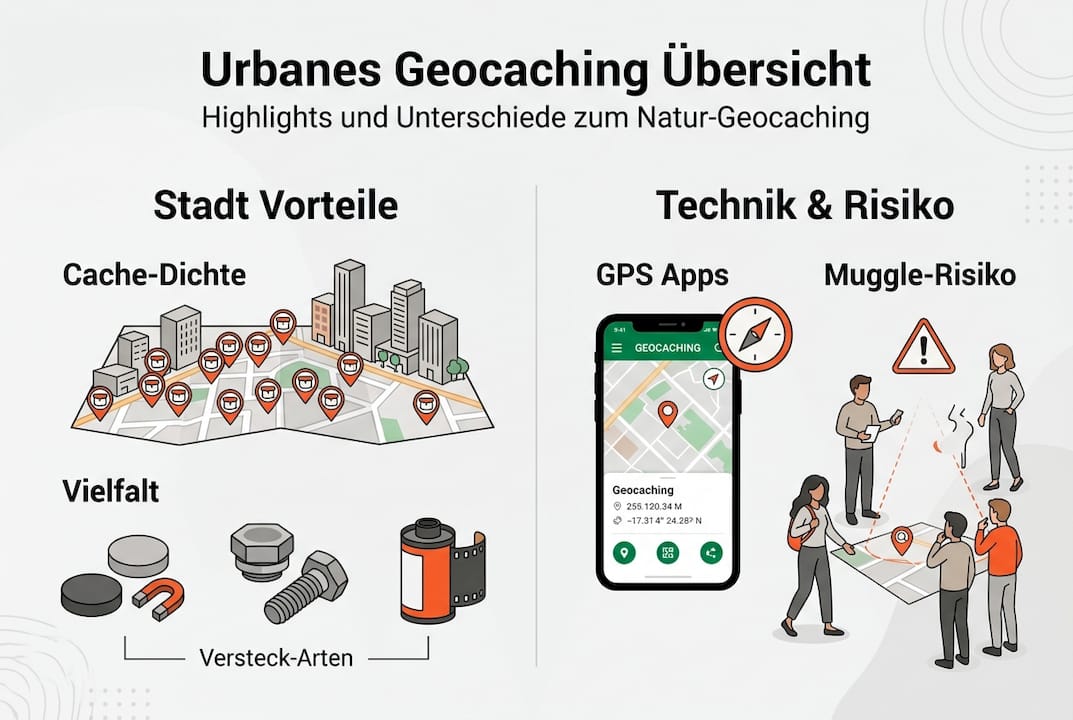
Added to this is the creative variety. Creative hiding spots in cities use everyday objects as camouflage: screws, magnets, fake signs, or deceptively real stones. Examples from Manhattan show how far this creativity can go. Caches there hide in street signs, phone booths, and even art installations.
| Feature | Urban Geocaching | Nature Geocaching |
|---|---|---|
| Cache Density | Very high | Low to medium |
| Creativity | Everyday objects as camouflage | Natural hiding places |
| Accessibility | Year-round, weather-independent | Seasonally restricted |
| Muggle Risk | Very high | Low |
| Maintenance Effort | High | Medium |
The biggest difference lies in the so-called muggle risk. Muggles are people who know nothing about geocaching and could accidentally remove or report a cache. In the city, there are always people around. This makes camouflage and discretion particularly important.
What many underestimate: Urban vs. nature shows that while urban caches are more creative and accessible, they require significantly more maintenance and planning. A poorly camouflaged cache in the city center will quickly be found or removed.
The advantages at a glance:
- High find density in a small area
- Discovery of unknown city districts and historical sites
- Playable year-round, even in bad weather
- Promotion of city tourism and local interest
- Strong community through shared routes
“Urban geocaching combines everyday life with a sense of adventure. Those who look closely will discover a city they thought they knew in a completely new way.”
Creative hiding solutions and accessories
The choice of the right hiding place determines whether a cache survives for months or only weeks. In urban areas, two properties are particularly important: inconspicuousness and weather resistance.
Magnetic nano-caches are particularly popular in urban areas. They adhere to metal structures like lampposts, railings, or electrical boxes and are hardly noticeable. Another highlight are 3D-printed mimics: these are containers that deceptively imitate everyday objects. Screws, chewing gum, stones, or tree bark made of PETG plastic look like the original but contain a small logbook.
When choosing a container, the more inconspicuous, the better. Important considerations are:
- Waterproofness: Silicone seals and screw-on lids protect the logbook
- UV Resistance: PETG and ABS withstand sun exposure better than simple PLA
- Size: Nano and micro-caches are the first choice in the city
- Color and Texture: Gray, black, or rust optics blend into urban environments
Creative ideas worldwide show how far imagination can go: from deceptively real coasters to hidden magnets in street signs.
| Hiding Spot Type | Material | Location | Durability |
|---|---|---|---|
| Magnetic Nano | Metal/Plastic | Metal structures | High |
| 3D Mimic Screw | PETG | Railings, walls | Very high |
| Fake Stone | Synthetic resin | Paved areas | Medium |
| Micro Container | Aluminum | Under benches | High |
Technical accessories make searching and hiding even more precise. GPS apps with offline maps help with exact coordinate entry. Strong neodymium magnets ensure that magnetic caches remain in place even with wind and vibrations. Replacement seals and logbook rolls belong in every serious cacher's maintenance kit.
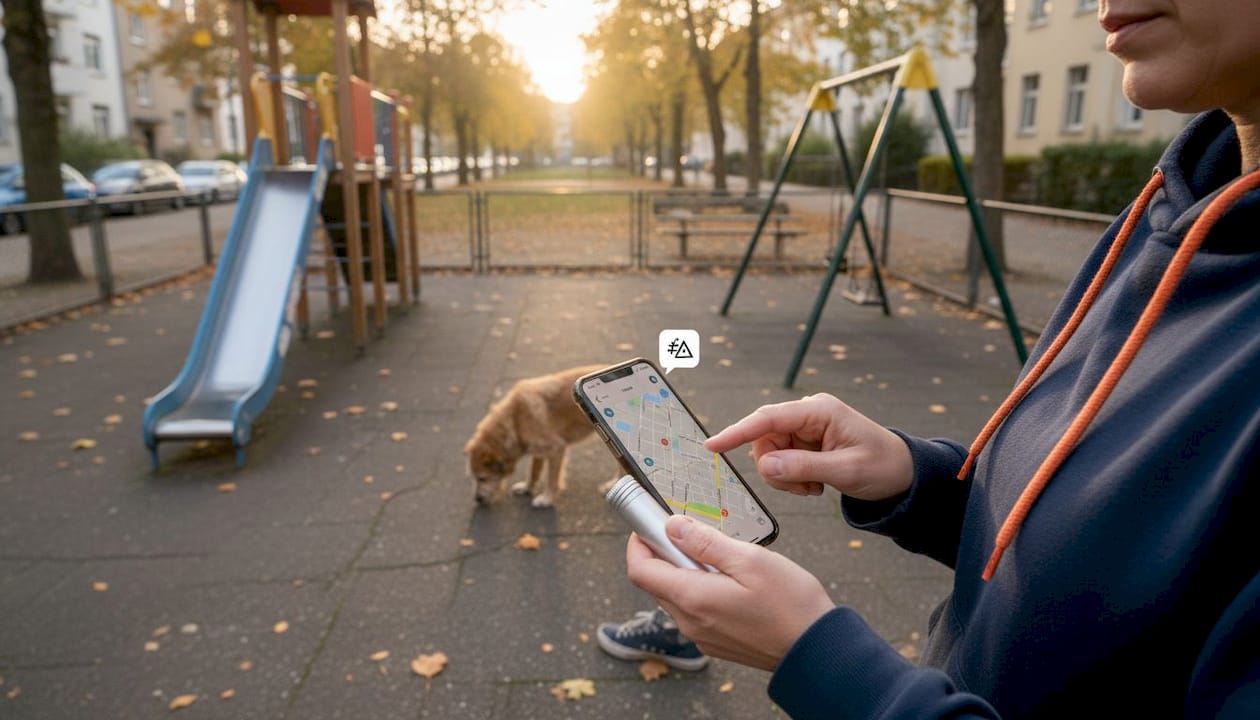
Pro Tip: Before hiding your new cache, test its weather resistance outdoors for a day. Place a piece of paper towel inside. If it's dry after 24 hours, the seal is good.
Rules, permits, and maintenance for urban caches
A well-camouflaged cache is useless if it violates rules. Anyone placing caches in urban areas must know some important points.
The most important rules at a glance:
- Minimum Distance: Every cache must be at least 161 meters away from the next cache. This applies worldwide on the Geocaching platform.
- Forbidden Zones: Schools, government buildings, military areas, and children's playgrounds are off-limits. Train stations and airports also require special caution.
- Permits: On private property or in public parks, a permit may be necessary. If in doubt, inquire with the responsible authority.
- No Damage: Caches must never be attached to buildings if this could cause damage.
- Regular Maintenance: Anyone who places a cache is responsible for its condition.
Especially point five is often underestimated. Weatherproof and inconspicuous containers, as well as regular maintenance, are indispensable in urban areas due to high muggle activity. A soggy logbook or a half-open container quickly stands out and gets reported.
Statistic: According to community reports, urban caches are maintained up to three times more often than nature caches because muggles and weather have a stronger impact.
A guide to cache maintenance recommends checking new caches weekly for the first four weeks. After that, a monthly check is sufficient.
Pro Tip: Use the stealth technique when hiding and maintaining: Never go directly to the cache location if other people are nearby. Wait until the coast is clear, or fake another action, such as tying your shoelaces.
The hiding tips for urban areas also emphasize: Choose locations you can reach regularly. A cache you only check once a year will eventually become a problem.
Tourism and Community: City Geocaching as an Experience
Geocaching changes how we experience cities. Those who follow a geocaching route through an unknown city discover places no travel guide shows: hidden courtyards, historic fountains, forgotten monuments.
This also has economic implications. The Marburg Geocaching Route is a well-known example: local retailers report more foot traffic since a geocaching route runs through the city center. Urban routes noticeably increase tourism, and clever urban hides regularly receive high Favorite Points from the community.
Amsterdam and Manhattan are also well-known examples of urban geocaching hotspots. Cachers from all over the world specifically search for special hiding spots there and combine it with sightseeing.
The community also benefits:
- Shared routes strengthen cohesion
- Event caches and CITO actions (Cache In Trash Out) combine fun with environmental protection
- Social media spreads special finds and increases visibility
- High Favorite Points motivate cache owners to create even more creative hiding spots
- Local groups organize tours for beginners
“A good urban cache tells a story. It leads seekers to places they would otherwise never have visited.”
Ideas for more community often arise through exchange in local groups. Anyone who links their cache with an interesting backstory or a puzzle creates an experience instead of just a find.
Mystery caches are particularly popular, where seekers first have to solve a puzzle before they receive the actual coordinates. In urban areas, such puzzles can be wonderfully combined with local history or architecture.
Our view: What truly makes urban caches unique
Many people first think of camouflage when it comes to geocaching. But camouflage is only the first step. What makes a truly good urban cache is the "hidden in plain sight" principle: the cache is right there where no one looks, because the object seems so commonplace that it becomes invisible.
This only works if technology and creativity come together. 3D printing and magnets now enable hiding places that were unthinkable ten years ago. A deceptively real screw made of PETG or a magnetic nano behind a street sign is not a gimmick but the result of real planning.
What we observe again and again: The most common mistakes are not poor camouflage, but too obvious containers and poorly chosen locations. A black film canister cache under a bench in the pedestrian zone is found because it looks out of place there.
Our advice: Test prototypes before real use. Stand in front of the location and ask yourself: Would I notice this if I weren't looking for it? If the answer is no, you're on the right track.
Further products and accessories for urban geocachers
You now know what matters for urban caches. Now all that's missing is the right accessories to implement your ideas.
At cachewerk.de you will find everything you need: from magnetic nanos and 3D-printed mimics to replacement seals and logbook rolls. Our geocaching equipment is specially selected for urban requirements. Weatherproof, discreet, and durable. For particularly creative hiding spots, take a look at our special hiding spots for the city. There you will find fake signs, mimic screws, and other unusual solutions that will make your cache unforgettable.
Frequently Asked Questions
How do I find a suitable location for an urban cache?
Choose everyday structures with low muggle presence and check the hiding spot for discretion and weather resistance. Location selection and camouflage are the decisive factors for a long-lasting urban cache.
What rules apply to urban geocaching?
Caches must be at least 161 meters apart and must not be placed in forbidden zones such as schools or government buildings. A permit is required on private property.
How do you protect your cache from muggles?
Use particularly inconspicuous, creative camouflage and check the position for visibility at different times of the day. Stealth techniques and clever camouflage are indispensable in the presence of many muggles.
What are the advantages of geocaching in the city?
Cities offer high cache density and quick finds, open up new places, and promote city tourism. Urban routes demonstrably increase local interest and retail.
Which accessories are particularly helpful for urban cachers?
Magnetic caches, 3D-printed containers, and replacement seals increase the creativity and durability of urban hiding spots. Magnets and 3D printing are now central tools for every serious urban cacher.