
Geocacher Communication Guide: Groups and Events
Communication in geocaching is the systematic foundation upon which successful group activities, events, and team searches are built. Geocachers or event organizers who communicate clearly and structured save time, avoid frustration, and strengthen the community. This Geocacher Communication Guide shows you how to create professional listings, organize events smoothly, and coordinate your team on site. Platforms like Geocaching.com, the 2026 Geocaching Championship, and CITO events provide concrete examples of proven communication strategies.
How to create clear and effective geocache listings?
A geocache listing is your most important communication with both seekers and reviewers. It defines what seekers can expect, what equipment they need, and how difficult the search will be. Poorly filled-out listings risk queries, delays in activation, and frustrated finders.
Geocaching.com recommends systematically filling out all listing fields, including reviewer feedback for quality assurance. This means: precisely measuring coordinates, realistically choosing difficulty and terrain ratings, and clearly naming the cache type. A listing that meets these basics will be released faster and generate fewer queries.
What elements belong in every listing?
The most important components of a good listing are:
- Coordinates: Measured precisely with a GPS device or smartphone, not estimated
- Size: Clearly state Nano, Micro, Small, Regular, or Large
- Difficulty (D) and Terrain (T) rating: On a scale of 1 to 5 in 0.5 increments
- Attributes: Information about dogs, wheelchair access, night cache, or seasonal restrictions
- Hint: An encrypted tip that helps with genuine perplexity without spoiling the search
- Description text: Context for the hide, the surroundings, and special rules
Geocache listings should contain clear text blocks such as size, difficulty and terrain ratings, and attributes. This gives seekers a common language before they even set off.
Reviewers are experienced community members who check listings for policy compliance and provide helpful feedback for improvements. This process ensures quality and equal treatment worldwide. If you receive feedback from a reviewer, respond promptly and objectively. This significantly accelerates the activation process.
Pro Tip: Write the description text as if a stranger unfamiliar with the area were searching. Avoid hints like “next to the big tree,” because trees grow and fall. Instead, use permanent landmarks such as bridges, signs, or buildings.
For a detailed step-by-step guide to creating listings, the Geocaching Guide from Cachewerk, which also includes DIY tips for creative hides, is recommended.
How do I organize geocaching events communicatively?
The preparation for a geocaching event begins not on the day of the event, but weeks in advance with the correct listing. Those who submit too late risk reviewer queries close to the date and low participation. Early communication is the crucial factor.
CITO events require early listing submission to clarify reviewer issues and enable high participation. Geocaching HQ announces two CITO seasons for 2026 and highlights over 850,000 geocachers as potential participants. This shows: those who plan and communicate early reach significantly more people.
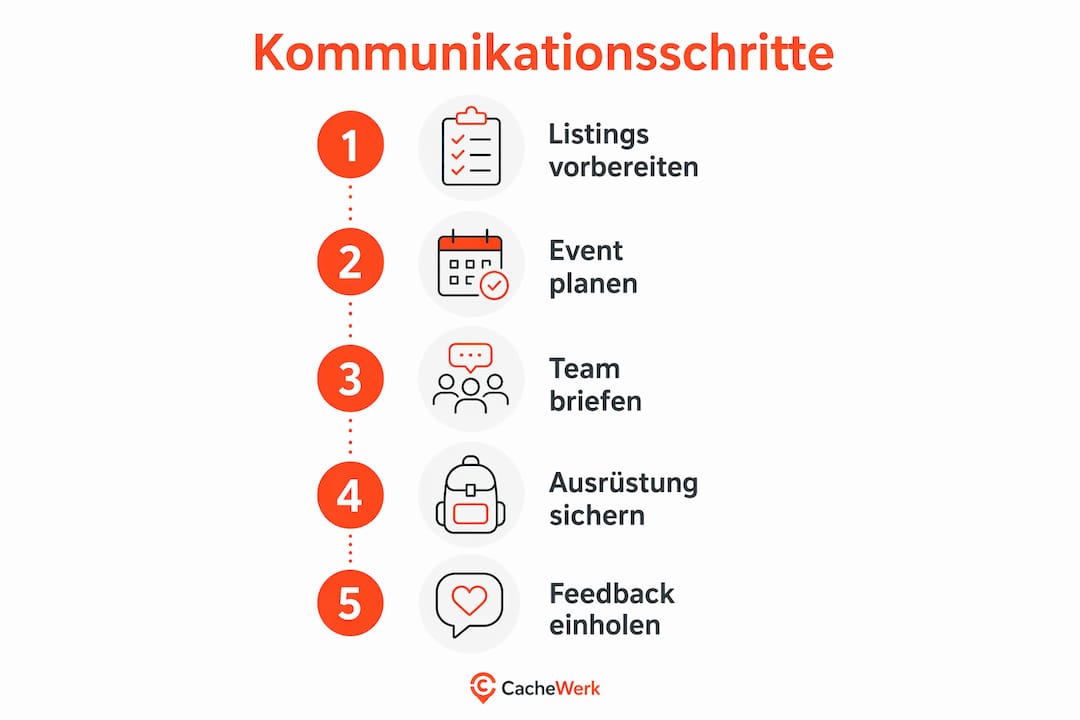
Here's how to prepare an event communicatively:
- Submit the listing at least four weeks in advance. This gives reviewers time for queries and you time for corrections.
- Provide precise date, time, and meeting point. Vague information like “in the afternoon” or “somewhere in the park” leads to inquiries and no-shows.
- Describe the number of participants and the schedule in the listing. Those who know what to expect are more likely to show up.
- Provide cache lists for offline download. This is essential, especially for events in areas with poor mobile reception.
- Publish a schedule for team competitions. Individual running and time schedules ensure fairness and incentivize punctuality.
- Explicitly welcome new participants. A short sentence in the listing like “Beginners welcome” significantly lowers the barrier to entry.
Pro Tip: Consciously use Geocaching HQ's CITO season windows. Events within these windows receive more visibility on the platform and are more actively promoted by the community. This doubles your reach without additional effort.
Motivation for participating in events can be created through immediate incentives such as coffee, snacks, or a special cache directly after the event. Psychological approaches show that such offers reduce no-show risks and strengthen community bonding. Write these incentives directly into the listing, not just in comments.
What are proven methods for team communication in geocaching?
Team communication in geocaching usually fails not due to lack of willingness, but due to lack of preparation. Those who clarify roles, hints, and schedules before starting search more efficiently and have more fun. The best teams discuss everything before entering the first coordinate pair.
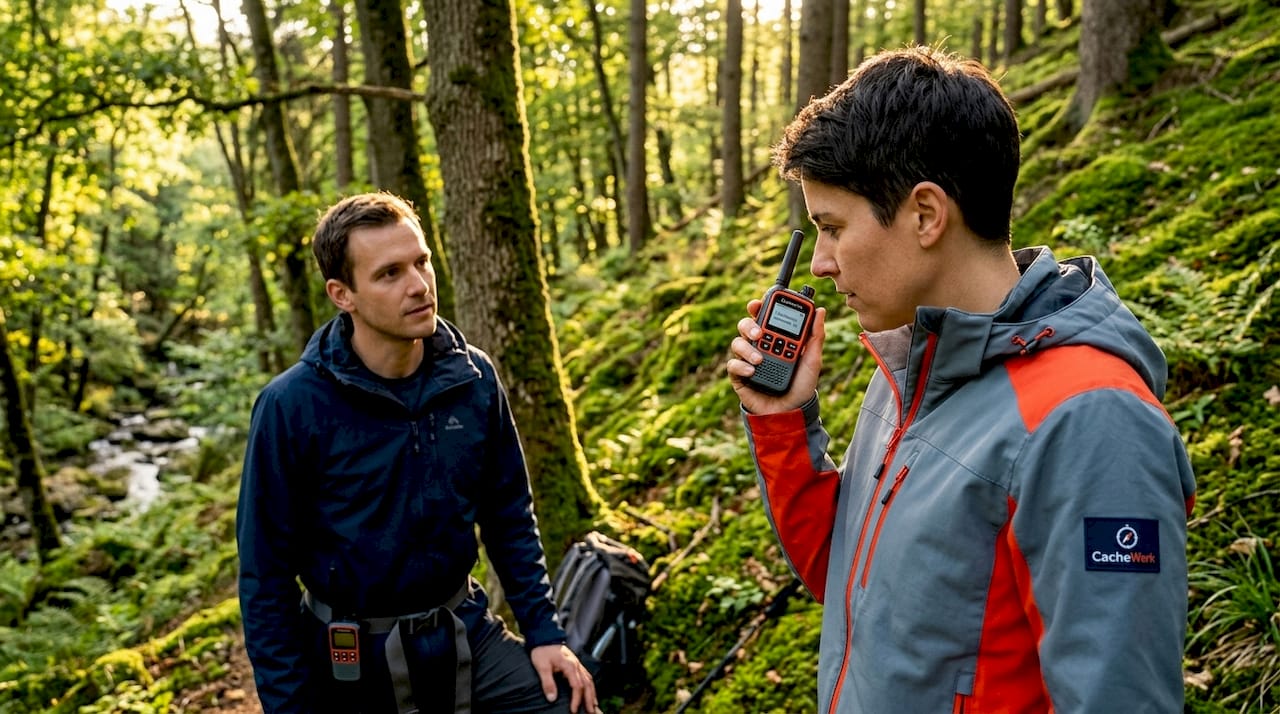
Participants benefit from downloading cache lists offline in advance and discussing hints together on site. This avoids inefficient discussions directly at the cache and saves valuable search time. A regional event report from 2026 confirms that this offline preparation measurably improves search success.
Proven communication methods for geocaching teams:
- Role distribution before starting: Who navigates, who searches, who keeps an eye on the time. Clear roles prevent everyone from staring at their smartphone at the same time.
- Joint hint analysis: Read and interpret attributes, hints, and description text together before the team sets off.
- Offline readiness: Save cache lists, maps, and hints on the device. Mobile reception is often unreliable in forests and industrial areas.
- Adhere to schedules: In team competitions, delays lead to time penalties or loss of points. Clear agreements on departure times are not a luxury, but a must.
- Know fairness rules: The rules of the 2026 Geocaching Championship define strict station sequences and communication mechanisms for team formats. Those who know these avoid disqualifications.
- Communication without a smartphone: Agree on simple signals or meeting points in case batteries are dead or the network fails.
A structured process and clear participation rules at events increase the relaxation and success of the events. This applies not only to competitions but to every group search. Those who know what's next can concentrate on searching.
For group searches in unfamiliar terrain, it's also worth taking a look at adventure planning tips, which also apply to geocaching trips with several people.
How do I create motivating geocaching group activities?
A good geocaching event thrives on atmosphere, not just caches. Actively involving new participants and incorporating playful elements creates experiences that people talk about for months. This is the strongest form of community communication.
New cachers should be actively welcomed at events and involved with simple, playful elements to strengthen the sense of community. Event organizers recommend introductory rounds with a geocaching theme and creative games to promote participation. One example: Everyone names their geocaching name and their most difficult find so far. This breaks the ice in three minutes.
Concrete ideas for motivating group activities:
- Geocaching Quiz: Questions about cache types, rules, or local history. Works as a warm-up and playfully promotes knowledge.
- Guessing games with coordinates: Teams get hints and have to collectively determine the next station. Communication becomes a game mechanic.
- Raffles after CITO events: Small prizes like trackables, Cachewerk products, or special cache containers motivate participation and return visits.
- Plan beginner-friendly caches: Difficulty ratings around 1.5 for terrain and difficulty are most popular and prevent frustration for new teams. This keeps spirits high.
- Special cache after the event: A special cache accessible only on that day gives participants an additional reason to come and be punctual.
Playful elements and communicative involvement of new geocachers promote the community in the long term and increase event participation. This is not a nice extra, but the core of sustainable networking. Those who have experienced a truly good event once will come back and bring others with them.
Pro Tip: Create a short welcome message in the event listing that explicitly addresses geocaching for beginners. Explain in two sentences what participants should bring and what to expect. This small gesture doubles the willingness of newcomers to actually show up.
Key Takeaways
Clear communication in listings, at events, and within the team is the decisive factor for successful geocaching group activities, from listing creation to event design.
| Point | Details |
|---|---|
| Ensure listing quality | Fill out coordinates, difficulty, attributes, and hint completely to minimize reviewer queries. |
| Submit events early | Allow at least four weeks lead time so reviewer feedback can be incorporated and participants informed in a timely manner. |
| Offline preparation in the team | Download cache lists and hints before starting and discuss them together to avoid discussions on site. |
| Actively involve new participants | Introduction rounds, beginner-friendly caches, and playful elements lower the barrier to entry and strengthen the community. |
| Communicate incentives | Announce coffee, raffles, or special caches directly in the listing to reduce no-shows. |
My Experience with Communication and Event Organization
Over the past few years, I have accompanied many geocaching events, and one thing has always stood out to me: the technically best caches often fail due to poor communication. A listing that confuses seekers or an event without a clear schedule frustrates more than a difficult cache ever could.
What truly surprised me: The reviewer process is not an obstacle, but a tool. Those who accept feedback and react quickly learn more about good listing design than through any guide. I have experienced listings that were significantly better after two reviewer rounds than the original.
At events, the biggest weakness is almost always the welcome of new participants. Experienced cachers know the procedures, while newcomers often stand lost on the sidelines. A simple welcome protocol, which any organizer can prepare in five minutes, completely changes the atmosphere. I recommend every organizer to consciously reserve the first ten minutes for new faces.
My honest advice: Plan fewer caches for an event, but communicate each one better. Three well-explained caches with clear hints and a motivated team beat ten poorly documented searches any day.
— Benedikt
Equipment and Accessories for Better Geocaching Events
Good communication sometimes also requires the right equipment. Whether weatherproof logbooks, striking trackables for raffles, or creative cache containers for special event caches: the right accessories make the difference between an average and an unforgettable event.
At Cachewerk, you'll find everything you need for organizing and conducting geocaching events. From geocaching equipment and accessories for group activities to special hides for event caches that participants will remember for a long time. All products are durable, well-thought-out, and designed for outdoor use. Take a look and make your next event a truly memorable experience.
FAQ
What belongs in a good geocache listing?
A good listing includes exact coordinates, difficulty and terrain ratings, cache size, attributes, and an encrypted hint. Geocaching.com recommends filling out all fields completely to minimize reviewer queries and set clear expectations for seekers.
How early should I submit an event listing?
At least four weeks before the event date, even earlier for CITO events. Early submission gives reviewers time for queries and you time for corrections without jeopardizing the event date.
How do I communicate effectively in a geocaching team?
Clarify roles, download cache lists offline, and discuss hints together before starting. Avoiding on-site discussions saves time and allows for a more focused search.
How do I involve new geocachers at events?
Use introduction rounds with a geocaching theme, plan beginner-friendly caches with difficulty ratings around 1.5, and explain the process in the listing. An explicit welcome note for newcomers in the listing significantly lowers the barrier to entry.
What motivates participants to attend an event?
Concrete incentives such as coffee, snacks, raffles, or a special cache directly after the event reduce no-shows and strengthen community bonding. These incentives should be communicated directly in the listing, not just in comments.