
Geocoins in Geocaching: Function, Tips & Collectors
TL;DR:
- Geocoins are trackable coins with individual designs and unique codes, primarily used as collector's items.
- They are actually meant to travel from cache to cache but are often safely stored at home.
- There are different types of users, including collectors, travelers, and proxy users, who shape the community.
Many geocoins never truly travel. They are bought, admired, shown at events, and then safely stored at home. Yet, they are actually intended as trackables, meaning items that wander from cache to cache, creating a story along the way. This contradiction is not a flaw of the community, but a fascinating characteristic of these small coins. In this article, you will learn what geocoins are exactly, how their tracking code works, what types of users exist, and how you can creatively design and use your own geocoin.
Table of Contents
- Geocoin Basics: Origin and Function
- How Does a Geocoin Work? Activation and Tracking
- Collectors, Travelers, and Proxies: Geocoins in the Community
- Practice: Creative Use and Personalization of Geocoins
- Experiences and Perspective: The True Value of Geocoins
- Geocoins and Accessories for Your Geocaching Project
- Frequently Asked Questions About Geocoins
Key Takeaways
| Point | Details |
|---|---|
| Geocoin Definition | Geocoins are coins with a tracking code, specifically designed for geocaching. |
| Usage and Tracking | Geocoins are activated on geocaching.com and can be logged as found, placed, or traveled. |
| Collectors vs. Travelers | Many geocoins remain collector's items; only a few are used as travelers in caches. |
| Proxies in Use | Proxies enable safe travel but are often debated among geocachers. |
| Creative Application | Own design and clever accessories increase the personal value of geocoins. |
Geocoin Basics: Origin and Function
A Geocoin is a trackable item in the form of a coin for geocaching with a unique tracking code. That sounds simple, but there's a whole culture behind it. Geocoins are usually made of metal, sometimes wood or plastic, and bear an individual engraving as well as an alphanumeric code on their surface. This code is the heart of every geocoin.
The first known geocoin was the Moun10Bike #002, which was launched in 2001. This means the history of geocoins is almost as old as geocaching itself. Since then, the design has evolved enormously: Today, geocoins come in countless shapes, colors, and themes, from animals to seasons to personal motifs.
Typical features of a geocoin at a glance:
- Material: Zinc, brass, aluminum, or wood
- Size: Usually between 38 and 50 mm in diameter
- Code: Alphanumeric, unique for each item
- Engraving: Individual design on front and back
- Tracking: Registration on geocaching.com
The main function of a geocoin is to travel. It is placed in a cache, picked up by a finder, deposited in another cache, and so on. Each station is logged online, allowing the owner to follow its journey. For many geocachers, this is one of the most emotional aspects of the hobby.
| Feature | Geocoin | Normal Cache Content |
|---|---|---|
| Tracking Code | Yes | No |
| Travel Function | Yes | No |
| Collector's Value | High | Low |
| Personalization | Very high | Low |
For those who want to delve deeper into the topic, our Geocaching Guide explains all the basics step by step. Geocoins are thus far more than just coins. They are personal ambassadors in the geocaching community network.
Did you know? Some geocoins travel thousands of kilometers in their lifetime and cross several continents.
How Does a Geocoin Work? Activation and Tracking
The mechanics of a geocoin include activation with a code, logging as Discovered, Retrieved, or Dropped, and traveling from cache to cache. It sounds technical, but in practice, it's very intuitive. Here's the process step by step:
- Activation: You register your geocoin on geocaching.com/track using the printed code.
- Set a goal: You can optionally define a travel destination or mission for your geocoin.
- Place in cache: You place the geocoin in a suitable cache.
- Log as Retrieved: A finder picks it up and logs it as “Retrieved”.
- Further travel: The finder places it in another cache and logs “Dropped”.
- Discovered: Anyone who sees the geocoin but does not take it can log it as “Discovered”.
The tracking code itself is alphanumeric and usually has six to eight characters. It is engraved or printed on the geocoin and must not be shared publicly, as it protects the owner's status. Only the tracking code allows logging.
Pro Tip: When activating, write a personal mission for your geocoin, for example, “Visit all German federal states” or “Travel to Scandinavia”. This motivates finders to actively carry it further, instead of leaving it behind.
A common problem: Geocoins stagnate. They end up in a cache and are not moved for weeks. This often happens with rarely visited caches or when finders are unsure if they are allowed to take the coin. A clear mission and a friendly note in the cache can help here.
For those who have never activated a geocoin, we recommend our step-by-step guide as an introduction. It also explains how to correctly log caches and what etiquette applies in the community.
Collectors, Travelers, and Proxies: Geocoins in the Community
Not every geocoin is destined to travel. Many are discovered at events, few actually travel; proxies enable travel without risk to the original. These three user types strongly shape the community.
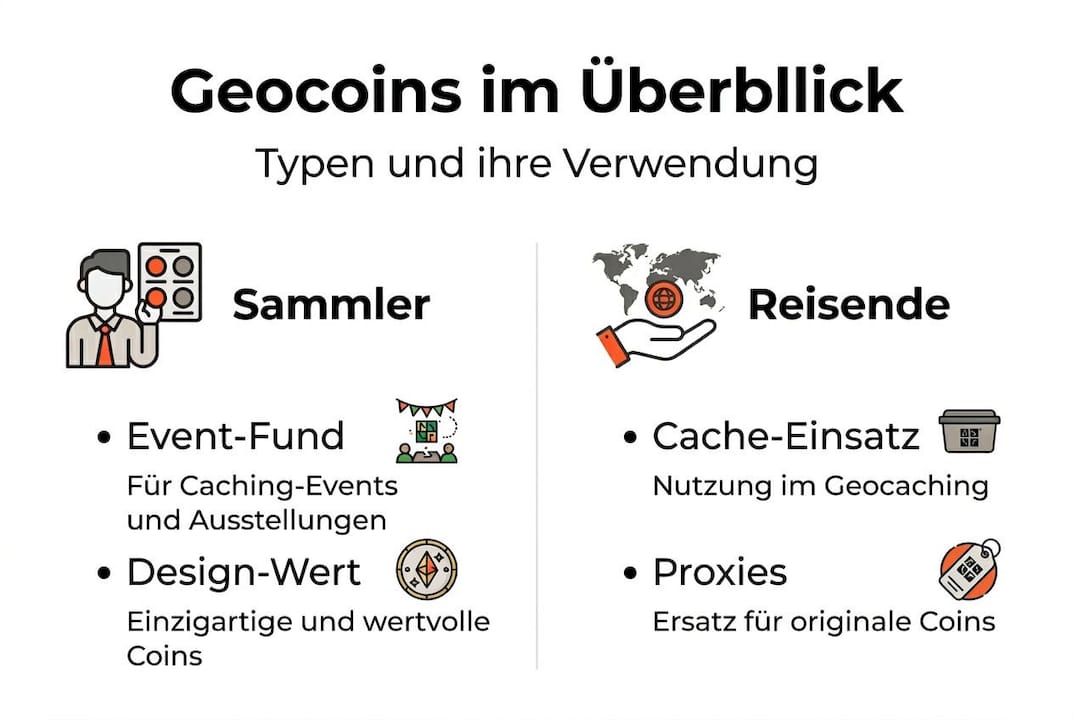
Collectors buy geocoins for their design and collector's value. They log them at events as “Discovered,” exchange them with other collectors, and keep them safe. The original rarely leaves home.
Travelers, on the other hand, actively place geocoins in caches. They accept the risk that a coin might be lost or stolen. Unfortunately, this happens regularly, especially with high-value specimens.
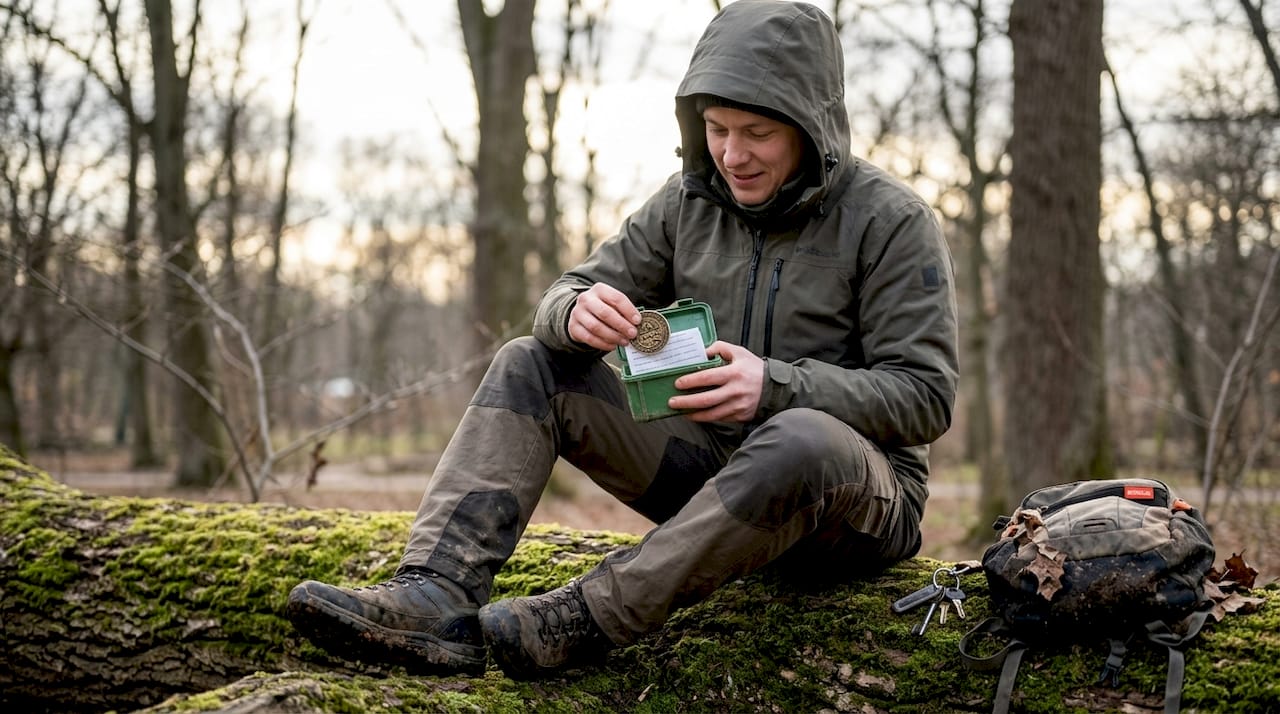
Proxies are copies of an original that travel instead. The owner keeps the original but sends a cheap replica on its journey. This protects the collector's value but is controversial in the community.
| User Type | Risk | Collector's Value | Community Acceptance |
|---|---|---|---|
| Collector | Low | High | Very High |
| Traveler | High | Medium | High |
| Proxy User | Low | Low | Divided |
Pros and cons of proxies:
- Advantage: Original remains safe, coin can still travel
- Advantage: Cheap replacement in case of loss
- Disadvantage: Some geocachers find proxies less authentic
- Disadvantage: Emotional value of the original is lost
Pro Tip: If you want to let a valuable geocoin travel, create a proxy from durable material, such as PETG print, and include a note explaining that it is a copy. This way, you remain transparent to the community.
Anyone looking for creative solutions for cache contents will find many ideas for individual trackables and hideouts in our DIY tips.
Practice: Creative Use and Personalization of Geocoins
Designing your own geocoin is easier than many think. You don't have to be a professional to create a coin that leaves an impression. Here are the most important steps and ideas:
Choose design and material: Metal is durable and looks high-quality. Wood gives the coin a natural character. For hobbyists, PETG printing is also suitable, as it is weather-resistant and dimensionally stable. Choose a design that suits you, for example, your geocaching nickname, a personal symbol, or a theme important to you.
Engraving and labeling: The engraving should include the tracking code, your nickname, and optionally a short mission. Clear, legible font is more important than elaborate ornaments. Remember: the coin will be handled outdoors, often with dirty hands.
Tips for high durability:
- Seal or varnish surfaces
- Avoid overly fine details that wear off quickly
- Choose weather-resistant materials
- Deeply engrave the tracking code, do not just print it
Use as a signature: Many geocachers use their personal geocoin as a signature item. Instead of a normal logbook tool, they leave their coin briefly in the cache, have it logged, and take it with them again. This is an elegant way to show yourself in the community.
Combination with stickers and trackables: Geocaching stickers are a great addition to geocoins, especially for geocaching stickers for cache swaps. They can be easily combined and make every cache visit a small experience.
Pro Tip: Create several versions of your geocoin in different materials. A metal version for collectors, a cheaper version as a proxy. This way, you can offer both and cater to every taste in the community.
For those who want to dive deeper into the DIY world, our DIY guide offers many more ideas for creative cache design.
Experiences and Perspective: The True Value of Geocoins
After all the facts, we want to share an honest assessment. The discussion about proxies and collectors divides the community, but at the same time allows for creative development. And that's exactly what makes geocoins so special.
An original has an emotional value that no proxy can replace. When a geocoin that you designed yourself travels thousands of kilometers and is logged by hundreds of people, it's a feeling that is hard to describe. Proxies are practical, no question. But they don't create the same connection.
At the same time, collectors, through their passion for design and quality, promote innovation throughout the scene. The most beautiful geocoins are often created not for travel, but as works of art. This is not a contradiction, but an enrichment.
Our experience with geocaching projects shows: The best geocoins are always personal expressions. Whether traveler, collector, or proxy user, anyone who designs their coin with passion inspires others. The conflict in the community is not a problem. It is the driving force for ever more creative ideas.
Geocoins and Accessories for Your Geocaching Project
Do you want to design your own geocoin or enhance your cache hideout? Then CacheWerk is the right place for you. We offer creative solutions for every step, from the idea to the finished trackable.
In our shop, you will find individual trackables, high-quality accessories, and specialized tools for hobbyists and enthusiasts. Whether you need a personal geocoin, are looking for suitable hideouts, or want to equip your cache with special details: We have what you need. Check out our Geocaching Equipment & Accessories and get inspired. Everything for your next geocaching adventure can be found directly in the CacheWerk Shop.
Frequently Asked Questions About Geocoins
What Distinguishes a Geocoin from Other Trackables?
A geocoin is a trackable item in coin form, usually made of metal, with a unique tracking code, whereas classic trackables are often plastic tags or other objects. The main difference lies in the high collector's value and individual design.
How Do I Activate and Track a Geocoin?
Activation and tracking are done using the code on geocaching.com/track; afterwards, you can log discoveries and travels. The process only takes a few minutes.
Are Proxies Allowed and Useful for Geocoins?
Proxies allow travel without risk to the original, but the community is divided. They are allowed, but many geocachers prefer the real item because of its emotional value.
How Can I Design My Own Geocoin?
You can choose the design, material, and engraving yourself; specialized providers and crafting platforms help with implementation. It is important that the tracking code is clearly legible and permanently engraved.