Tree-friendly cache placement: How to protect bark and tree

Never attach your cache to a living tree with nails or screws. Instead, use loose Velcro straps, belts, or clamping solutions that you can remove at any time without leaving a trace. Before doing so, check whether the location is in a protected area, if there is a tree hollow nearby, and if you need the permission of the forest owner for permanent attachments. If you want to attach a cache in a tree-friendly way, completely avoid hardware that penetrates the bark.
In short:
- Permanent attachments to living trees require written permission from the forest owner, as nails or screws are prohibited.
- Velcro straps or belts are the best options for attaching a cache in a tree-friendly way, always ensuring there is some slack.
- Materials like adhesives or power strips are unsuitable as they fail in adverse weather conditions and leave residues in the bark that are difficult to remove.
- It is advisable to avoid plants, living trees, and protected areas when choosing a location and to seek contact with the forest owner.
- Regular annual inspections are necessary to detect and remedy ingrowth or damage early.
Table of Contents
- Tree-friendly cache attachment: Which methods really work?
- Do you need permission for your attachment?
- How to mount your cache step by step
- How often do you need to check the attachment?
- Which materials and CacheWerk products are best suited?
- Why you can trust this guide
- The right assortment for your tree-friendly installation
- Sources
Tree-friendly cache attachment: Which methods really work?
Choosing the right technique determines whether your hide will still be intact in a year or will harm the tree. Velcro straps and belts are the first choice for most owners because they adapt to different trunk diameters and can be removed without leaving any residue. Important: always leave a little slack so that the strap doesn't cut into the bark as the tree naturally grows thicker.
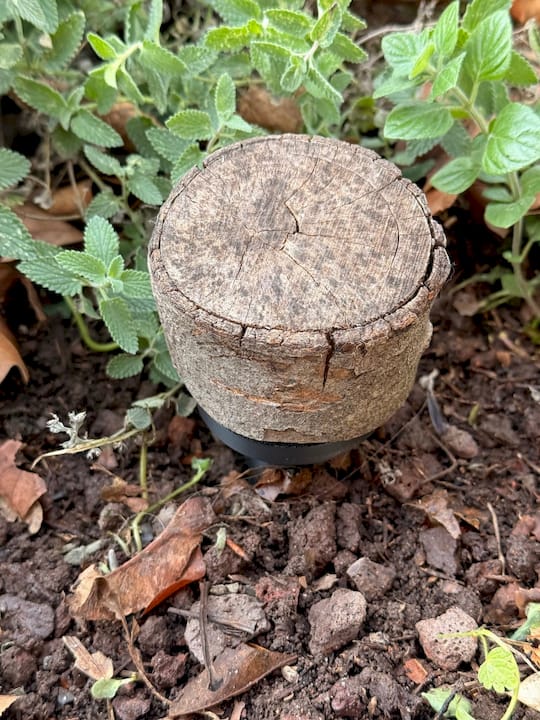
Reusable strap systems, as described in the CacheWerk Velcro strap guide, are particularly suitable for light PETlings and nano containers. Clamps or mounted bases work if you need a stable support that does not penetrate the tree, for example on a dead branch or a branch fork. Magnetic solutions are an underestimated alternative: they don't work on the tree itself, but on attached metal objects such as old nails, signs or pipes nearby.
However, you should avoid adhesives and so-called power strips. Community experiences in the Geoclub Forum repeatedly show that these adhesive bonds fail in humidity and temperature changes and leave residues in the bark that are almost impossible to remove.
- Velcro strap or belt: flexible, removable, ideal for small to medium containers
- Clamp or plug-in base: stable, no material contact with the bark
- Magnetic attachment: only on existing metal objects, not on the wood itself
- Cable ties with slack: practical, but adjust regularly
- Adhesives and power strips: unsuitable for permanent outdoor use
Pro tip: Never wrap the Velcro strap too tightly around the trunk. A finger should fit loosely between the strap and the bark, otherwise it will grow in within a few seasons.
Do you need permission for your attachment?
For permanent or invasive attachments, the answer is almost always: yes. The Geocaching guidelines explicitly prohibit attaching caches with nails or screws to living trees unless written permission from the forest owner is available. You must provide this approval to the reviewer when submitting your listing, otherwise the cache will not be published.
While the general right of access to forests allows you to enter the forest for recreational purposes, it does not cover permanent objects on trees. Therefore, anyone planning more than a loose, temporary attachment should contact the relevant forestry office or the landowner directly.
Protected areas and tree hollows are generally off-limits because they often provide habitat for bats, birds, or insects. The nature conservation guidelines in the CacheWiki explicitly recommend completely avoiding such areas.
- Obtain written permission for permanent attachments
- Contact person: forestry office or direct forest owner
- Avoid tree hollows and identifiable habitats over a wide area
- Store permission as a photo or text proof in the listing
How to mount your cache step by step
Before you even hold a strap in your hand, the choice of location determines success or trouble. A tree with thin, young bark or a location in a recognizable biotope should be avoided. Also pay attention to how heavily the area is frequented by walkers or hikers, as too much trampling can harm the root area.
When choosing materials, quality pays off. A weatherproof PETling or nano container, combined with a wide, soft strap instead of a thin cable tie, lasts longer and protects the bark better. A short checklist for scouting the location helps to not overlook anything.
- Check location: no young growth, no visible biotope, moderate visitor traffic
- Choose suitable container, such as PETling or nano container depending on hide size
- Select strap or Velcro that is wide enough to distribute pressure
- Attach container, deliberately leaving one to two centimeters of slack
- Add secondary securing, such as a second loop to prevent slipping
- Check seal to ensure no water enters the container
- Set maintenance interval and document in listing or personal notes
- Provide contact information for finders or forest owner in the listing
Pro tip: Photograph the finished installation immediately after attachment. This gives you a reference point for the next inspection and you can immediately see if the strap has shifted or loosened.
How often do you need to check the attachment?
Once a year is sufficient as a basic interval; for fast-growing trees, a semi-annual check is even worthwhile. During each inspection, check three things: whether the strap is starting to grow in, whether it is rubbing against the bark, and whether the entire construction is still sitting stably.
If you find a strap that is too tight, loosen it immediately and re-tie it more loosely. When removing a container, never pull abruptly; instead, open the strap first and then remove it to avoid tearing off pieces of bark. If a material has visibly grown in, carefully cut it open and, if in doubt, leave the rest in rather than cutting deeper into the bark.
- Check for ingrowth, chafing, and stability
- Loosen straps and reattach more loosely instead of tightening
- Carefully cut embedded material, never tear it out
- In case of damage, inform the forest owner and note the find in the listing
If finders report a loose or damaged attachment via a logbook photo, take it seriously and schedule the next maintenance. Direct contact with the forest owner pays off here, especially if you are asking for further approval.
Which materials and CacheWerk products are best suited?
PETlings and nano containers are standard in the scene for good reason: they are lightweight, weatherproof, and add little extra weight to the attachment material. For beginners, CacheWerk offers two starter bundles: the Geocaching Starter Bundle 1 with PETling, logbook, and holder, and the Geocaching Starter Bundle 2 with PETling, logbook, and suspension. Both sets provide a tree-friendly basic setup without you having to gather individual parts.
For urban camouflage hides where no living tree is touched anyway, it's worth taking a look at the Rusty Bolt Cache with nano container or the Ammo Box in the Trick Edition. The Survey Point Hide with PETling and ground sleeve is suitable if you are looking for a fixed but tree-free base, for example on a post or boundary stone instead of the trunk.
- PETling and nano containers: lightweight, weatherproof, low additional load for the strap
- Starter bundles: complete basic equipment including holder or suspension
- Rusty Bolt and Ammo Box: urban camouflage without tree contact
- Survey point hide: fixed base on external objects instead of the trunk
Pro tip: Combine a holder from the starter bundle with a wide Velcro strap instead of the supplied narrow strap if the tree already has a larger trunk diameter.
Why you can trust this guide
This guide comes from Benedikt, who regularly writes tutorials for CacheWerk on hide construction and material selection. CacheWerk has been dealing with durable, well-thought-out solutions for geocache owners for years and publishes practical guides on the subject, such as the Guide to special cache attachments. The methods described here are based on official guidelines, regional nature conservation information, and years of community experience, not guesswork.
— Benedikt
The right assortment for your tree-friendly installation
If you don't want to tinker but simply want to get started, Cachewerk has the ready-made equipment for you. Unlike simply shopping at a hardware store, here you get components that are designed for geocaching requirements from the outset, from the size of the PETling to the width of the strap.
For beginners, one of the two starter bundles, which include a PETling, logbook, and suitable holder or suspension in a set, is ideal. If you prefer an urban camouflage hide without any tree contact, the Rusty Bolt Cache or the Ammo Box in the Trick Edition offer two solutions that work completely independently of the trunk. The complete geocaching accessories assortment shows you further combination possibilities, for example for magnetic attachments to external objects. Check out the bundles and choose the set that suits your next hide before you head out and scout the location.
Sources
Binding rules are provided by the Geocaching HQ Hiding Guideline, practical advice from the Saxony information sheet and the Opencaching Wiki.
- Geocaching
- How to attach geocaches / stations without damage? — Geoclub Forum
- Nature-friendly Geocaching — CacheWiki